Sweet and Sticky Steak Bites: The Juicy, Glazed Beef You’ll Crave All Week

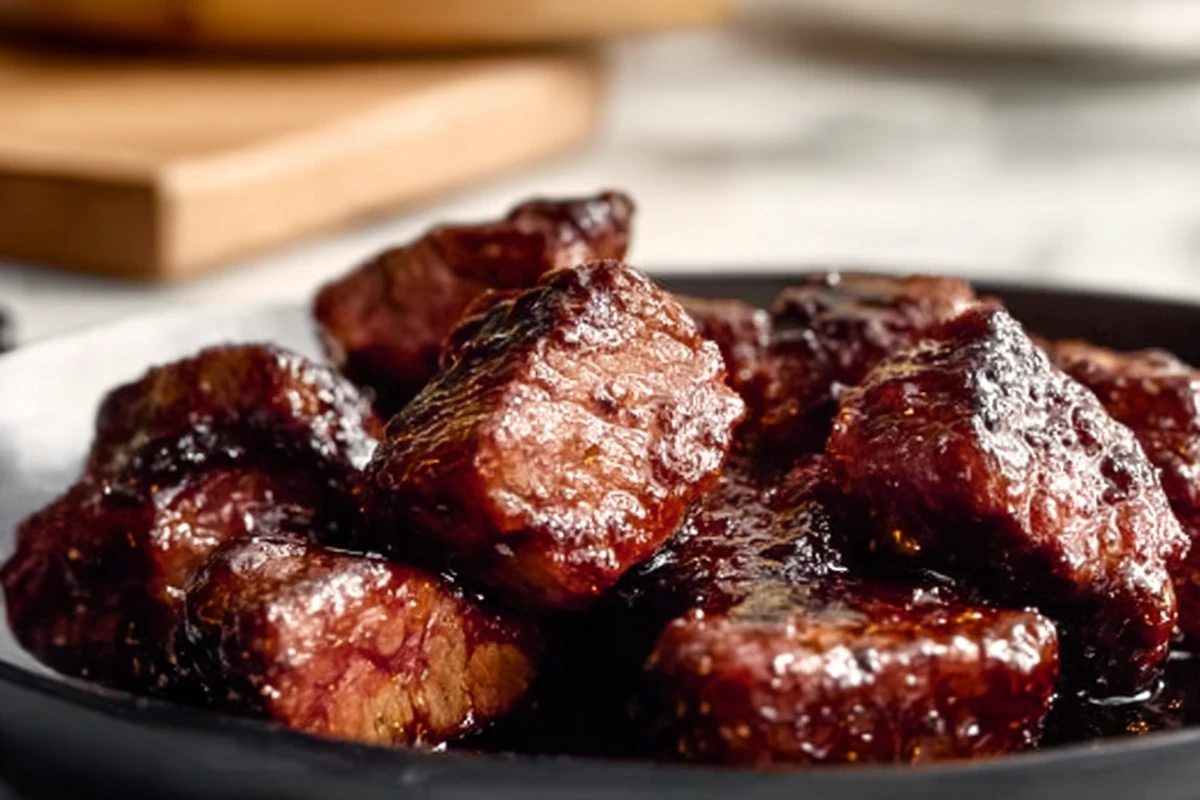
There’s a moment in this recipe when the smell shifts. At first, it’s pure beef and smoke—clean, savory, almost restrained. Then the butter melts, the brown sugar softens, and the BBQ sauce warms just enough to thicken. Suddenly the air changes. It smells darker, rounder, like caramel brushing up against wood smoke. That’s the point when you know these aren’t just steak tips anymore. They’ve crossed into something richer.
Sweet and Sticky Steak Bites are built around contrast. Thick cubes of beef develop structure in the smoker before anything sweet ever touches them. The rubs do their work slowly, setting a crust and deepening the meat’s flavor without rushing the process. Only after the steak has already found its tenderness does the sauce come in—warm butter, dark sugar, and BBQ sauce tightening together into a glaze that clings instead of dripping.
This is the kind of recipe that rewards patience more than precision. You don’t need fancy tools, but you do need to respect timing and temperature. Pull the steak too late and the sugar burns. Sauce it too early and the meat steams instead of smokes. When it’s right, the edges stay firm, the centers stay juicy, and every bite tastes layered instead of loud.
What follows isn’t a rushed set of steps. It’s a process designed to give the steak time to become itself before it gets dressed up.
Table of Contents
Why Sweet and Sticky Steak Bites Need Three Rubs (Not One)
The flavor of these Sweet and Sticky Steak Bites doesn’t come from the sauce alone. It’s built in layers, and those layers start dry. Each rub has a job, and skipping one flattens the final bite. The beef needs a savory base early, sweetness that caramelizes later, and a darker edge that keeps the sugar from taking over. This is especially important with smoked steak bites, where long exposure to low heat can dull seasoning if it isn’t intentional from the start.
- Beef filet steaks (about 2 inches thick): Filet stays tender during the long smoke and finishes cleanly without shredding. Leaner cuts also keep the glaze from tasting greasy.
- Beef rub (or salt, pepper, garlic powder): This goes on first to anchor the meatiness. Salt here penetrates early and keeps the beef from tasting sweet-but-hollow later.
- Sweet rub: Brown sugar–forward rubs shine once heat and butter are introduced. This one isn’t for the interior—it’s for the edges that will eventually lacquer.
- Activated charcoal rub: This adds bitterness and color. It’s subtle, but it prevents the BBQ sauce and brown sugar from tasting one-note or candy-like.
If you don’t have a charcoal rub, a very light hand with a pepper-heavy rub can work—but expect a lighter color and less depth.

Sauce Isn’t a Marinade—It’s a Finish Line
The sauce components here are simple, but their balance matters. This isn’t a soak or a glaze brushed on at the grill. It’s a tightening sauce that finishes the steak after the smoke has already done its work.
- BBQ sauce: Choose something balanced, not aggressively sweet. A sauce with vinegar or smoke already built in pairs better with dark brown sugar.
- Dark brown sugar: Dark sugar brings molasses notes that read as smoky rather than sugary once heated.
- Butter: Butter rounds the sauce and helps it cling. It also softens the edges of the sugar so the glaze sets glossy instead of grainy.
If your BBQ sauce is already very sweet, pull back slightly on the brown sugar. The goal is sticky, not syrupy. When done right, the sauce coats the steak bites instead of pooling underneath, making them just as suited for a backyard cookout platter as they are for a game-day tray.
The Make-or-Break Moment: Timing the Smoke Before the Sugar
The smoker should be settled at a steady 225°F before the steak ever goes on. When the smoked steak bites hit the grates, they should look dry on the surface and heavily seasoned, not damp or glossy. As they cook, the smell stays clean and beefy with a soft ribbon of smoke—no sweetness yet, no burning sugar notes. You’re watching for structure here, not color: the exterior firms up, the edges darken slightly, and the meat feels springy when pressed, similar to the base of your thumb.

Pulling the steak bites at around 120°F is the quiet decision that makes the whole recipe work. Go past it and the sugar stage becomes a rescue mission. At the right moment, the steak is cooked enough to hold its shape but still eager to take on what comes next.
Cutting, Seasoning, and Staging the Steak (This Is Where Consistency Comes From)
Cutting the steak into even cubes isn’t about looks—it’s about timing. When the pieces are uniform, they cook and smoke at the same pace, which keeps the final batch consistent. As you season, the steak should feel tacky but not wet, with the rub clinging instead of falling off onto the rack below.
Setting the steak bites on a cooling rack creates space. You’ll hear a gentle sizzle when they first hit the smoker grates, not a hiss, which tells you the surface moisture is under control. This staging step is what separates tender BBQ steak bites from ones that steam and soften too early.
Sauce Isn’t a Marinade—It’s a Finish Line
When the steak bites move into the cast iron or pan, everything changes fast. The butter begins to melt almost immediately, carrying the smell of warm dairy and brown sugar as it slides between the pieces. The BBQ sauce loosens first, then thickens, bubbling lazily instead of boiling hard.

As the sauce tightens, the steak bites turn glossy and darker, with the glaze pulling itself around the meat rather than dripping off. You’ll hear a low, steady sizzle and smell caramelized sugar mixed with smoke—that’s your cue. Once the internal temperature reaches about 130°F and the sauce coats cleanly, the pan comes off. Any longer and you risk losing that balance between tender beef and sticky finish.
Make It Your Own (Without Breaking the Recipe)
These steak bites are flexible, but only within a few guardrails. The structure comes from how the meat is cooked before the sauce ever touches it, so any variation has to respect that order.
If filet isn’t available, a well-trimmed sirloin works as a second choice. Cut it slightly larger to protect it during the longer smoke, and expect a firmer bite with more beefy chew. Ribeye can work too, but only if you remove excess fat—too much rendering will thin the glaze and leave the pan greasy instead of sticky.
For the rubs, you can simplify if needed, but don’t eliminate balance. If you skip the charcoal rub, compensate with a pepper-forward seasoning to keep the sweetness in check. Swapping dark brown sugar for light will make the glaze sweeter and less smoky; it’s usable, but flatter.
What doesn’t work: marinating the steak ahead of time or adding the sauce early. Both soften the surface and prevent proper smoke absorption, turning these into glazed beef cubes instead of true BBQ steak bites.
Where These Steak Bites Actually Belong on the Table
These are built for sharing, but they don’t have to stay in the appetizer lane. Piled onto a platter with toothpicks, they disappear fast on game day. Serve them hot, when the glaze is still tacky and the edges have a slight resistance to the bite.
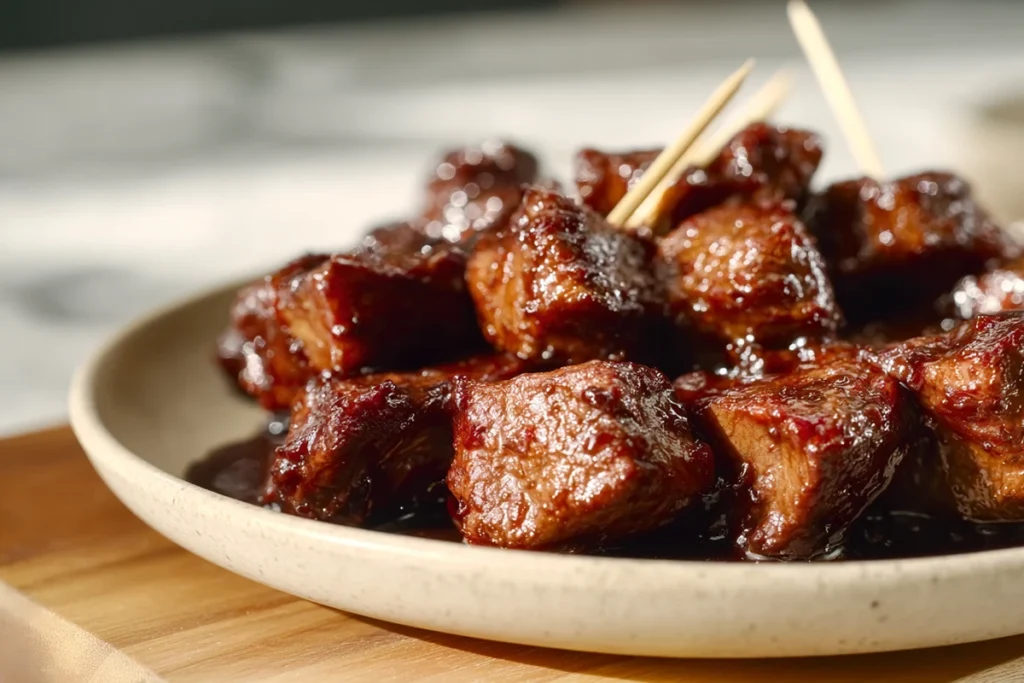
For a more substantial plate, spoon the steak bites over grilled bread, cornbread, or even a simple scoop of rice. Something neutral underneath catches the extra sauce without competing. To balance the richness, pair them with something sharp or crisp—vinegar slaw, pickled onions, or a mustardy potato salad all cut through the sweetness cleanly.
These Sweet and Sticky Steak Bites also hold well for short stretches, making them reliable for backyard cookouts where timing isn’t perfect.
A Few Final Notes Before You Fire the Smoker
This recipe rewards restraint. Resist the urge to rush the smoke or thicken the sauce with extra sugar. Let the steak build flavor first, then let the glaze finish the job. When you get that balance right, every bite tastes intentional.
If there’s one thing to remember, it’s this: good food doesn’t have to be complicated, but it does need care. Cook these once, pay attention, and they’ll find their way back onto your table the next time you want something bold, comforting, and meant to be shared.
Get inspired with more mouthwatering recipes! Follow me on Facebook and Pinterest for new cooking ideas every week.
FAQ
Can I make Sweet and Sticky Steak Bites without a smoker?
Yes, but the flavor will be different. You can use a low oven and finish the steak bites in a cast iron skillet, but you’ll miss the gentle smoke that gives these BBQ steak bites their depth. If you go this route, add a small pinch of smoked paprika to the rub to compensate slightly.
What cut of steak works best if I don’t have filet?
Filet is ideal because it stays tender during the long, low cook, but a well-trimmed sirloin is a solid substitute. Expect a firmer bite and a slightly beefier chew, which some people actually prefer in smoked steak bites. Avoid very fatty cuts unless you’re willing to trim aggressively.
Why did my steak bites turn out sweet but not smoky?
This usually means the sauce went on too early or the smoke time was rushed. The steak needs time in the smoker on its own so the surface can absorb smoke before any sugar is added. Once the glaze is on, the smoke becomes background, not the main flavor.
Can I prep Sweet and Sticky Steak Bites ahead of time?
You can cut and season the steak a few hours in advance and keep it refrigerated, uncovered. Don’t add the sauce or sugar until cooking day, or the surface will soften and won’t smoke properly. These are best cooked fresh, but they hold well for short periods once finished.
Is it normal for the glaze to look loose at first?
Yes, that’s normal. The sauce tightens as the butter melts and the sugar cooks down, especially in a cast iron pan. If you pull it too early, it will look thin; give it a little more time until it coats the steak bites instead of pooling.
Print
Sweet and Sticky Steak Bites
- Total Time: 1 hour 50 minutes
- Yield: 4 servings 1x
- Diet: N/A
Description
Tender steak bites smoked low and slow, then finished in a glossy BBQ glaze with butter and brown sugar. Built for deep beef flavor, sticky edges, and confident home cooking.
Ingredients
- 4 beef filet steaks, about 2 inches thick, cut into 1 1/2-inch cubes
- 2 tablespoons beef rub or equal parts salt, pepper, and garlic powder
- 2 tablespoons sweet BBQ-style rub
- 2 tablespoons charcoal or pepper-forward rub
- 1/2 cup BBQ sauce
- 1/4 cup dark brown sugar
- 1/4 cup butter
Instructions
- Preheat the smoker to 225°F and allow it to stabilize.
- Trim any silverskin from the steaks and cut into evenly sized cubes for consistent cooking.
- Season the steak bites, coating the tops and bottoms first, then the sides, and place them on a cooling rack.
- Smoke the steak bites until they reach about 120°F and the exterior feels firm but springy.
- Transfer the steak bites to a cast iron skillet and add the BBQ sauce, brown sugar, and butter.
- Return the skillet to the smoker and cook until the glaze tightens and the steak reaches about 130°F.
- Remove from heat once the sauce coats the steak bites cleanly and serve warm.
Notes
- Do not add the sauce too early or the sugar may burn.
- If substituting sirloin for filet, expect a firmer texture.
- Let the glaze tighten fully before removing from heat.
- Prep Time: 20 minutes
- Cook Time: 1 hour 30 minutes
- Category: Appetizer
- Method: Smoking
- Cuisine: American
Nutrition
- Serving Size: 1 serving
- Calories: 730
- Sugar: 26 g
- Sodium: 585 mg
- Fat: 45 g
- Saturated Fat: 22 g
- Unsaturated Fat: 20 g
- Trans Fat: 1 g
- Carbohydrates: 38 g
- Fiber: 2 g
- Protein: 47 g
- Cholesterol: 168 mg