Vegetable Soup Recipe: Clean Broth, Tender Vegetables, No Canned Taste

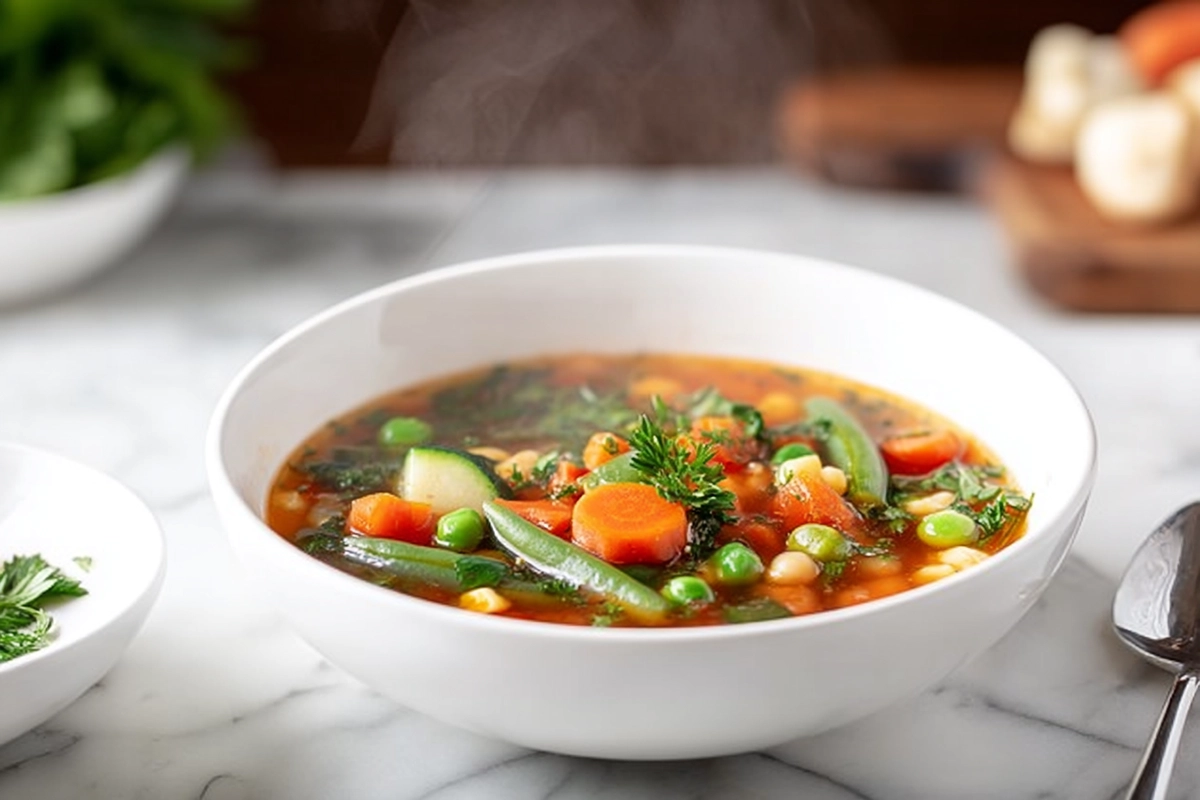
There’s a very specific moment when a pot of soup tells you it’s on the right track. The onions turn translucent without browning, the garlic softens just enough to lose its sharp edge, and the steam rising from the pot smells faintly of thyme and tomato instead of raw vegetables. That’s when you know you’re not headed toward something watery or forgettable.
This vegetable soup isn’t built on shortcuts or powdered flavor. It works because the vegetables are added in a deliberate order, each one given the time it needs and no more. Carrots and celery are allowed to soften and sweeten. Potatoes simmer long enough to become tender without falling apart. Green beans hold their shape. Corn and peas stay bright and lightly sweet, not dulled by overcooking. The result is a soup that feels complete, not crowded.
What I like most about this vegetable soup recipe is that it behaves the same way every time. You can make it on a quiet afternoon or at the end of a long day and trust that it will land where you expect. It doesn’t rely on heavy seasoning or tricks to taste comforting. The flavor comes from attention—heat control, timing, and knowing when to stop.
This is the kind of soup that teaches you something while you’re making it. Not through rules, but through small cues: how the broth changes once the potatoes go in, how the pot smells different right before the final vegetables are added. Those details matter, and they’re what turn a simple pot of vegetables into something you’ll want to make again.
Table of Contents
Let’s Talk About What Actually Goes Into the Pot (And Why)
This vegetable soup recipe works because every ingredient has a clear job. Nothing is there just to fill space, and nothing needs to shout to be noticed. The base vegetables create sweetness and body, the broth carries that flavor without overpowering it, and the later additions keep the soup feeling fresh instead of overcooked. Think of this as a balanced, dependable homemade vegetable soup—one that tastes intentional rather than improvised.
The foundation starts with olive oil and a classic mix of onion, carrot, and celery. Olive oil isn’t just fat here; it’s the medium that gently coaxes sweetness out of the vegetables without browning them. Yellow onion gives depth without sharpness, carrots add natural sweetness, and celery brings a subtle bitterness that keeps the soup from tasting flat. Garlic comes in early enough to soften, but not so early that it turns bitter.
Broth matters, but not in the way people often think. A good-quality low-sodium chicken broth adds richness, while vegetable broth keeps things lighter and fully plant-based. Low-sodium is important—you want control over seasoning as the soup reduces. Tomatoes add acidity and balance, preventing the soup from tasting heavy, while potatoes give structure and a mild starchiness that makes the broth feel satisfying without cream.
Fresh herbs and bay leaves quietly shape the background flavor, and frozen or fresh vegetables at the end—green beans, corn, peas—keep the soup bright. This is what separates a healthy vegetable soup from one that tastes tired before it’s even served.
- Olive oil: Carries flavor and softens vegetables gently; avoid butter here to keep the soup clean-tasting.
- Yellow onion: Sweetens as it cooks and forms the flavor base without overpowering.
- Carrots: Add natural sweetness and color; cutting them evenly helps them cook consistently.
- Celery: Balances sweetness with a light bitterness that keeps the soup grounded.
- Garlic: Softens early for aroma, not sharpness.
- Low-sodium chicken or vegetable broth: Lets you control salt while building a savory backbone.
- Canned diced tomatoes (undrained): Provide acidity and depth without making the soup tomato-heavy.
- Potatoes: Give body and make the soup feel filling without cream.
- Fresh parsley & thyme: Add freshness and warmth; dried thyme works, but use it sparingly at first.
- Bay leaves: Background structure—remove before serving.
- Green beans, corn, peas: Added late to preserve texture, color, and gentle sweetness.
- Salt and black pepper: Season gradually; the soup concentrates as it simmers.

The One Timing Decision That Makes or Breaks This Vegetable Soup Recipe
Everything in this vegetable soup recipe depends on what goes into the pot first—and what waits. The process starts with olive oil warming gently until it loosens and shimmers, not smoking, not dull. When the onion, carrot, and celery hit the pot, you should hear a steady, confident sizzle. If it’s loud and aggressive, the heat is too high; if it barely whispers, you won’t build flavor.
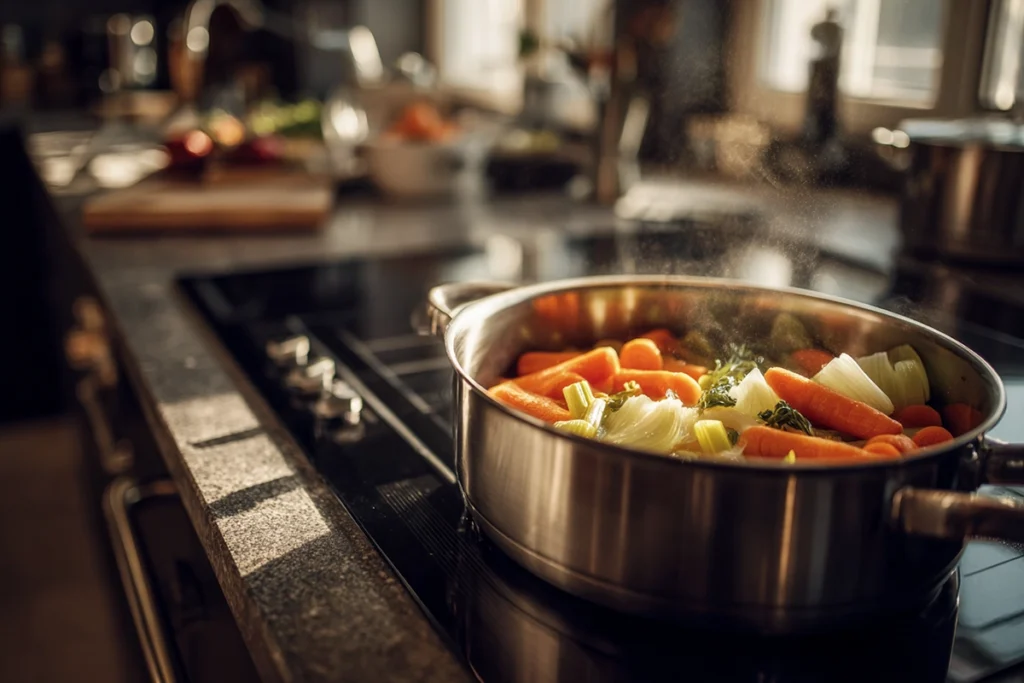
As the vegetables cook, watch their color shift. The onions turn translucent, the carrots deepen slightly, and the celery softens without losing its shape. The smell should move from raw and sharp to softly sweet. Garlic follows briefly, just until its aroma rises—nutty and fragrant, never acrid.
Once the broth, tomatoes, potatoes, and herbs are added, the pot changes character. The sound drops from a sizzle to a gentle bubble. This is where patience matters. The potatoes should simmer until a fork slides in with light resistance, not crumble apart. That texture tells you the soup is ready for the next phase.
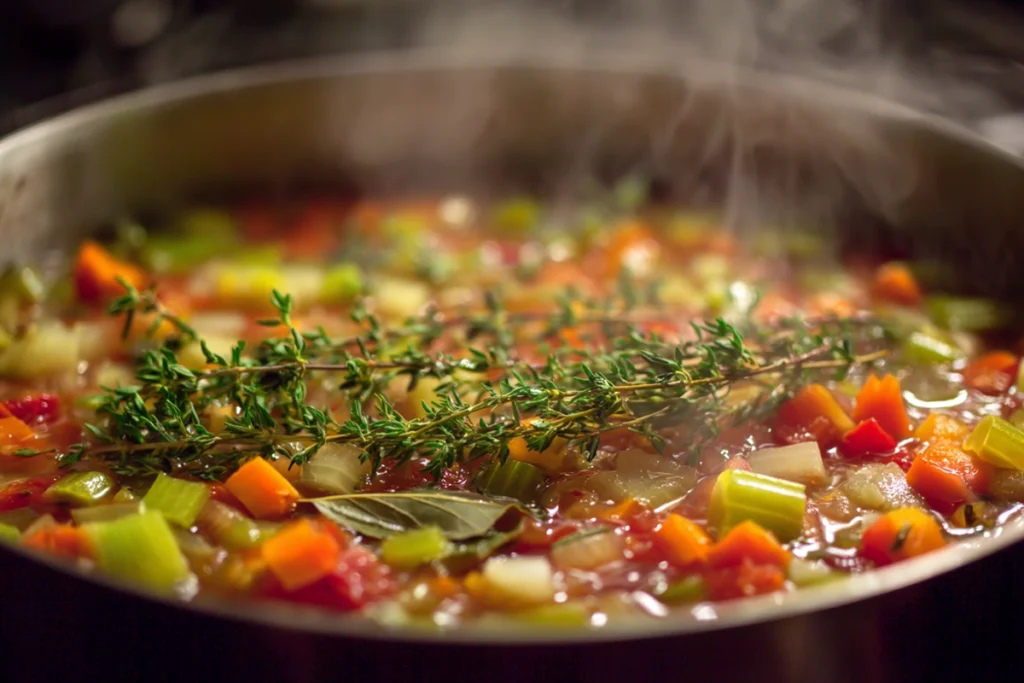
Green beans go in while the broth is still actively simmering, giving them time to soften without turning gray. Corn and peas wait until the end. When they’re added, the soup should smell brighter again—slightly sweet, fresh, and balanced. This staggered timing is what keeps a homemade vegetable soup from tasting tired.
Common Texture Problems—and How to Fix Them Mid-Pot
If the soup starts to look cloudy or overly thick before the vegetables are tender, the heat is likely too high. Lower it until the surface barely moves, with slow bubbles breaking gently. A hard boil will break down the potatoes and muddy the broth.
If the vegetables feel soft but the flavor seems flat, don’t rush to add salt. Take a breath and smell the pot. Often, what’s missing is time. Let the soup simmer uncovered for a few minutes so the flavors concentrate naturally.
When the vegetables are cooked but the broth feels thin, a brief rest off the heat helps. As it cools slightly, the starch from the potatoes settles into the liquid, giving the soup body without thickening agents. This is especially noticeable in a healthy vegetable soup like this one, where balance matters more than heaviness.
The final check is sensory. The broth should taste rounded, the vegetables distinct, and the spoon should come out coated lightly—not watery, not heavy. When it reaches that point, stop cooking. That restraint is part of the technique.
Quiet Upgrades Home Cooks Use When No One’s Watching
This soup is intentionally straightforward, which means small adjustments show up clearly in the final bowl. If you want deeper flavor without changing the character of the dish, a parmesan rind is the easiest upgrade. Drop it into the pot when the broth goes in and let it simmer quietly. You’ll notice the broth take on a rounder, slightly savory edge. Remove the rind before serving, along with the bay leaves.
If you’re using fresh corn, adding the bare corn cob to the pot while the soup simmers makes a real difference. It gives the broth a subtle sweetness that canned or frozen corn alone can’t quite match. Take it out before the final vegetables go in. This works well without turning the soup into a corn soup.
For herbs, restraint matters. You can increase the dried thyme if you like a more pronounced herbal note, but piling on too many dried herbs at once tends to blur the flavor. Fresh herbs at the end—especially parsley—brighten the soup without overwhelming it. Avoid creamy additions here; they fight the clean, balanced structure this vegetable soup recipe relies on.
How This Soup Actually Gets Used in a Real Kitchen
This soup is filling enough to stand on its own for lunch, especially with a slice of crusty bread that can soak up the broth. For dinner, it pairs well with something crisp and simple—a grilled cheese with sharp cheddar, or toasted sourdough brushed lightly with olive oil. The clean flavors make it a natural partner for richer sides without competing with them.
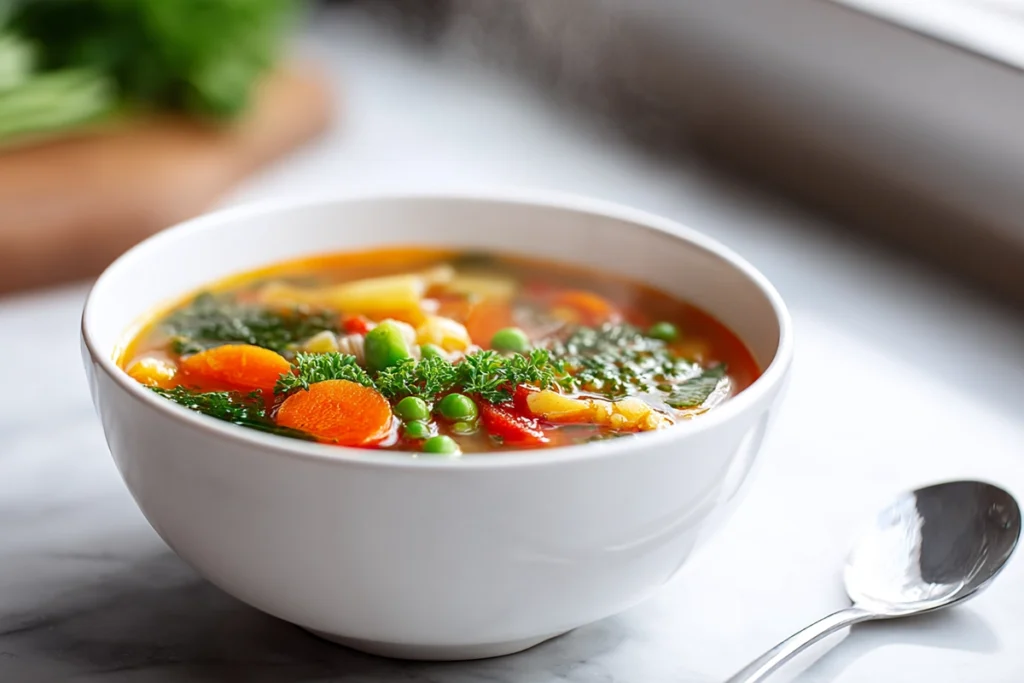
ecause the vegetables hold their shape, this homemade vegetable soup also works well as a starter. Serve smaller bowls ahead of a roasted chicken or a pan of baked pasta to warm people up without spoiling their appetite. Leftovers reheat gently and taste even better the next day, making this a reliable healthy vegetable soup for meal planning.
A Few Last Things That Make This Soup Worth Repeating
Resist the urge to keep adjusting once the soup tastes balanced. Over-seasoning at the end is one of the easiest ways to lose the clarity of flavor you’ve built. Let the vegetables speak for themselves.
If the pot tastes good while it’s hot, it will taste even better after it rests. That’s a sign you’ve done it right.
This vegetable soup recipe isn’t meant to impress anyone with tricks or shortcuts. It’s meant to be dependable—the kind of soup you can make without second-guessing yourself. When cooking feels calm and familiar, people feel it in the food. And that’s usually the point.
Get inspired with more mouthwatering recipes! Follow me on Facebook and Pinterest for new cooking ideas every week.
FAQ
Can I make this vegetable soup vegetarian?
Yes, this soup works very well with vegetable broth instead of chicken broth. The key is using a good-quality, low-sodium broth so the vegetables still have room to shine. The flavor will be a little lighter, but still balanced and satisfying.
Why do my potatoes sometimes fall apart in vegetable soup?
That usually happens when the soup boils too hard or cooks too long after the potatoes are tender. Keep the heat at a gentle simmer and check the potatoes early. Once a fork slides in easily, they’re ready for the final vegetables.
Can I freeze this vegetable soup?
You can, but expect a slight change in texture. The broth freezes well, but the potatoes may soften more once reheated. If you plan to freeze it, slightly undercook the potatoes so they hold up better later.
How can I make this soup more filling without changing the flavor?
Adding an extra cup of potatoes or serving the soup with bread is the simplest option. You can also stir in cooked rice or small pasta just before serving, but keep the amount modest so the soup doesn’t turn heavy.
Is it normal for this soup to taste better the next day?
Yes, that’s very common with a homemade vegetable soup. As it rests, the flavors settle and the broth becomes more cohesive. Reheat it gently to avoid overcooking the vegetables.
Print
Vegetable Soup
- Total Time: 55 minutes
- Yield: 8 servings 1x
- Diet: Vegetarian
Description
This vegetable soup recipe is clean, comforting, and dependable, with tender vegetables simmered in a balanced broth. Built on simple ingredients and careful timing, it delivers real flavor without tasting canned or heavy.
Ingredients
- 2 Tbsp olive oil
- 1 1/2 cups chopped yellow onion
- 2 cups peeled and chopped carrots
- 1 1/4 cups chopped celery
- 4 cloves garlic, minced
- 4 cans (14.5 oz each) low-sodium chicken broth or vegetable broth
- 2 cans (14.5 oz each) diced tomatoes, undrained
- 3 cups diced potatoes
- 1/3 cup chopped fresh parsley
- 2 bay leaves
- 1/2 tsp dried thyme or 1 Tbsp fresh thyme
- Salt, to taste
- Black pepper, to taste
- 1 1/2 cups chopped green beans
- 1 1/4 cups corn
- 1 cup peas
Instructions
- Warm the olive oil in a large pot over medium heat until it shimmers, then add the onion, carrots, and celery and cook until softened and lightly sweet.
- Add the garlic and cook briefly until fragrant, taking care not to let it brown.
- Pour in the broth and tomatoes, then add the potatoes, parsley, bay leaves, thyme, salt, and pepper and bring the pot to a gentle boil.
- Lower the heat and simmer until the potatoes are nearly tender.
- Add the green beans and continue simmering until they soften.
- Stir in the corn and peas and cook just until heated through.
- Remove the bay leaves and serve warm.
Notes
- For deeper flavor, increase the amount of dried thyme or add other dried herbs such as basil or oregano.
- A parmesan rind can be simmered with the soup for extra savory depth and removed before serving.
- If using fresh corn, add the corn cob to the pot while the soup simmers, then remove it before adding the final vegetables.
- Finish individual bowls with grated parmesan or a light drizzle of olive oil if desired.
- Prep Time: 15 minutes
- Cook Time: 40 minutes
- Category: Soup
- Method: Simmering
- Cuisine: American
Nutrition
- Serving Size: 1 bowl
- Calories: 198
- Sugar: 8
- Sodium: 259
- Fat: 5
- Saturated Fat: 1
- Unsaturated Fat: 4
- Trans Fat: 0
- Carbohydrates: 31
- Fiber: 6
- Protein: 7
- Cholesterol: 5