Beef Enchiladas: Juicy, Saucy, and Never Dry

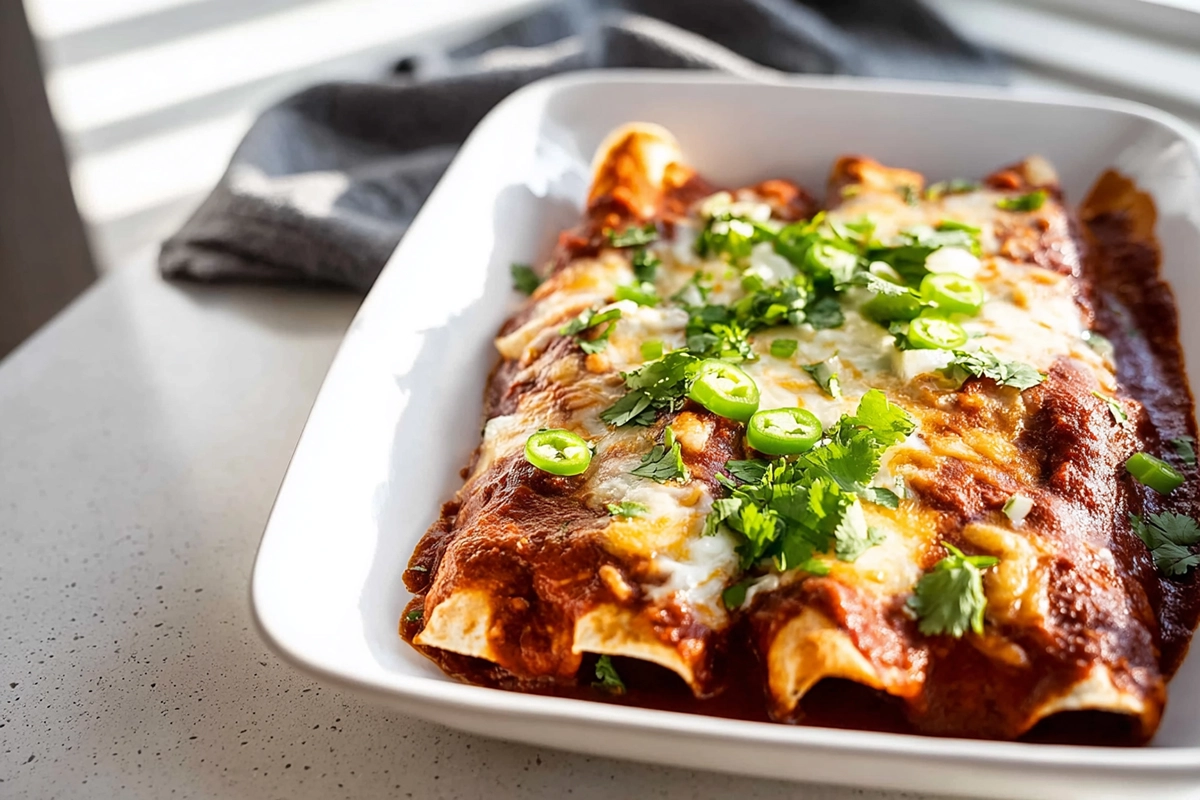
Dry enchiladas are a special kind of disappointment. You cut in expecting something rich and comforting, and instead you get crumbly beef, stiff tortillas, and a red sauce that somehow tastes both watery and heavy at the same time. The problem isn’t your oven or your pan. It’s the filling—and how most recipes treat it like an afterthought.
These beef enchiladas fix that by building juiciness on purpose. Ground beef gets backed up with refried beans so the filling stays soft and cohesive instead of drying out as it bakes. Black beans add texture and balance without turning the whole thing into bean mush. The spice mix—cumin, paprika, oregano, onion and garlic powder—blooms directly in the pan so it tastes warm and rounded, not dusty. And the sauce? It’s cooked just long enough to thicken into something that clings to tortillas instead of soaking through them.
This isn’t about piling on cheese to hide mistakes. It’s about getting the fundamentals right. The sauce starts as a simple flour-and-oil paste, loosened slowly with chicken stock so it turns glossy instead of lumpy. A scoop of that sauce goes straight into the beef filling, which is the quiet move that keeps everything juicy all the way through baking. Covered first, uncovered second, the enchiladas come out bubbling, the edges just catching, the cheese melted but not scorched.
You don’t need special equipment or hard-to-find ingredients. Just a hot pan, a little attention at the right moments, and the patience to pull the filling off the heat before it feels “done.” The oven finishes the job—and does it gently.
Table of Contents
Why These Beef Enchiladas Don’t Dry Out (It’s the Beans, Not the Beef)
Most beef enchiladas fail for one simple reason: the filling loses moisture faster than the tortillas can protect it. Ground beef, especially when cooked aggressively, sheds fat and water. In the oven, that loss gets worse. This recipe solves the problem structurally, not cosmetically.
Refried beans are the backbone here. They act like a moisture buffer, binding rendered beef fat and liquid into a cohesive filling that stays soft even after baking. Black beans layer in contrast—intact beans that break up the texture so the filling doesn’t turn pasty. Lean ground beef works better than fatty mince because the beans already provide richness; excess fat just leaks and dulls the spice.
This is why these beef enchiladas stay juicy without relying on excessive cheese or drowning everything in sauce. The filling is engineered to hold itself together.
- Ground beef (lean): Lean mince browns cleanly and doesn’t flood the filling with grease; the beans supply moisture instead.
- Refried beans: The key structural ingredient—binds fat and spice, keeping the filling soft.
- Black beans: Add texture and balance; kidney beans work in a pinch but are firmer.
- Onion & garlic: Finely chopped so they melt into the filling instead of standing out.

The Spice Mix Is Doing More Work Than You Think
This spice mix isn’t just seasoning—it’s the flavor foundation for both the sauce and the filling. Onion and garlic powder are doing a different job than fresh aromatics: they dissolve directly into fat and liquid, spreading evenly instead of sitting in pockets. Fresh garlic has its place, but here it would brown unevenly and distract from the sauce.
Cumin provides depth, paprika brings warmth and color, and oregano adds that unmistakable Tex-Mex backbone. Cayenne is optional, but when used sparingly it sharpens everything else without announcing itself as “heat.”
Blooming the spices in fat before liquid hits them wakes up their volatile oils. Skip this, and the enchiladas taste flat no matter how long they bake.
- Onion & garlic powder: Even flavor distribution; if substituting fresh garlic, sauté briefly before adding anything else.
- Cumin: Earthy base note that carries the beef.
- Paprika: Adds warmth and color without sweetness.
- Dried oregano: Brings the savory, herbal edge associated with enchiladas.
- Cayenne (optional): Background heat, not a headline.
The Sauce Step That Separates “Okay” Enchiladas From Restaurant-Level
Enchilada sauce fails when it’s either too thin to cling or so thick it turns stodgy in the oven. This sauce lands in the middle by starting with a simple flour-and-oil paste, then loosening it gradually with chicken stock. That staged addition prevents lumps and builds a smooth, glossy texture.
Tomato passata matters here. It’s thick, smooth, and unseasoned, which gives you control. In the U.S., canned tomato sauce is the closest substitute—crushed tomatoes are too coarse unless blended smooth.
Seasoning the sauce lightly keeps it from overpowering the filling. Remember, some of it goes inside the enchiladas, not just on top.
- Olive oil & flour: Form the base that thickens without heaviness.
- Chicken stock (low sodium): Adds savoriness without salt overload.
- Tomato passata / canned tomato sauce: Smooth body; crushed tomatoes must be blended.
- Salt & pepper: Under-season slightly—the filling finishes the job.
Cheese, Tortillas, and the Supporting Players
Tortillas aren’t just wrappers; they’re part of the texture. Flour tortillas soften and absorb sauce without breaking, which is why they’re used here. Corn tortillas bring flavor but crack unless treated carefully, making them less forgiving.
For cheese, you want melt, not stretch. Monterey Jack, mild cheddar, or a similar melting cheese blankets the enchiladas without turning greasy. Pre-shredded cheese works, but freshly grated melts cleaner.
Cilantro is optional, but its fresh bite cuts through the richness at the end.
- Flour tortillas: Flexible and sauce-friendly; corn tortillas require extra handling.
- Melting cheese (Monterey Jack, cheddar): Smooth melt without oil separation.
- Cilantro: Optional, but adds freshness against the rich filling.
The Sauce Step That Separates “Okay” Enchiladas From Restaurant-Level
Start with the saucepan over medium heat and add the olive oil and flour together. Stir immediately. You’re looking for a smooth, pale paste that smells slightly nutty but not toasted—if it darkens, you’ve gone too far. It should sound quiet and steady, not crackly.
When the first splash of chicken stock goes in, whisk fast. The mixture will tighten up almost instantly into a thick paste; that’s exactly right. As you add the rest of the stock and the tomato passata, the sauce loosens and turns glossy. By the time it’s done, it should coat the back of a spoon like warm maple syrup, not drip like soup and not sit like gravy. The smell should be tomato-forward with a warm spice note, not raw flour.
Building the Filling: Stop Cooking Earlier Than Feels Comfortable
Get the pan hot before the beef goes in—you want a loud, confident sizzle, not a gentle hiss. The onion and garlic should soften quickly and smell sweet, not sharp. When the beef hits the pan, break it up but don’t fuss with it too much; you’re chasing browning, not steaming.
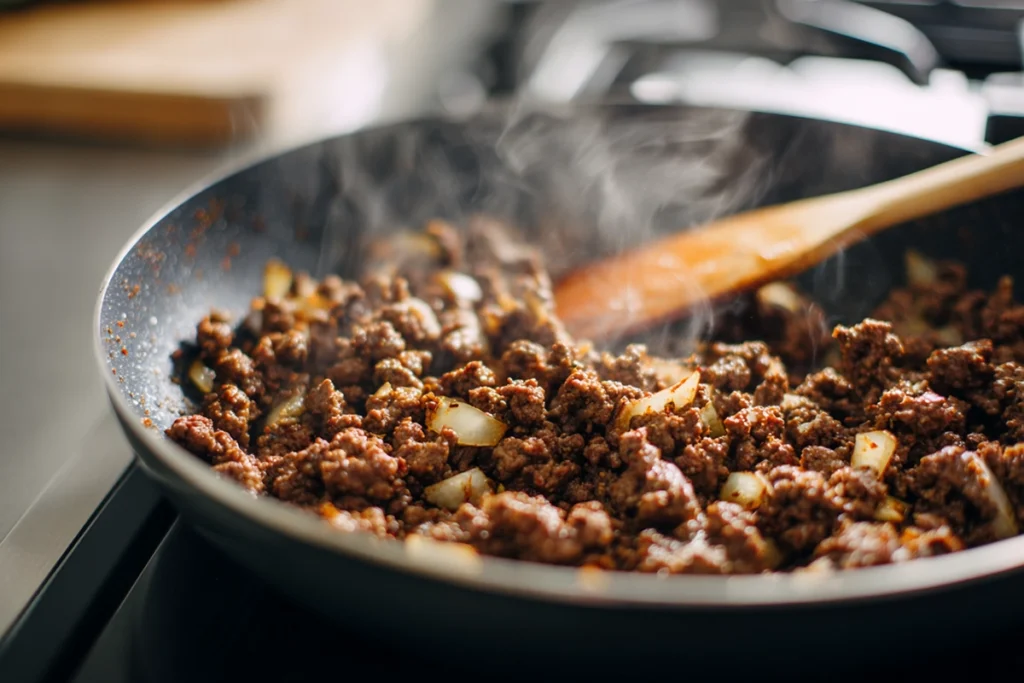
Once the beef is no longer pink, add the spice mix and stir just until everything smells toasted and savory. This happens fast—seconds, not minutes. When the refried beans and black beans go in, the texture changes immediately. The mixture should loosen and look creamy, not stiff. If it feels tight when you stir, add a small splash of water or sauce. Pull it off the heat while it still feels slightly softer than “done.” The oven will finish the job.
Rolling, Covering, and Baking Without Ending Up With Soggy Tortillas
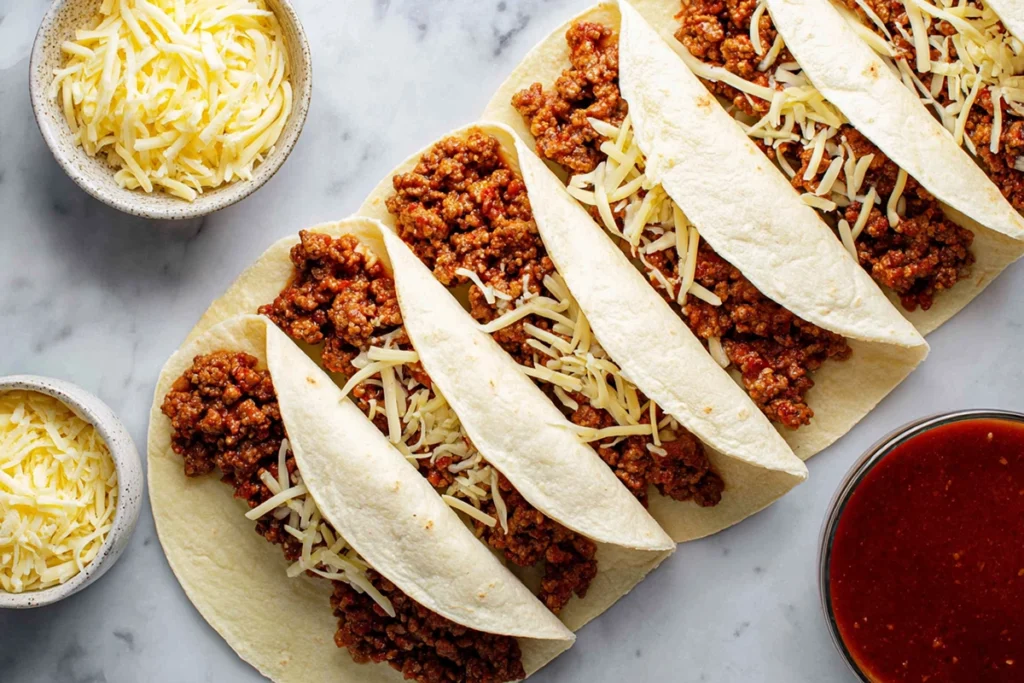
Smear a thin layer of sauce on the baking dish first. This keeps the tortillas from sticking and creates steam underneath them. As you roll the enchiladas, the tortillas should feel flexible and cooperative; if they crack, they’re too cold or too dry.
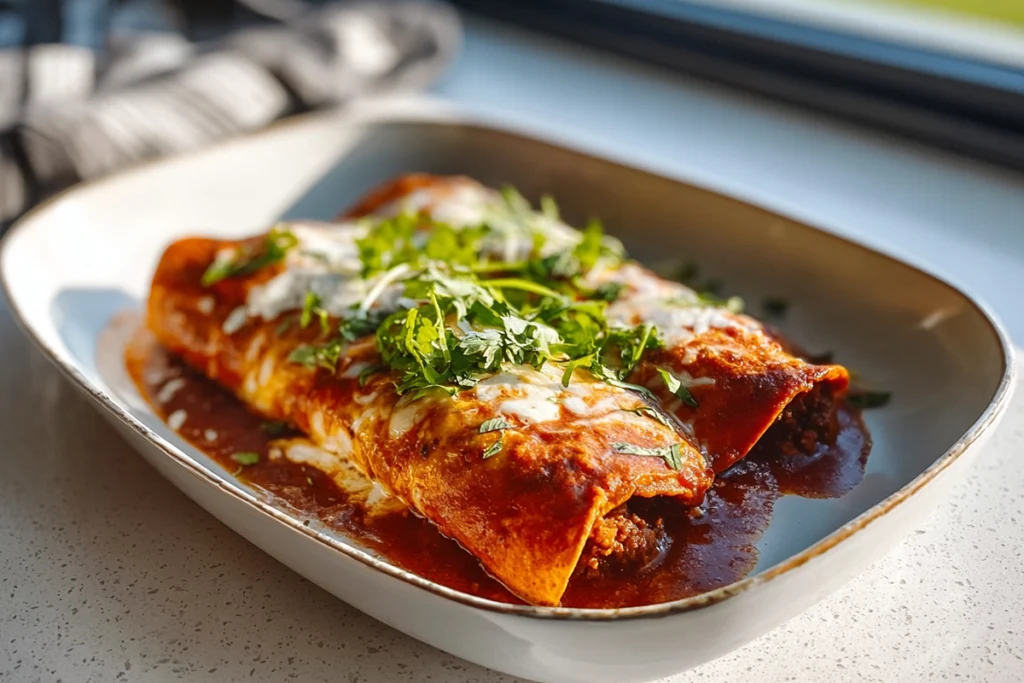
Once the beef enchiladas are lined up seam-side down, pour the remaining sauce evenly over the top. You want everything coated, not submerged. When the cheese goes on, it should look generous but not buried. Covered in the oven, you’ll hear gentle bubbling after a few minutes. Uncovered, the top tightens, the edges darken slightly, and the smell shifts from saucy to deeply savory. Pull them when the cheese is melted and the corners are just starting to toast—any longer, and you lose that juicy interior you worked so hard to build.
Swaps That Actually Work (and One That Doesn’t)
If you’re short on ground beef, this recipe is forgiving—but only in specific ways. Leftover rotisserie chicken works if you shred it cold and stir it in right where the beans go. Don’t cook it further or it dries out fast. Ground turkey can stand in for beef only if it’s not extra-lean; otherwise the filling loses richness even with the beans helping out.
Bean-wise, kidney beans can replace black beans without drama. They’re a little firmer, but still play nicely with the refried beans. What doesn’t work? Skipping the refried beans entirely. That’s the move that turns beef enchiladas dry and crumbly, no matter how much sauce you pour on top. Also tempting—but wrong—is swapping crushed tomatoes straight into the sauce without blending. You’ll get texture where you don’t want it.
How to Serve These When You Want Them to Feel Like a Full Meal
These beef enchiladas are rich and filling, so they shine next to something sharp and fresh. A crunchy cabbage slaw with lime cuts through the sauce and resets your palate between bites. Simple Mexican-style rice works too, especially if it’s lightly seasoned and not oily—it should soak up extra sauce, not compete with it.
If you’re serving a crowd, keep the sides restrained. A bowl of sliced avocado, a spoonful of sour cream, and a handful of chopped cilantro let everyone customize without burying the enchiladas. Skip heavy sides like loaded rice or cheesy beans; they flatten the meal instead of rounding it out.
Last Tip Before You Start
Taste the filling before you roll. It should be boldly seasoned and slightly looser than you think it needs to be. Tight filling going into the oven means dry enchiladas coming out.
These beef enchiladas reward paying attention to texture more than timing. Get the sauce right, pull the filling early, and let the oven do the gentle work. You’ll end up with a pan that bubbles, smells deeply savory, and actually delivers on that cozy comfort promise—no waste, no fixes at the table, just dinner that works.
Get inspired with more mouthwatering recipes! Follow me on Facebook and Pinterest for new cooking ideas every week.
Common Questions About Beef Enchiladas
Can I make beef enchiladas ahead of time without soggy tortillas?
Yes—but only if you keep the sauce separate. Roll the enchiladas with the filling, place them in the baking dish, and cover tightly. Store the sauce in a separate container. When you’re ready to bake, pour the sauce over, add the cheese, and bake as directed. Sauce sitting on tortillas too long is what causes sogginess, not refrigeration itself.
What’s the best substitute if I can’t find tomato passata?
Use plain canned tomato sauce, not crushed tomatoes. Tomato passata is smooth and thick, which is why it works so well here. Crushed tomatoes are too coarse and watery unless you blend them completely smooth. If you use tomato sauce, keep the seasoning the same—it’s already close to the right consistency.
Can I freeze beef enchiladas before baking?
Freeze them unbaked and unsauced for best results. Assemble and roll the enchiladas, freeze them tightly wrapped in the dish, and freeze the sauce separately. Thaw overnight, then add sauce and cheese right before baking. Freezing fully sauced enchiladas leads to watery sauce and soft tortillas after baking.
Should I use corn or flour tortillas here—and why?
Flour tortillas work best for this recipe because they stay flexible and absorb sauce without splitting. Corn tortillas have great flavor, but they crack easily unless softened first, which adds extra steps and margin for error. For dependable beef enchiladas with clean rolls, flour tortillas are the practical choice.
How spicy are these beef enchiladas really, and how do I adjust them?
As written, they’re warmly seasoned, not hot. The cayenne pepper is optional and meant to add background warmth, not heat. If you want more spice, increase the cayenne slightly or add sliced jalapeños on top before baking. If you want them milder, skip the cayenne entirely—the enchiladas will still taste full and savory.
Print
Beef Enchiladas
- Total Time: 40 minutes
- Yield: 4 servings 1x
Description
These beef enchiladas are baked with seasoned ground beef, rich enchilada sauce, and melted cheese for a comforting Tex-Mex dinner that’s easy to make at home.
Ingredients
- 1 lb ground beef (80/20)
- 1 tablespoon olive oil
- 1 medium yellow onion, finely diced
- 3 garlic cloves, minced
- 2 teaspoons chili powder
- 1 teaspoon ground cumin
- 1/2 teaspoon smoked paprika
- 1 teaspoon salt
- 1/2 teaspoon black pepper
- 2 tablespoons tomato paste
- 2 cups red enchilada sauce
- 10–12 corn tortillas
- 2 1/2 cups shredded cheddar or Mexican blend cheese
- 2 tablespoons chopped fresh cilantro (optional)
- 4 oz diced green chiles (optional)
Instructions
- Preheat the oven to 375°F (190°C) and lightly grease a baking dish.
- Heat olive oil in a skillet over medium heat, add onion, and cook until soft.
- Add garlic and cook briefly until fragrant.
- Add ground beef and cook until browned, breaking it up as it cooks.
- Stir in chili powder, cumin, smoked paprika, salt, pepper, and tomato paste.
- Warm the tortillas until pliable.
- Spread a thin layer of enchilada sauce in the baking dish.
- Fill each tortilla with beef mixture and cheese, roll tightly, and place seam-side down.
- Pour remaining enchilada sauce over the enchiladas and top with remaining cheese.
- Bake uncovered for 20–25 minutes until bubbly and lightly golden.
Notes
- Warm tortillas before rolling to prevent cracking.
- Do not overfill the tortillas to keep enchiladas intact.
- Let enchiladas rest for 5 minutes before serving for easier slicing.
- Prep Time: 15 minutes
- Cook Time: 25 minutes
- Category: Main Course
- Method: Baking
- Cuisine: Tex-Mex
Nutrition
- Serving Size: 2 enchiladas
- Calories: 520
- Sugar: 6 g
- Sodium: 980 mg
- Fat: 32 g
- Saturated Fat: 14 g
- Unsaturated Fat: 16 g
- Trans Fat: 1 g
- Carbohydrates: 34 g
- Fiber: 4 g
- Protein: 28 g
- Cholesterol: 95 mg