
Butter Poached Lobster That Feels Special Without Feeling Stressful
There are some meals that feel a little intimidating before you ever turn on the stove. Lobster is one of them. It carries a reputation for being fussy or reserved for white-tablecloth restaurants, even though it doesn’t have to be. The first time you make Butter Poached Lobster at home, something clicks. You realize this dish isn’t about complexity at all. It’s about slowing down, using gentle heat, and trusting your instincts.
This is the kind of recipe you reach for when you want dinner to feel intentional. Maybe it’s a quiet date night at home. Maybe it’s a celebration that doesn’t need an excuse. However you serve it, butter-poached lobster turns simple ingredients into something deeply comforting and quietly luxurious.
Table of Contents
A Quiet Luxury Dinner That Feels Achievable at Home
Butter-poached lobster is not flashy cooking. There’s no boiling pot overflowing with steam or frantic timing. Instead, everything happens slowly in one pan, right in front of you. You’re in control the entire time.
What makes this dish special is how calm it feels to cook. The butter melts gradually. The lobster turns opaque right before your eyes. Nothing splatters or rushes. You don’t need professional tools or years of seafood experience. You just need to pay attention and let the process guide you.
This is why it works so well for a home kitchen. You’re not chasing perfection. You’re letting good ingredients do what they naturally do when treated gently.
Why Butter Poaching Makes Lobster Taste So Good
Butter poaching is one of those techniques that sounds fancy but behaves kindly. Instead of exposing lobster to aggressive heat, you’re surrounding it with warm butter held just below a simmer. The lobster cooks evenly, staying tender and sweet instead of tightening up.
In my own kitchen, the biggest lesson was learning that lower heat actually gives you more control. When lobster is boiled, it’s easy to overshoot doneness by a minute. In butter, you have a wider window. The meat firms slowly, giving you time to notice the change.
Butter also acts as a flavor cushion. It carries the lobster’s natural sweetness instead of overpowering it. When done right, the result tastes rich but clean, indulgent but balanced.
Ingredients That Matter More Than You Think
Butter-poached lobster relies on very few ingredients, which means each one plays a noticeable role. This isn’t the place to cut corners.
Lobster tails are the heart of the dish. Cold-water lobster tails have a firmer texture and sweeter flavor, which makes them ideal for poaching. Smaller tails are often easier to manage and cook more evenly, and serving two per person feels generous without being excessive.
Butter is just as important as the lobster itself. A good-quality, cultured butter adds depth and richness without tasting greasy. You don’t need anything exotic, just something you’d happily spread on warm bread.
Garlic, bay leaf, and red pepper flakes gently perfume the butter without competing with the lobster. Lemon juice added at the end keeps everything from feeling heavy.
If you’re serving this with pasta, linguine works beautifully. Its shape holds onto the butter sauce without soaking it up too aggressively.
Ingredients
- 8 lobster tails, about 4 ounces each
- 2 tablespoons water
- 1 cup unsalted butter, cut into tablespoon pieces
- 4 garlic cloves, chopped
- 1 bay leaf
- 1/2 teaspoon fine sea salt or truffle salt
- 1/2 teaspoon red pepper flakes
- 3 tablespoons fresh lemon juice
- Freshly ground black pepper
- 1 pound linguine, optional
- Chopped flat-leaf parsley for finishing

The Butter Poaching Method—What’s Actually Happening in the Pan
Before cooking, remove the lobster meat from the shells. Kitchen shears make this easy. Cut along the underside, open the shell, and gently pull the meat out in one piece. Check for the dark digestive vein and remove it if present.
Set a wide skillet over medium-low heat and add the water. Once it’s warm, whisk in one piece of butter until melted, then another. This small amount of water helps stabilize the butter so it melts smoothly instead of separating.
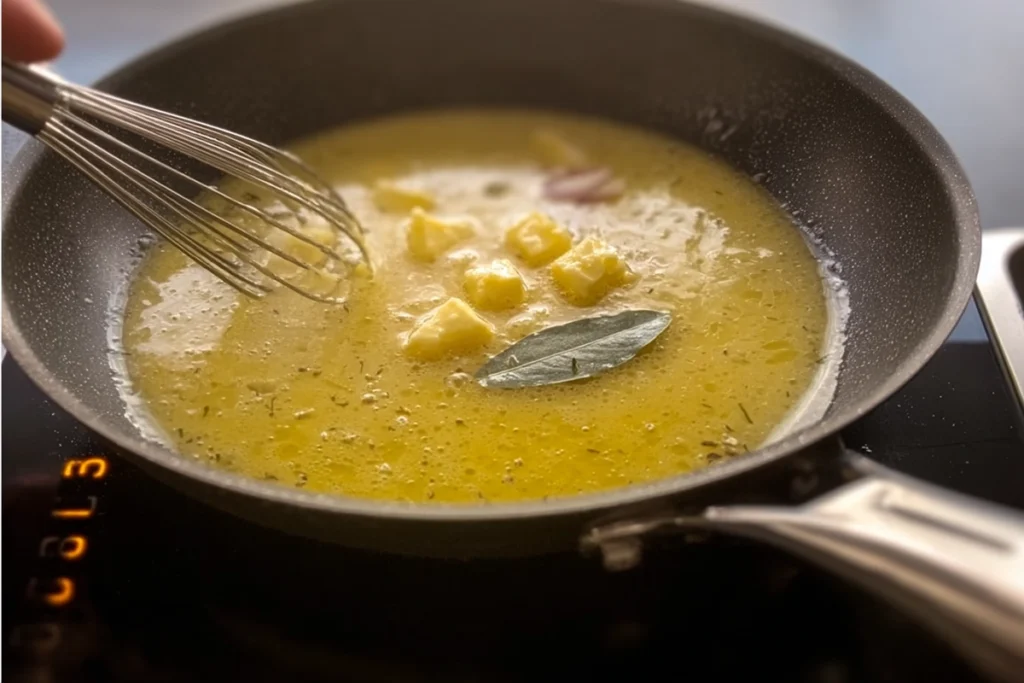
As you continue whisking in the remaining butter, keep the heat steady. The butter should look glossy and cohesive, not bubbling or sizzling. This gentle emulsion is the foundation of butter poaching.
Stir in the garlic, bay leaf, salt, and red pepper flakes. The aroma should be warm and inviting, never sharp or fried.
Temperature, Timing, and Doneness
This is where butter-poached lobster separates itself from other methods. The sweet spot for the butter is between 160°F and 180°F. You don’t need to hover anxiously, but you do want to keep the heat low and consistent.
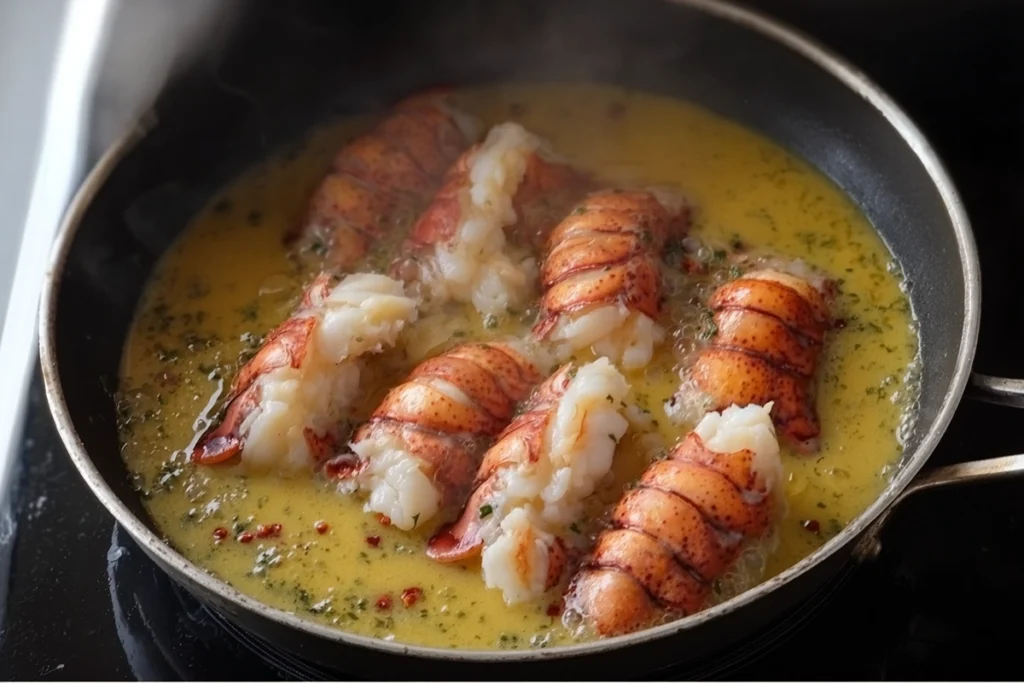
Add the lobster tails in a single snug layer. They should be surrounded by butter, not stacked. Turn them every minute or two, so they cook evenly on all sides.
Within about six minutes, the lobster will turn opaque and gently firm to the touch. When you press it lightly, it should feel springy, not stiff. That’s your cue. Pull the pan from the heat as soon as the lobster is cooked through. Carryover heat will finish the job.
Overcooking happens fast here, so trust your eyes and hands more than the clock.
Common Mistakes and How to Avoid Them
The most common mistake is letting the butter get too hot. If it starts bubbling aggressively, lower the heat immediately or remove the pan for a moment. Broken butter can sometimes be rescued by whisking in a tablespoon of warm water, but prevention is easier than repair.
Another issue is seasoning too early. Butter concentrates flavor as it cooks, so it’s better to finish with salt, lemon juice, and pepper once the lobster is done.
Finally, resist the urge to multitask. Butter poaching rewards attention. Staying nearby makes all the difference.
Turning Butter Poached Lobster into a Complete Meal
If you’re serving this with pasta, cook the linguine in well-salted water while the lobster poaches. Once the lobster is done, transfer it to a plate and discard the bay leaf.
Add lemon juice, black pepper, and parsley to the butter in the pan. Then add the drained pasta and toss gently until coated. The pasta should look glossy, not oily.
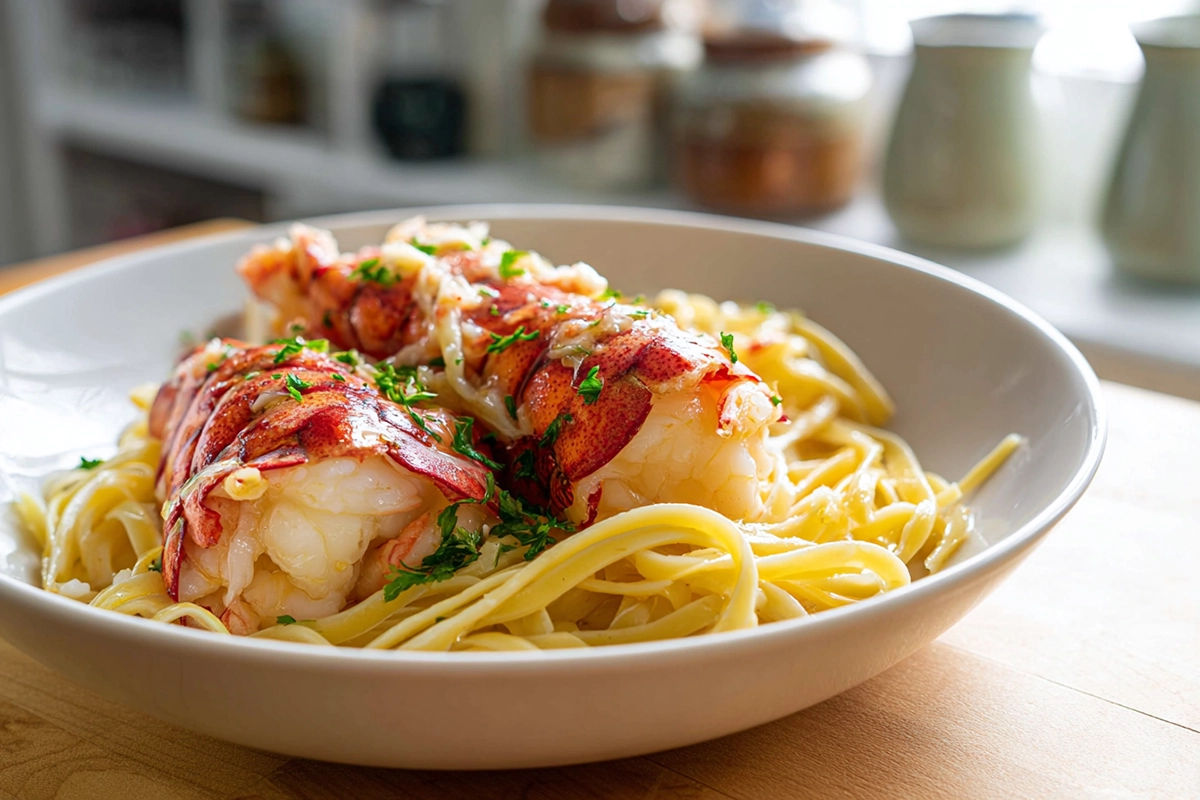
Serve the pasta in shallow bowls and top each portion with lobster tails. The butter sauce becomes part of the dish instead of something that sits on top.
If you’re skipping pasta, crusty bread is all you need to make this meal feel complete.
Variations That Still Respect the Technique
You can serve butter-poached lobster tails without pasta for a lighter, low-carb option. Pair them with roasted vegetables or a simple green salad.
For a brighter profile, lean into lemon and parsley. For a deeper flavor, add a sprig of thyme or a small strip of lemon zest to the butter.
This same method works beautifully with scallops or shrimp, though cooking times will be shorter.
Dietary Variations
This recipe is naturally gluten-free when served without pasta or with gluten-free linguine. For a lower-calorie approach, use slightly less butter and serve smaller portions alongside vegetables.
Dairy-free substitutions are not recommended here, as butter is essential to both the texture and flavor of the dish.
Storage, Reheating, and Make-Ahead Reality
Butter-poached lobster is best enjoyed shortly after cooking. If you have leftovers, store them in an airtight container in the refrigerator for up to four days.
Reheat gently in a skillet over low heat with a spoonful of butter or water to prevent drying. Avoid microwaving, which can toughen the lobster.
You can remove the lobster from the shells and prep the aromatics ahead of time, but the poaching itself should always be done just before serving.
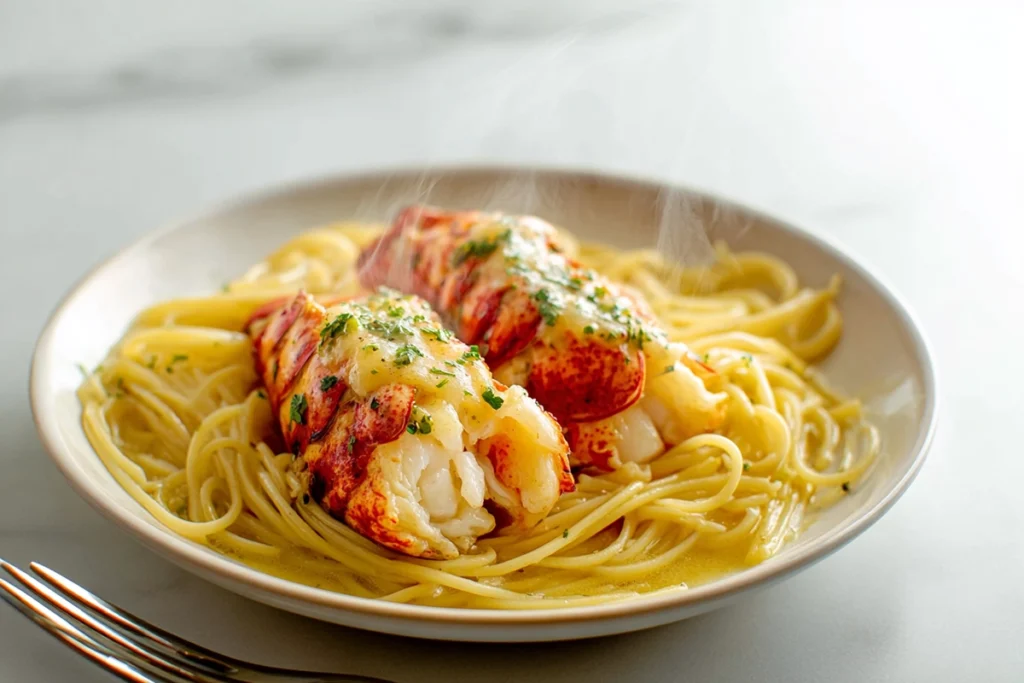
There’s something deeply satisfying about making Poached Lobster at home. It’s not about showing off or chasing perfection. It’s about taking a quiet moment, trusting gentle heat, and letting a beautiful ingredient shine. Once you’ve made it this way, lobster no longer feels intimidating. It feels like something you can return to whenever you want dinner to feel a little more special.
Get inspired with more mouthwatering recipes! Follow me on Facebook and Pinterest for new cooking ideas every week.
FAQ
What temperature should butter poached lobster be cooked at?
Butter poached lobster should cook gently in butter held between about 160°F and 180°F. The butter should look glossy and calm, never bubbling or sizzling aggressively. Keeping the heat low is what keeps the lobster tender instead of rubbery.
How do you know when butter poached lobster is done?
The lobster is done when the meat turns fully opaque and feels just firm but still springy when pressed. It should not feel stiff or tight. If you’re unsure, it’s better to pull it slightly early since carryover heat will finish the cooking.
Can I use frozen lobster tails for butter poached lobster?
Yes, frozen lobster tails work well as long as they’re fully thawed in the refrigerator before cooking. Pat them dry before poaching so extra moisture doesn’t affect the butter. Many high-quality grocery stores sell excellent frozen cold-water tails.
Why did my butter sauce separate while poaching lobster?
Butter usually separates when the heat gets too high. If that happens, remove the pan from the heat and whisk gently to bring it back together, adding a small splash of warm water if needed. Keeping the temperature steady prevents this issue in the first place.
Can butter poached lobster be made ahead of time?
Butter poached lobster is best cooked shortly before serving for the most tender texture. You can remove the lobster from the shells and prep the aromatics ahead of time, but the poaching itself should be done just before eating. Reheating can tighten the meat if done too quickly.
Print
Butter Poached Lobster
- Total Time: 40 minutes
- Yield: 4 servings 1x
Description
Butter poached lobster tails cooked gently in butter and served with linguine for a tender, comforting seafood dinner that feels special but is easy to make at home.
Ingredients
- 8 lobster tails (about 4 ounces each)
- 2 tablespoons water
- 1 cup unsalted butter, cut into tablespoon pieces
- 4 garlic cloves, chopped
- 1 bay leaf
- 1/2 teaspoon fine sea salt or truffle salt
- 1/2 teaspoon red pepper flakes
- 3 tablespoons fresh lemon juice
- Freshly ground black pepper
- 1 pound linguine (optional)
- Chopped flat-leaf parsley, for serving
Instructions
- Remove the lobster meat from the shells using kitchen shears and remove the vein if present.
- Warm the water in a wide skillet over medium-low heat and whisk in the butter one piece at a time until smooth and glossy.
- Stir in the garlic, bay leaf, salt, and red pepper flakes and keep the butter between 160°F and 180°F.
- Add the lobster tails in a single layer and gently turn every 1–2 minutes until opaque and just firm, about 6 minutes.
- Cook the linguine in well-salted water if using, then drain.
- Remove the lobster from the pan and discard the bay leaf.
- Stir lemon juice, black pepper, and parsley into the butter sauce.
- Toss the pasta with the butter sauce and serve topped with lobster tails.
Notes
- Cold-water lobster tails have the best flavor and texture for this recipe.
- Frozen lobster tails work well if fully thawed in the refrigerator before cooking.
- Use good-quality butter for the smoothest, richest sauce.
- Keep the heat low to prevent the butter from separating.
- This dish is best enjoyed shortly after cooking and reheated gently if needed.
- Prep Time: 20 minutes
- Cook Time: 20 minutes
- Category: Fish & Seafood
- Method: Stovetop
- Cuisine: American
Nutrition
- Serving Size: 1 serving
- Calories: 929
- Sugar: 1
- Sodium: 1039
- Fat: 52
- Saturated Fat: 30
- Unsaturated Fat: 17
- Trans Fat: 2
- Carbohydrates: 45
- Fiber: 3
- Protein: 68
- Cholesterol: 327
What Are Our Readers Saying?
There are no reviews yet. Be the first one to write one.