
Cheesy Ground Beef and Potatoes: A One-Pan Dinner That Feels Like Home
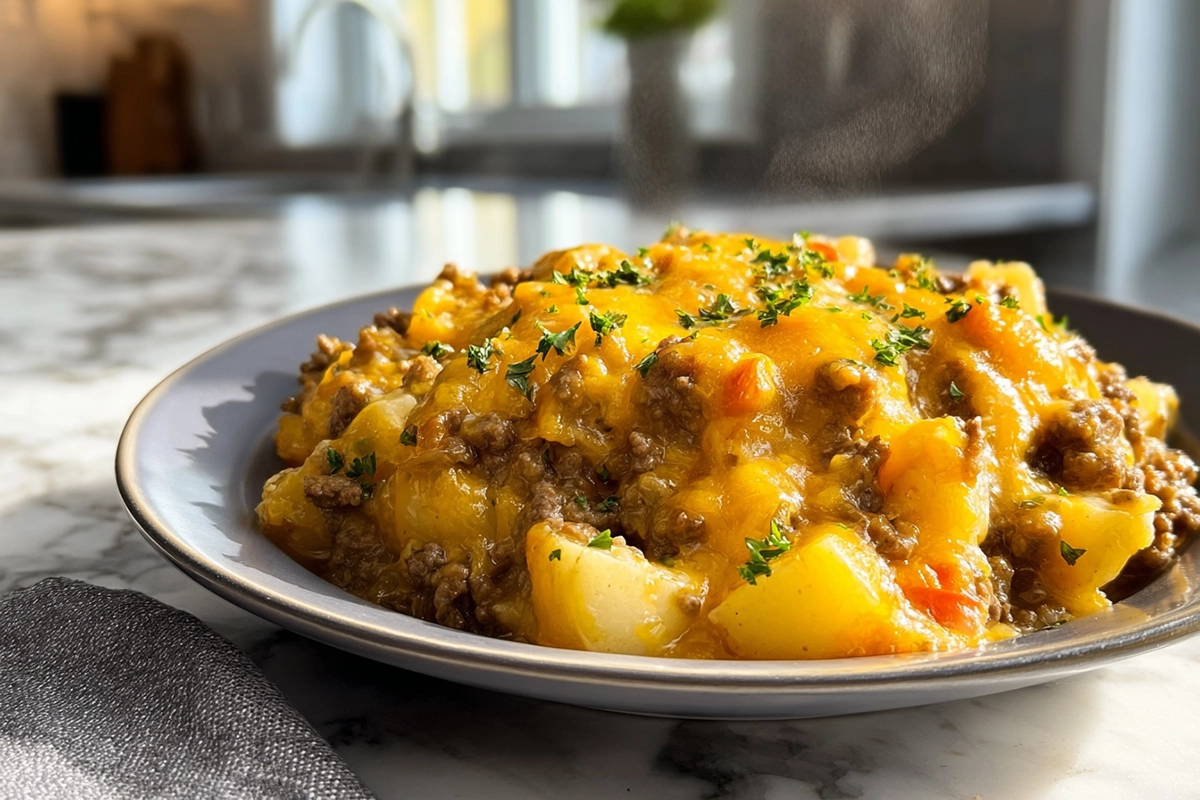
There’s a moment in certain dinners when everything finally clicks. The beef has browned just enough to leave a savory layer on the pan. The onions have softened and turned sweet. Thyme and paprika warm in the heat, and the potatoes start absorbing all of it instead of sitting on the sidelines. That’s the moment this dish is built for—the point where a simple skillet stops being a collection of ingredients and starts feeling like dinner.
This is the kind of meal that earns its place in a regular rotation. It doesn’t rely on shortcuts or gimmicks, and it doesn’t ask you to juggle three pans just to get there. Ground beef brings depth and richness, baby gold potatoes cook up tender without falling apart, and a measured splash of broth and cream creates a sauce that coats instead of floods. The cheese comes in at the end, not to rescue the dish, but to finish it—melting into everything that’s already working.
Cheesy Ground Beef and Potatoes succeeds because it respects timing. The beef gets the space it needs to brown. The potatoes cook in stages, first steaming, then concentrating flavor as the pan opens up. Nothing is rushed, but nothing drags either. It’s practical food, cooked with intention, the kind you make on a weeknight and still feel good serving to anyone who pulls up a chair.
What follows isn’t just a list of steps. It’s the reasoning behind them—the moments that matter, the ones that don’t, and how to tell the difference when you’re standing at the stove.
Table of Contents
Why Cheesy Ground Beef and Potatoes Works in One Pan
This dish is built around cooperation, not contrast. In Cheesy Ground Beef and Potatoes, every ingredient has a job, and none of them are meant to stand alone. The beef provides fat and depth early on, which becomes the cooking medium for everything that follows. The potatoes aren’t just filler—they’re designed to absorb flavor as they cook, pulling in beef juices, broth, cream, and seasoning instead of sitting bland in the background. That’s why this works as a true one-pan dinner instead of feeling like several parts forced together.
The sauce isn’t a sauce in the classic sense. There’s no roux, no thickener. Beef broth and heavy cream reduce naturally as the pan stays uncovered, creating something spoonable but not soupy. The cheese comes in last to bind it all together, not to mask mistakes. If the base is right, the cheddar simply reinforces what’s already there. This balance is what turns a simple ground beef potato casserole idea into a dependable weeknight skillet that tastes intentional.

The Potatoes That Carry the Whole Dish
Baby gold potatoes are doing more work here than most people realize. Their waxy texture allows them to soften without falling apart, which matters when they’re cooking directly in liquid instead of being parboiled first. Cut in halves, they cook evenly and keep enough structure to hold onto the sauce. Russets break down too quickly in this format and can turn the pan starchy before the beef finishes its job.
- Baby gold potatoes: Tender without collapsing; absorb flavor while holding their shape
- Kosher salt: Used in stages so the potatoes are seasoned from the inside, not just at the end
If your potatoes are on the larger side, quarter them instead of halving. Size consistency matters more than exact weight here.
Building Flavor Starts With the Beef
Lean ground beef is important, but not too lean. You want enough fat to brown properly and to coat the onions as they soften. That fat is part of the seasoning system, carrying garlic powder, black pepper, and paprika across the pan. Overly lean beef cooks dry and leaves the dish tasting flat, while fattier blends can make the final skillet greasy.
- Lean ground beef: Browned first to create depth and fond
- Yellow onion: Softens in beef fat to add sweetness and balance
- Garlic powder: Chosen for even distribution without burning
This is where many ground beef and potato dishes lose flavor—rushing this stage means everything after tastes muted.
The Liquid That Becomes the Sauce
The combination of low-sodium beef broth and heavy cream isn’t about richness alone. The broth brings savory structure, while the cream rounds out sharp edges and allows the sauce to reduce smoothly. Low-sodium broth matters because cheese and salt are added later; starting too salty leaves no room to adjust.
- Low-sodium beef broth: Builds savory flavor without overpowering
- Heavy cream: Creates body and helps the sauce cling to potatoes
If you substitute half-and-half, expect a looser finish. It will still work, but it won’t coat the same way.
Cheese as a Finish, Not a Crutch
Sharp cheddar is intentionally added at the end, once heat is lower. At that point, it melts into the reduced liquid instead of separating. Mild cheddar disappears too easily here, while extra-sharp can overpower the beef.
- Sharp cheddar cheese: Adds structure and depth without dominating
Used correctly, the cheese ties together this one-pan comfort food instead of turning it heavy. That’s what keeps this recipe repeatable—and why it earns its place among reliable comfort food casseroles and skillet dinners you come back to.
The Browning Step You Can’t Rush (And What Happens If You Do)
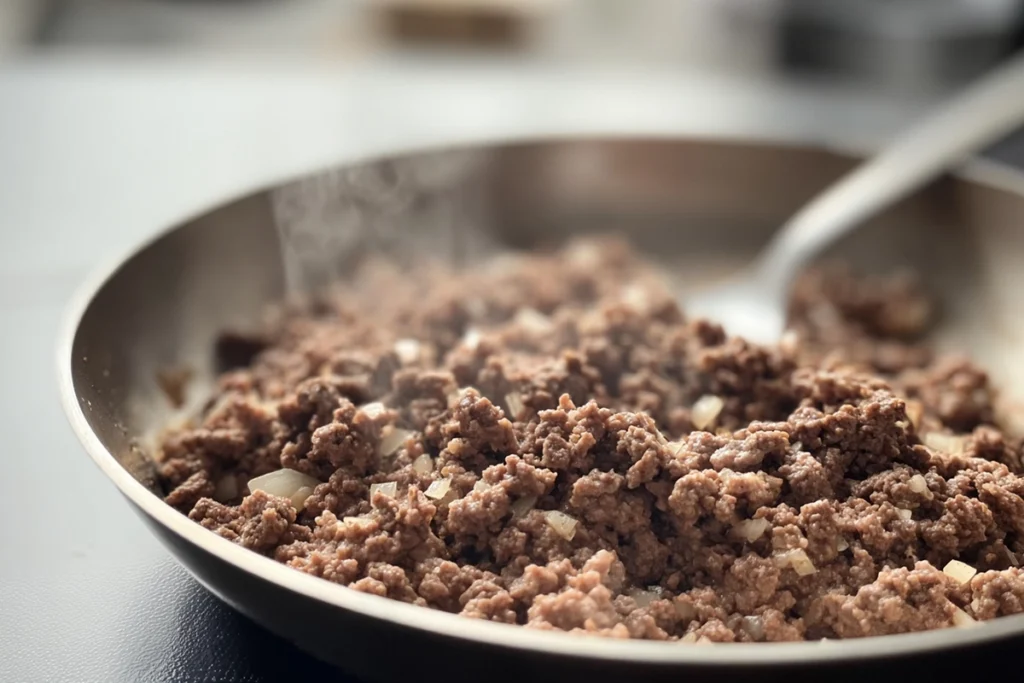
Start with a wide skillet over medium-high heat and give it a minute to fully warm before anything goes in. When the oil shimmers and moves easily across the pan, add the ground beef and onions together. You should hear an immediate, confident sizzle—not a weak hiss. As the beef cooks, break it into medium chunks and let it sit long enough to develop browned edges; pale meat means missed flavor.
The onions will soften as they cook in the beef fat, turning glossy and lightly golden. When garlic powder and black pepper hit the pan, the smell should shift toward something round and savory, almost toasted. If the pan smells flat or steamy at this stage, the heat is too low and the base of the dish will taste muted.
Potatoes, Timing, and the Covered–Uncovered Dance
Once the beef is properly browned, the potatoes, thyme, and paprika go in together. Stir until everything is coated in fat and seasoning—the potatoes should look slick, not dry. When the broth and cream are added, the pan should come to a gentle simmer, with small bubbles breaking around the edges rather than a rolling boil.
Covering the pan traps steam and jumpstarts the potatoes. After several minutes, uncover and stir; the liquid should look slightly thickened, not watery. From here on, you’re listening as much as watching. A soft, steady simmer means the sauce is reducing and the potatoes are finishing without scorching, which is key for a one-pan comfort food skillet like this.
Cheese Is the Finish Line, Not the Fix
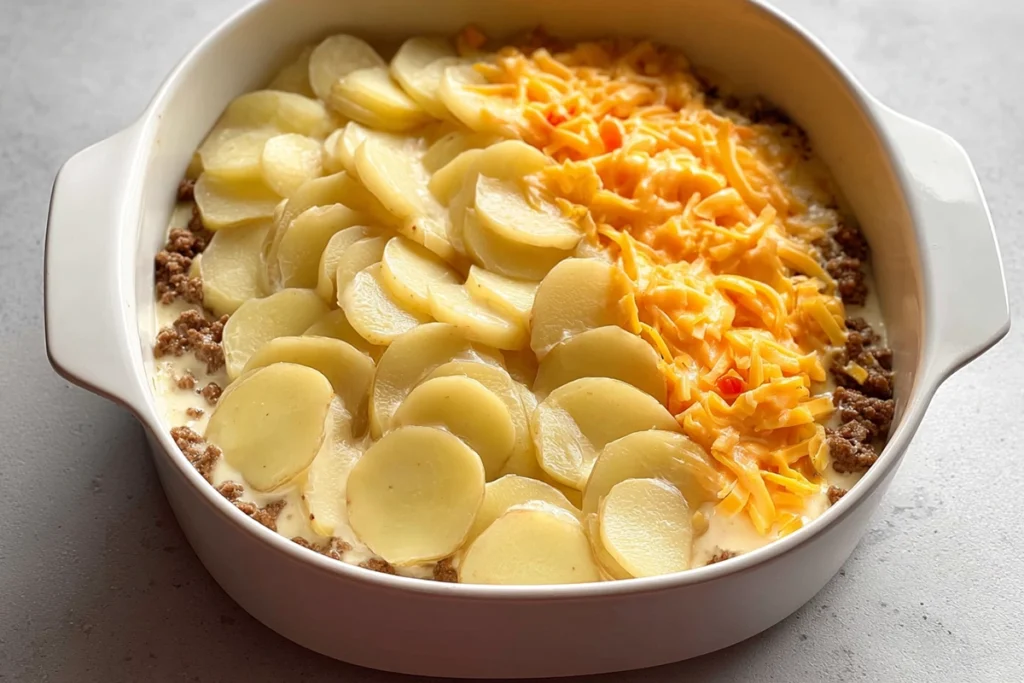
When the potatoes are tender—easily pierced with a knife—the heat should be lowered before the cheese goes in. Sprinkle in the cheddar and stir gently. The sauce should tighten and turn glossy as the cheese melts, not seize or separate. If it smells sharp or looks grainy, the pan is too hot.
This is the moment where the dish becomes cohesive, closer to a creamy ground beef potato casserole than a stew. Taste once everything is melted and adjust seasoning lightly. A final crack of black pepper wakes the whole pan back up just before serving.
Make It Yours Without Breaking the Dish
This skillet is flexible, but only within reason. If you want to change it, do so in ways that respect the timing and texture that make it work. Ground turkey can replace the beef, but choose a blend that isn’t ultra-lean and add a small splash of oil up front so the pan doesn’t dry out. The flavor will be lighter, but the structure holds.
If you only have dried thyme, use it sparingly and add it early so it has time to soften. Smoked paprika can replace regular paprika if you want a deeper, almost campfire note, but keep the amount the same. For cheese, sharp cheddar is the safest option. Colby-Jack melts well but softens the flavor; extra-sharp cheddar can dominate if you’re heavy-handed.
What doesn’t work: skipping the cream, using pre-shredded cheese with heavy anti-caking agents, or swapping in russet potatoes without adjusting expectations. Those changes tend to turn this into a thin, starchy pan instead of a cohesive skillet.
How to Serve It So It Feels Like a Complete Mea
This dish is rich and self-contained, which means it doesn’t need much on the side. What it does benefit from is contrast. A vinegar-forward green salad cuts through the creaminess without competing for attention. Steamed broccoli or green beans work well, especially if finished with lemon or black pepper.
If you’re serving Cheesy Ground Beef and Potatoes family-style, bring it to the table straight from the skillet while the sauce is still loose and glossy. For leftovers, reheat gently on the stove with a splash of beef broth to loosen everything back up—microwaving tends to tighten the cheese too quickly.
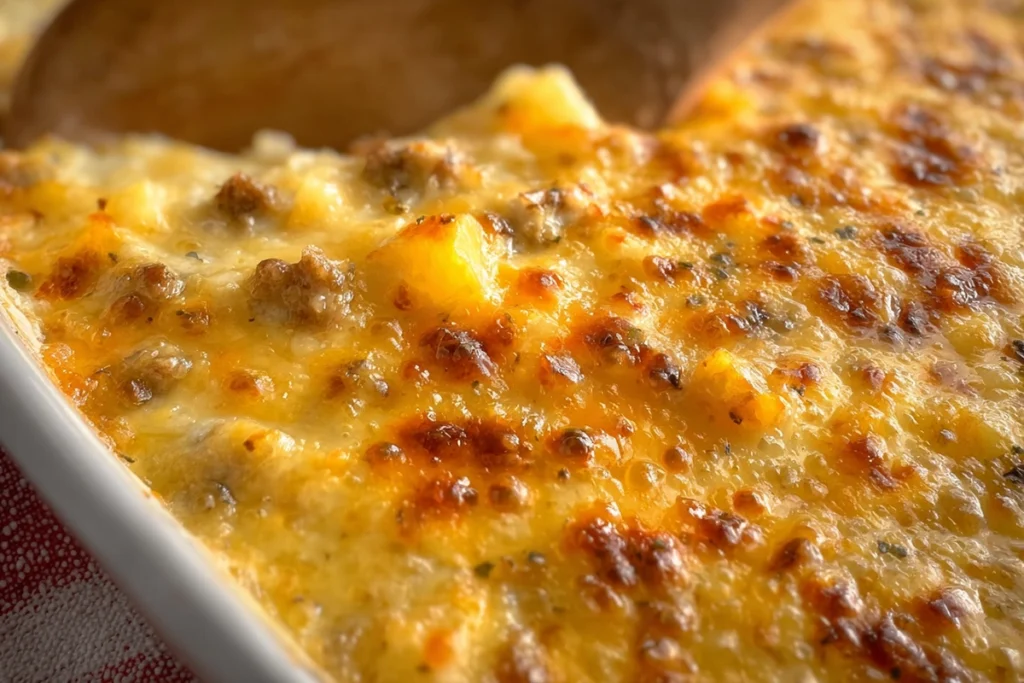
This also makes a reliable next-day lunch. The flavors deepen overnight, and the potatoes hold their texture better than you’d expect from a cheesy ground beef potato casserole.
A Few Final Things Worth Remembering
This is the kind of recipe that teaches you something every time you make it. Pay attention to the sound of the pan when the beef hits the heat. Watch how the liquid reduces instead of relying on the clock. Trust your nose more than the timer when the cheese goes in.
If you take your time with those moments, this dish becomes more than just another weeknight option. It turns into one of those dependable meals you remember how to make without pulling out the recipe—exactly the kind of cooking that belongs at home.
Get inspired with more mouthwatering recipes! Follow me on Facebook and Pinterest for new cooking ideas every week.
FAQ
Can I make Cheesy Ground Beef and Potatoes ahead of time?
Yes, this dish can be made ahead and reheated, but it’s best enjoyed within a day or two. Reheat it gently on the stove with a small splash of beef broth or cream to loosen the sauce. Microwaving works in a pinch, but the cheese sauce tightens more quickly.
Why did my sauce turn thin instead of creamy?
A thin sauce usually means the pan stayed covered too long or the heat was too low at the end. This dish relies on uncovered simmering so the liquid can reduce naturally. Let it cook a few extra minutes uncovered and it should thicken on its own.
What kind of potatoes work best for this recipe?
Baby gold potatoes work best because they stay tender without falling apart and absorb flavor well. Russet potatoes tend to break down and can make the skillet starchy. If you substitute, expect a softer, less defined texture.
Can I freeze Cheesy Ground Beef and Potatoes?
Freezing isn’t recommended for this recipe. The cream and cheese sauce can separate when thawed, and the potatoes may become grainy. This is one of those comfort food casseroles that’s better cooked fresh or enjoyed as leftovers from the fridge.
Is it normal for the cheese to tighten as it cools?
Yes, that’s completely normal. As the dish cools, the cheese firms up and the sauce thickens. A little heat and a splash of liquid will bring it back to a creamy consistency.
Print
Cheesy Ground Beef and Potatoes
- Total Time: 45 minutes
- Yield: 4 servings 1x
- Diet: Gluten Free
Description
A cozy one-pan skillet where browned ground beef, tender baby gold potatoes, and melted cheddar come together in a creamy, savory sauce. Built for real weeknights, this is dependable comfort food that rewards good timing and simple technique.
Ingredients
- 1 tablespoon neutral oil
- 1 pound lean ground beef
- 1 medium yellow onion, diced
- 1 teaspoon garlic powder
- 1 teaspoon kosher salt
- 3/4 teaspoon black pepper
- 1 1/2 pounds baby gold potatoes, halved
- 2 teaspoons fresh thyme leaves
- 1 teaspoon paprika
- 1 1/2 cups low-sodium beef broth
- 1/4 cup heavy cream
- 4 ounces sharp cheddar cheese, shredded
Instructions
- Heat oil in a wide skillet until shimmering, then add ground beef and onion and cook until well browned with golden edges.
- Season with garlic powder, salt, and pepper, allowing the spices to bloom in the beef fat.
- Add potatoes, thyme, and paprika and stir until the potatoes are coated and glossy.
- Pour in beef broth and cream and bring to a gentle simmer, then cover and cook briefly to steam the potatoes.
- Uncover and continue simmering until the sauce reduces and the potatoes are tender.
- Lower the heat, stir in the cheddar cheese, and cook gently until melted and glossy.
- Taste and adjust seasoning before serving.
Notes
- Brown the beef thoroughly before adding potatoes to build flavor.
- Uncovering the pan at the right time allows the sauce to reduce naturally.
- Add cheese off high heat to prevent a grainy texture.
- Prep Time: 10 minutes
- Cook Time: 35 minutes
- Category: Dinner
- Method: Skillet
- Cuisine: American
Nutrition
- Serving Size: 1 bowl
- Calories: 520
- Sugar: 4
- Sodium: 780
- Fat: 32
- Saturated Fat: 14
- Unsaturated Fat: 16
- Trans Fat: 1
- Carbohydrates: 30
- Fiber: 4
- Protein: 28
- Cholesterol: 95
What Are Our Readers Saying?
There are no reviews yet. Be the first one to write one.