Cinnamon Scones: Crisp Sugar Tops and Buttery Cinnamon Pockets

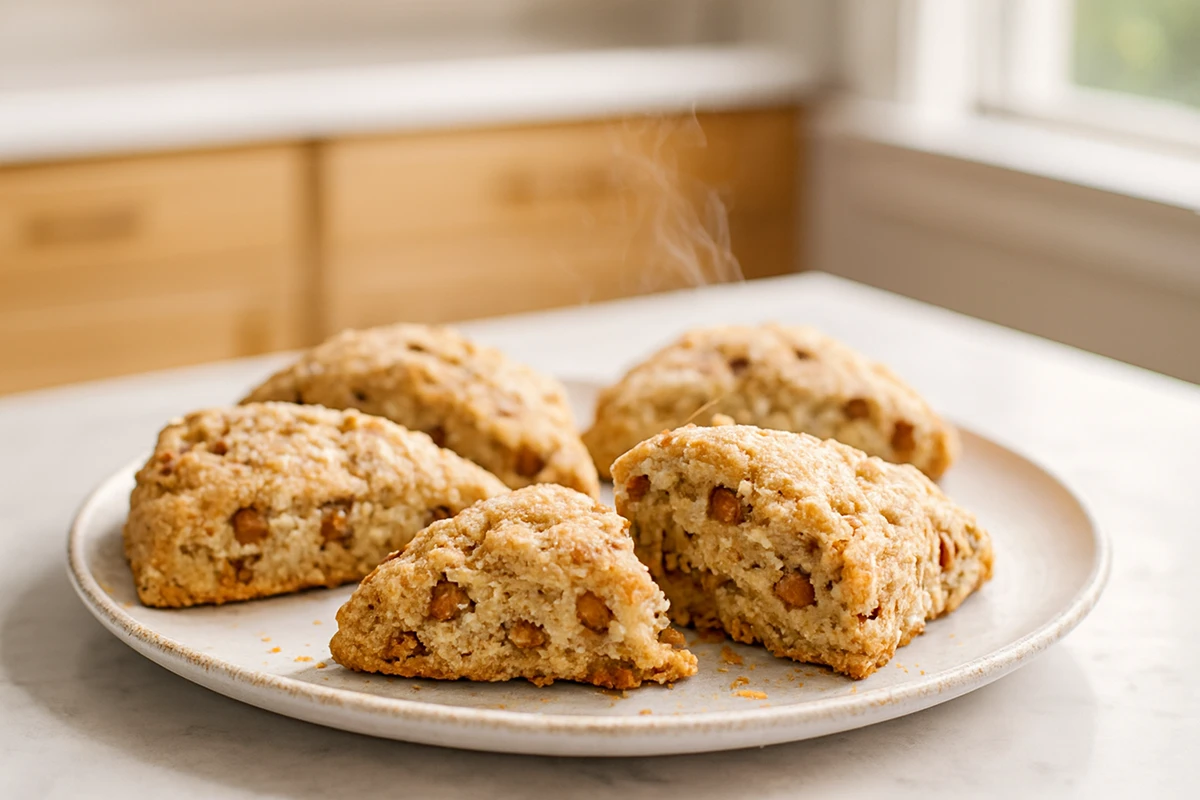
There’s a moment when a good scone breaks open that tells you everything. The top gives a gentle crack under your fingers, the inside pulls apart in soft layers, and warm cinnamon rises with the steam. Not sharp. Not overpowering. Just steady, sweet warmth wrapped in butter. That’s the kind of payoff we’re after here.
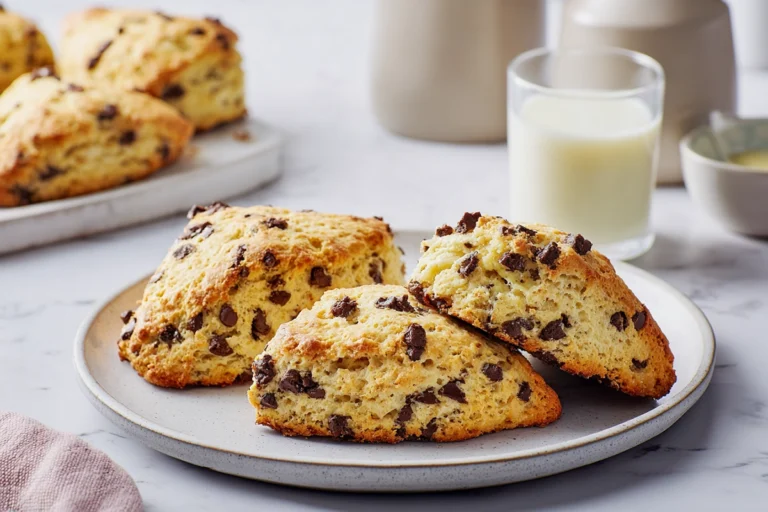
Too many scones lean dry or crumbly — the kind that look beautiful but need a full mug of coffee just to get through one bite. These Cinnamon Scones are different. They’re tender without being cakey, structured without being dense, and finished with raw sugar that melts into a light crust across the top. And those cinnamon chips? They don’t just flavor the dough. They melt into little pockets that give you bursts of sweetness in every wedge.
This recipe moves quickly — about 25 minutes from start to finish — but it depends on small details done right. Cold butter cut properly. Dough that looks crumbly but isn’t overworked. Clean cuts before baking so the layers can rise.
Get those steps right, and what comes out of the oven feels like something you’d want waiting on the counter on a quiet weekend morning.
Why These Cinnamon Scones Work
Good Cinnamon Scones don’t rely on a long ingredient list. They rely on balance. The right flour for structure. Enough fat for tenderness. Just enough sweetness to support the cinnamon without turning the whole thing into dessert. When someone says “bakery-style” or “Starbucks-style scones,” what they’re usually describing is texture — crisp edges, soft centers, and richness without greasiness. That doesn’t happen by accident.
The foundation here is simple, but every ingredient carries weight. This is not the place to eyeball flour or guess at fat. Scones reward precision and punish shortcuts.

- All-purpose flour: This gives structure without toughness. Bread flour will make the crumb too chewy, and cake flour won’t hold the wedges properly.
- Granulated sugar: Just enough to sweeten the dough itself. These are breakfast scones, not frosting-heavy pastries.
- Baking powder (a full tablespoon): The lift. Without it, the scones stay flat and dense.
- Ground cinnamon: Background warmth. It supports the cinnamon chips instead of replacing them.
- Sea salt: Essential for balance. If using unsalted butter, keep this full amount. If your butter is salted, don’t skip it entirely — just don’t add more.
- Cold salted butter: The most important player. Cold butter creates steam pockets in the oven, which translates into flaky layers.
- Half-and-half: Richer than milk but lighter than heavy cream. It keeps these buttery scones tender without making them heavy.
- Large egg: Structure and binding. It keeps the crumb cohesive.
- Pure vanilla extract: Rounds out the cinnamon and deepens the flavor.
- Cinnamon chips: The difference between “cinnamon-flavored” and actual cinnamon scones. They melt into pockets of sweetness throughout.
- Raw turbinado sugar: Sprinkled on top for a crackly, lightly caramelized finish.
If you need substitutions, keep them controlled. Whole milk can replace half-and-half, but expect slightly less richness. Heavy cream works too, though you may need a splash more to keep the dough from feeling stiff. Gluten-free all-purpose blends can work, but use one designed for baking — not a single-flour swap.
The Dough Should Look “Wrong” (And That’s How You Know It’s Right)
Before we ever talk about shaping, you need to understand what this dough is supposed to feel like. It will not look smooth. It will not feel soft like cookie dough. It will look crumbly — almost under-mixed.
That texture is intentional.
When the cold butter is cut into the flour mixture, it should resemble coarse crumbs with visible pea-sized bits. Those bits are what melt in the oven and create lift. If you mix until everything looks uniform, you’ve already gone too far.
When you stir in the half-and-half, egg, and vanilla, the mixture will still look dry. But if you press it between your fingers, it should clump together. That’s the test. If it holds when squeezed, it’s hydrated enough.
Overmixing develops gluten. Gluten creates chew. Chew is great in bread. It’s not what we want in Cinnamon Scones. Keep the handling minimal, trust the crumbly texture, and let the oven do the rest.
The Make-or-Break Moment: Cutting Cold Butter Correctly
Before anything else, get your oven preheated to 375°F and line your baking sheet. Cinnamon Scones move quickly once the dough comes together, and you don’t want them sitting around warming up on the counter.
In a large bowl, stir together the flour, sugar, baking powder, cinnamon, and salt until everything looks evenly blended. No streaks. No clumps of baking powder hiding in the corners.
Now comes the critical part: adding the cold butter. Drop it in and cut it into the flour using a pastry cutter, fork, or your fingertips. You’re aiming for coarse crumbs with visible pea-sized bits of butter. It should look uneven and sandy. If it starts looking creamy or smooth, stop — that means the butter has softened too much.
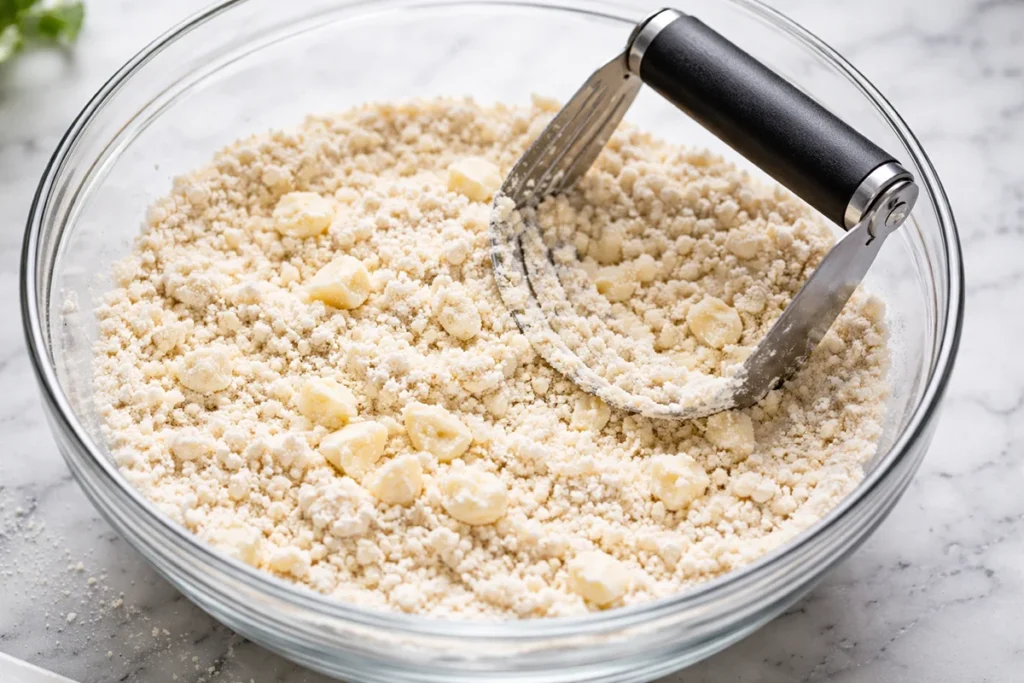
When you add the half-and-half, egg, and vanilla, stir gently. The dough will look crumbly and slightly dry. That’s right. When you press it between your fingers, it should hold together without sticking to your hands.
Once the cinnamon chips are folded in, turn the dough out onto a floured surface and gently press it into a round about 10 inches wide. Don’t knead it. Press, shape, and stop.
Cut cleanly into wedges and separate them slightly on the baking sheet. As they bake, watch for the tops to look set and lightly golden at the edges. You’ll notice the raw sugar on top beginning to sparkle and melt. The smell will shift from floury to warm butter and toasted cinnamon — that’s when you know you’re close.
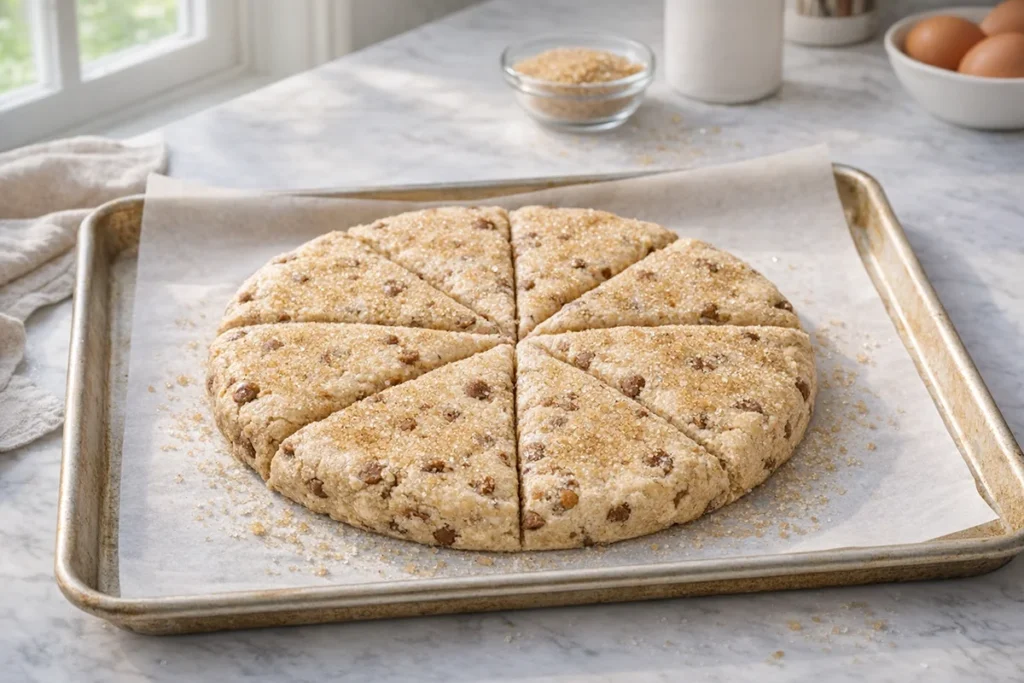
Pull them when the bottoms are lightly golden, and the centers feel just firm when tapped. Overbaking is how even bakery-style scones turn dry.
Shaping Without Stress: Clean Cuts for Better Rise
Once your dough is shaped into that 10-inch circle, resist the urge to overwork it. Press gently, keeping the surface slightly rough. Those imperfect edges help create texture.
Use a sharp knife or bench scraper and cut straight down. Don’t saw back and forth. Clean cuts allow steam from the cold butter pockets to push upward in the oven, giving you that tender, flaky interior that makes these buttery scones stand out from dense coffee shop versions.
After separating the wedges, give them a little space. They shouldn’t be touching. As they bake, you’ll see them rise slightly and spread just enough to create defined edges. The tops will dry out first, then slowly take on color along the corners.
When they come out of the oven, let them sit just long enough to settle — about five minutes. Then break one open while it’s still warm. You should see soft layers and melted cinnamon chips inside, not a tight, uniform crumb. That’s the difference between just a scone and one you’ll actually want to bake again next weekend.
When You Need to Adjust (Without Ruining the Texture)
If you’re going to change something in these Cinnamon Scones, do it with intention.
Whole milk can replace half-and-half if that’s what you have in the fridge. The scones will still rise properly, but they won’t be quite as rich. If you choose heavy cream instead, add just enough to bring the dough together — it’s thicker, so you may need an extra tablespoon to keep the texture soft instead of stiff.
Unsalted butter works perfectly well. Just keep the full amount of sea salt in the recipe so the flavor doesn’t fall flat.
Gluten-free all-purpose baking blends can work here, but use one designed for 1:1 substitution with xanthan gum included. Don’t swap in almond flour or a single alternative flour — the structure won’t hold, and you’ll lose those clean wedges.
As for the cinnamon chips, they really are the difference between simple cinnamon scones and bakery-style scones with those sweet, melty pockets inside. You can replace them with chocolate chips if you want a variation, but don’t expect the same warm cinnamon depth. And don’t increase the ground cinnamon to “make up for it.” Too much powdery spice will dry the dough and overpower everything else.
When and How to Serve Them
These are at their best about five minutes after coming out of the oven — still warm, with the turbinado sugar crackling lightly on top.
Serve them with strong coffee in the morning, especially something dark and slightly bitter to balance the sweetness. If you’re setting up a brunch table, they sit beautifully next to scrambled eggs and fresh fruit. The richness of the buttery scones pairs well with something bright and acidic, like sliced oranges or berries.
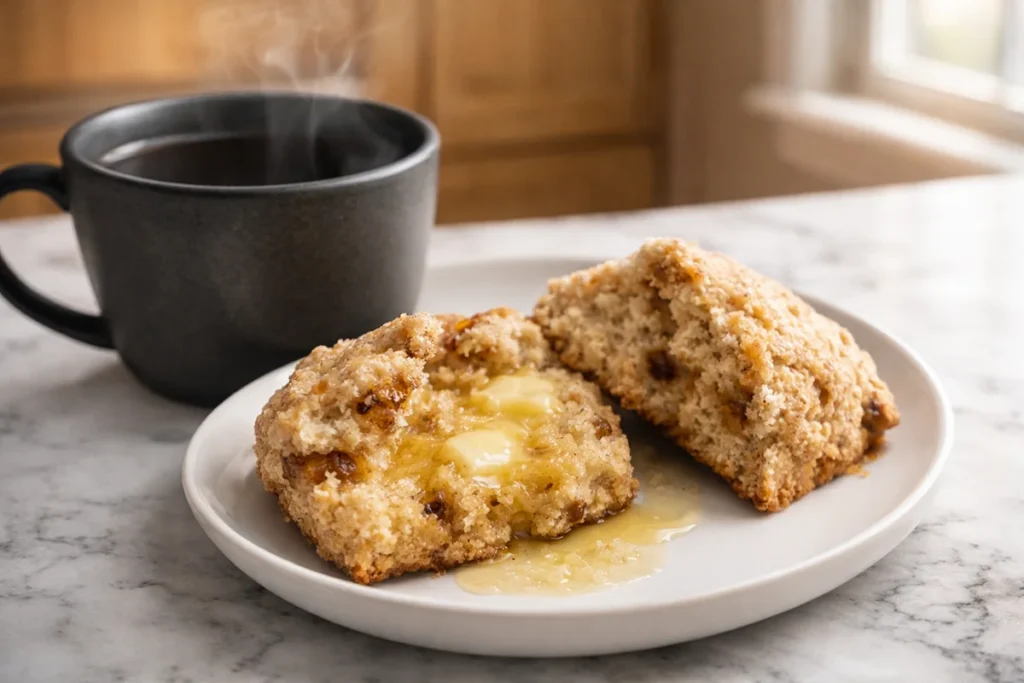
You can also split one gently and spread a thin layer of salted butter while it’s still warm. It melts into the crumb and deepens the flavor without making it heavy.
If you’re baking ahead, let them cool completely and store airtight. A quick 8–10 seconds in the microwave brings back that soft interior. They freeze wel,l too, which makes them a reliable make-ahead option when you want something homemade without starting from scratch.
A Few Small Things That Make a Big Difference
Keep the butter cold. If your kitchen is warm, cut it into cubes and chill it again before mixing.
Don’t knead the dough. Press and shape — that’s it. Overhandling is what turns tender cinnamon chip scones into dense wedges.
And watch the oven closely toward the end. They won’t turn deeply golden like cookies. You’re looking for lightly browned bottoms and tops that feel set but not hard. Pull them at that point. The residual heat will finish the job.
These Cinnamon Scones aren’t complicated, but they reward attention. When you get the texture right — crisp on top, soft and layered inside — they feel like something you’ll want to bake again next weekend. And that’s the goal here: not perfection, just something warm on the counter that makes the kitchen feel like home.
Get inspired with more mouthwatering recipes! Follow me on Facebook and Pinterest for new cooking ideas every week.
FAQ
Why did my Cinnamon Scones turn out dry?
Dry scones usually come from overmixing the dough or leaving them in the oven too long. The dough should look crumbly before shaping, not smooth, and the baked scones should be lightly golden on the bottom but not deeply browned on top. Even an extra two minutes in the oven can dry them out.
Can I make the dough ahead of time and bake it in the morning?
Yes, and it works beautifully. Shape the dough into the full 10-inch round, wrap it tightly, and refrigerate overnight. In the morning, cut into wedges and bake straight from the fridge for fresh, bakery-style scones.
What can I use if I don’t have cinnamon chips?
You can substitute chocolate chips if you’d like a different flavor, but the texture and cinnamon intensity will change. Adding extra ground cinnamon won’t create the same melty pockets inside the scones. The chips are what give cinnamon chip scones their signature bursts of sweetness.
Why didn’t my scones rise very much?
Flat scones are usually the result of butter that was too soft or baking powder that isn’t fresh. The butter should stay cold and visible in small chunks before baking, which creates steam and lift in the oven. Also, make sure you’re cutting straight down when shaping so the edges can rise cleanly.
Print
Cinnamon Scones
- Total Time: 37 minutes
- Yield: 8 scones 1x
- Diet: Vegetarian
Description
Warm, flaky cinnamon scones made from scratch with pantry staples. Perfect for cozy mornings, brunch tables, or sweet treats paired with coffee.
Ingredients
- 2 cups all-purpose flour
- 1 tbsp baking powder
- ½ tsp salt
- ⅓ cup granulated sugar
- 2 tsp ground cinnamon
- ½ cup unsalted butter, cold and cubed
- ½ cup heavy cream or milk
- 1 egg
- 1 tsp vanilla extract
- Optional: ¼ cup brown sugar (for deeper flavor)
- Optional Glaze:
- 1 cup powdered sugar
- 2 tbsp milk
- ½ tsp vanilla extract
- Optional Streusel Topping:
- 2 tbsp flour
- 2 tbsp brown sugar
- 1 tbsp cold butter
- ¼ tsp cinnamon
Instructions
-
Preheat oven to 400°F (200°C) and line a baking sheet with parchment.
-
Whisk together flour, baking powder, salt, sugar, and cinnamon.
-
Cut in cold butter until the mixture resembles coarse crumbs.
-
In a separate bowl, whisk together the egg, cream or milk, and vanilla.
-
Combine wet and dry mixtures until just combined.
-
Turn out dough onto a floured surface and shape it into a circle about 1 inch thick.
-
Cut the cake into eight wedges and place them on a baking sheet.
-
Brush with cream or milk, bake for 18–22 minutes until golden.
-
Optional: Add glaze or streusel after baking.
Notes
- Use very cold butter for the best texture.
- Don’t overmix—this keeps the scones fluffy.
- Freeze unbaked scones for up to 2 months; bake from frozen, adding an extra 5 minutes to the baking time.
- Customize with raisins, nuts, or cinnamon chips.
- Prep Time: 15 minutes
- Cook Time: 22 minutes
- Category: Breakfast, Brunch, Dessert
- Method: Baking
- Cuisine: American
Nutrition
- Serving Size: 1 scone (out of 8)
- Calories: ~290 kcal (per serving, without glaze/streusel)
- Sugar: ~10 g
- Sodium: ~230 mg
- Fat: ~15 g
- Saturated Fat: ~9 g
- Unsaturated Fat: ~5 g
- Trans Fat: ~0 g
- Carbohydrates: ~35 g
- Fiber: ~1 g
- Protein: ~4 g
- Cholesterol: ~60 mg