Fluffy Japanese Soufflé Pancakes for a Cozy, Slow Morning

There’s something comforting about slowing down in the morning, especially when breakfast feels more like a small ritual than a rushed task. The first time you make Japanese Soufflé Pancakes, it might feel a little different from your usual pancake routine—but in the best way. These pancakes aren’t about speed or flipping stacks as fast as you can. They’re about patience, gentle hands, and enjoying the process just as much as the first soft bite.
If you’ve ever seen those tall, jiggly pancakes served in Japanese cafés and wondered if they’re really possible at home, I promise you they are. With a few simple ingredients and some quiet focus, you can make Japanese Soufflé Pancakes right in your own kitchen, no special trip or fancy equipment required.
Table of Contents
A Cozy Breakfast That Feels Like a Treat
These pancakes are the kind you make when the house is still quiet, the coffee is brewing, and you’re not watching the clock too closely. They feel special without being fussy. I like to think of them as a “stay-in” breakfast—something you make when you want to care for the people at your table, or maybe just yourself, a little extra.
Unlike classic American pancakes, these are lighter, softer, and almost cloud-like inside. They’re best enjoyed warm, straight from the pan, with simple toppings that don’t overpower their delicate texture.
What Makes Japanese Soufflé Pancakes Different
The magic of Japanese Soufflé Pancakes comes from whipped egg whites. Instead of relying on lots of flour or baking powder for height, these pancakes use a meringue to create lift. That’s what gives them their signature jiggle and airy center.
They cook slowly over low heat, which allows them to rise gently without burning. The result is a pancake that’s tender all the way through, with a soft interior that almost melts when you cut into it. If you’re expecting a crisp-edged diner pancake, this is something entirely different—and that’s what makes it so lovely.
Ingredients That Matter (And Why)
These pancakes use everyday ingredients, but each one plays an important role. Measuring carefully and understanding what each ingredient does will make the process feel much more relaxed.
Ingredients
- 2 large egg whites
- 1 large egg yolk
- 2 tablespoons granulated sugar, divided
- 2 tablespoons whole milk
- 3 tablespoons all-purpose flour
- 1/4 teaspoon baking powder
- 1/8 teaspoon cream of tartar
- Neutral oil, for greasing the pan
The eggs are the backbone of this recipe. The yolk adds richness, while the whites—when whipped—create structure and lift. Sugar sweetens gently and helps stabilize the meringue. Milk keeps the batter tender, and a small amount of flour gives just enough body without making the pancakes heavy. The baking powder is there as quiet support, not the star.
Ingredient Flexibility Notes
If you want slightly less sweetness, you can reduce the sugar by a teaspoon, but don’t remove it completely. Sugar helps the egg whites whip properly. Whole milk works best here, but low-fat milk can be used if that’s what you have on hand.

The Technique That Makes or Breaks Them
The most important part of making Japanese Soufflé Pancakes is treating the batter gently. This isn’t a recipe you rush through, and that’s part of its charm.
You’ll start by whisking the egg yolk with a tablespoon of sugar until it looks pale and slightly thickened. Once the milk is mixed in, the flour and baking powder are whisked just until smooth. At this stage, the batter will look thick but glossy.
The egg whites are whipped separately with the cream of tartar. As they turn foamy, the remaining sugar is added slowly. You’re looking for soft to medium peaks—when the whites hold their shape but still look smooth and shiny. Over-whipping will make them dry and difficult to fold.
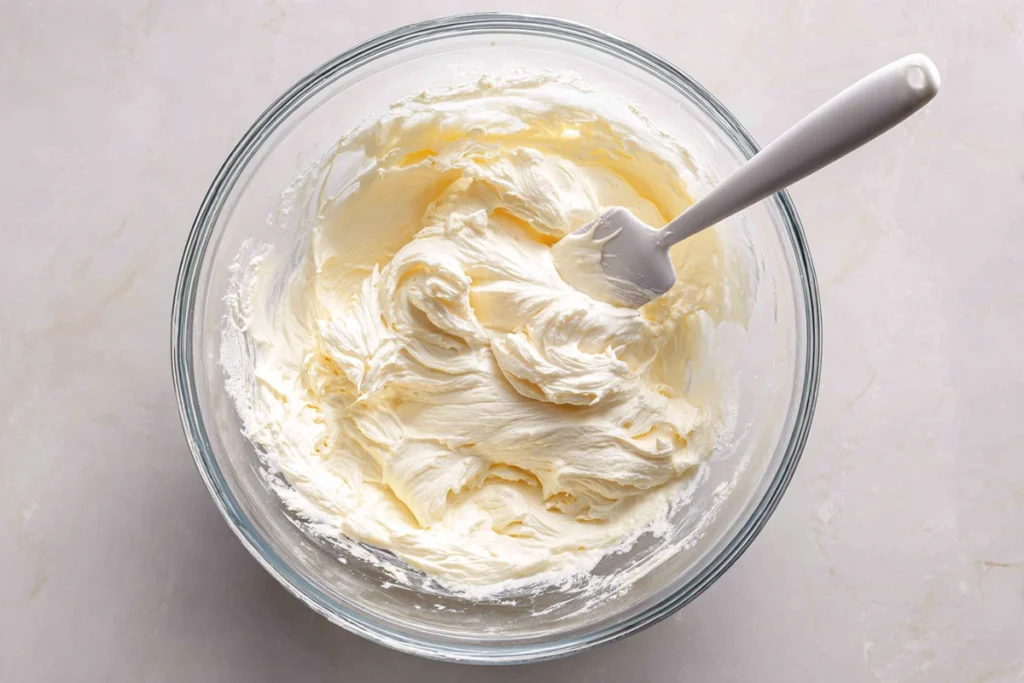
When combining the two mixtures, you’ll gently fold the egg whites into the yolk batter in stages. The goal is to keep as much air in the batter as possible. The batter should feel light and spoonable, not runny.
Cooking Method Overview (Low Heat, Real Patience)
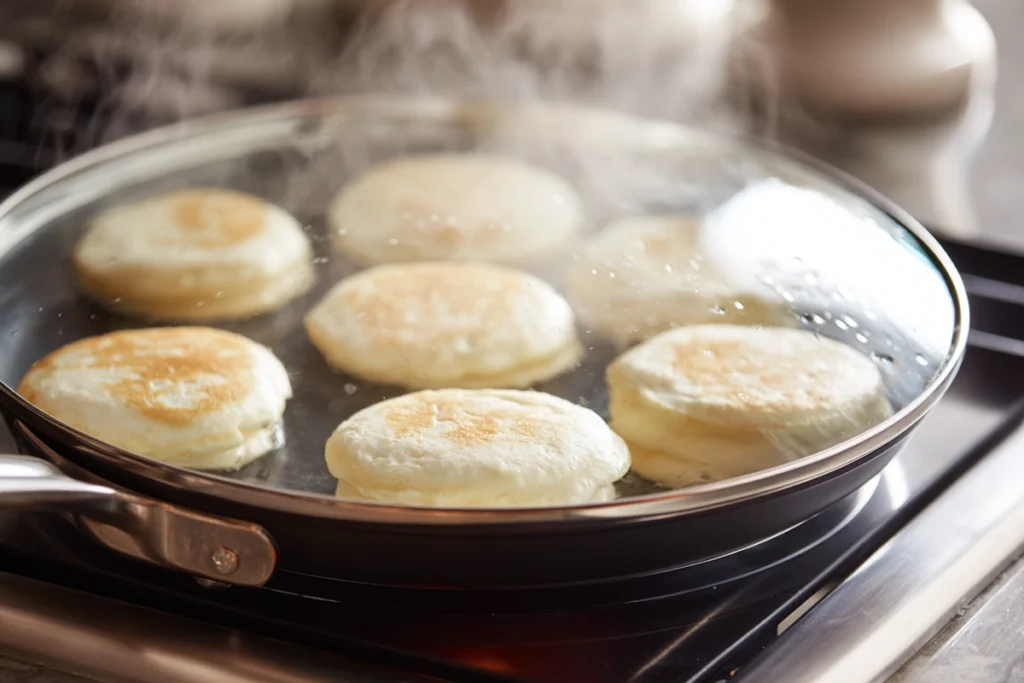
Cooking these pancakes is where patience really matters. A nonstick skillet set over very low heat is ideal. Lightly grease the pan, then wipe away any excess so only a thin film remains.
Spoon the batter into tall mounds rather than spreading it out. Cover the pan with a lid and let the pancakes cook slowly. After a few minutes, you can add a little more batter on top to build height, then cover again. The steam trapped under the lid helps the pancakes rise evenly.
When it’s time to flip, do it gently and without rushing. The pancakes should release easily from the pan when they’re ready.
Pan & Equipment Notes
A nonstick skillet with a tight-fitting lid works best. If your pan doesn’t have a lid, a heat-safe lid from another pot or even a sheet of foil can help trap steam. The key is even, gentle heat.
Doneness, Texture, and Visual Cues
Knowing when Japanese Soufflé Pancakes are done takes a little practice, but there are clear signs to watch for. The surface should look set and slightly matte rather than glossy. The sides will feel springy when touched lightly.
When you lift one gently with a spatula, it should hold its shape without collapsing. Inside, the pancake should be fully cooked but still soft and moist—not wet or gummy. A gentle jiggle is good; a wobble that feels loose in the center usually means it needs another minute or two.
Common Mistakes (And How to Avoid Them)
If your pancakes deflate, the egg whites may have been over-whipped or folded too aggressively. Take your time when folding, and stop as soon as the batter looks combined.
If the pancakes brown too quickly but stay raw inside, the heat is too high. Lower it and be patient. These pancakes prefer a slow cook.
Flipping too early can also cause collapse. Wait until the pancakes feel stable and release easily from the pan before turning them.
Serving Ideas That Keep Them Special
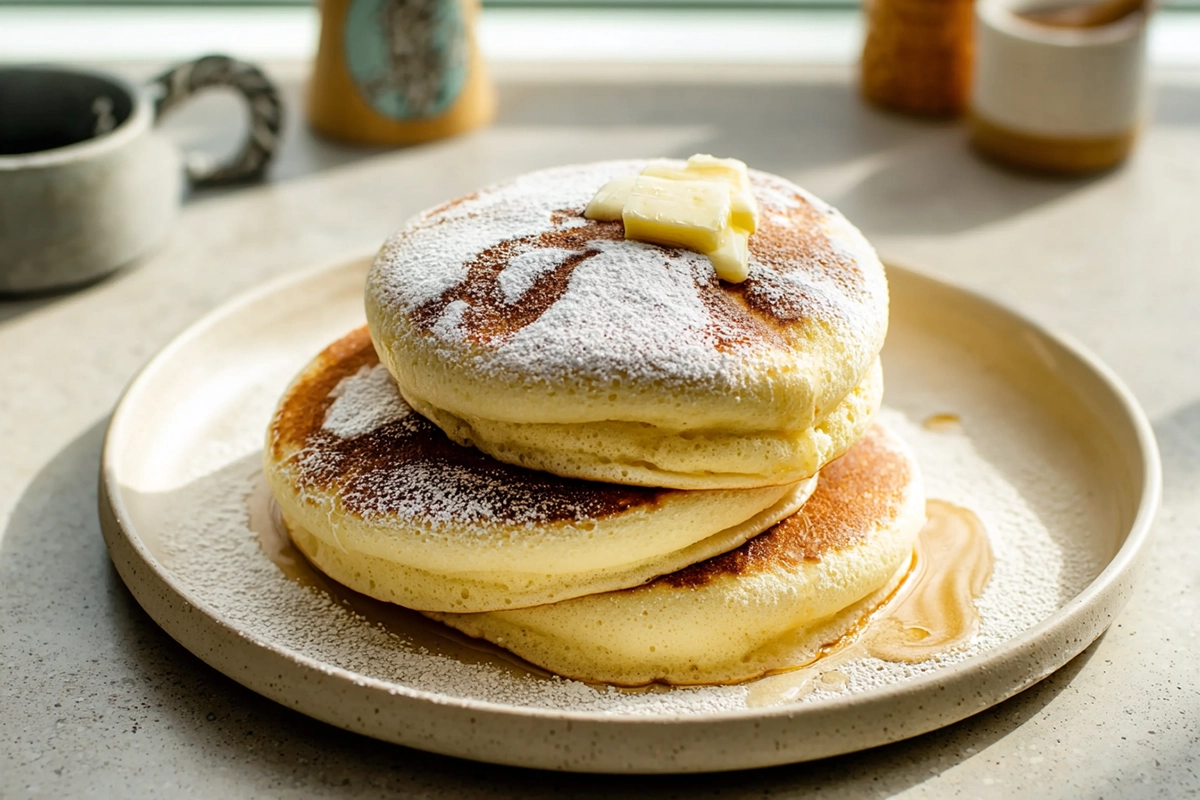
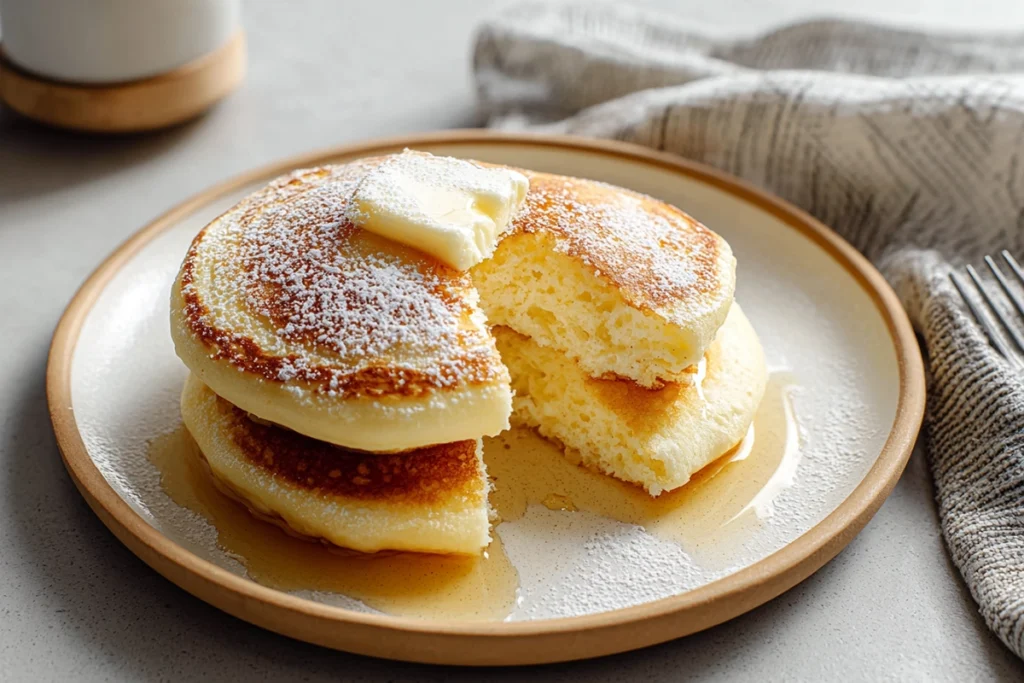
These pancakes are best served right away, while they’re still warm and tall. A light dusting of powdered sugar, a small pat of butter, or a spoonful of whipped cream is often all they need. Maple syrup works well, but drizzle it gently so it doesn’t weigh them down.
Fresh berries or sliced fruit add color and freshness without overpowering the delicate flavor.
Make-Ahead, Storage, and Reheating Reality
Japanese Soufflé Pancakes are at their best fresh from the pan. The batter can rest for a short time, but it’s best cooked soon after folding to preserve the air in the egg whites.
If you have leftovers, they can be stored in the refrigerator for a day, but expect some loss of height. Reheat gently in a covered skillet over low heat or briefly in the microwave. They’ll still be soft, just less airy.
Dietary Variations
For a gluten-free version, a cup-for-cup gluten-free flour blend can work, though the texture may be slightly denser. Dairy-free milk alternatives like almond milk can be used, but avoid anything too thick or sweetened, as it can affect the batter balance.
Lower-sugar versions are possible with small reductions, but removing sugar entirely will make it difficult to whip the egg whites properly.
A Warm Note Before You Serve
Making Japanese Soufflé Pancakes is as much about the experience as the result. They invite you to slow down, trust your instincts, and enjoy the little details—how the batter feels, how the pancakes rise, how the kitchen smells as they cook. Even if your first batch isn’t perfect, it will still be soft, warm, and made with care. And that’s exactly the kind of recipe worth keeping.
Get inspired with more mouthwatering recipes! Follow me on Facebook and Pinterest for new cooking ideas every week.
FAQ
Why did my Japanese soufflé pancakes deflate after cooking?
A little deflation is completely normal once the pancakes come off the heat. These pancakes rely on whipped egg whites for lift, and as they cool, some of that trapped air naturally escapes. If they collapsed a lot, it usually means the egg whites were over-whipped or the pancakes were flipped too early.
Why are my pancakes raw or wet in the middle?
This usually means the heat was too high and the outside cooked faster than the inside. Japanese soufflé pancakes need very low heat and time to cook through gently. Keeping the pan covered helps the centers set without browning too quickly.
Can I make Japanese soufflé pancakes without a mold?
Yes, molds are not required. Scooping the batter into tall mounds and cooking them slowly with a lid works well. Adding a little extra batter on top partway through cooking also helps build height without molds.
Can I prepare the batter ahead of time?
It’s best to cook the batter soon after folding in the egg whites. Letting it sit too long causes the air to deflate, which affects the rise and texture. If needed, you can let it rest briefly while the pan heats, but fresh batter gives the best results.
Print
Fluffy Japanese Soufflé Pancakes
- Total Time: 30 minutes
- Yield: 2 servings 1x
- Diet: Vegetarian
Description
These Japanese soufflé pancakes are soft, airy, and gently cooked for a cozy, comforting breakfast at home. Made with whipped egg whites and simple ingredients, they rise tall and tender with a light, cloud-like texture.
Ingredients
- 2 large egg whites
- 1 large egg yolk
- 2 tablespoons granulated sugar, divided
- 2 tablespoons whole milk
- 3 tablespoons all-purpose flour
- 1/4 teaspoon baking powder
- 1/8 teaspoon cream of tartar
- Neutral oil, for greasing the pan
Instructions
- Separate the eggs, placing the whites in one clean bowl and the yolk in another.
- Whisk the egg yolk with 1 tablespoon of sugar until pale, then whisk in the milk until smooth.
- Sift the flour and baking powder into the yolk mixture and whisk just until combined.
- In a separate bowl, beat the egg whites with the cream of tartar until foamy, then gradually add the remaining sugar and beat to soft, glossy peaks.
- Gently fold one-third of the whipped egg whites into the yolk batter to loosen it, then carefully fold in the remaining whites until just combined.
- Heat a nonstick skillet over very low heat and lightly grease it with oil, wiping away excess.
- Scoop the batter into tall mounds in the skillet, cover with a lid, and cook slowly until set and lightly golden.
- Carefully flip the pancakes, cover again, and cook until fully set through the center.
- Remove from the pan and serve immediately while warm.
Notes
- These pancakes are best enjoyed fresh and warm.
- Keep the heat very low to prevent browning before the center is cooked.
- Avoid over-whipping the egg whites, as this can cause the pancakes to collapse.
- Prep Time: 15 minutes
- Cook Time: 15 minutes
- Category: Breakfast
- Method: Pan Cooking
- Cuisine: Japanese
Nutrition
- Serving Size: 2 pancakes
- Calories: 320
- Sugar: 14 g
- Sodium: 220 mg
- Fat: 18 g
- Saturated Fat: 6 g
- Unsaturated Fat: 11 g
- Trans Fat: 0 g
- Carbohydrates: 28 g
- Fiber: 1 g
- Protein: 9 g
- Cholesterol: 215 mg