Greek Chicken Gyros: Fast-Seared, Lemon-Soaked, and Built for the Table

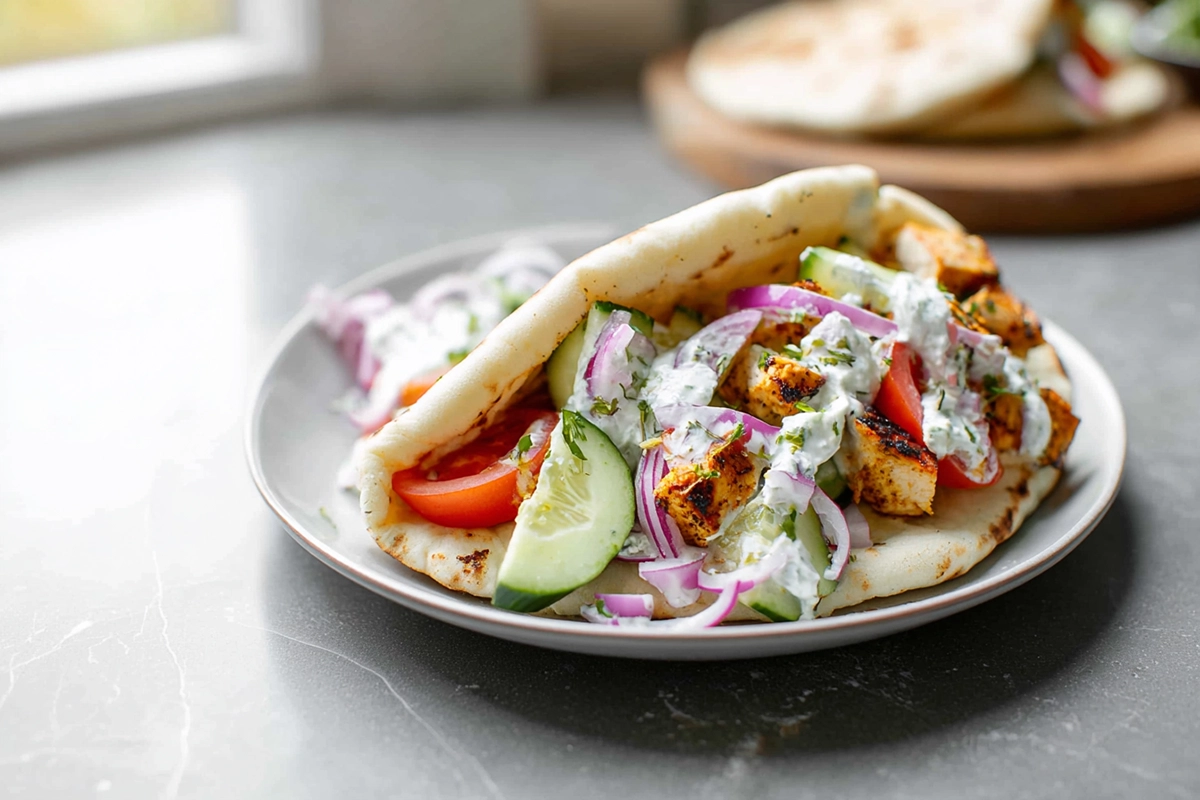
There’s a moment when chicken hits a hot pan or grill and the air changes. Garlic turns nutty, dried oregano wakes up, and lemon sharpens into something bright instead of sour. That’s the moment these gyros are built around. Not the wrap. Not the sauce. That first thirty seconds of heat that tells you dinner is going to be right.
Greek Chicken Gyros work because they respect timing. Yogurt in the marinade softens without turning the meat mushy. Lemon and vinegar bring edge without tightening the chicken. And chicken thighs — always thighs — stay juicy even when cooked quickly. This is the kind of food that smells finished before it looks finished, the kind that pulls people into the kitchen without asking.
What I like most about this recipe is how practical it is. The chicken cooks in minutes. The tzatziki cools everything down without drowning it. The salad stays simple and crunchy, doing its job instead of competing for attention. Nothing here is complicated, but every step matters. Skip one small detail — squeezing the cucumber, resting the chicken, warming the bread — and the whole thing feels off.
This is also a table recipe. Lay everything out. Let people build their own. It’s casual, forgiving, and generous by nature, which is exactly how I think home cooking should feel.
From here, the focus shifts to the decisions that make these gyros dependable: how long to marinate, how hot is hot enough, and why six minutes of cooking can be plenty when the prep is done right.
Table of Contents
The Marinade Is the Recipe (And Why Yogurt Changes Everything)
For Greek Chicken Gyros, the marinade isn’t a background step — it’s the entire foundation. This is where flavor gets locked in before heat ever touches the pan. Greek yogurt does the heavy lifting here. It gently tenderizes the chicken thighs while keeping the meat resilient enough to handle high heat. Lemon juice and white wine vinegar bring brightness, but the yogurt keeps that acidity from tightening the meat. Olive oil carries flavor into the chicken instead of letting it sit on the surface, and dried oregano gives you that unmistakable Greek aroma once it hits the heat.
Chicken thighs matter. They’re forgiving, flavorful, and stay juicy during fast cooking — exactly what gyros need. Chicken breast can work in theory, but it leaves far less room for error. This marinade is balanced to enhance thighs, not rescue dry meat.
- Chicken thigh fillets: Boneless and skinless; they stay moist and absorb marinade evenly.
- Greek yogurt (full-fat): Buffers acidity and tenderizes without breaking down texture.
- Lemon juice & white wine vinegar: Brightens the meat; don’t increase or the balance tips.
- Dried oregano: Earthy and bold; fresh won’t give the same grilled aroma.
- Garlic & olive oil: Flavor carriers — one sharp, one round.
If you’re short on time, a two-hour marinade works. Overnight is better. Over the past 24 hours, the texture has started to suffer.
Tzatziki Isn’t a Sauce, It’s a Temperature Control System
Tzatziki’s job isn’t to dominate the wrap — it’s to cool and balance everything else. Grated cucumber brings freshness, but only if the moisture is squeezed out aggressively. Left unchecked, that water will thin the yogurt and soak the bread. Greek yogurt gives structure, lemon keeps it sharp, and garlic should be present without lingering.
This is one place where full-fat yogurt really matters. Low-fat versions tend to loosen as they sit, which turns tzatziki into something closer to salad dressing than a spread.
- Cucumbers: Seeds removed and fully squeezed; texture matters more than quantity.
- Greek yogurt (full fat): Thick enough to cling to the chicken.
- Garlic: Minced fine so it blends, not bites.
- Olive oil: Optional but recommended for roundness.
Letting tzatziki rest before serving isn’t optional — that short wait smooths everything out.
The Salad’s Job Is Crunch, Not Flavor
The salad in Greek Chicken Gyros isn’t there to compete with the chicken or the tzatziki. Its role is contrast. Tomatoes add juiciness without sweetness, cucumbers reinforce freshness, and red onion gives just enough sharpness to wake everything up. Deseeding tomatoes is a small step that makes a big difference — excess moisture weakens the wrap.
Parsley is optional, not essential. This salad is about clean texture, not herbal complexity.
- Tomatoes: Deseeded to prevent sogginess.
- Cucumbers: Firm and fresh; no peeling needed.
- Red onion: Finely chopped so it blends, not overwhelms.
- Parsley (optional): Adds color more than flavor.
Salt lightly and close to serving time so the vegetables stay crisp.
Bread That Holds Its Shape (And Why Warming Matters)
Pita or flatbread isn’t just a vehicle — it’s structure. Warm bread bends without cracking and keeps fillings in place. Cold bread splits, leaks, and turns a good gyro into a mess halfway through eating. Thicker pita gives you insurance, especially when loading generously.
- Pita or flatbreads: Warmed just before assembling so they stay flexible.
Laid out on the table, with everything ready to build, this setup turns the meal into something relaxed and communal — exactly how gyros should be served.
Greek Chicken Gyros Live or Die in Six Minutes of Cooking
This is fast cooking, but it isn’t rushed cooking. The chicken needs to come out of the marinade looking lightly coated, not dripping. Excess marinade should be shaken off — too much yogurt on the surface will burn before the meat browns.

When the pan or grill is ready, you should hear an immediate, confident sizzle as the chicken hits the heat. Not a hiss. Not silence. Within the first minute, the surface should turn opaque and lightly golden, and the smell should shift from raw garlic to toasted oregano. That’s your signal that the heat is right.
Flip only when the chicken releases easily. If it sticks, it’s not ready. The second side cooks faster, and by the time both sides are deeply colored, the meat should feel springy when pressed — firm like the base of your thumb, not stiff. This quick, high-heat approach is what keeps grilled chicken gyros juicy instead of dry.
Once cooked, the chicken needs a short rest. Covered loosely, it finishes cooking gently, and the juices settle instead of spilling out when sliced.
Resting, Cutting, and Keeping the Chicken Juicy
Resting isn’t downtime — it’s insurance. As the chicken sits, the surface sheen dulls slightly, and the aroma mellows from sharp lemon to something rounder and savory. Slice too early, and you’ll see moisture pooling on the board instead of staying in the meat.
When cutting, follow the natural shape of the thighs. Large pieces should be cut into bite-sized strips that still feel substantial. Gyros should eat generously, not shred into filler.
At this point, the chicken should smell deeply savory with a bright citrus edge, not acidic. That balance is what makes a reliable chicken gyros recipe worth repeating.
Assembling While Everything Is Still Warm
Warm bread bends without cracking. You’ll feel it soften in your hands, flexible but sturdy. Cold pita tears and leaks — a small detail that ruins the experience halfway through eating.
Start with salad down the center so it acts as a cushion. Add chicken while it’s still warm enough to melt slightly into the tzatziki. Finish with sauce last, letting it cool the meat without drowning it.
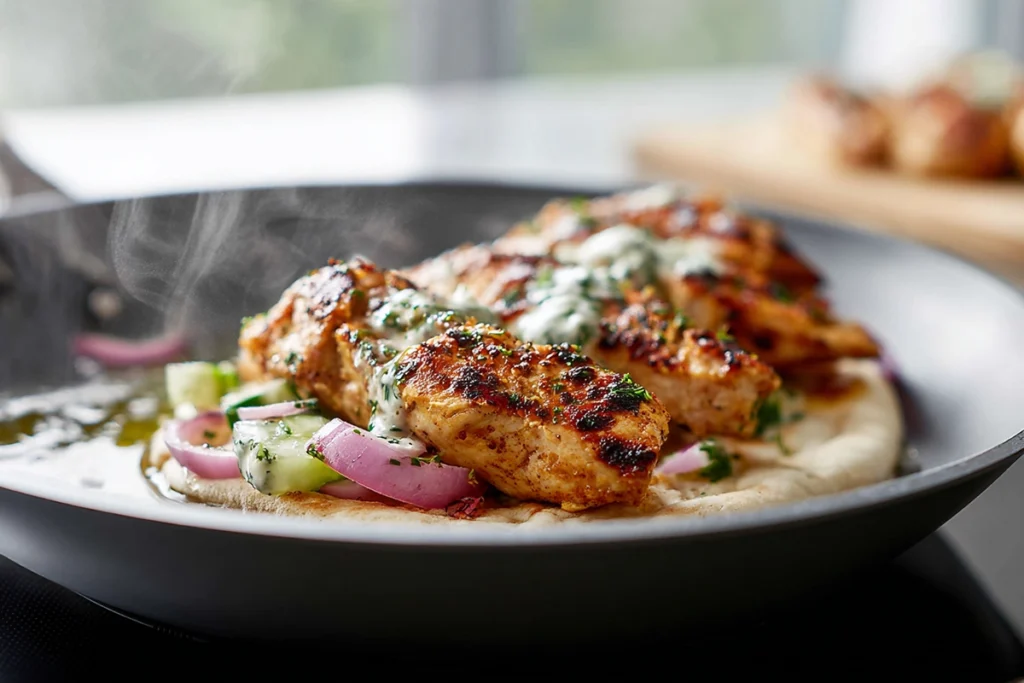
When wrapped, the gyro should feel compact and warm, with no cold spots and no soggy bottom. If it holds together for the first bite, you’ve done it right.
Smart Variations That Still Respect the Recipe
There are a few ways to adapt this without losing what makes it work. Chicken thighs are still the best choice, but if all you have is chicken breast, slice it horizontally into thinner pieces and shorten the cooking time. Pull it off the heat the moment it turns opaque and springy — any longer and it dries out fast. This is one of those swaps where attention matters more than technique.
If grilling isn’t an option, a heavy skillet does the job just as well. Cast iron gives you the closest result because it holds heat and encourages browning. Avoid baking the chicken altogether. The yogurt-based marinade needs direct heat to caramelize properly, and the oven turns it pale and flat.
For the tzatziki, full-fat Greek yogurt really is worth sticking with. Low-fat versions loosen as they sit and lose that thick, cooling contrast. If you want a sharper sauce, a little extra lemon juice is fine, but adding more garlic than called for tends to overpower everything else.
How to Serve Greek Chicken Gyros Without Overthinking It
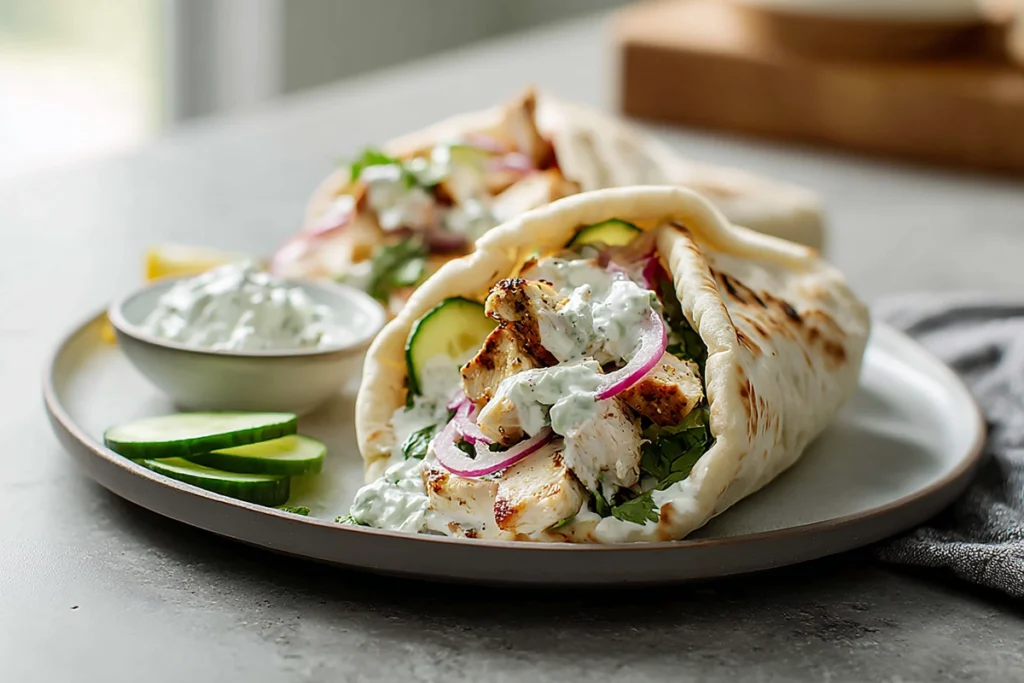
These are best served build-your-own style, laid out on a table while everything is still warm. Warm pita or flatbreads go first, followed by the sliced chicken, the salad, and the tzatziki. This setup keeps the bread from getting soggy and lets everyone balance their wrap the way they like.
Greek Chicken Gyros pair especially well with simple sides that don’t fight for attention. Lemon-roasted potatoes work because they echo the citrus in the marinade. A bowl of olives or a quick tomato and cucumber salad adds salt and crunch without adding work. If you’re serving this for a casual gathering, a cold, crisp drink — something lightly acidic — cuts through the richness of the yogurt and olive oil.
Leftovers hold up better than you’d expect. Store the chicken separately, reheat it quickly in a hot pan, and assemble fresh. Avoid microwaving if you can; it softens the edges too much.
A Few Last Things Worth Remembering
If the chicken sticks, the heat wasn’t ready.
If the wrap falls apart, the bread wasn’t warm enough.
If the flavors feel muted, the chicken needed a longer rest after cooking.
None of these are big problems — just small signals.
This is the kind of meal that earns a spot in rotation because it’s dependable. Once you’ve made it once, the rhythm sticks. You’ll know when the pan is hot enough. You’ll recognize the smell. And you’ll start setting everything out before anyone even asks what’s for dinner. That’s when a recipe stops feeling like instructions and starts feeling like yours.
Get inspired with more mouthwatering recipes! Follow me on Facebook and Pinterest for new cooking ideas every week.
FAQ
Can I marinate the chicken overnight for Greek chicken gyros?
Yes, overnight marinating works very well and actually deepens the flavor. Just keep it under 24 hours, as the yogurt and acid can start to affect the texture if left too long. Anything between 3 and 12 hours is a safe, reliable window.
Why did my chicken turn dark before it was fully cooked?
This usually means the heat was slightly too high or there was too much marinade clinging to the surface. Yogurt-based marinades brown quickly, so shaking off excess before cooking helps. As long as the inside is juicy and cooked through, a deeper color on the outside is normal.
Can I make Greek chicken gyros without a grill?
Absolutely. A heavy skillet, especially cast iron, works just as well and gives you excellent browning. What matters most is high, steady heat and not overcrowding the pan.
My tzatziki seems watery — is that normal?
A little loosening is normal as it sits, but watery tzatziki usually means the cucumber wasn’t squeezed enough. Removing as much liquid as possible before mixing keeps it thick and spreadable. Using full-fat Greek yogurt also makes a big difference.
Can I prep Greek chicken gyros ahead of time for guests?
Yes, and they’re great for entertaining. You can marinate the chicken, prep the salad, and make the tzatziki earlier in the day. Cook the chicken just before serving so it stays juicy and warm when assembled.
Print
Greek Chicken Gyros
- Total Time: 40 minutes
- Yield: 6 gyros 1x
- Diet: Halal
Description
Juicy Greek chicken gyros made with a yogurt-lemon marinade, quick-seared chicken thighs, creamy tzatziki, and fresh vegetables wrapped in warm pita.
Ingredients
- 2 lb chicken thigh fillets, boneless and skinless
- Greek yogurt, full fat
- Garlic cloves
- Lemon juice
- White wine vinegar
- Extra virgin olive oil
- Dried oregano
- Salt
- Black pepper
- Cucumbers
- Tomatoes
- Red onion
- Fresh parsley (optional)
- Pita breads or flatbreads
Instructions
- Mix the marinade ingredients until smooth, then coat the chicken thoroughly and refrigerate to marinate.
- Prepare the tzatziki by grating and squeezing the cucumber, then mixing with yogurt, garlic, lemon juice, olive oil, salt, and pepper.
- Combine the chopped tomatoes, cucumbers, onion, parsley, salt, and pepper for the salad.
- Heat a grill or heavy skillet until very hot and cook the marinated chicken until golden and cooked through.
- Let the chicken rest briefly, then slice.
- Warm the pita, layer with salad, chicken, and tzatziki, then wrap and serve.
Notes
- Chicken thighs stay juicier than chicken breast and are strongly recommended.
- Shake off excess marinade before cooking to prevent burning.
- Always squeeze cucumber well to keep tzatziki thick.
- Prep Time: 20 minutes
- Cook Time: 20 minutes
- Category: Main Course
- Method: Grilling
- Cuisine: Mediterranean
Nutrition
- Serving Size: 1 gyro
- Calories: 480
- Sugar: 4 g
- Sodium: 780 mg
- Fat: 22 g
- Saturated Fat: 6 g
- Unsaturated Fat: 14 g
- Trans Fat: 0 g
- Carbohydrates: 38 g
- Fiber: 3 g
- Protein: 32 g
- Cholesterol: 110 mg