
One Pot Chicken and Rice: Butter-Soaked Grains, Tender Chicken, Zero Regret
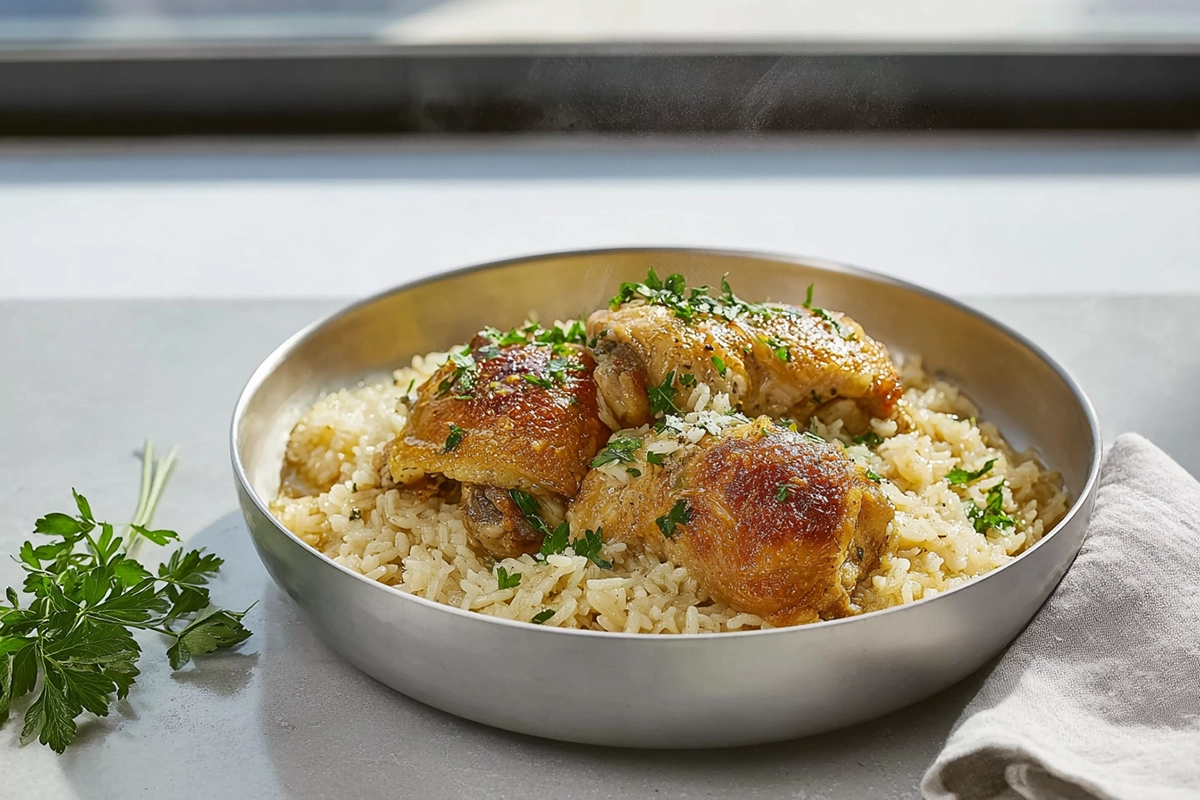
The problem with most one-pot chicken and rice recipes is always the same: the rice turns to mush, the chicken dries out, and you’re left wondering why you didn’t just order takeout. You want comfort, not compromise. You want rice that still has shape, chicken that’s actually juicy, and a pot that smells like butter melting into toasted grains instead of boiled disappointment.
This one works because it respects timing. The rice isn’t dumped into liquid and abandoned. It’s warmed first in butter, just long enough to coat every grain so it absorbs stock slowly instead of all at once. The carrots soften under a lid until they release their sweetness, not browned, not soggy. And the chicken? It waits its turn. Added halfway through, in small, deliberate pieces, it cooks gently alongside the rice instead of toughening while everything else catches up.
The result sits somewhere between soup and risotto — spoonable, glossy, deeply comforting — without the constant stirring or nervous hovering. The seasoning looks modest on paper, but in the pot it builds quietly as the rice drinks in stock and dried aromatics soften into the broth. A final knob of butter pulls it together, giving the whole dish that rich, settled flavor that makes people hover near the stove asking when it’s ready.
You don’t need a fancy pan or a stack of prep bowls. Just one good pot, decent rice, and the patience to let each step do its job. The rest takes care of itself.
Table of Contents
Why This One Pot Chicken and Rice Refuses to Be Mushy
This one pot chicken and rice succeeds because it treats rice like an ingredient with limits, not a sponge that can take endless abuse. Long-grain white rice is chosen for its structure: the grains stay distinct while still absorbing flavor. Short-grain or parboiled rice releases too much surface starch too quickly, which is how you end up with glue instead of comfort. Toasting the rice briefly in butter coats each grain in fat, slowing down liquid absorption and buying you control over texture.
The liquid ratio matters just as much. Eight cups of chicken stock may sound generous, but the timing of when ingredients enter the pot is what keeps things balanced. The rice gets a head start in the simmer so it can swell and soften gradually. The chicken waits until the rice is already on its way, which prevents the proteins from tightening and squeezing out moisture. This staggered approach is the entire strategy: nothing competes for heat or hydration at the wrong moment.
Butter finishes the dish because fat rounds sharp edges. As the pot rests, starches relax and the broth thickens naturally without cream, flour, or fuss. What you’re left with isn’t soup and isn’t risotto — it’s something sturdier, spoonable, and forgiving, even if dinner gets delayed five minutes.
- Long-Grain White Rice: Holds its shape; avoid instant or short-grain or the texture collapses.
- Chicken Stock: The backbone of flavor; low-sodium gives you control if your seasoned salt runs bold.
- Butter or Vegan Butter: Coats the rice early and softens the finish; if using salted, ease up on seasoning later.

The Seasoning Is Boring on Paper — Smart in the Pot
At first glance, this seasoning lineup looks almost too plain. That’s intentional. Dried minced onion and garlic are doing a job fresh aromatics can’t in a long simmer: they dissolve instead of scorch. Fresh garlic would burn during the rice-toasting stage, leaving bitterness behind. The dried versions melt into the stock, spreading flavor evenly through every spoonful.
Parsley flakes aren’t here for color. In a moist environment, they rehydrate and mellow, adding a quiet herbal note that keeps the dish from tasting flat. Seasoned salt pulls double duty by salting the chicken and layering subtle spice into the rice as it cooks. Because the rice absorbs liquid continuously, seasoning early and often matters more than dumping salt at the end.
Carrots may seem like filler, but they’re part of the balance. As they steam under the lid, their sugars release into the butter and stock, adding sweetness that offsets the salt and fat. It’s a background effect — you won’t taste “carrot,” but you’ll notice the dish feels fuller and more rounded.
- Dried Minced Onion & Garlic: Infuse without burning; fresh versions are too aggressive here.
- Dried Parsley Flakes: Rehydrate into the broth, adding depth rather than garnish.
- Seasoned Salt & Pepper: Builds flavor in layers; adjust late if using a salty stock.
- Carrots: Natural sweetness that balances the butter and salt as the pot simmers.
Butter First, Chicken Later (The Order Matters More Than You Think)
Softening the Base Without Browning
Start with butter melting over medium heat until it foams quietly but doesn’t color. When the carrots go in, you should hear a gentle sizzle — not a crackle. Covering the pot traps steam, and after a few minutes the carrots will look glossy and slump slightly when stirred. The smell here is sweet and buttery, not roasted.
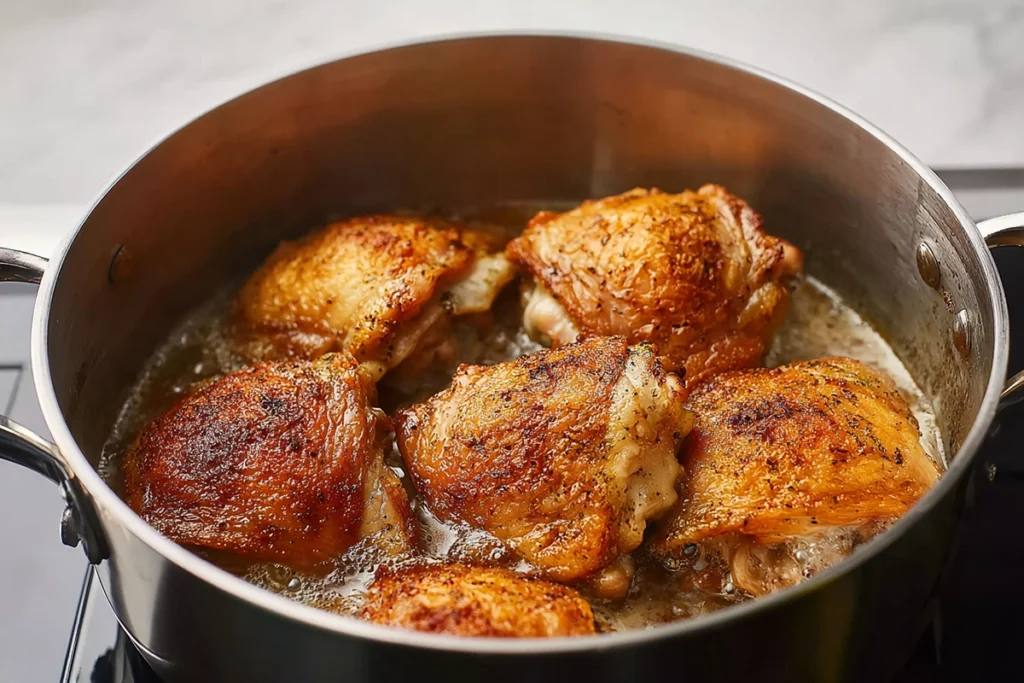
Toasting the Rice Until It Smells Nutty
When the rice hits the pot, stir until every grain is slicked with fat. You’re watching for a faint pearly sheen and listening for a soft whispering sound as moisture cooks off. After about a minute, the aroma shifts — subtle, nutty, almost like popcorn rice. That’s your signal to move on.
Bringing the Pot to a Controlled Boil
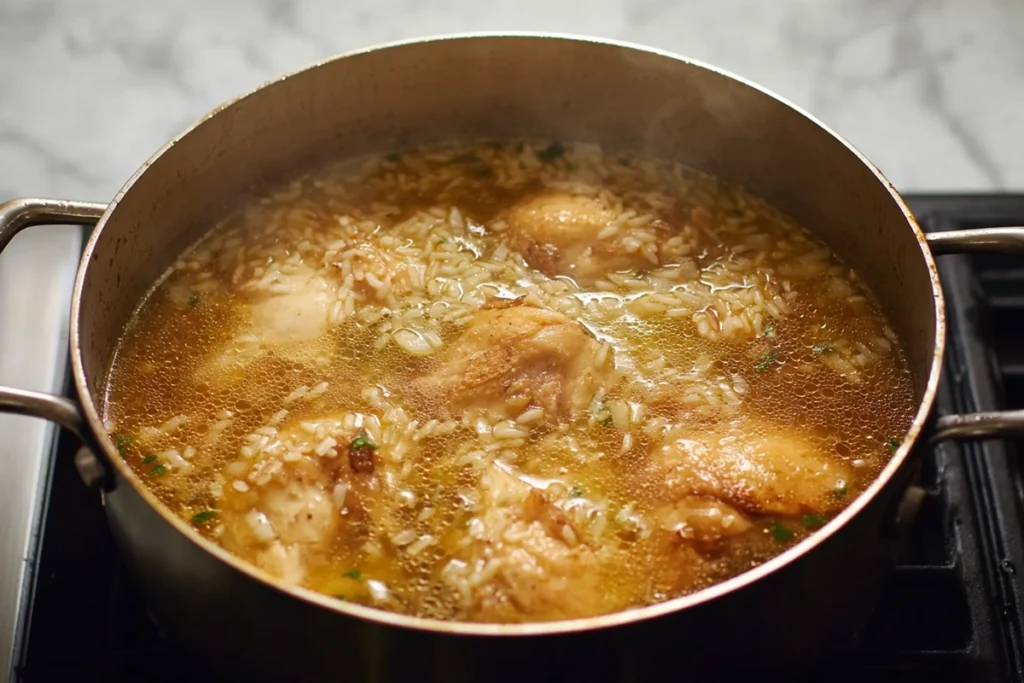
Once the stock goes in, stir deliberately, scraping the bottom so nothing sticks. As the heat rises, you’ll hear the simmer turn from quiet blips to a rolling bubble. This is where attention matters: stir occasionally until the boil settles into a steady, gentle rhythm. The rice should float freely, not clump.
Adding the Chicken at the Right Moment
Seasoned chicken goes in when the rice is just tender on the outside but still firm at the center. The simmer should be lively enough to move pieces around but never aggressive. As it cooks, the chicken turns opaque and springy when pressed, like the base of your thumb. This staggered timing is what keeps one pot chicken and rice from turning dry or gummy.
The “Don’t Ruin It” Moments to Watch Closely
Stirring Without Overdoing It
As the pot finishes cooking, stir more frequently but gently. You should hear a thicker, slower bubble now — a sign the starches are tightening. Scrape the bottom to prevent scorching, but don’t whip air into it. This is a coax, not a scramble.
The Butter Finish and the Rest
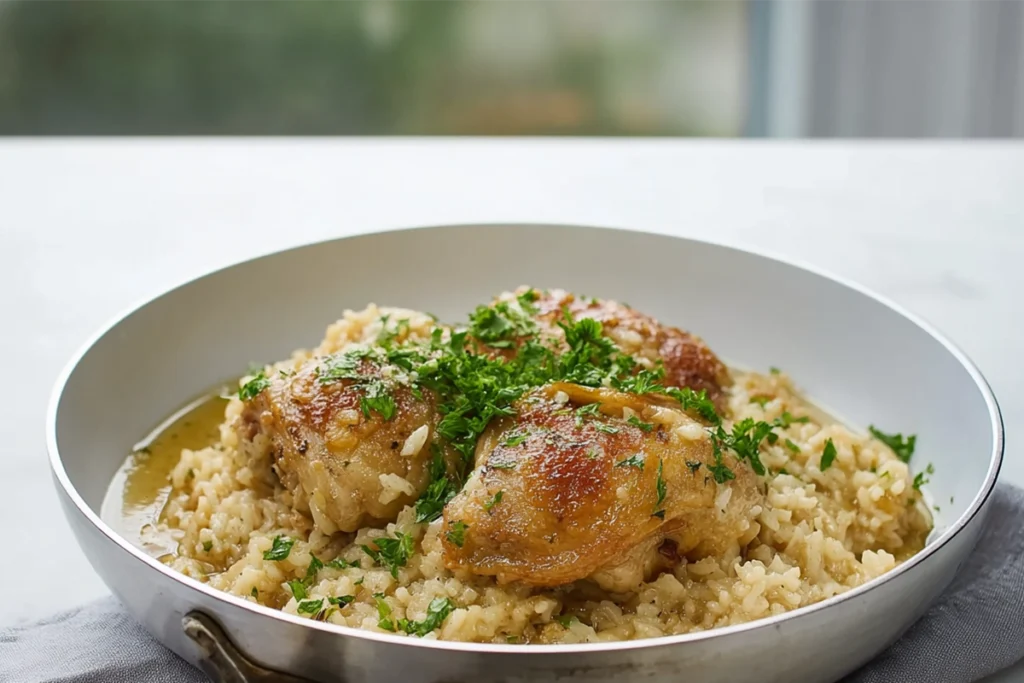
When the heat goes off and the final butter melts in, the surface should look glossy and cohesive. The smell deepens here — richer, rounder, unmistakably comforting. Letting the pot sit is not optional. After a few minutes, the rice relaxes, the broth thickens, and the texture becomes spoonable instead of soupy.
Knowing When It’s Ready
Scoop a spoonful and tilt it slightly. It should mound softly, not run. The rice should bite cleanly, and the chicken should feel tender without shredding. If it tastes better warm than piping hot, you’ve nailed it — that’s exactly where this dish wants to be.
Swaps That Actually Work (and One That Doesn’t)
If you’re staring into the fridge trying to make this work with what you have, a few smart swaps won’t hurt the soul of the dish. Chicken thighs can stand in for breasts without issue — they’re more forgiving and stay juicy, just keep the pieces small so they cook in the same window as the rice. Leftover rotisserie chicken works too, but only if you add it cold near the end, just long enough to warm through. Let it simmer from the start and it will shred itself into dryness.
Vegan butter holds up surprisingly well here and keeps the texture right, especially if you’re avoiding dairy. Low-sodium chicken stock is another safe adjustment, especially if your seasoned salt is aggressive. What doesn’t work? Brown rice, parboiled rice, or anything labeled “instant.” They change the absorption rate completely and turn one pot chicken and rice into either soup or paste — there’s no middle ground.
What to Put Next to a Bowl of This (and What Not To)
This dish is rich, soft, and deeply savory, so it needs contrast more than companionship. A crisp, acidic salad — think sharp vinaigrette, lots of crunch — cuts through the butter and starch in the best way. Pickled vegetables or a quick vinegar-based slaw do the same job with even less effort.
Skip anything else heavy or creamy. Bread sounds tempting, but it doubles down on the starch and leaves you feeling sluggish instead of satisfied. If you want something warm alongside it, go green and bitter — lightly cooked vegetables or a simple side that refreshes the palate rather than competes with the pot.
Last Tip Before You Start
This dish rewards patience more than precision. Stir enough to prevent sticking, but not so much that you break down the rice. Trust the rest at the end — that quiet pause is where the texture locks in and the flavors settle.
If you’re looking for a dinner that feels generous without being fussy, this one pot chicken and rice earns its place in the regular rotation. It reheats well, forgives distractions, and tastes even better once everyone has slowed down enough to enjoy it.
Get inspired with more mouthwatering recipes! Follow me on Facebook and Pinterest for new cooking ideas every week.
Common Questions About One Pot Chicken and Rice
Can I use brown rice instead of white?
Brown rice is not a good swap in this recipe. It needs significantly more liquid and a much longer cooking time, which means the chicken would be overcooked and dry before the rice ever turns tender. This one pot chicken and rice relies on long-grain white rice cooking at the same pace as the chicken; changing that balance breaks the dish. If brown rice is non-negotiable, use a different recipe built specifically for it.
Why does my rice cook unevenly in one-pot recipes?
Uneven rice usually comes from two issues: sticking and rushing the boil. If rice settles on the bottom before the liquid is fully simmering, it cooks faster there and stays firm on top. Stir deliberately as the stock heats up, scraping the bottom, until you reach a steady simmer. After that, occasional gentle stirring is enough — aggressive stirring breaks grains and releases excess starch.
Can I swap chicken thighs for breasts here?
Chicken thighs work well and are actually more forgiving. They stay moist even if the pot runs a few minutes long. Cut them into the same small, bite-sized pieces called for in the recipe so they cook evenly with the rice. Large chunks will lag behind and throw off the timing.
Is this closer to soup or risotto?
It lands right in between. It’s spoonable and glossy like risotto, but sturdier and less creamy. The rice absorbs most of the stock, thickening naturally as it rests. If it looks slightly loose when the heat goes off, that’s correct — it tightens as it sits.
How do I keep the rice from sticking to the pot?
Sticking happens early, not at the end. Stir while the stock comes to a boil so the rice doesn’t settle and scorch. Use medium-low heat once simmering and scrape the bottom occasionally, especially in the last few minutes when the starch thickens. A heavy-bottomed soup pot makes this much easier to control.
Print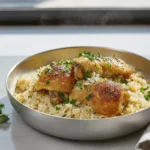
One-Pot Chicken and Rice
- Total Time: 50 minutes
- Yield: 6 servings 1x
- Diet: Halal
Description
One Pot Chicken and Rice is part soup, part risotto, and wholly comforting. Buttery rice, tender chicken, and a cozy, spoonable texture made in a single pot.
Ingredients
- 4–6 tablespoons butter or vegan butter, divided
- 1 heaping cup shredded or chopped carrots
- Seasoned salt, to taste
- Black pepper, to taste
- 2 scant cups long-grain white rice
- 1 tablespoon dried minced onion
- 1 teaspoon dried minced garlic
- 2 tablespoons dried parsley flakes
- 8 cups chicken stock
- 2 chicken breasts (about 1 pound), cut into small bite-sized pieces
Instructions
- Melt part of the butter in a large soup pot over medium heat until foamy.
- Add carrots, season lightly, cover, and cook until tender and glossy.
- Stir in rice, dried onion, and dried garlic and cook briefly until the rice smells lightly toasted.
- Add parsley and chicken stock, bring to a controlled boil, stirring to prevent sticking.
- Lower to a gentle simmer and cook until rice is partially tender.
- Season chicken and add to the pot, simmering until chicken is cooked through and rice is al dente.
- Finish with remaining butter, adjust seasoning, and let rest before serving.
Notes
- Use long-grain white rice only; instant or short-grain rice will turn mushy.
- Cut chicken into small pieces so it cooks evenly with the rice.
- The dish thickens as it rests and tastes best warm rather than piping hot.
- Store leftovers in glass containers for best texture when reheating.
- Prep Time: 15 minutes
- Cook Time: 35 minutes
- Category: Dinner
- Method: Stovetop
- Cuisine: American
Nutrition
- Serving Size: 1 bowl
- Calories: 508
- Sugar: 7
- Sodium: 1014
- Fat: 14
- Saturated Fat: 6
- Unsaturated Fat: 6
- Trans Fat: 0.3
- Carbohydrates: 64
- Fiber: 2
- Protein: 29
- Cholesterol: 78
What Are Our Readers Saying?
There are no reviews yet. Be the first one to write one.