Overnight Crème Brûlée French Toast: Crackly Caramel, Soft Centers, No Morning Rush

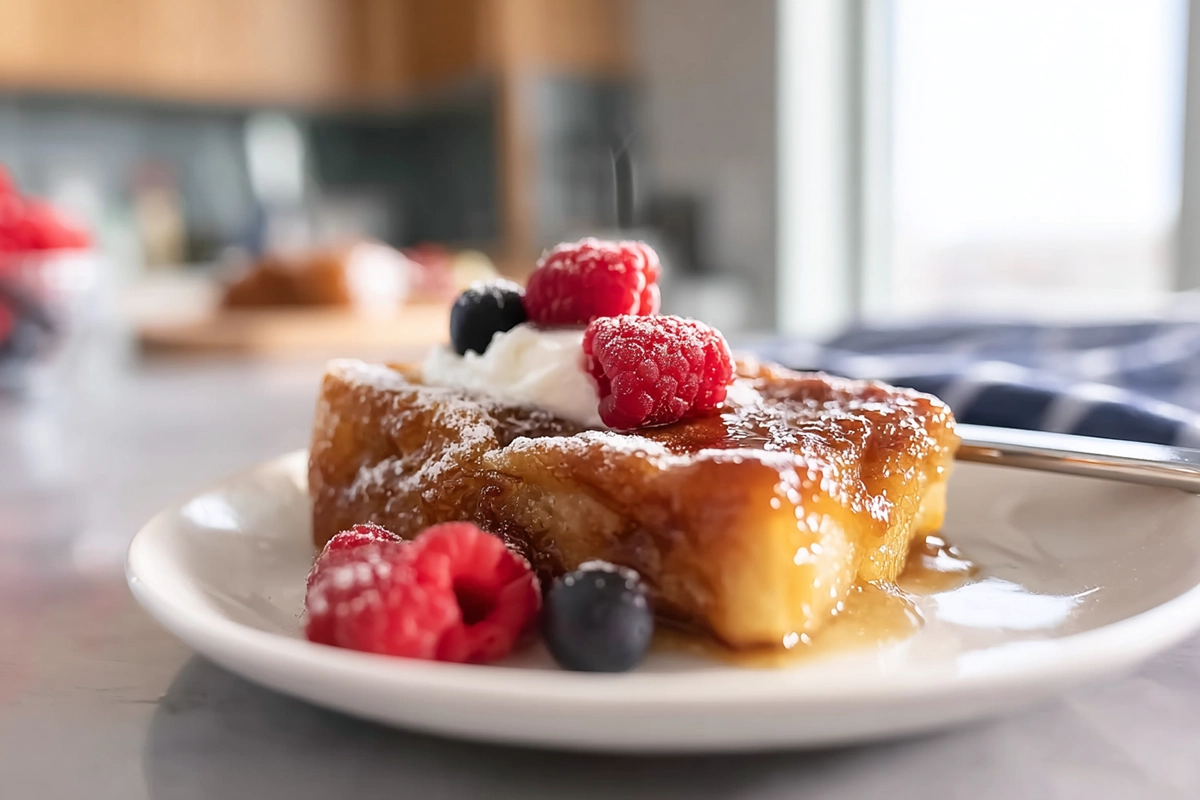
There’s a particular kind of quiet satisfaction that comes from opening the oven and seeing caramel bubble up around bread that’s been waiting patiently all night. The brown sugar melts into butter, turns glossy, then deepens into something just shy of candy. The edges darken first. The center follows. By the time it’s ready, the kitchen smells like toasted sugar and vanilla with that faint, buttery bitterness that tells you the caramel did its job.
This overnight crème brûlée French toast isn’t about speed or showmanship. It’s about timing. Letting the bread absorb the custard slowly. Letting the sugar dissolve fully before heat ever touches it. Letting the oven warm up gradually so the custard sets before the caramel hardens. Those small decisions are the difference between a pan that slices clean and one that collapses into soggy layers. Nothing here is complicated, but none of it is accidental either.
What I like most about this recipe is that it works while you’re not paying attention. The mixing happens the night before. The structure takes care of itself in the fridge. In the morning, all that’s left is heat and patience. You don’t stand at the stove flipping slices or guessing doneness. You wait for the bubbling to tell you when it’s ready.
From here, the process is straightforward, but a few steps matter more than others. The way the sugar layer is built. How the bread is arranged. When the oven gets turned on. Those details are where this dish earns its name.
Table of Contents
Ingredients With Jobs (Not Just a Shopping List)
This overnight crème brûlée French toast works because every ingredient is doing quiet, specific work long before the oven turns on. Nothing here is decorative. Each piece supports texture, timing, or balance.
The butter, brown sugar, and syrup aren’t just sweetness at the bottom of the pan. Melted together, they form a controlled caramel that stays fluid long enough for the bread to settle into it, then firms up as the oven slowly comes to temperature. Brown sugar matters here. White sugar melts too sharply and hardens too fast, while brown sugar brings moisture and depth that keeps the caramel supple instead of brittle.
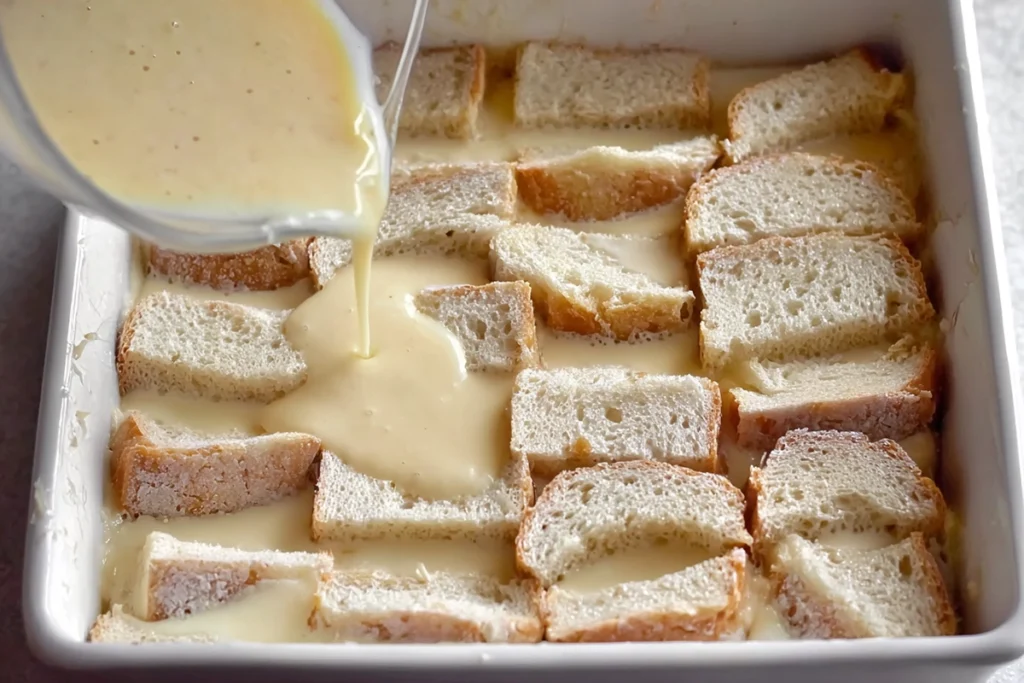
The bread choice is practical, not romantic. French bread has a tight crumb and neutral flavor, which means it absorbs custard without collapsing. Cut into cubes and laid mostly in a single layer, it creates even contact with both custard and caramel. Softer enriched breads can work, but they push the dish closer to bread pudding than French toast.
Eggs and half-and-half are about structure, not richness. Four eggs give just enough set so the center slices clean. Half-and-half provides body without turning the bake heavy or dense. Milk alone would thin the custard too much; heavy cream would tip it toward dessert.
Vanilla and salt don’t announce themselves, but you notice their absence immediately. Vanilla softens the caramel edge, while salt keeps the sweetness from tasting flat or sticky.
- Unsalted butter: Builds the caramel base without overpowering the sugar
- Brown sugar: Melts evenly and stays supple as it bakes
- Maple, corn, or pancake syrup: Adds fluidity so the caramel doesn’t seize
- French bread: Absorbs overnight without turning mushy
- Eggs: Set the custard so slices hold together
- Half-and-half: Balances richness and structure
- Vanilla extract: Rounds out the sweetness
- Salt: Sharpens flavor and controls sweetness
If you only have salted butter, skip adding extra salt later. The balance matters more here than you’d expect.

Why Overnight Crème Brûlée French Toast Works Without a Torch
What makes this dish feel like a crème brûlée French toast casserole isn’t fire or crunch on top — it’s patience underneath. The overnight rest allows the custard to hydrate the bread evenly, which means it sets cleanly instead of squeezing liquid as it bakes. That rest time is what separates a clean slice from a soggy scoop.
The caramel layer works because it’s introduced before heat, not after. Melting the sugar with butter and syrup dissolves the crystals completely, so they re-form smoothly in the oven instead of burning or turning grainy. As the pan warms gradually, the custard sets first, then the caramel tightens just enough to cling to the bread.
This is also why the cold oven start matters. Bringing everything up to temperature together gives the custard time to stabilize before the sugar reaches its breaking point. Skip that, and you risk scrambled egg texture under a burnt base.
The result eats like a make-ahead French toast bake with intention — soft inside, caramelized underneath, and steady enough to serve without rushing.
Cold Oven Baking: The Quiet Step People Skip and Then Regret
This French toast bake starts before the oven ever heats up. The pan goes in cold, straight from the refrigerator, and that pause matters. As the oven warms, the custard begins to set gently instead of seizing at the edges. You’ll notice the surface stay pale at first, then slowly take on color as the kitchen fills with warm vanilla and melted brown sugar.
Listen for the sound near the end — a low, sticky bubbling from the corners of the pan. That’s the caramel waking up underneath. If you rush this with a fully preheated oven, the sugar hardens before the custard firms, and the bottom burns while the center stays loose.
Managing the Caramel Layer Without Burning It
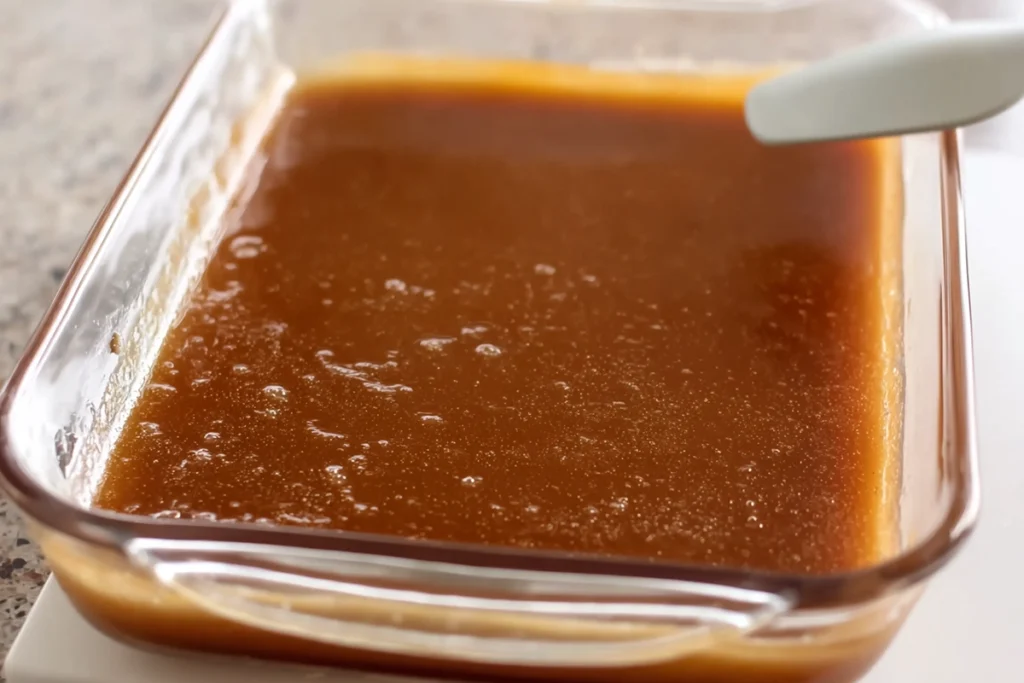
The caramel is built before baking, not finished after. Once the butter and brown sugar mixture is spread across the pan, it should look glossy and fluid, not grainy or stiff. As the bake progresses, that layer melts again, then thickens into a syrup that clings to the bread instead of soaking into it.
Watch the edges. When they turn deep amber and pull slightly away from the sides of the pan, you’re close. The smell shifts at that point too — less raw sugar, more toasted, almost nutty. That’s your signal that the caramel has set without tipping into bitterness.
Knowing When the Custard Is Fully Set
The center should look softly puffed, not wet. Press lightly with the back of a spoon or your fingertip; it should feel springy, like a firm sponge, not sloshy. If you lift a piece slightly, the bottom should hold together with a thin, sticky coating of caramel instead of dripping liquid.
If you choose to flip partway through baking for extra caramel contact, you’ll hear a brief hiss as the syrup meets the hot pan again. That’s normal. What you don’t want is loud popping or smoke, which means the sugar is cooking too fast.
Resting Before Serving Matters More Than You Think
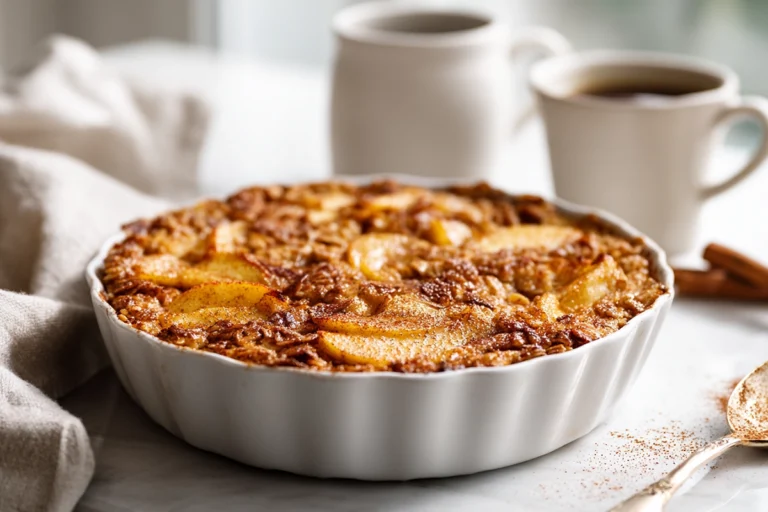
Once out of the oven, this crème brûlée French toast casserole needs a few quiet minutes. The bubbling slows, the caramel tightens, and the custard finishes setting from residual heat. Cut too soon, and the layers slide. Wait five minutes, and the slices lift clean, glossy on the bottom, soft through the middle, and ready for whipped cream or fruit without collapsing.
Small Adjustments That Keep the Texture Intact
This dish is fairly forgiving, but a few changes are safer than others. If you prefer a softer, more custardy center, increasing the half-and-half and adding one extra egg works well — especially if your bread slices are thicker than an inch. The bake stays cohesive, just looser in the middle. Going in the opposite direction, with less dairy, pushes the toast toward dryness and isn’t worth it.
Bread swaps need restraint. Brioche or challah will work, but only if you trim heavy crusts and keep the cubes in a tight, mostly single layer. These breads absorb faster and collapse more easily, which can blur the line between French toast and bread pudding. What doesn’t work well is sandwich bread; it disintegrates overnight and leaves the caramel with nothing to cling to.
For sweetness, brown sugar is non-negotiable. Reducing the amount slightly is fine, but replacing it with white sugar changes how the caramel behaves and often leads to a hard, burnt base. If you only have salted butter, simply omit any additional salt later — the balance stays right.
How This Is Meant to Be Served
This overnight crème brûlée French toast is best served warm, not piping hot. Give it a few minutes to settle so the caramel firms just enough to release clean slices. A spoon of lightly sweetened whipped cream adds contrast without masking the caramel, while fresh strawberries or raspberries cut through the richness and keep the dish from feeling heavy.
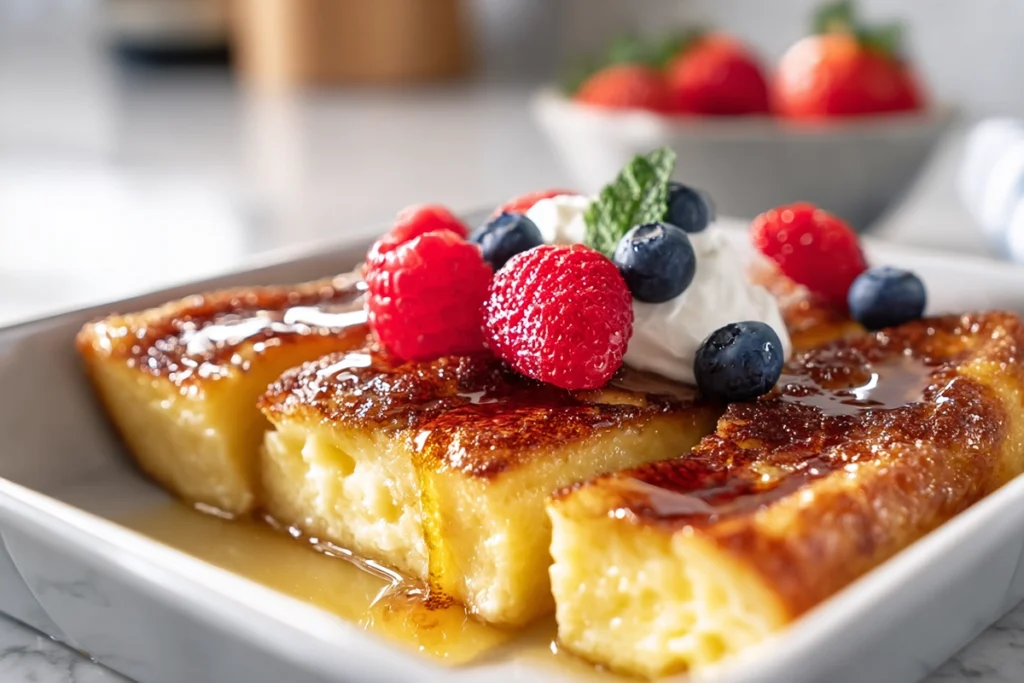
On a larger table, this pairs well with something savory on the side — crisp bacon or sausage works because the salt offsets the sugar. For a quieter breakfast, coffee with a slightly bitter edge does the same job. This is a dish that replaces pancakes or cinnamon rolls, not one that needs competition.
A Few Last Things Worth Remembering
Resist the urge to rush the bake.
the edges is the most reliable sign of doneness, not color alone. If the center feels loose, give it a few more minutes; it will finish setting as it rests. Cutting too early is the fastest way to undo all the overnight work.
This recipe rewards patience more than precision. Once you understand how the caramel and custard behave together, it becomes a dependable piece of your rotation — the kind you come back to when you want breakfast to feel taken care of.
There’s something grounding about putting a pan together the night before and letting time do the work. This overnight crème brûlée French toast isn’t flashy, but it shows up exactly how you need it to — warm, steady, and meant to be shared.
Get inspired with more mouthwatering recipes! Follow me on Facebook and Pinterest for new cooking ideas every week.
FAQ
Can I prepare overnight crème brûlée French toast more than one night ahead?
It’s best prepared the night before and baked the next morning. Letting it sit longer than about 10–12 hours can cause the bread to absorb too much custard and lose structure, especially with softer breads. If you need to get ahead, assemble everything except the custard and add that the night before baking.
Why is my French toast bake soggy in the middle?
A slightly soft center is normal, but wet or loose usually means the bread layer was too thick or stacked unevenly. This recipe works best when the bread is mostly in a single layer so it bakes evenly. It can also happen if the bake is pulled before the caramel is actively bubbling at the edges.
Do I have to start this French toast in a cold oven?
Yes, the cold oven start is important for texture. It allows the custard to set gently before the caramel tightens, which prevents a burnt bottom and undercooked center. Putting the pan straight into a hot oven often causes the sugar to harden too fast.
Can I use brioche or challah instead of French bread?
You can, but the texture will be softer and more pudding-like. Trim thick crusts and keep the bread cubes snug and mostly in one layer to avoid collapse. French bread gives the cleanest slices and the most consistent results.
Is it normal for the bottom to look very syrupy when it comes out?
Yes, that’s expected. The caramel is still bubbling and loose when it first comes out of the oven. After resting for about five minutes, it thickens and clings to the bread instead of running.
Print
Overnight Crème Brûlée French Toast
- Total Time: 9 hours 10 minutes
- Yield: 8 servings 1x
Description
This overnight crème brûlée French toast features a buttery brown sugar caramel base, custardy bread, and a make-ahead method that delivers rich flavor with minimal morning effort.
Ingredients
- 6 tablespoons unsalted butter
- 3/4 cup packed brown sugar
- 2 tablespoons maple syrup, corn syrup, or pancake syrup
- 6 to 8 slices French bread, cut into cubes
- 4 large eggs
- 1 cup half-and-half
- 1 tablespoon vanilla extract
- 1/4 teaspoon salt
- Sweetened whipped cream
- Fresh strawberries or raspberries
Instructions
- Melt the butter, brown sugar, and syrup until smooth and glossy.
- Spread the caramel mixture evenly in a greased baking dish and layer the bread cubes on top.
- Whisk the eggs, half-and-half, vanilla, and salt, then pour evenly over the bread.
- Cover and refrigerate overnight to allow the custard to fully absorb.
- Place the pan in a cold oven, then bake until the caramel bubbles and the top is golden.
- Let rest briefly before serving to allow the caramel to set.
Notes
- For a softer, more custardy texture, increase the half-and-half to 1 1/2 cups and use 5 eggs.
- Trim thick crusts from artisan bread to prevent uneven soaking.
- Bread should be mostly in a single layer to avoid soggy centers.
- Prep Time: 20 minutes
- Cook Time: 50 minutes
- Category: Breakfast
- Method: Baking
- Cuisine: American
Nutrition
- Serving Size: 1 slice
- Calories: 420
- Sugar: 20g
- Sodium: 210mg
- Fat: 18g
- Saturated Fat: 10g
- Unsaturated Fat: 7g
- Trans Fat: 0g
- Carbohydrates: 54g
- Fiber: 2g
- Protein: 10g
- Cholesterol: 180mg