Homemade Bagels That Bake Up Chewy and Golden Every Time

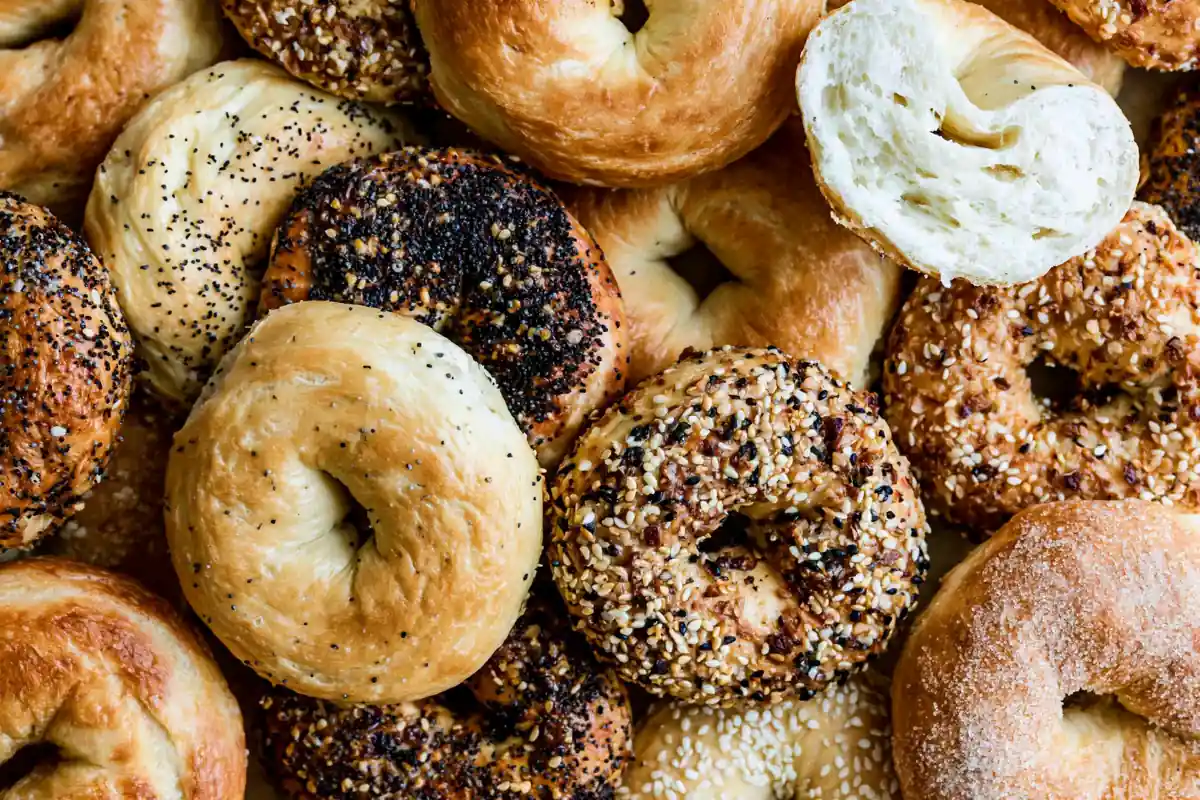
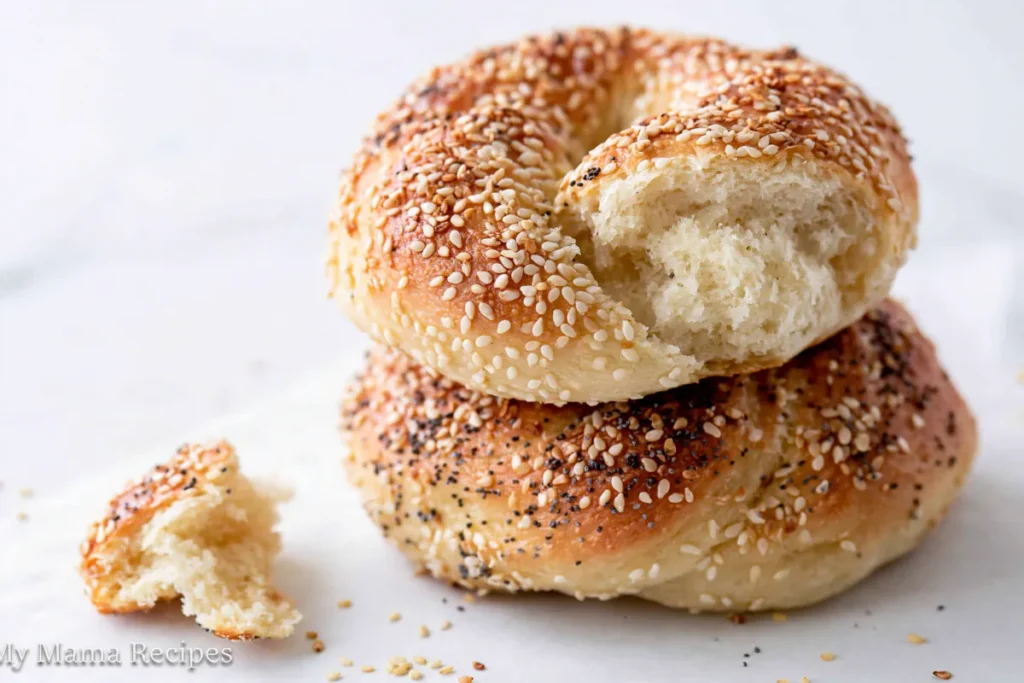
Fresh homemade bagels smell different from regular bread. The crust turns deep golden in the oven while the inside stays dense and chewy, especially when they’re still a little warm from the cooling rack. That texture comes from a few specific techniques, not complicated ingredients.
This homemade bagels recipe keeps things straightforward. You mix a lean dough, give it enough kneading to build strength, then boil the bagels before baking. It takes a little time, but most of it is hands-off waiting while the dough rises.
What Gives Homemade Bagels Their Classic Chew
Bagels aren’t supposed to feel soft and fluffy like sandwich bread. A good homemade bagel has resistance when you bite into it, followed by a dense interior that still feels tender once toasted. That texture starts with the dough itself. Compared to standard bread dough, bagel dough contains less water, which makes it firmer and easier to shape into rings that hold their structure.
The boiling step matters just as much. Dropping the shaped dough into simmering water for about 1 minute per side gelatinizes the outer starch layer before the bagels even reach the oven. That’s why the crust develops that shiny finish and slight pull when you bite into it later.
Bread flour also changes the texture noticeably because of its . All-purpose flour can work in a pinch, but the bagels tend to bake softer and flatter. I stick with bread flour here because it gives the dough enough strength to stay chewy without becoming heavy.
Building the Dough for Homemade Bagels
The dough starts simple: warm water, yeast, barley malt syrup or sugar, bread flour, and salt. Nothing fancy. The key is paying attention to how the dough feels after mixing for a couple of minutes. It should look stiff and slightly dry, not loose like pizza dough.
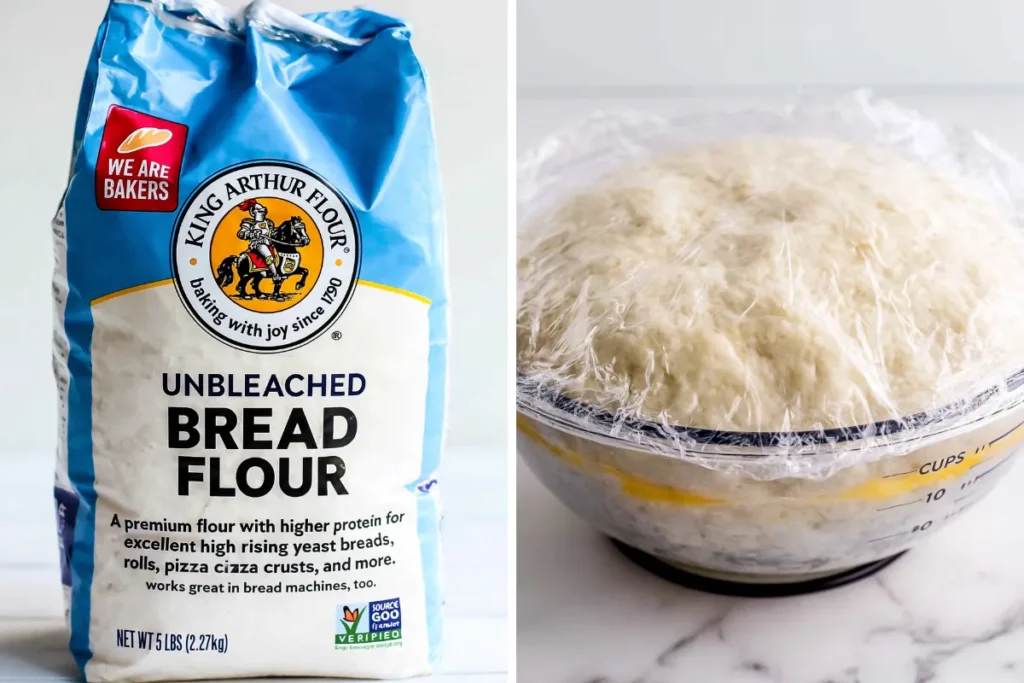
If the dough clings heavily to the sides of the bowl, add flour slowly — just 1 tablespoon at a time. Too much flour too quickly can leave you with dense bagels that feel dry once cooled. On humid days, I usually need an extra spoonful or two. Dry winter kitchens sometimes need the opposite, especially if the dough starts breaking apart while kneading.
Why Bread Flour Matters
Bread flour contains more protein than regular flour, which helps develop stronger gluten strands during kneading. That’s what creates the chewy texture bagels are known for. You can feel the difference after about 6 minutes of kneading when the dough starts turning smoother and more elastic instead of rough and shaggy.
Adjusting Water and Flour When Dough Feels Wrong
Sticky dough isn’t automatically bad. Slightly tacky is fine. What you don’t want is dough that smears across the counter or tears apart when stretched. Add tiny adjustments only when needed. A teaspoon of water or a dusting of flour often fixes the issue without changing the final texture too much.
Simple Ways to Tell if Your Dough Is Ready
Most home bakers stop kneading too early because the dough already looks smooth. Bagel dough needs a little more time than softer breads. Around the 6 to 7 minute mark, the surface should feel elastic and spring back slowly when pressed with a fingertip.
The finger poke test is the easier option. Press gently into the dough with one finger. If the indentation slowly fills back in, the gluten structure is developed enough for rising. If it stays sunken or tears, keep kneading another minute or two.
The Windowpane Test Without Overthinking It
Tear off a small piece of dough and stretch it gently between your fingers. If light passes through the center before the dough tears, you’re there. It doesn’t need to look perfectly transparent. You’re just checking whether the dough can stretch without immediately ripping apart.
Kneading and Rising for Better Texture
Bagel dough should feel firm during kneading. That’s normal. A stand mixer makes the process easier because this dough puts up some resistance, but kneading by hand works just fine if you don’t mind a little effort.
Try not to dump extra flour onto the counter constantly while kneading. The dough becomes smoother as gluten develops, and too much added flour can tighten it too much. I usually keep the counter lightly dusted and only add more if the dough genuinely sticks.
Once kneaded, the dough needs about 1½ to 2 hours to rise at room temperature until doubled in size. Warmer kitchens move faster. Cooler kitchens can take longer. Don’t rush it by overheating the dough near the oven. Slow, steady rising gives the finished bagels a better texture and more balanced flavor.
My mother used to judge dough readiness by lifting the bowl slightly and watching how relaxed the surface looked after rising. Tight dough usually needed more time. I’ve caught myself doing the same thing more than once.
Shaping Homemade Bagels Without Flattening Them
Once the dough finishes rising, punch it down gently to release the large air pockets. You don’t need to aggressively deflate it. Divide the dough into 8 equal portions, roughly 4 ounces each if you’re weighing them. Even sizing helps the bagels bake at the same rate later.
Roll each piece into a tight ball first. That tension on the outer surface helps the bagels keep their shape during boiling. After that, press your finger straight through the center and stretch the hole gradually until it’s about 1½ to 2 inches wide. Bigger than you think, honestly. The hole shrinks quite a bit during boiling and baking.
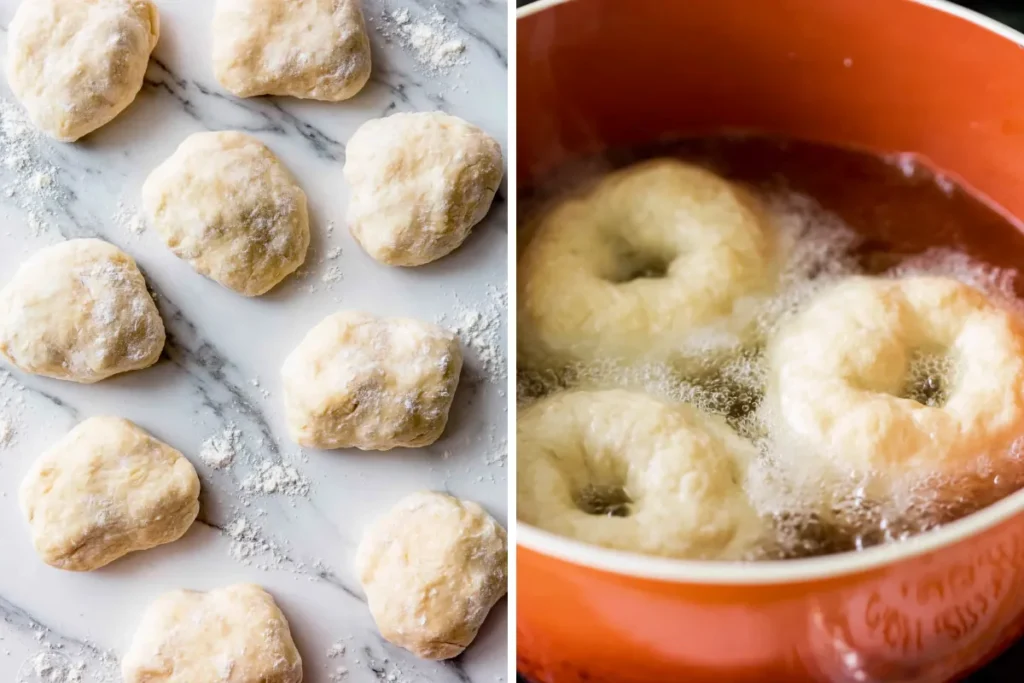
Let the shaped bagels rest for 5 to 10 minutes before boiling. That short rest relaxes the gluten slightly, which helps prevent wrinkled surfaces later.
Why the Water Bath Changes Everything
Boiling is what separates bagels from regular bread rolls. Without it, you’d still get something tasty, but it wouldn’t have that glossy crust and chewy bite that makes a bagel feel like a bagel.
The water bath here includes barley malt syrup or honey, which adds a subtle sweetness and encourages deeper browning in the oven. Once the water reaches a steady boil, reduce the heat slightly so the bagels simmer instead of getting tossed around violently. Too much movement can stretch or deflate them.
Boil each bagel for 1 minute per side. Longer boiling creates a thicker crust and denser interior. Shorter boiling gives a softer texture. I find the one-minute timing hits a good middle ground for homemade bagels that still toast beautifully the next day.
Use a slotted metal spatula when lifting them out. They’re delicate right after boiling and can wrinkle if handled roughly.
Baking for a Dark Golden Crust
Bagels need a hot oven. 425°F gives enough heat to develop color quickly without drying the centers before they’re fully baked. Preheat the oven fully before boiling starts so the bagels can go straight from water to oven while the surface is still tacky.
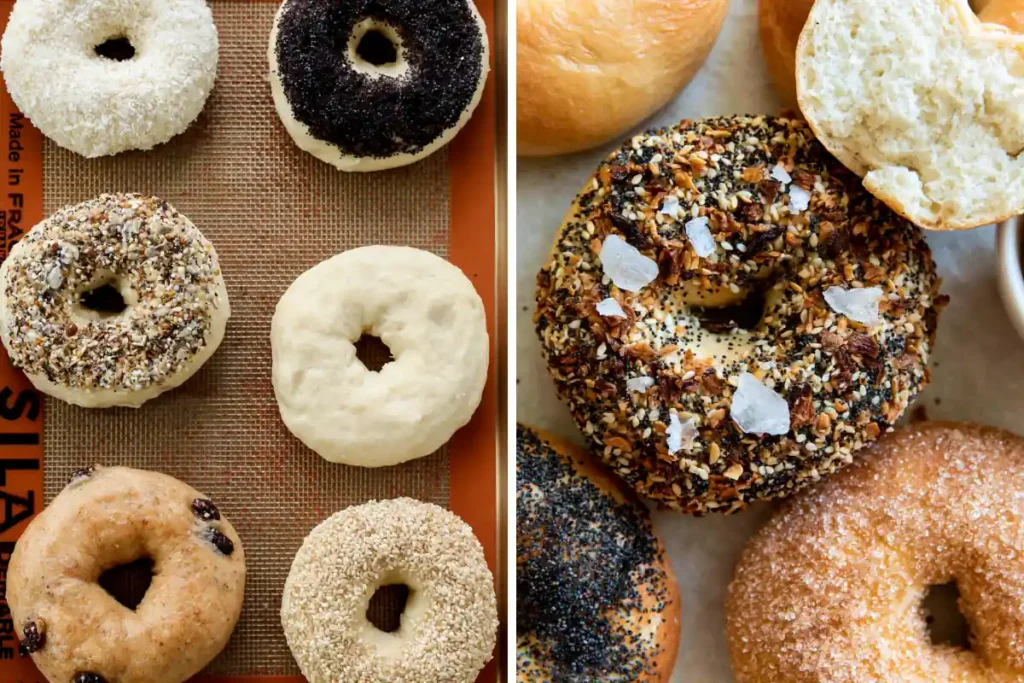
The egg wash helps in two ways: it gives the crust shine and helps toppings stick better. Brush the tops and sides evenly, especially around the center ring where pale spots tend to hide. If you’re using sesame seeds, everything seasoning, or poppy seeds, press them on right after brushing so they adhere properly.
Bake for about 20 to 25 minutes, rotating the pans halfway through. The bagels should look noticeably darker than dinner rolls when done. A light golden color usually means the crust hasn’t developed enough yet. The bottoms should feel firm, and the tops should sound slightly hollow if tapped.
Cooling Bagels the Right Way
Fresh bagels smell tempting straight out of the oven, but slicing them too early can leave the interior gummy. Give them at least 20 minutes on the baking sheet first, then move them to a wire rack so steam can escape evenly from all sides.
That cooling period finishes the texture. The crust settles, and the inside becomes chewy instead of damp. Worth waiting for.
If you’re planning to toast them later, let the bagels cool completely before storing. Trapped warmth inside a sealed container softens the crust faster than you’d expect.
Easy Homemade Bagel Variations
Plain bagels are great, but this dough handles toppings and mix-ins really well if you want a little variety. Sesame seeds and poppy seeds are the easiest place to start because they hold up nicely during baking without changing the dough itself.
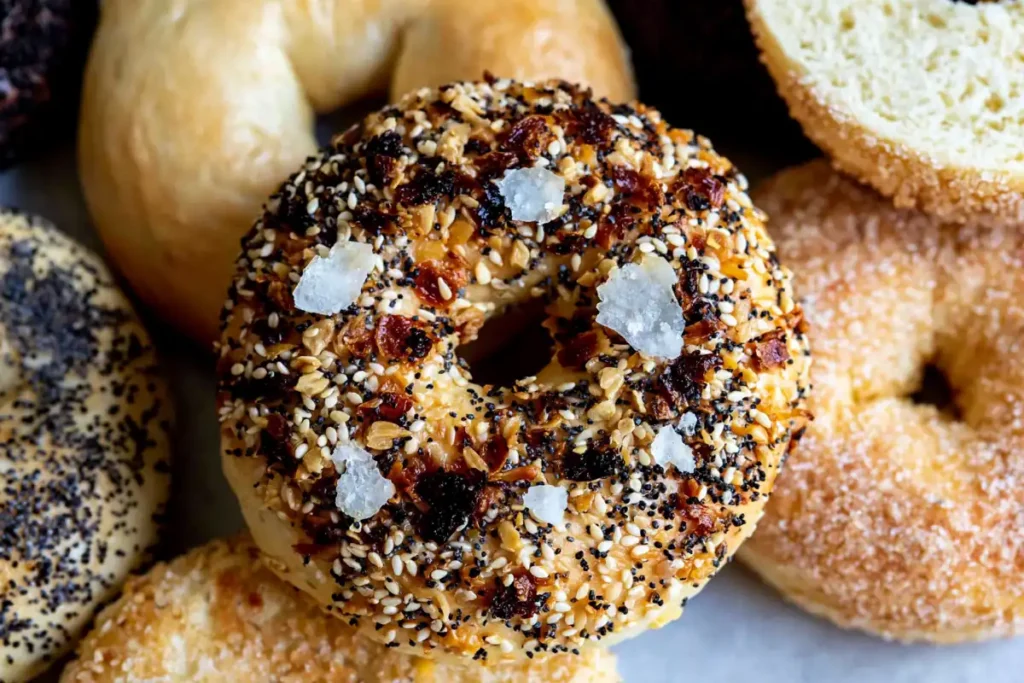
Everything seasoning works especially well here because the chewy crust gives the garlic, onion, and sesame seeds something sturdy to cling to. Just make sure the egg wash fully coats the top before dipping. Dry spots tend to shed toppings after baking.
Seeded Bagels
For seeded bagels, press the toppings down lightly after dipping instead of just sprinkling them over the surface. It helps them stay attached once the crust expands in the oven.
A coarse salt topping can work too, though I usually go lighter with it because the dough already contains enough salt for balance.
Cinnamon Raisin and Other Sweet Variations
If you want sweeter bagels, knead about ¾ cup raisins and 1 teaspoon cinnamon into the dough during the final minute of kneading. The dough may feel slightly looser afterward because raisins release a little moisture while baking.
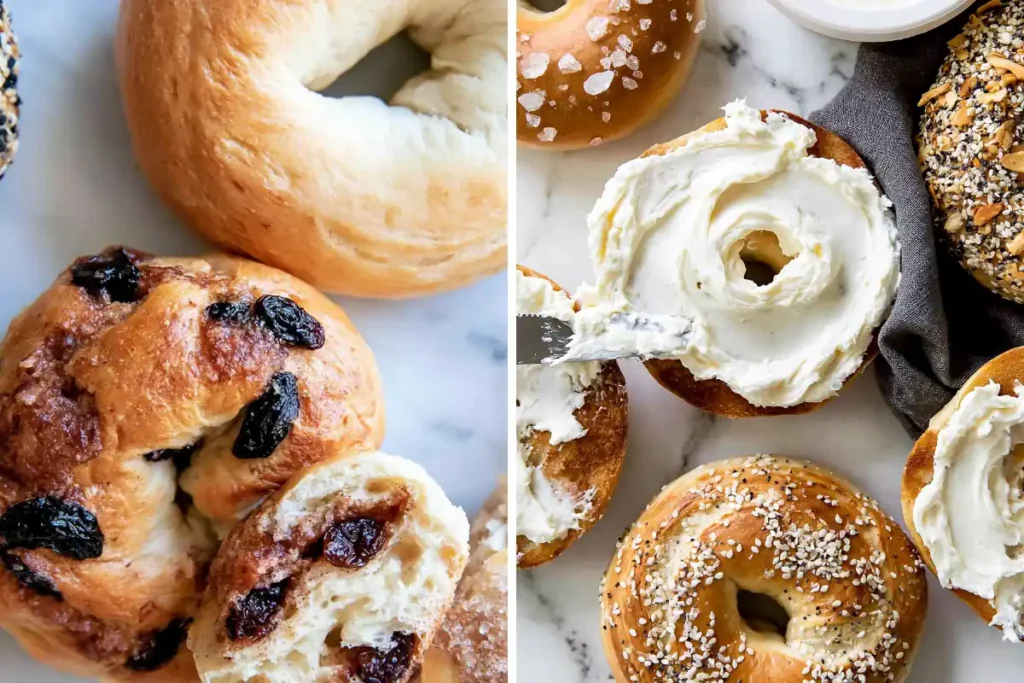
I’ve also made these with a handful of dried blueberries. Good toasted with cream cheese. Especially the next morning.
Storing and Reheating Without Losing Texture
Homemade bagels are best the day they’re baked, but they hold up surprisingly well for several days if stored correctly. Keep them tightly covered at room temperature for up to 4 days. Avoid refrigerating unless your kitchen runs especially warm because refrigeration tends to dry bread out faster.
For longer storage, slice the bagels completely once cooled, then freeze them in a sealed bag. That way you can pull individual halves straight into the toaster without thawing first.
A quick toast usually brings the crust back to life. If the bagels feel a little firm after a couple of days, a 10-second splash of water on the exterior before toasting can help restore some chewiness.
Frequently Asked Questions
Can I Make Homemade Bagels Without a Stand Mixer?
Yes. The dough is firm, so mixing with a wooden spoon takes a little effort at first, but once the flour hydrates, you can knead everything by hand on a lightly floured counter for about 7 minutes.
Why Did My Bagels Wrinkle After Boiling?
Wrinkling usually happens when the dough overproofs before boiling or when the bagels cool too long before going into the oven. Keep the resting period short after shaping and transfer them to the oven fairly quickly after boiling.
Can I Replace Some of the Bread Flour With Whole Wheat Flour?
You can replace part of the bread flour with whole wheat flour, though I wouldn’t swap more than about 1 cup unless you want a much denser texture. Whole wheat flour absorbs more water and can make the dough tighter.
How Do I Keep Toppings From Falling Off?
Brush the egg wash thoroughly around the tops and sides, then dip the bagels directly into the toppings while the surface is still wet. Press gently so the seeds stick before baking.
Can This Dough Be Made With Sourdough Starter?
It can, though the timing changes quite a bit depending on your starter strength. For this specific recipe, commercial yeast keeps the process more predictable and gives a consistent chew.
Fresh Bagels Are Worth the Effort
The first batch of homemade bagels usually teaches you more than any recipe explanation can. You’ll start noticing how the dough should feel, how the crust changes after boiling, and how much color the bagels really need before leaving the oven.
Once you get comfortable with the process, it becomes the kind of recipe you can make almost from memory. That’s usually when the good bagels start happening.
Homemade Bagels
Ingredients
Method
- Whisk the warm water, barley malt syrup or sugar, and yeast together in the bowl of a stand mixer. Cover and let sit for 5 minutes.
- Add the bread flour and salt, then mix on medium speed for about 2 minutes until the dough pulls away from the sides of the bowl.
- Knead the dough for 6 to 7 minutes until smooth, elastic, and slightly tacky.
- Place the dough in a lightly greased bowl, cover, and let rise at room temperature for 1 1/2 to 2 hours until doubled in size.
- Line two baking sheets with parchment paper or silicone mats.
- Punch down the dough and divide it into 8 equal pieces. Shape each piece into a ball, then poke a hole through the center and stretch into a bagel shape.
- Cover the shaped bagels loosely and let rest for 5 to 10 minutes.
- Preheat the oven to 425°F.
- Bring 2 quarts of water and barley malt syrup or honey to a boil in a large pot.
- Boil 2 to 3 bagels at a time for 1 minute per side, then transfer back to the prepared baking sheets.
- Brush each bagel with egg wash and add toppings if desired.
- Bake for 20 to 25 minutes, rotating the pans halfway through, until dark golden brown.
- Cool the bagels on the baking sheets for 20 minutes, then transfer to a wire rack to cool completely.
Notes
- Bread flour gives these bagels their chewy texture.
- Do not add too much extra flour while kneading or the bagels may turn dry.
- The bagel holes should look larger than expected because they shrink during boiling and baking.
- Store leftover bagels tightly covered at room temperature for up to 4 days.
- Slice and freeze cooled bagels for longer storage.