German Potato Pancakes with Crispy Golden Edges

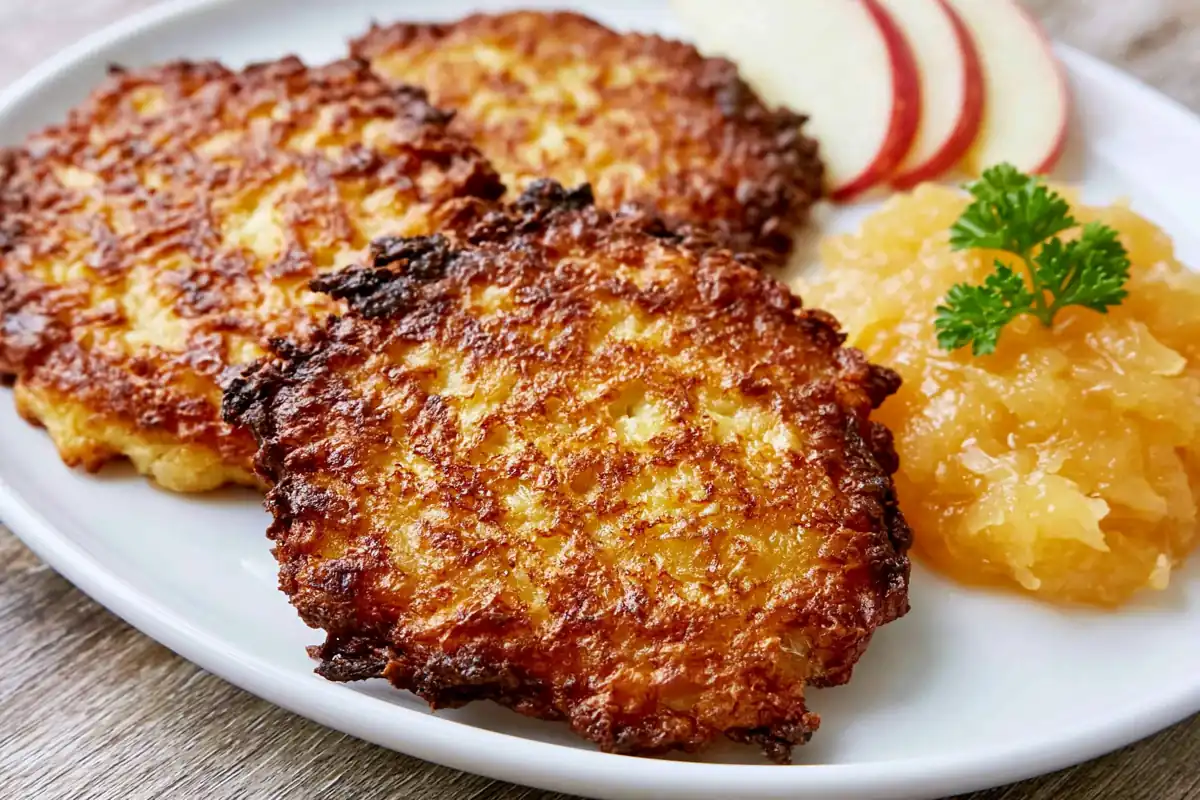
German Potato Pancakes are the kind of food that should hit the plate hot, with crisp edges that crack a little when you bite into them. The middle stays tender, the onion gives just enough sharpness, and the salt keeps everything simple.
This is my home version of Kartoffelpuffer, made with grated potatoes, onion, eggs, flour, and a hot pan. Nothing fancy. Just a good squeeze, a quick mix, and careful frying.
What Makes German Potato Pancakes Special
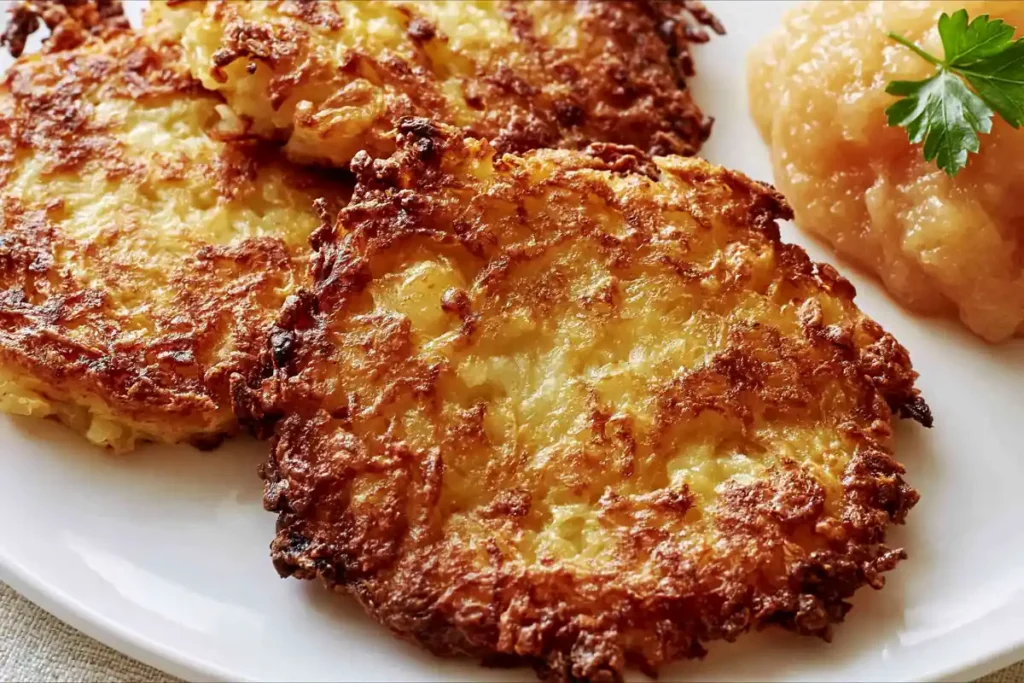
The best thing about German Potato Pancakes is the contrast. You want the outside deeply golden and crisp, while the inside still tastes like soft grated potato, not dry hash browns. That balance comes from removing enough liquid before the mixture ever touches the pan.
A wet potato mixture spreads badly and steams instead of frying. That’s why I don’t rush the draining step. After grating the potatoes, squeeze them hard in a clean dish towel or press them firmly in a colander. It feels like extra work, but it’s the part that gives the pancakes their bite.
These are also meant to be eaten right away. Let them sit too long, and the crispness fades. I usually serve them as they come out of the pan, even if that means everyone eats in little batches. Worth it.
What Are Kartoffelpuffer?
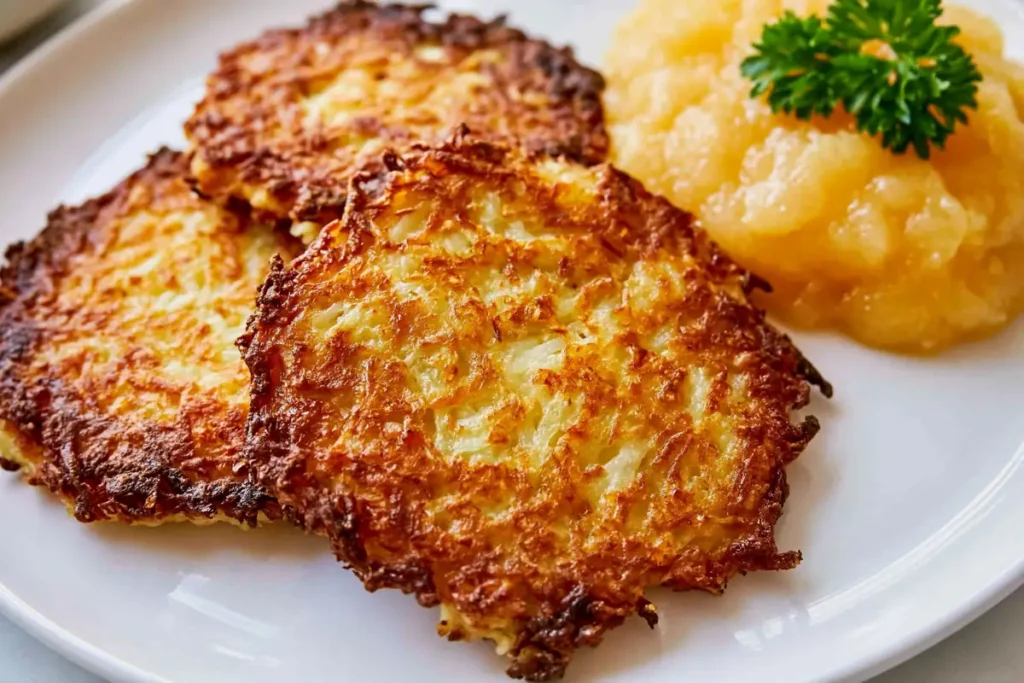
Kartoffelpuffer are traditional German potato pancakes made from grated raw potatoes, usually mixed with onion, egg, and a little flour or starch to help hold everything together. They’re fried in oil until the edges turn golden and crisp.
You may see different names depending on the region. Some people call them Reibekuchen, Reiberdatschi, or Kartoffelpfannkuchen. The idea stays close: grated potato, simple binder, hot fat, crisp result.
They’re not quite the same as Swiss Rösti. Rösti is often more focused on potato alone and can be made as one larger cake. German Potato Pancakes usually include onion and egg, and they’re shaped into smaller pancakes. They also land somewhere between a snack, a side dish, and a comfort meal, depending on what you serve with them.
The Simple Ingredients Behind the Crispy Texture
Good German Potato Pancakes don’t need many ingredients, so each one matters. I prefer starchy potatoes because they bind better and fry with a lighter crispness. Waxy potatoes can work in a pinch, but they tend to hold more moisture and can make the pancakes softer.
The onion adds flavor, but it also brings more liquid, so grate it finely and mix it in only after the potatoes have been drained well. Eggs help hold the pancakes together, while flour gives the mixture just enough structure. You’re looking for a tacky mixture, not a pourable batter.
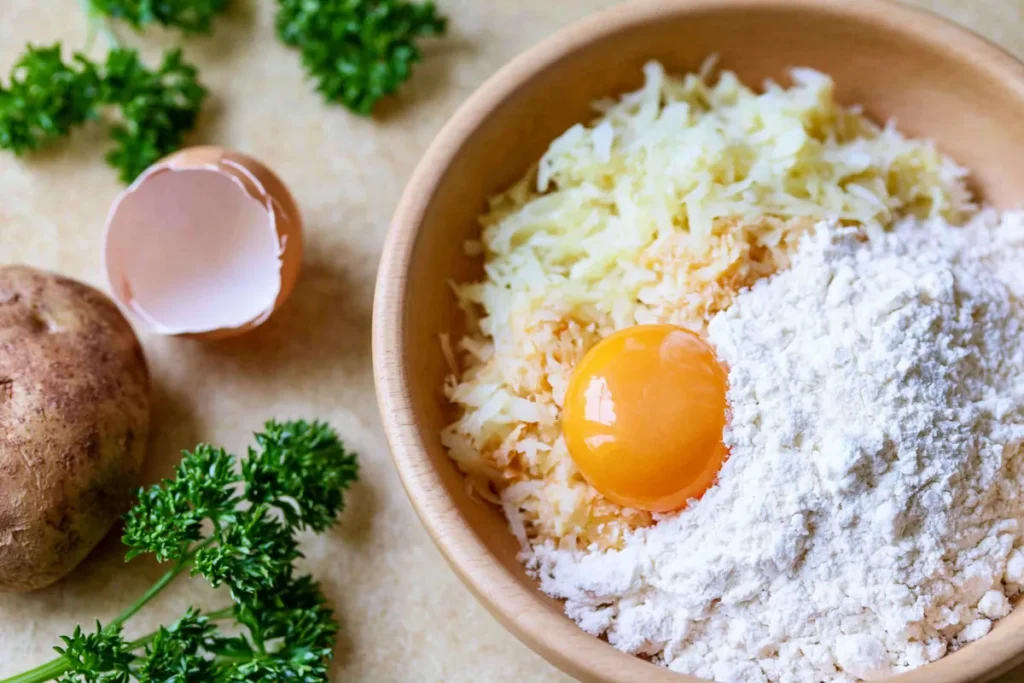
Salt is small but important. Start with enough to season the potatoes, not overpower them. The oil matters too. Use a neutral oil that can handle medium-high heat. Clarified butter or ghee can add a nice flavor, but regular butter tends to brown too quickly on its own.
Frying German Potato Pancakes the Right Way
The pan should be hot enough that the potato mixture sizzles as soon as it goes in. Medium-high heat usually works well, but every stove has its mood. If the pancakes brown too fast before the center cooks, lower the heat a little. If they sit quietly in the pan with barely a sound, the oil is not hot enough yet.
Use a few tablespoons of oil, not just a thin smear. These are shallow-fried, and the oil helps the ragged potato edges crisp properly. I like a non-stick pan here because it makes turning easier, especially when the mixture is fresh and delicate.
Scoop about 1/3 to 1/2 cup of mixture per pancake, depending on how large you want them. Flatten each one with the back of a spoon. Don’t make them too thick. A thinner pancake cooks more evenly and gives you more crisp edges.
Fry for about 3 to 5 minutes per side, watching the edges first. They should look browned and set before you flip. Use a wide spatula and turn with confidence. After frying, place them briefly on paper towels, but don’t leave them there too long or the steam softens the bottom.
Step-by-Step Method for Kartoffelpuffer
Start by grating the potatoes, then get rid of as much liquid as you can. I use a clean dish towel when I want the driest result: pile the grated potatoes in the center, twist the towel closed, and wring hard over the sink. A colander works too, especially if you press and squeeze with your hands in small batches.
Move the drained potatoes into a medium bowl and add the grated onion, eggs, flour, and salt. Use your hands to mix it. A spoon works, but your hands tell you faster when the texture is right. The mixture should feel tacky and hold together when pressed. If it feels loose or watery, add a small spoonful of flour and mix again.
Don’t let the mixture sit around. Potatoes release liquid and darken as they wait, so fry the pancakes soon after mixing. Heat the oil in a non-stick pan over medium-high heat, then add 1/3 to 1/2 cup of mixture for each pancake.
Flatten each scoop with the back of a spoon. The thinner edges are the ones that crisp best. Fry each side for 3 to 5 minutes, until the surface is golden and the edges look set. Drain briefly on paper towels, then serve while still hot.
Sweet and Savory Ways to Serve Them
German Potato Pancakes can go sweet or savory, and both feel traditional in their own way. For the sweet side, applesauce is the classic pairing. The cool fruit cuts through the fried potato, and that little sweet-tart contrast works better than it sounds if you haven’t tried it before.
Fruit compote is good too, especially if it has some sharpness. A light dusting of powdered sugar also works when the pancakes are served as a snack or festival-style treat.
For a savory plate, I like them with herbed yogurt, quark, or crème fraîche. Keep the topping cool and slightly tangy. If you want to make them part of a bigger meal, serve them beside meat and gravy. Just don’t drown the pancakes too early. Add the sauce at the table so the edges keep some crunch.
Frequently Asked Questions
Can I make German Potato Pancakes ahead of time?
They taste best fresh from the pan. You can make them ahead if needed, but they lose some crispness as they sit. Reheat them in a hot skillet or oven instead of the microwave, which tends to make them soft.
Why are my potato pancakes falling apart?
The mixture may be too wet, or it may need a little more flour. Wring the potatoes well before mixing, and make sure the mixture feels tacky enough to hold together when pressed.
Can I freeze Kartoffelpuffer?
Yes. Let them cool completely, then freeze them in a single layer before moving them to a freezer bag. Reheat from frozen in the oven until hot and crisp around the edges.
Can I use a different kind of potato?
Starchy potatoes work best because they help the pancakes bind and crisp. Waxy potatoes can make a softer pancake and may need a little extra flour.
Can I serve these without applesauce?
Of course. Applesauce is classic, but savory toppings like herbed yogurt, quark, crème fraîche, or gravy all work well.
Bring Them to the Table Hot
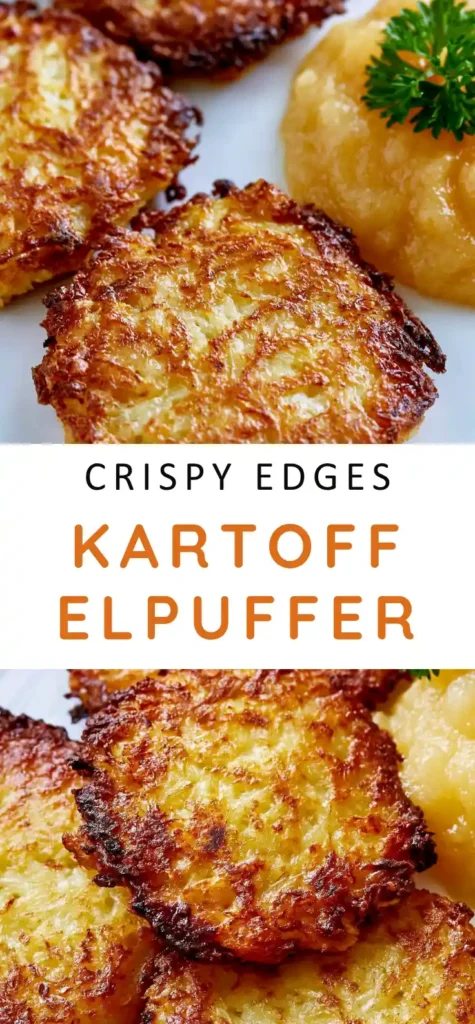
German Potato Pancakes are simple, but they ask for attention in the right places: dry potatoes, a hot pan, and quick serving. Get those right and you’ll have crisp edges, tender centers, and a plate that disappears fast. Serve them sweet, savory, or both, and let everyone choose their favorite.
German Potato Pancakes
Ingredients
Method
- Thoroughly wring out the liquid from the grated potatoes by placing them in a colander and squeezing firmly with your hands, or by wrapping them in a clean dish towel and wringing out as much liquid as possible.
- Place the drained grated potatoes in a medium bowl with the grated onion, eggs, flour, and salt.
- Use your hands to work everything together until the mixture feels tacky and holds together when pressed. Add a little more flour if the mixture feels too loose or wet.
- Do not let the potato mixture sit for long after mixing. Use it immediately so the potatoes do not release too much liquid or darken.
- Heat a few tablespoons of oil in a non-stick pan over medium-high heat.
- Place 1/3 to 1/2 cup of the potato mixture into the hot pan for each pancake, depending on your preferred size.
- Flatten each scoop into a pancake with the back of a spoon.
- Fry for 3 to 5 minutes per side, until the Kartoffelpuffer are golden, crisp at the edges, and cooked through.
- Transfer the pancakes briefly to paper towels to drain excess oil.
- Serve immediately while hot with applesauce, fruit compote, or powdered sugar. For a savory version, serve with herbed yogurt, quark, crème fraîche, or meat and gravy.
Notes
- For the crispiest pancakes, squeeze the grated potatoes very well before mixing.
- Use the batter immediately after mixing because grated potatoes release liquid as they sit.
- If the mixture feels too wet, add a small spoonful of flour and mix again.
- Do not make the pancakes too thick, or the center may stay soft before the outside browns.
- Serve right away for the best texture.