Cinnamon French Toast Bites That Crisp Up Fast in the Pan


Cinnamon French Toast Bites come together somewhere between breakfast and dessert. The outside turns lightly crisp from the skillet, the centers stay soft, and the cinnamon sugar coating melts just enough to cling to every corner. They’re quick too. No oven waiting around.
This version keeps things simple: bread, eggs, milk, butter, cinnamon sugar, and a hot pan. The small cubes cook faster than full slices, which means you get browned edges in just a few minutes. Good for rushed mornings. Even better for lazy weekend breakfasts with maple syrup on the side.
Why Cinnamon French Toast Bites Work So Well for Busy Mornings
Big slices of French toast can feel slow. You stand over the pan flipping one piece at a time while the first batch goes cold. These bites solve that problem fast. Since the bread is cut into cubes, you can move them around the skillet with a wooden spoon almost like breakfast potatoes. Everything browns at once.
They’re also easier to serve. Kids usually grab them straight from the plate, and honestly, adults do too. Maple syrup becomes a dipping sauce instead of something that soaks the bread into mush after five minutes.

The other thing I like here is the texture. Small cubes mean more edges touching the pan, so you get more browned spots and less soft middle. That’s the whole point.
Choosing Bread and Building the Custard Base
The bread matters more than people think. Soft sandwich bread works, but thick slices hold up better once they hit the egg mixture. Slightly stale bread is even better because it absorbs enough custard without collapsing in the bowl. Fresh bread can get too wet fast if you leave it sitting.
Cutting the crusts off helps the cubes brown evenly. Then cut each slice into roughly equal pieces so they cook at the same speed. If some cubes are tiny and others are thick, you’ll end up chasing doneness around the pan.
The custard itself stays simple here:
- Eggs
- Milk
- Salt
That’s it. No need to overcomplicate it. Too much liquid can make the bread soggy before it even reaches the skillet. You want enough egg mixture to lightly coat the cubes, not drown them.
A quick toss works better than soaking. I usually use my hands to shake off extra custard before the bread hits the buttered pan. Otherwise the excess egg cooks separately and sticks to the skillet instead of the bread.
The Fast Skillet Method That Browns Every Side
Start with medium-high heat and melt about 1½ tablespoons butter in the pan. Watch it carefully. Once butter starts turning dark brown, the milk solids can leave bitter spots on the bread. You want melted and foamy, not smoking.
The bread cubes cook fast. Really fast. Toss only half the cubes in the egg mixture at a time so they don’t sit too long absorbing liquid while you work. Straight into the pan after coating.
Then move them constantly.
Not aggressively. Just enough to keep different sides touching the skillet every 20–30 seconds. A wooden spoon works best because you can nudge and turn several cubes at once without smashing them. After about 2 to 3 minutes, the edges should look golden with a few darker spots.
One thing worth paying attention to: overcrowding. If the cubes are piled on top of each other, they’ll steam instead of brown. Use a large skillet if you have one, or cook in batches like the recipe suggests.
My mother used to do something similar with leftover bread when I was younger, though hers leaned less sweet and more buttery. The trick she cared about most was heat control. Too low and the bread dried out before browning. Too high and the sugar burned later. She wasn’t wrong.
Coating the French Toast Bites While They’re Still Hot
Have the cinnamon sugar ready before the bread finishes cooking. Timing matters here. The coating sticks best while the butter on the surface is still warm.
Mix the sugar and cinnamon in a shallow bowl wide enough for tossing. As soon as the bread comes out of the skillet, transfer it directly into the mixture. Don’t wait around arranging things on a plate first. The residual heat slightly melts the sugar coating and helps it cling to every side.
A gentle toss is enough. If you stir too aggressively, the softer corners can break apart.
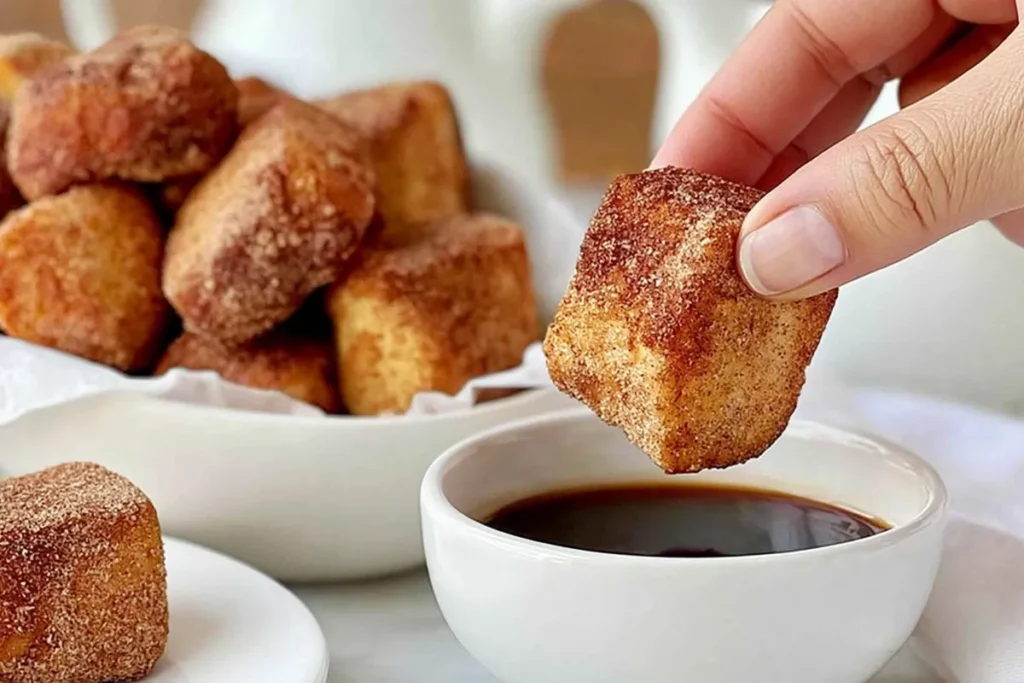
The contrast is what makes these good: crisp edges, warm centers, and that thin cinnamon coating outside. Maple syrup works best served on the side for dipping instead of pouring over everything immediately. Keeps the texture intact longer.
Easy Ways to Change the Flavor Without Changing the Method
Once the basic method is down, these Cinnamon French Toast Bites are easy to adjust depending on the season or whatever’s sitting in the pantry. The cooking process stays exactly the same. That’s the nice part.
A pinch of nutmeg gives the coating a warmer flavor, especially during colder months. Cardamom works too, though use less than you think — it can take over quickly. Chopped toasted pecans added after cooking bring a little crunch without softening the bread.
Fresh fruit works best on the side instead of cooked into the skillet. Strawberries, sliced bananas, or blueberries keep the plate from feeling too heavy. Sometimes I skip the maple syrup entirely and serve the bites with warm apples on the side. Feels more like brunch that way.
Storing Leftovers Without Losing Texture
These are best straight from the pan, but leftovers can still work if you reheat them properly. The refrigerator tends to soften the coating overnight, so don’t expect the same crisp edges right out of the container.
Store the cooled bites in an airtight container for up to 3 days. A sheet of paper towel underneath helps absorb extra moisture. Small detail, but it helps.
For reheating, the oven works better than the microwave. About 5 to 7 minutes at 350°F brings back some of the texture without drying the centers. An air fryer does an even better job if you already have one sitting on the counter. Just a few minutes is enough.
The microwave? It’ll warm them, sure. But the coating usually turns soft.
Frequently Asked Questions (FAQ)
Can You Make Cinnamon French Toast Bites Ahead of Time?
You can prep the bread cubes and cinnamon sugar mixture ahead, which saves time in the morning. I wouldn’t soak the bread overnight though. The cubes absorb liquid too deeply and tend to fall apart once cooked.
Can They Be Air Fried Instead of Pan Fried?
Yes, though the texture changes slightly. Air frying gives a drier outer crust compared to the buttery skillet version. A light spray of oil helps the coating brown more evenly. Around 375°F for 6 to 8 minutes usually works.
Can You Freeze Them?
They freeze surprisingly well after cooking. Let them cool completely first so steam doesn’t create ice crystals inside the container. Reheat directly from frozen in the oven or air fryer until hot and crisp again.
What Goes Well With Cinnamon French Toast Bites?
Fresh fruit balances the sweetness nicely. Crispy bacon on the side works too because the salty flavor cuts through the cinnamon sugar. For brunch, coffee is enough. Strong coffee especially.
Worth Making on Slow Mornings
These Cinnamon French Toast Bites don’t ask for much. A few basic ingredients, one skillet, and about 15 minutes gets breakfast on the table without much cleanup afterward.
The small pieces cook quickly, brown evenly, and somehow disappear faster than regular French toast every single time around here. Keep the maple syrup nearby and serve them hot. That’s when they’re at their best.
Cinnamon French Toast Bites
Ingredients
Method
- Cut the crust off the bread slices and cut each slice into 9 cubes.
- Whisk eggs, milk, and salt together in a medium bowl.
- Mix sugar and cinnamon together in a shallow bowl.
- Melt 1 1/2 tablespoons butter in a skillet over medium-high heat.
- Quickly toss half the bread cubes in the egg mixture and shake off excess liquid.
- Cook the bread cubes in the skillet for 2 to 3 minutes, turning often until browned on all sides.
- Transfer the hot bread cubes directly into the cinnamon sugar mixture and toss to coat.
- Repeat with remaining butter and bread cubes.
- Serve immediately with maple syrup for dipping.
Notes
- Use slightly stale bread for the best texture.
- Do not soak the bread cubes too long in the egg mixture.
- Cook in batches to avoid overcrowding the skillet.
- Serve immediately while the coating is still crisp.