Overnight Crème Brûlée French Toast That Turns Golden and Caramelized

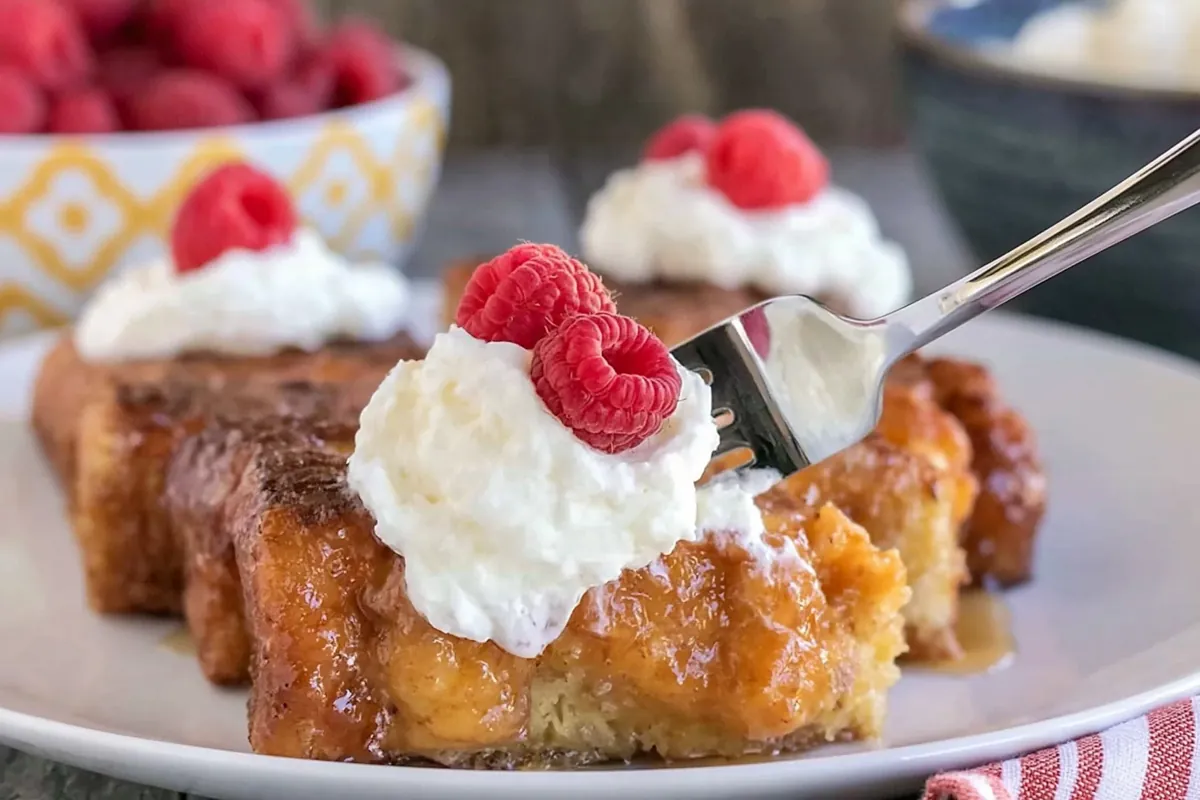
A good overnight breakfast has to earn its spot. This Overnight Crème Brûlée French Toast does that with almost no morning work at all. The bottom turns into a buttery caramel layer while the bread stays soft in the middle and crisp around the edges.
It’s the kind of breakfast that works especially well for holidays or slow weekends because everything is assembled the night before. By the time the coffee is ready, the oven is doing most of the work.
Why Overnight Crème Brûlée French Toast Works So Well
Some baked French toast recipes end up heavy or wet in the center. This one avoids that because the custard ratio stays fairly balanced. There’s enough egg and half-and-half to soak the bread overnight without turning it into pudding.
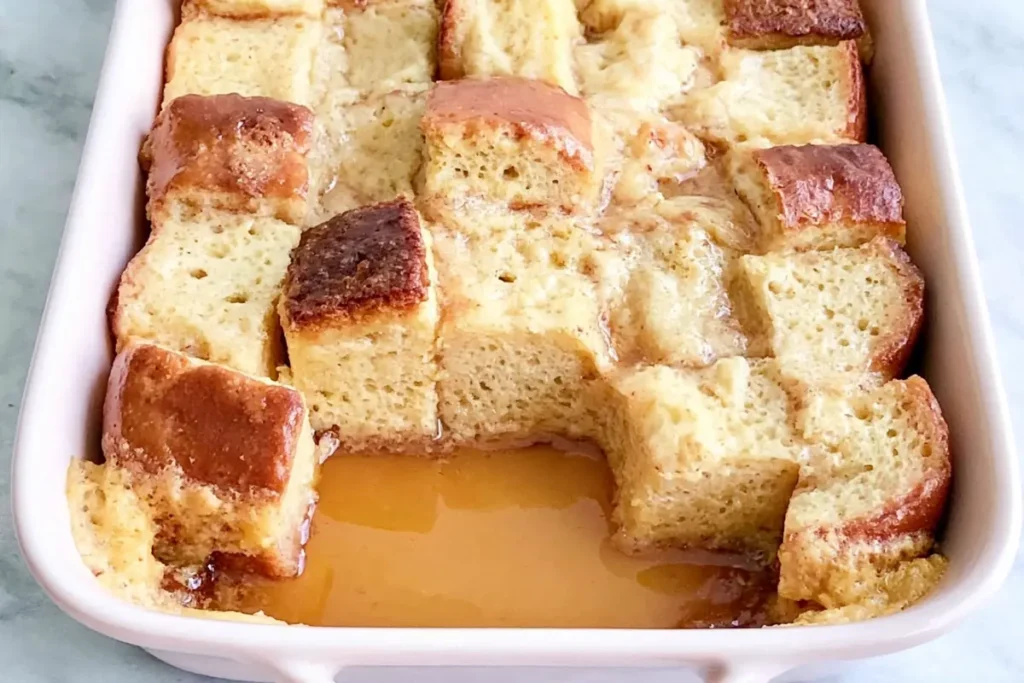
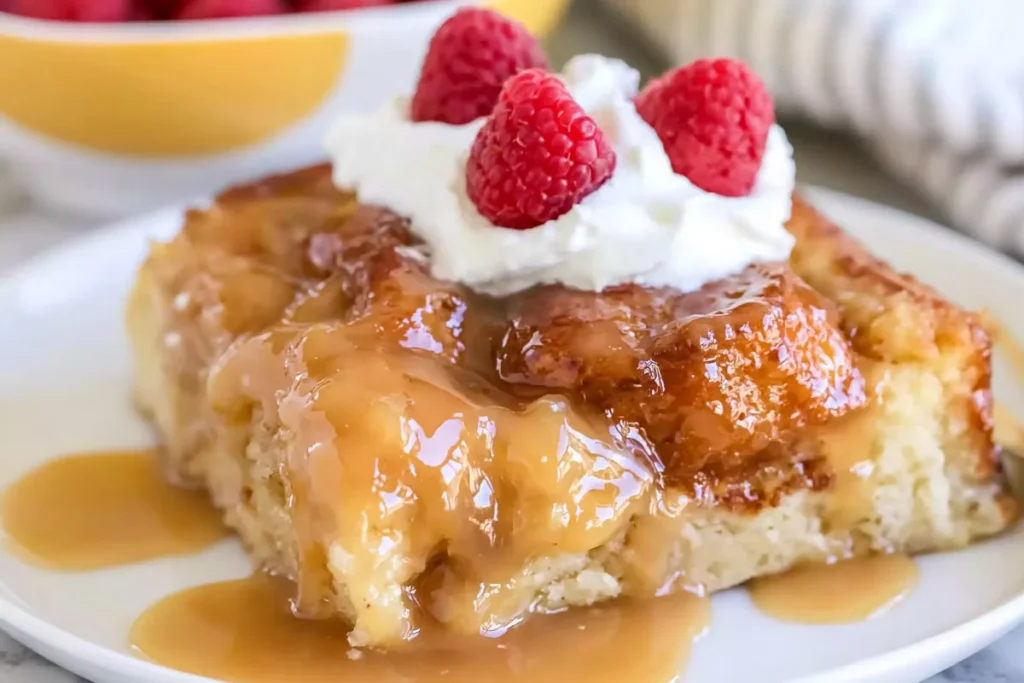
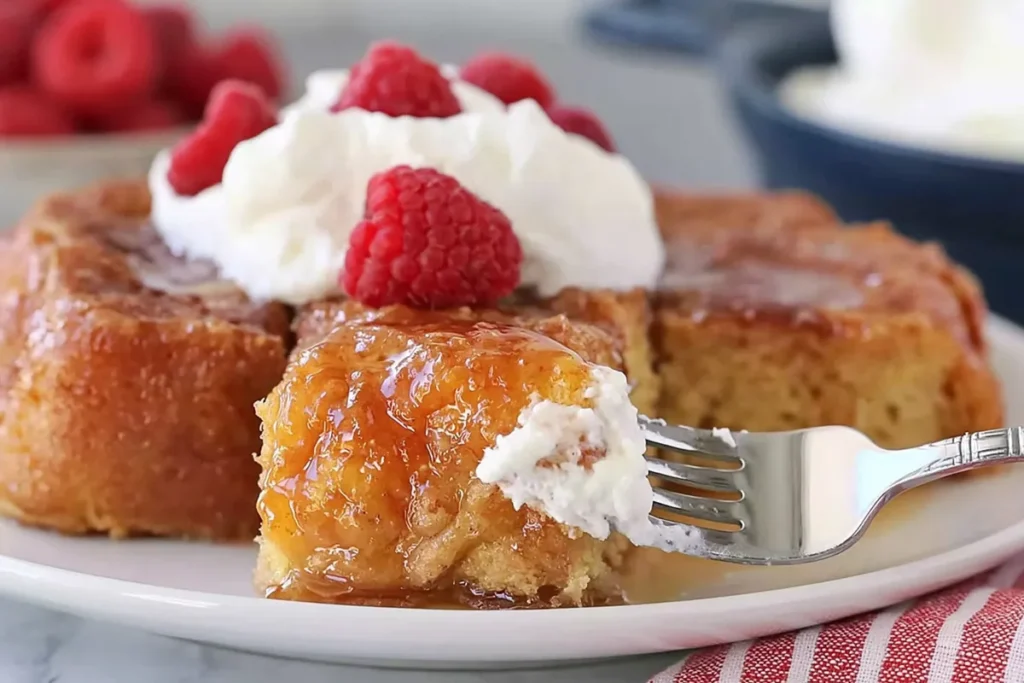
The caramel layer matters too. Butter, brown sugar, and maple syrup melt together under the bread while it bakes, creating that sticky brûlée-style base that coats the pieces once served. It’s not crunchy like a torched crème brûlée topping, though. Think softer caramel with crisp edges where the syrup bubbles against the pan.
An overnight soak also solves the timing problem. No standing over the stove flipping slices one at a time. You assemble everything the night before, refrigerate it for 8 to 10 hours, and bake it the next morning. Much easier when the kitchen is already busy.
Ingredient Notes for the Best Texture and Flavor
The bread makes the biggest difference here. Soft sandwich bread tends to disappear into the custard after sitting overnight, especially in a casserole-style bake. I prefer thick French bread cut into sturdy cubes because it keeps some structure even after soaking for hours.
Slightly stale bread works better than fresh bread straight from the bakery. If the loaf feels very soft, leave the cubes out uncovered for an hour or two before assembling the dish. Small detail, but it helps.

Half-and-half gives the custard enough richness without becoming overly heavy. Heavy cream can make the center feel dense, while regular milk sometimes leaves the texture thin and watery. The middle ground works best here.
Vanilla and salt seem minor, but skipping either one changes the flavor noticeably. The vanilla softens the deeper brown sugar flavor, and the salt keeps the caramel from tasting flat. You don’t need much. Just enough to balance things out.
Avoiding Soggy French Toast the Easy Way
Most soggy French toast problems start with too much liquid or bread that’s too thin. Overnight recipes need a little structure because the bread keeps absorbing custard for hours in the refrigerator.
Arrange the cubes in a fairly even layer instead of piling them too high in the pan. If some pieces sit completely submerged while others stay dry, the texture won’t bake evenly later. I usually press the top lightly after pouring the custard so every piece gets coated without compacting the bread.
Cold ovens actually help this recipe. The casserole goes into the oven while it’s still cold, then heats gradually as the oven preheats to 350°F. That slower temperature rise gives the custard time to warm evenly before the top browns too quickly.
Watch the syrup near the edges during baking. Once it starts bubbling steadily and the bread turns golden on top, it’s ready. Usually around 30 to 35 minutes in most ovens.
How to Make Overnight Crème Brûlée French Toast
Start with the caramel base first. Melt the butter, brown sugar, and maple syrup together until the sugar dissolves fully. A microwave works fine for this if you stir halfway through, though a small saucepan gives you a little more control. The mixture should look smooth and glossy, not grainy.
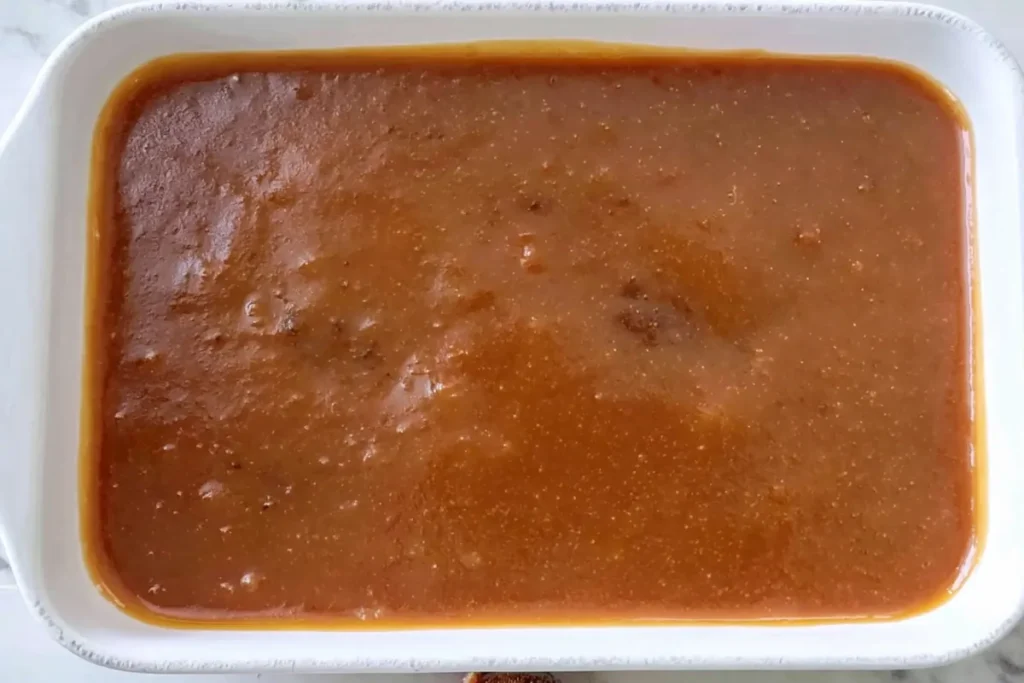
Spread that mixture across the bottom of a lightly greased 9×13-inch baking dish. Don’t worry if it seems thin. Once it bakes, it thickens into a rich syrup underneath the bread.
Scatter the bread cubes evenly across the pan. Try not to pack them too tightly. A little space helps the heat move through the casserole while baking. In another bowl, whisk together the eggs, half-and-half, vanilla, and salt until fully combined. Pour it slowly over the bread so everything gets coated.
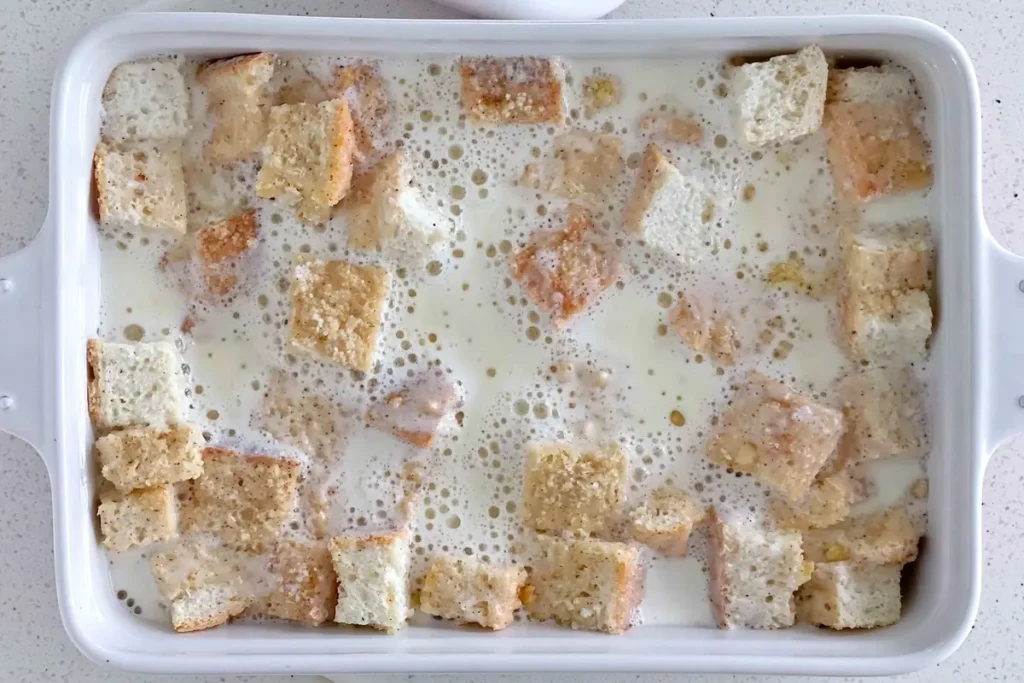
Now the overnight rest does the work. Cover the dish and refrigerate it for at least 8 hours. By morning, the bread should feel soft but not collapsed.
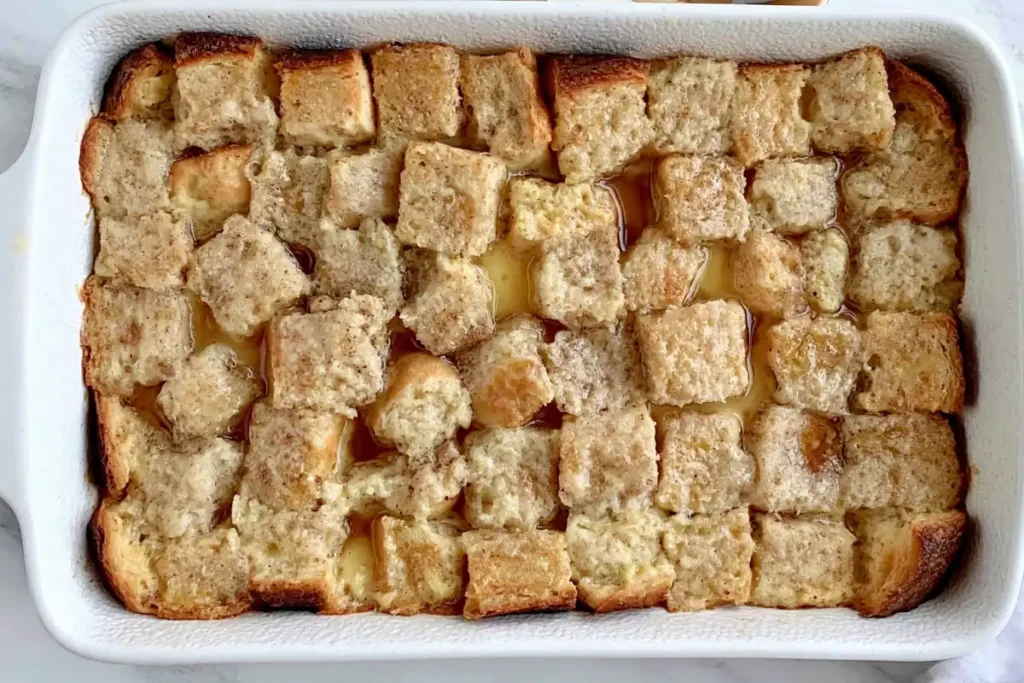
Before baking, place the cold pan directly into the cold oven. Then set the oven to 350°F. That gradual heating helps the custard cook evenly from the center outward.
After about 30 minutes, the top should look lightly crisped and the caramel around the edges will bubble actively. If you want more of that sticky syrup coating the top pieces too, there’s another option. Bake the casserole for about 20 minutes, then carefully flip sections of the bread with a wide spatula and return it to the oven for another 10 to 15 minutes. Slightly messier. Worth it, honestly.
Serve it warm while the caramel is still loose and glossy.
Storing Leftovers and Easy Recipe Adjustments
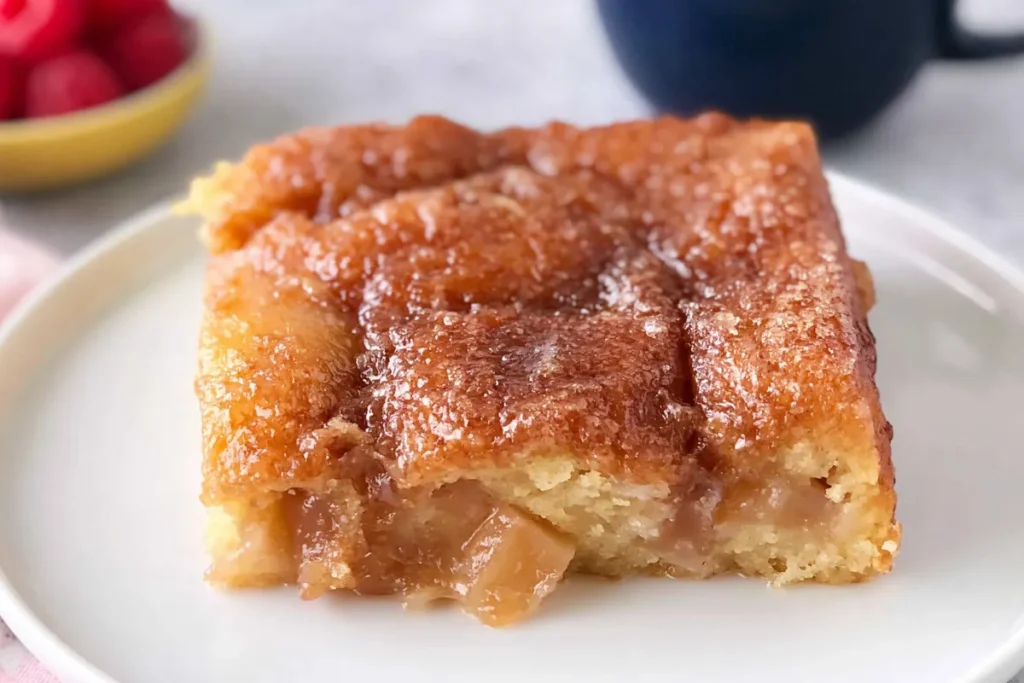
This casserole keeps surprisingly well for the next day, especially if you reheat it gently. The caramel firms up once chilled, so straight-from-the-fridge leftovers can seem dense at first. Warm individual portions in the microwave for about 45 seconds to 1 minute, or reheat larger portions in a 300°F oven until heated through. Lower heat works better than blasting it hot too quickly.
You can swap the bread if needed, though some work better than others. Brioche gives a softer, richer texture, while challah stays slightly firmer. I’d avoid very thin sandwich bread here. It tends to break down overnight and loses the contrast between crisp edges and soft centers.
Maple syrup works nicely because it adds depth without overpowering the caramel flavor. Honey changes the flavor more noticeably and can brown faster during baking. Still workable. Just something to keep in mind.
Serving Suggestions for a Cozy Brunch Table
This Overnight Crème Brûlée French Toast already leans rich, so fresh fruit helps balance things out. Raspberries cut through the sweetness especially well, though sliced strawberries work nicely too. Their acidity keeps the caramel from feeling too heavy after a few bites.
Sweetened whipped cream on top makes it feel a little more like dessert-for-breakfast, which honestly fits the whole vibe of this recipe. For brunch tables, I usually serve it alongside coffee and something savory like eggs or bacon so the meal doesn’t turn overly sweet.
Serve it while the syrup is still warm underneath the bread. That’s when the texture is at its best.
The Kind of Breakfast People Remember
Some breakfasts disappear from memory by lunchtime. This one tends to stick around a bit longer. Maybe it’s the caramel at the bottom of the pan or the way the edges crisp while the center stays soft.
The overnight prep is what keeps me coming back to it. You do the work ahead of time, wake up, and let the oven finish the job. Quiet mornings feel easier that way.

Overnight Crème Brûlée French Toast
- Total Time: 8 hours 50 minutes
- Yield: 8 servings 1x
Description
This Overnight Crème Brûlée French Toast bakes into soft custardy bread with a buttery brown sugar caramel layer underneath. It is assembled the night before, chilled for 8 to 10 hours, and baked in the morning until golden, bubbling, and ready for a cozy brunch.
Ingredients
- 6 tablespoons butter
- 3/4 cup brown sugar
- 2 tablespoons maple syrup
- Thick French bread, cut into sturdy cubes
- 5 large eggs
- 1 1/2 cups half-and-half
- 1 teaspoon vanilla extract
- 1/4 teaspoon salt
- Sweetened whipped cream, for serving
- Fresh raspberries or strawberries, for serving
Instructions
- Add the butter, brown sugar, and maple syrup to a microwave-safe bowl. Microwave for 1 to 2 minutes, until the sugar is dissolved, then stir until smooth and glossy. This can also be done in a small saucepan on the stove.
- Lightly grease a 9×13-inch baking dish with cooking spray.
- Spread the brown sugar mixture evenly over the bottom of the prepared baking dish.
- Arrange the bread cubes in a single even layer over the caramel mixture.
- In a bowl or liquid measuring cup, whisk together the eggs, half-and-half, vanilla extract, and salt until fully combined.
- Pour the custard mixture evenly over the bread cubes, making sure the bread is coated without packing it down too tightly.
- Cover the pan and refrigerate overnight for 8 to 10 hours.
- Remove the pan from the refrigerator, uncover it, and place it in a cold oven.
- Preheat the oven to 350°F. Once the oven reaches temperature, bake for 30 to 35 minutes, until the bread is golden and the caramel syrup is bubbling around the edges.
- For more syrupy caramel on top, bake for 20 minutes, carefully flip the bread pieces with a large flat spatula, then bake for another 10 to 15 minutes.
- Serve warm with sweetened whipped cream and fresh raspberries or strawberries.
Notes
- Use thick French bread or another sturdy bread so the cubes hold their shape after soaking overnight.
- Slightly stale bread works better than very fresh soft bread because it absorbs the custard without collapsing.
- Place the cold pan in a cold oven so the custard warms gradually and bakes more evenly.
- Leftovers can be reheated in the microwave for 45 seconds to 1 minute, or in a 300°F oven until warmed through.
- Prep Time: 15 minutes
- Cook Time: 35 minutes
- Category: Breakfast
- Method: Baking
- Cuisine: American
Nutrition
- Serving Size: 1 serving
- Calories: 455
- Sugar: 28
- Sodium: 330
- Fat: 20
- Saturated Fat: 11
- Unsaturated Fat: 7
- Trans Fat: 0
- Carbohydrates: 56
- Fiber: 2
- Protein: 12
- Cholesterol: 175