Potato and Cheese Pierogi That Feel Like Home

There’s something quietly comforting about working dough on a floured counter, especially when you know what’s coming next. The rhythm of rolling, filling, and sealing has a way of slowing you down, even on a busy day. That’s exactly how potato and cheese pierogi feel to me—unrushed, familiar, and deeply satisfying. They’re the kind of food you make when you want the kitchen to smell warm and buttery, and the table to feel full in more ways than one.
If you’ve ever thought pierogi were too complicated for a home kitchen, let me reassure you right away: they’re not. They do take a little time, but each step is simple, forgiving, and worth it. By the end, you’ll have tender dumplings filled with creamy potatoes and melted cheese—exactly the kind of comfort food that invites everyone to linger a little longer.
Table of Contents
What Makes Potato and Cheese Pierogi So Comforting
At their heart, pierogi are wonderfully humble. Soft dough wraps around a filling that’s rich but not heavy, familiar without being boring. The potatoes bring a gentle sweetness, the cheese adds depth, and the dough ties it all together with just enough chew.
What really makes this dish special is balance. Too much cheese and the filling feels greasy. Too much potato and it turns bland. When those two are in harmony, every bite feels just right. Add a spoonful of sour cream or buttery onions on top, and suddenly you’re eating something that feels both simple and deeply cared for.
Ingredients That Matter (and Why)
Before you start, it helps to understand why each ingredient is there. Pierogi don’t rely on shortcuts, so the basics really matter.
Dough Ingredients
- 2 large eggs
- 2 tablespoons sour cream
- 1 cup whole milk
- 3½ cups all-purpose flour, plus more for dusting
- 2 teaspoons salt
The eggs give the dough structure while keeping it tender. Sour cream adds softness and a slight tang, and milk brings everything together. Flour should be added gradually so the dough stays soft instead of stiff.
Potato and Cheese Filling
- 3 pounds russet potatoes, peeled and cut into chunks
- 4 tablespoons unsalted butter
- ¼ cup warm milk
- ½ cup shredded cheddar cheese
- Salt, to taste
Russet potatoes mash smoothly and absorb butter beautifully. Cheddar gives a mild, savory flavor that melts into the potatoes without overpowering them.
For Serving
- 1 large onion, thinly sliced
- 2 tablespoons unsalted butter
- Sour cream, for garnish

Dough Technique: Getting Soft, Stretchy Pierogi Dough
You start by whisking the eggs, sour cream, and milk together until smooth. The mixture should look creamy and even, with no streaks of egg remaining. Once the flour and salt are added, the dough will look shaggy at first. That’s normal.
As you knead, the dough will slowly become elastic and smooth. It should feel soft under your hands, not sticky and not stiff. If it clings to your fingers, dust in a little more flour. When the dough springs back gently when pressed, it’s ready to rest.
Letting the dough sit for about 10 minutes makes a noticeable difference. The gluten relaxes, which means rolling it out later will feel easier and less stubborn.
Potato and Cheese Filling: Flavor, Texture, and Balance
While the dough rests, you can turn your attention to the filling. The potatoes should be boiled in well-salted water until they’re easily pierced with a fork. Drain them thoroughly—any excess water will dilute the flavor and affect the texture.
Mash the potatoes while they’re still hot, adding butter and warm milk slowly. You’re looking for a smooth, fluffy consistency without turning them gluey. Once the potatoes are mashed, fold in the cheese and season with salt. The filling should taste slightly more seasoned than you think it needs to be, since the dough itself is mild.
Let the filling cool slightly before assembling. Warm filling is fine, but piping hot potatoes can soften the dough too much.
Assembling Pierogi Without Leaks or Tears
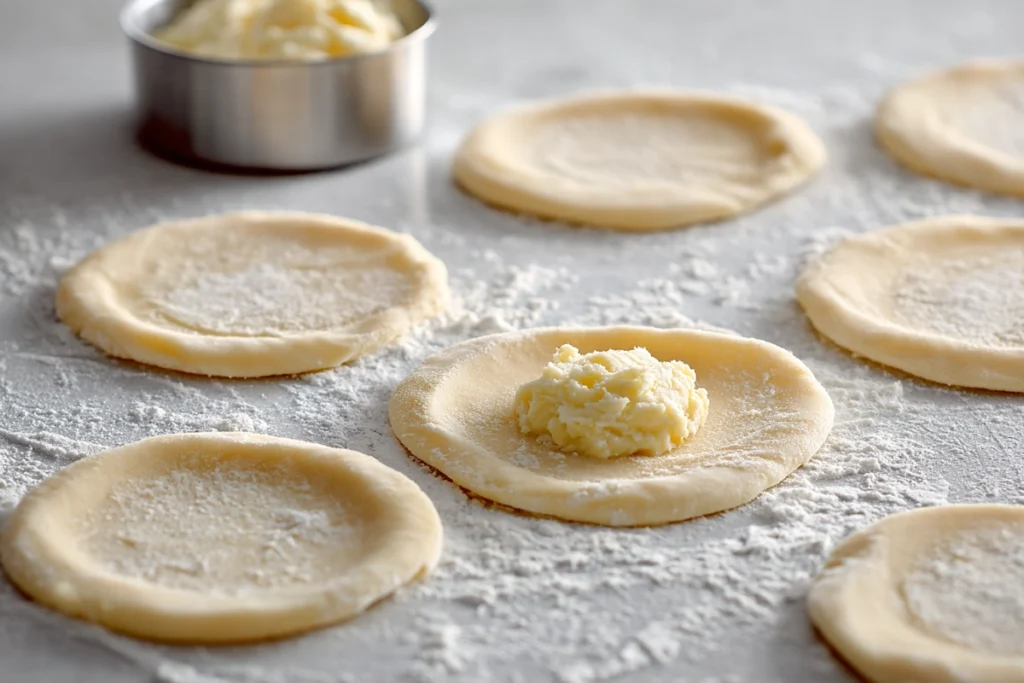
Roll the rested dough out on a well-floured surface until it’s about ⅛ inch thick. Thinner dough keeps the pierogi tender, but too thin can cause tearing. Cut circles using a floured glass or cookie cutter.
Place a small spoonful of filling in the center of each circle. Resist the urge to overfill—too much filling is the most common reason pierogi burst open during cooking. Fold the dough over into a half-moon shape and press the edges together firmly with your fingers. If the dough feels dry, a light brush of water along the edge helps seal it.
Once sealed, place the pierogi on a floured surface so they don’t stick while you work through the rest.
Cooking Pierogi: Boiling, Then Pan-Frying for Flavor
Bring a large pot of water to a gentle boil and salt it generously. Drop the pierogi in a few at a time so the water temperature stays steady. At first, they’ll sink to the bottom. After a few minutes, they’ll float to the surface, which is your sign they’re nearly done.
Let them cook for another minute or two after floating, then lift them out with a slotted spoon. At this stage, they’re fully cooked and can be served as-is, but pan-frying adds a layer of flavor that’s hard to resist.
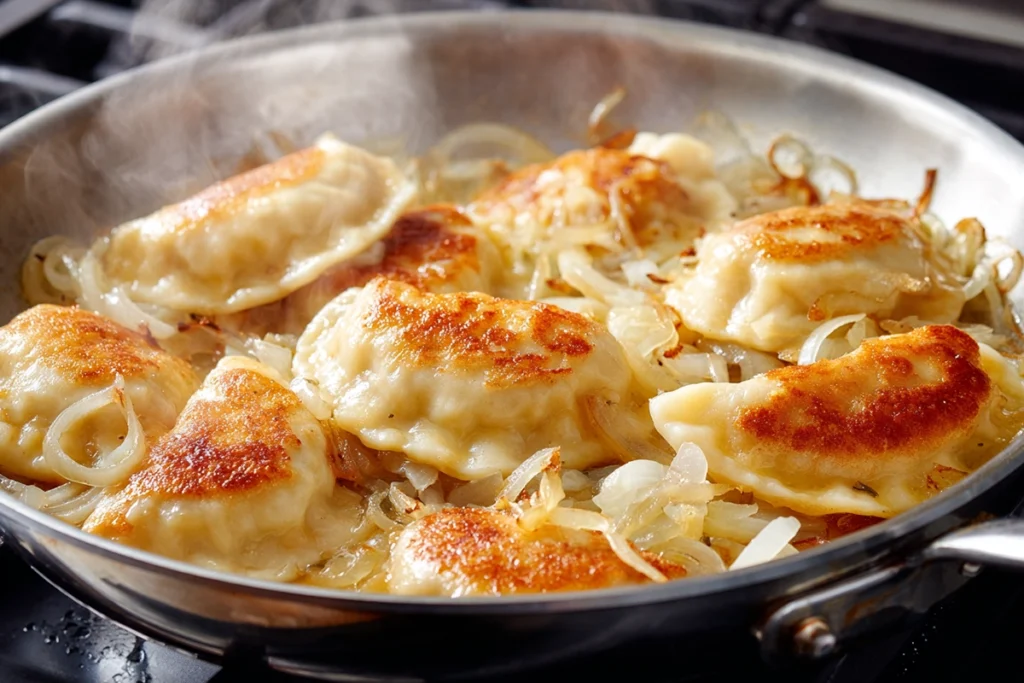
In a wide skillet, melt butter and add the sliced onions. Cook until golden and soft, then add the boiled pierogi. Let them sit undisturbed for a minute or two so a light crust forms, then gently turn them to brown the other side.
Serving Potato and Cheese Pierogi the Traditional Way
Serve the pierogi hot, topped with buttery onions and a generous spoonful of sour cream. The cool tang of the sour cream balances the richness of the filling perfectly.
These pierogi pair well with simple sides like a crisp green salad or a bowl of soup, but they’re just as satisfying on their own. They’re especially lovely for family dinners, holidays, or any time you want a meal that feels shared and unhurried.

Make-Ahead, Freezing, and Reheating Tips
Pierogi are wonderfully make-ahead friendly. You can freeze them after shaping but before boiling. Lay them out on a baking sheet until firm, then transfer to freezer bags.
When you’re ready to cook, boil them straight from frozen. They may need an extra minute or two, but the texture stays just as good. Leftover cooked pierogi can be stored in the refrigerator and reheated gently in a skillet with butter until warmed through.
Common Pierogi Problems (and How to Fix Them)
If your dough feels tough, it likely had too much flour or wasn’t rested long enough. Sticky dough usually just needs a bit more flour during kneading.
If pierogi open during boiling, the edges weren’t sealed tightly or they were overfilled. Press firmly and keep the filling modest.
A bland filling can often be fixed after cooking with butter, onions, or a touch more salt at the table.
Simple Variations That Still Feel Traditional
You can experiment gently without losing the soul of the dish. Swap cheddar for farmer’s cheese or a mild Colby. Stir sautéed onions into the potato filling for extra depth, or finish the pierogi with browned butter instead of onions for a simpler presentation.
Dietary Variations
For a vegetarian version, this recipe already fits beautifully. If you need an egg-free dough, it can be made with milk and sour cream alone, though the texture will be slightly softer. Gluten-free pierogi are more challenging and require specialized flour blends, so results can vary.
There’s something deeply satisfying about setting a plate of homemade pierogi on the table, knowing each one passed through your hands. These potato and cheese pierogis aren’t just a meal—they’re a reminder that comfort food doesn’t have to be complicated. With a little patience and a warm kitchen, you’ll have a dish that feels like it belongs in your family, too.
Get inspired with more mouthwatering recipes! Follow me on Facebook and Pinterest for new cooking ideas every week.
FAQ
Why is my potato and cheese pierogi dough tough?
Tough dough usually means too much flour was added or the dough didn’t get enough resting time. The dough should feel soft and elastic, not stiff. Letting it rest allows the gluten to relax, which makes rolling and shaping much easier.
Can I freeze potato and cheese pierogi before cooking them?
Yes, potato and cheese pierogi freeze very well before cooking. Freeze them in a single layer until firm, then transfer to a freezer-safe bag. When you’re ready to cook, boil them straight from frozen without thawing.
Why did my pierogi open while boiling?
Pierogi usually open if they’re overfilled or not sealed tightly enough. Press the edges firmly and avoid getting filling on the seam. Using lightly floured fingers helps create a stronger seal.
What cheese works best for potato pierogi filling?
Mild cheddar is a great choice because it melts smoothly and adds flavor without overpowering the potatoes. You can also use farmer’s cheese or Colby for a more traditional, mellow taste. Avoid very sharp or oily cheeses, which can affect texture.
Do pierogi have to be pan-fried after boiling?
No, pan-frying is optional, but it adds extra flavor and texture. Boiled pierogi are fully cooked and tender on their own. Pan-frying simply gives them a lightly crisp exterior that many people love.
PrintPotato and Cheese Pierogi
- Total Time: 1 hour 20 minutes
- Yield: 15 servings 1x
- Diet: Vegetarian
Description
Soft homemade potato and cheese pierogi with tender dough and a creamy, comforting filling. A classic family-style dumpling made simply in a real home kitchen.
Ingredients
- 2 large eggs
- 2 tablespoons sour cream
- 1 cup whole milk
- 3 1/2 cups all-purpose flour
- 2 teaspoons salt
- 3 pounds russet potatoes, peeled and cut into chunks
- 4 tablespoons unsalted butter
- 1/4 cup warm milk
- 1/2 cup shredded cheddar cheese
- 1 large onion, thinly sliced
- 2 tablespoons unsalted butter
- Sour cream, for serving
Instructions
- Whisk the eggs, sour cream, and milk together until smooth.
- Add the flour and salt, then knead until a soft, elastic dough forms. Let rest for 10 minutes.
- Boil the potatoes in salted water until fork-tender, then drain well.
- Mash the hot potatoes with butter and warm milk until smooth, then mix in the cheese and season with salt.
- Roll the dough thin on a floured surface and cut into circles.
- Place a spoonful of filling in the center of each circle, fold, and seal the edges firmly.
- Boil the pierogi in salted water until they float, then cook 1–2 minutes longer.
- Sauté onions in butter until golden, add pierogi, and pan-fry until lightly browned.
Notes
- Do not overfill the pierogi to prevent splitting during boiling.
- Allow the dough to rest so it rolls easily without shrinking.
- Pierogi can be frozen before boiling and cooked straight from frozen.
- Prep Time: 1 hour
- Cook Time: 20 minutes
- Category: Main Dish
- Method: Boiling and Pan-Frying
- Cuisine: Polish
Nutrition
- Serving Size: 1 serving
- Calories: 189
- Sugar: 2g
- Sodium: 408mg
- Fat: 8g
- Saturated Fat: 4g
- Unsaturated Fat: 3g
- Trans Fat: 1g
- Carbohydrates: 24g
- Fiber: 1g
- Protein: 6g
- Cholesterol: 40mg