
Red Velvet Cinnamon Rolls: Soft Pull-Apart Spirals With Cocoa and Cream Cheese Icing
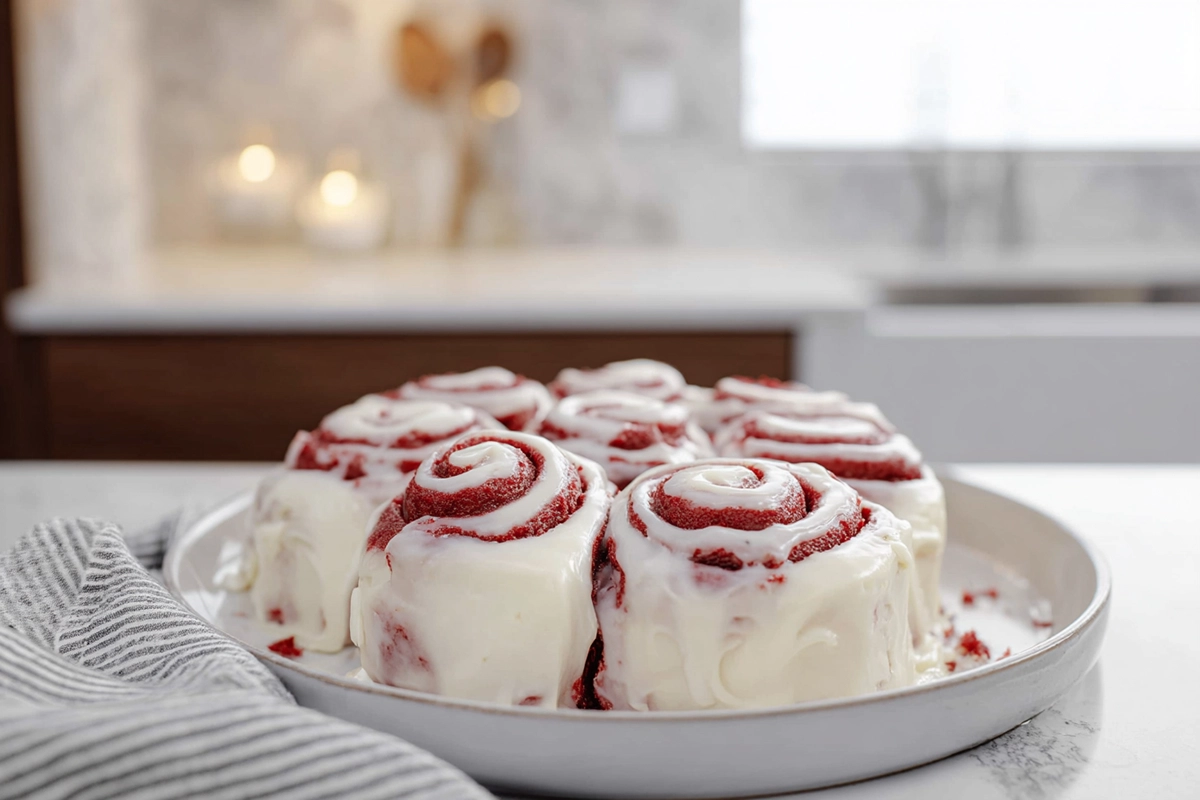
The first thing you notice isn’t the color — it’s the aroma. Warm milk, butter, cocoa, and cinnamon baking together into something that smells deeper than a standard cinnamon roll, but still familiar enough to feel right at home. These rolls come out of the oven tall and puffy, their red-tinted layers pulling apart in soft ribbons, with cinnamon sugar tucked neatly into every spiral.
What makes this version work is restraint. The cocoa powder is there to round out the flavor, not turn the dough into chocolate bread. Sour cream keeps the crumb tender through a long rise, and the dough stays rich without becoming heavy. The red color isn’t meant to shout — it’s a visual cue that this is a little more celebratory than your everyday breakfast roll, perfect for holidays, special mornings, or anytime you want something that feels intentional.
This recipe was built to behave. The dough is mixed long enough to develop structure, proofed patiently so it rises instead of spreading, and rolled to a size that guarantees even filling and clean layers. The cinnamon mixture stays put, the rolls bake up fluffy instead of dry, and the cream cheese icing melts just enough to settle into the cracks without sliding off.
In the sections ahead, I’ll walk through the points that matter most — how the dough should feel, what to look for during proofing, and where timing makes the difference between good rolls and great ones.
Table of Contents
Why Red Velvet Cinnamon Rolls Aren’t Just “Cinnamon Rolls With Food Coloring”
Red velvet only works when it’s treated as a flavor balance, not a color project. In these red velvet cinnamon rolls, the goal isn’t chocolate bread and it’s definitely not vanilla dough dyed red. The cocoa powder is used sparingly to deepen the dough and give it a faint bitterness that keeps the sugar in check. That small amount is doing quiet structural work too — it slightly tightens the crumb, which is why the dough needs extra richness from dairy and fat to stay soft after baking.
Sour cream is the unsung hero here. It adds moisture without thinning the dough and gives the rolls that plush, bakery-style interior even after a long rise. Milk and eggs round out the richness, while melted butter keeps the crumb tender instead of flaky. The red food coloring is purely visual, but it matters: it sets expectations before the first bite and turns a familiar breakfast into something festive without changing how the dough behaves.
Cinnamon and brown sugar stay classic on purpose. The filling needs to ground the roll so the cocoa dough doesn’t feel gimmicky. Paired with a tangy cream cheese icing, the overall effect lands where red velvet should — lightly cocoa-forward, gently sweet, and unmistakably indulgent without being heavy. This is what separates a novelty bake from a repeatable breakfast recipe.
The Key Ingredients That Control Texture, Not Just Flavor
Every ingredient here has a job beyond taste. The dough is enriched, but it still needs structure to rise tall and bake evenly.
- All-purpose flour: This keeps the rolls soft and pillowy. Bread flour will push the texture too far into chewy territory, which works against the tender red velvet crumb.
- Instant yeast: Reliable and forgiving for a dough with cocoa and dairy. If your yeast is old, the rise will suffer — there’s no shortcut around that.
- Warm milk: Activates the yeast gently and adds softness. Too hot and you’ll damage the yeast; lukewarm is the sweet spot.
- Sugar: Feeds the yeast and sweetens the dough without turning it dessert-heavy.
- Unsweetened cocoa powder: Adds depth, not chocolate flavor. Dutch-process will mute the dough; natural cocoa keeps the balance right.
- Full-fat sour cream: Critical for moisture and tenderness. Low-fat versions don’t deliver the same result.
- Eggs: Provide structure and richness so the rolls rise instead of spreading.
- Butter (unsalted): Controls flavor and softness. If you only have salted butter, skip adding extra salt later.
- Brown sugar and cinnamon: The backbone of the filling. They anchor the dough and create contrast.
- Cream cheese and powdered sugar: The icing’s tang is what keeps these from tasting flat or overly sweet.
Together, these ingredients make a dough that rises confidently, bakes evenly, and stays soft long after it leaves the oven — exactly what you want from a festive breakfast roll that still feels familiar.

The Dough Phase That Makes or Breaks Everything
This dough comes together richer than a standard cinnamon roll dough, and you’ll feel that difference almost immediately. As the mixer runs, the dough should move from shaggy to smooth, pulling cleanly from the sides of the bowl while still clinging slightly at the bottom. It should feel soft and elastic when you press it with your fingertips, like the fleshy part of your palm, not stiff or dry.
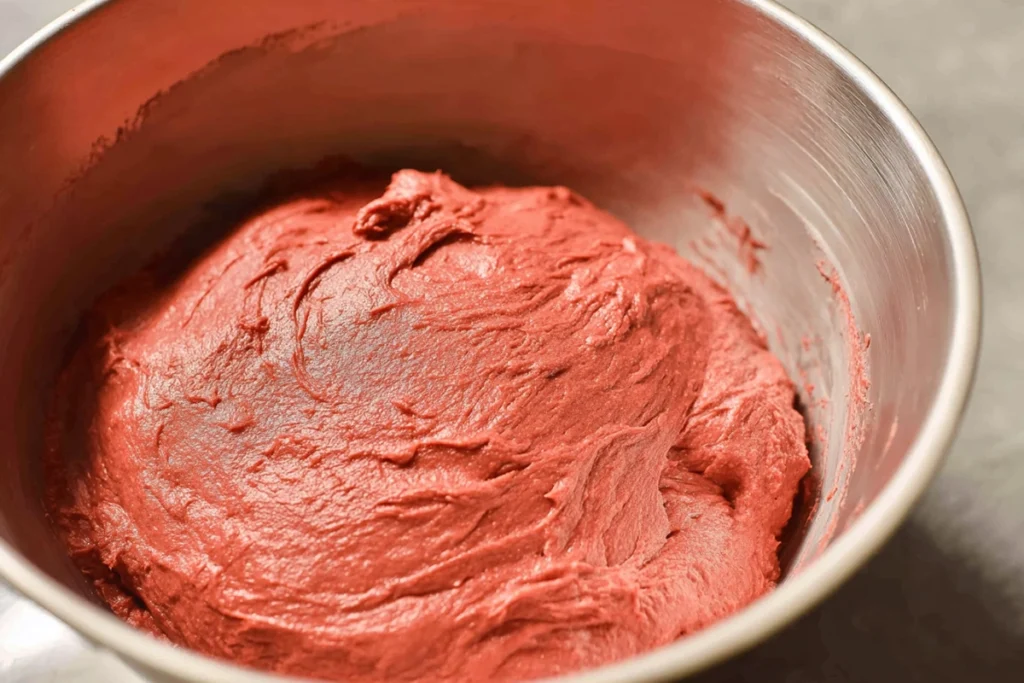
If it looks glossy and supple, you’re on track. If it smears against the bowl like batter, give it another minute of mixing before reaching for more flour. The cocoa and sour cream both slow gluten development slightly, so patience here pays off later with tall, tender festive breakfast rolls instead of squat ones.
Proofing Red Dough Is Different (And Here’s Why)
Once covered, the dough should rise quietly, without drama. You’re looking for volume, not speed. Visually, it should double and hold a gentle dome; when you press it lightly, the indentation should slowly spring back instead of collapsing.
Because cocoa and dairy weigh the dough down, this rise can take closer to two hours in a cool kitchen. If the room smells faintly yeasty and warm dairy rather than raw flour, you’re right where you need to be. Rushing this stage is the fastest way to end up with dense rolls.
The Roll-Up Technique That Creates Spiral Drama, Not Filling Puddles
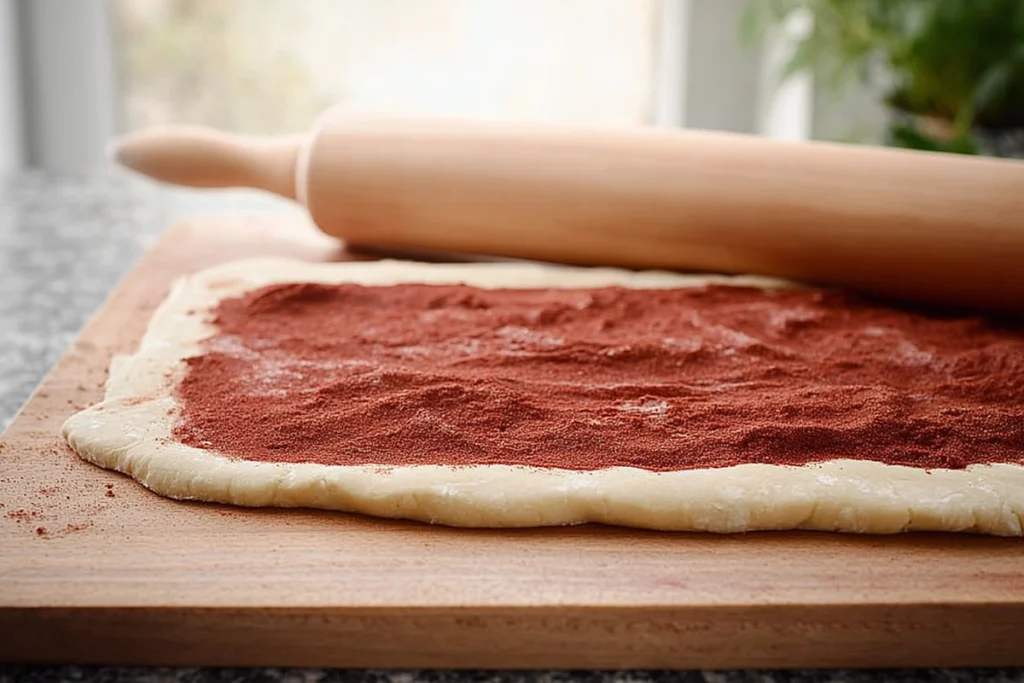
When you roll the dough out, it should stretch easily without snapping back. If it resists, let it rest for a few minutes until it relaxes. Spread the softened butter evenly, using your fingers to reach the corners, then sprinkle the cinnamon-sugar mixture until the surface looks evenly freckled, not piled.
As you roll, you should hear a soft whisper of dough sliding over itself, not tearing. A tight but gentle roll keeps the layers defined so each slice bakes into a clear spiral instead of unraveling.
Baking Red Velvet Cinnamon Rolls So They Stay Plush, Not Dry
In the oven, the rolls should puff noticeably within the first ten minutes, rising into each other until the pan looks full. As they bake, the kitchen will smell like cinnamon and warm cocoa, with butter caramelizing at the edges. The tops should turn lightly golden, not dark brown.
When tapped gently, the surface should feel set but springy. Overbaking dries out the crumb, so pull them while they still feel soft in the center — carryover heat will finish the job.
Cream Cheese Icing That Melts Instead of Sits There
The icing should be smooth and spreadable, thick enough to hold its shape but loose enough to flow. When you spoon it over warm rolls, it should slowly sink into the crevices, turning glossy as it melts. If it slides off instantly, it’s too thin; if it sits stiffly on top, it’s too cold.
This contrast — tangy cream cheese icing against warm, cinnamon-scented rolls — is what brings the whole bake together. Ice them while they’re still warm, and let the heat do the final bit of work for you.
Thoughtful Variations That Still Respect the Dough
There’s some room to adjust these rolls, but not every swap is worth making. If you want a slightly less sweet roll, you can reduce the brown sugar in the filling by a couple of tablespoons without hurting the structure. The cinnamon will still come through, just a little more gently. What you don’t want to do is cut back on the sugar in the dough itself — that sugar feeds the yeast and helps the rolls rise properly.
For the icing, a thicker, more tangy finish works well if you reduce the milk slightly and let the cream cheese lead. This is especially nice if you’re serving these alongside other sweet breakfast items. If you only have salted butter on hand, use it and simply skip adding any extra salt later — the rolls will still balance out.
One change I don’t recommend: swapping in bread flour. It sounds harmless, but it pushes the texture too far into chewy territory and works against the soft, plush crumb that makes these rolls feel like red velvet instead of dinner bread.
When and How These Rolls Belong on the Table
These rolls shine when they’re served warm, with the icing just barely set and still glossy. They’re at their best on holiday mornings, brunch tables, or any breakfast where you want one centerpiece bake to do the heavy lifting. Because they’re rich, pairing them with something bitter or sharp makes sense — strong coffee, espresso, or even plain black tea helps cut the sweetness.
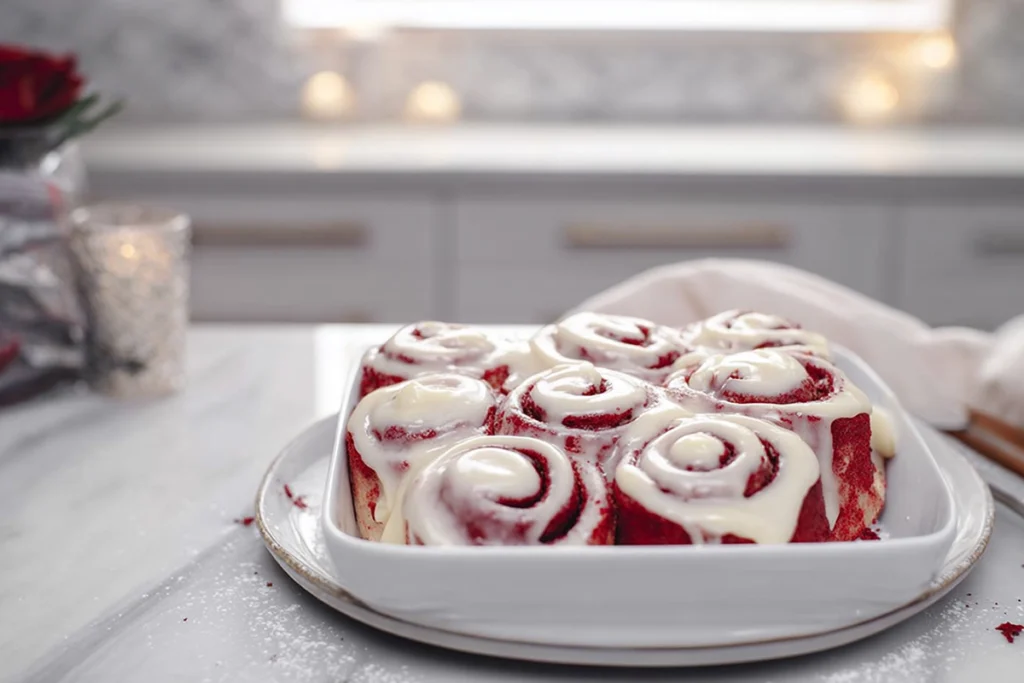
If you’re serving them as part of a larger spread, keep the sides simple. Fresh fruit or lightly salted eggs balance the richness without competing for attention. These also work well as a make-ahead option: proof overnight in the refrigerator, let them come to room temperature in the morning, then bake fresh so the kitchen still smells like cinnamon and cocoa.
A Few Final Things Worth Remembering
These rolls reward patience more than precision. Give the dough time to rise fully, pull them from the oven while they still feel soft, and ice them while they’re warm enough to welcome it. If something looks slightly imperfect, that’s not a failure — it’s part of cooking something meant to be shared.
Red velvet cinnamon rolls aren’t about novelty or color alone. When done right, they’re familiar, comforting, and just festive enough to feel special. Make them once, pay attention to how the dough behaves, and they’ll quickly become one of those recipes you reach for when you want breakfast to feel like an occasion.
Get inspired with more mouthwatering recipes! Follow me on Facebook and Pinterest for new cooking ideas every week.
FAQ
Can I make red velvet cinnamon rolls the night before?
Yes, these rolls are designed to work well as an overnight bake. After shaping and placing them in the pan, cover tightly and refrigerate overnight. In the morning, let them sit at room temperature until slightly puffy before baking so they rise properly in the oven.
Why didn’t my rolls rise as much as I expected?
This usually comes down to yeast or temperature. Make sure your yeast is fresh and that the milk was warm, not hot, when mixed in. If your kitchen is cool, the dough may simply need more time to double in size before shaping or baking.
Do red velvet cinnamon rolls taste like chocolate?
Not really. The cocoa powder is used in a small amount to deepen the flavor and balance the sweetness, not to create a chocolate roll. The overall taste is closer to classic red velvet with cinnamon as the dominant note.
My dough feels sticky after mixing. Is that normal?
A slightly sticky dough is expected with this enriched recipe. It should feel soft and elastic, not wet or gluey. Avoid adding too much extra flour, as that can make the finished rolls dense instead of tender.
Can I freeze red velvet cinnamon rolls?
Yes, you can freeze them either before baking or after. For best texture, freeze the shaped, unbaked rolls and thaw overnight in the refrigerator before letting them rise and baking. Baked rolls can also be frozen, but the texture is best when they’re freshly baked.
Print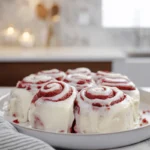
Red Velvet Cinnamon Rolls
- Total Time: 3 hours 40 minutes
- Yield: 12 servings 1x
Description
Soft, pull-apart red velvet cinnamon rolls made with cocoa-enriched dough, a classic cinnamon sugar filling, and tangy cream cheese icing. A festive breakfast bake that stays tender and fluffy.
Ingredients
- 1 cup warm milk
- 1/2 cup sugar
- 4 tablespoons unsalted butter, melted
- 1 teaspoon salt
- 2 1/4 teaspoons instant yeast
- 2 large eggs
- 1/2 cup full-fat sour cream
- 4 1/2 cups all-purpose flour
- 2 tablespoons unsweetened cocoa powder
- 1 tablespoon red food coloring
- 1/2 cup butter, softened (filling)
- 3/4 cup brown sugar
- 2 tablespoons cinnamon
- 1/4 cup butter, room temperature (icing)
- 1/2 cup cream cheese, room temperature
- 1 teaspoon vanilla extract
- 1 1/2 cups powdered sugar
- 2 tablespoons milk
Instructions
- Combine warm milk, sugar, melted butter, salt, yeast, and food coloring in a stand mixer bowl and mix until blended.
- Add eggs and sour cream and mix again until smooth.
- Add flour and cocoa powder, then mix on medium speed until a smooth, elastic dough forms.
- Cover and let the dough rise in a draft-free area until doubled in size.
- Roll the dough into a rectangle, spread with softened butter, and sprinkle evenly with brown sugar and cinnamon.
- Roll tightly into a log, slice into rolls, and place in a buttered baking dish.
- Let rolls rise again at room temperature or refrigerate overnight.
- Bake until puffed and lightly golden.
- Beat icing ingredients together and spread over warm rolls before serving.
Notes
- Make sure the yeast is fresh for proper rising.
- Allow extra rise time if your kitchen is cool.
- Avoid adding too much flour to keep the rolls tender.
- Prep Time: 3 hours
- Cook Time: 40 minutes
- Category: Breakfast
- Method: Baking
- Cuisine: American
Nutrition
- Serving Size: 1 roll
- Calories: 472
- Sugar: 38
- Sodium: 420
- Fat: 22
- Saturated Fat: 13
- Unsaturated Fat: 8
- Trans Fat: 0
- Carbohydrates: 62
- Fiber: 2
- Protein: 8
- Cholesterol: 85
What Are Our Readers Saying?
There are no reviews yet. Be the first one to write one.