Smoked Salmon Pasta Salad: Cool, Creamy, and Built for Summer Heat

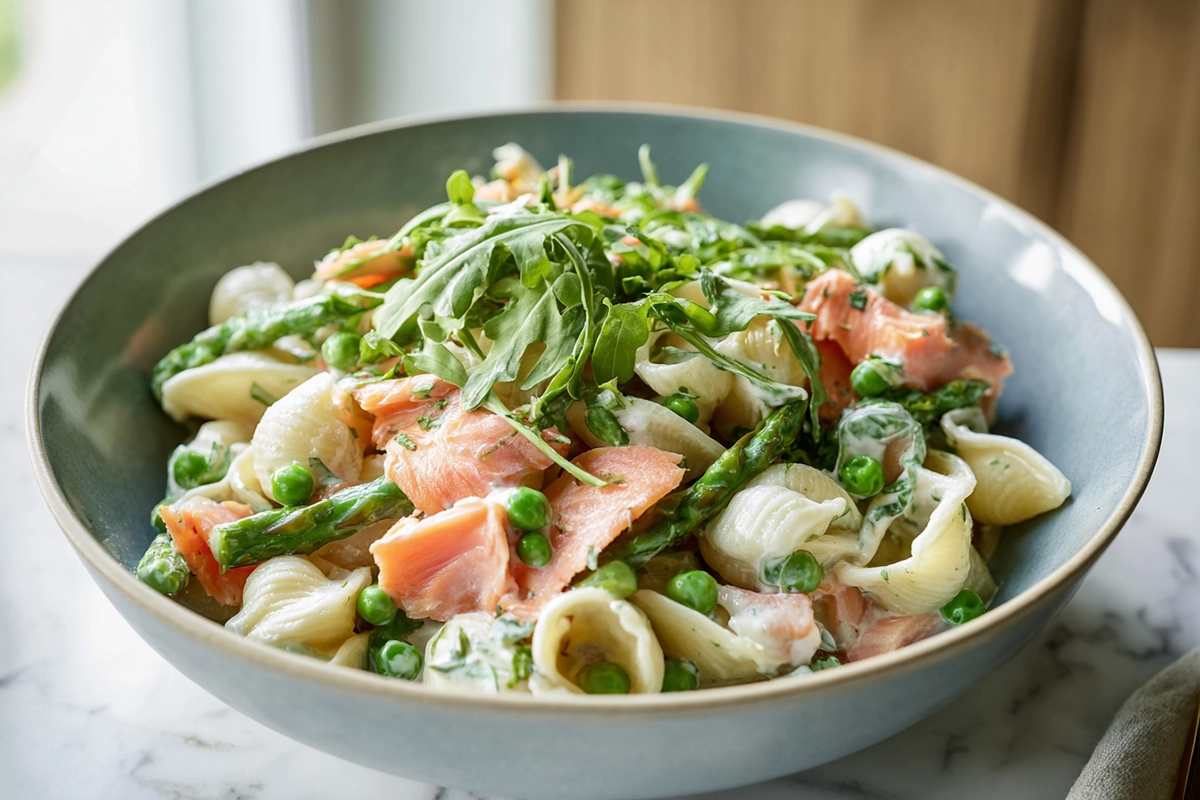
Cold pasta salad has a reputation problem. Too often it’s bland, gluey, or drowned in dressing that tastes like it came from a plastic tub. The noodles clump. The add-ins disappear. And the whole thing feels more like an obligation than something you actually want to eat. This is the exact opposite of that salad.
This smoked salmon pasta salad is built to stay lively even after it’s chilled. The pasta is cooked with intention—soft enough to stay tender when cold, never chalky. The salmon is smoky and rich, but not overwhelming, cut into proper bite-sized pieces so it shows up in every forkful instead of shredding into the background. The dressing is creamy, yes, but brightened with lemon zest, fresh herbs, and a bit of tang so it coats instead of smothers. Every element has a job, and none of them overstay their welcome.
There’s also a quiet efficiency baked into this recipe. The peas and asparagus cook right in the pasta pot at the last minute, so they stay crisp and green without extra dishes. The dressing comes together in one bowl and is made generously on purpose—because cold pasta drinks it up as it rests. Half now, half later is the difference between a salad that loosens beautifully overnight and one that turns stiff by morning. And the arugula? It waits its turn, going in at the very end so it stays perky instead of wilting into submission.
You don’t need special tools or cheffy tricks here. Just a pot, a bowl, and a little respect for timing and texture. Get those right, and this becomes the pasta salad people hover over at the table, fork already in hand.
Why This Smoked Salmon Pasta Salad Tastes Balanced, Not Heavy
This smoked salmon pasta salad works because every rich element is paired with something that reins it in. Smoked salmon is naturally fatty and salty; Greek yogurt and mayo give creaminess without turning the dressing dense; lemon zest and juice lift everything before it can feel dull. The goal isn’t “light” in the diet sense—it’s balanced, so you can keep eating without palate fatigue.
The yogurt brings tang and structure, while mayonnaise adds roundness. Using only one or the other would push the salad too far in one direction: all yogurt can taste sharp and thin once chilled, while all mayo gets flat and cloying. Dijon mustard acts as a quiet emulsifier and flavor bridge, tying the dairy, oil, and acid together so the dressing coats instead of pooling. Fresh herbs aren’t decoration here; dill echoes the salmon, parsley freshens the finish, and chives add a gentle onion note without the bite of raw onion dominating the bowl.
- Smoked salmon: Adds salt and umami; chop into bite-size pieces so it distributes instead of shredding.
- Greek yogurt: Provides tang and body; sour cream works similarly but is slightly richer.
- Mayonnaise: Softens the yogurt’s sharpness; avocado mayo works if that’s what you use.
- Lemon zest and juice: Zest for aroma, juice for acidity—both matter.
- Fresh herbs (dill, parsley, chives): Fresh is essential; dried herbs won’t give the same lift.
- Capers: Optional but effective for extra briny contrast—go light, they’re potent.
Vegetables That Pull Their Weight (And One That Waits)
Not every vegetable belongs in a creamy pasta salad, and this recipe is picky on purpose. Peas and asparagus earn their place because they stay sweet and structured after chilling. Cooking them briefly in the pasta water seasons them from the inside and avoids the watery crunch you get from raw add-ins. They cool quickly and hold their shape, which keeps the salad lively instead of limp.
Arugula plays a different role. Its peppery bite cuts through the richness, but only if it’s added at the last moment. Mixed in too early, it wilts, darkens, and turns grassy. That’s why it waits. If you want a green that can handle overnight storage, baby kale is the strongest substitute; baby spinach is acceptable but milder and softer.
The pasta itself is part of this equation. Short shapes like shells, farfalle, penne, or fusilli trap dressing and small bits of salmon and herbs. Long noodles shed dressing and make the salad awkward to eat. Cooking the pasta one minute past standard al dente is intentional—cold pasta firms up as the starches set, and that extra minute keeps it tender once chilled.
- Short pasta (shells, farfalle, penne): Holds dressing and mix-ins; avoid long noodles.
- Green peas: Sweet and sturdy; frozen peas are ideal here.
- Asparagus: Adds bite and freshness; cut small for even distribution.
- Arugula: Peppery contrast—add just before serving to prevent wilting.
- Red onion or shallot (optional): Use sparingly for sharpness; too much overpowers the salmon.
These choices aren’t about fancy ingredients—they’re about how texture, temperature, and balance behave once the salad hits the fridge.

Pasta Texture Is the Make-or-Break Moment
Cooking the Pasta With the End in Mind
Bring your pot of water to a full, rolling boil—the kind that sounds like it’s working hard—then salt it until it tastes like the sea. Drop in the short pasta and watch it tumble freely; if it sticks at the start, the water isn’t hot enough. Cook it just past al dente, about a minute longer than the package suggests. When you bite a piece, it should feel tender all the way through with no chalky center—this matters because pasta firms up as it cools.
Drain and rinse under cold water until the steam stops rising and the pasta feels cool to the touch. You’re not washing away flavor here; you’re stopping the cooking and locking in the texture. If you run your fingers through it, the pasta should feel supple, not squeaky. A light gloss of olive oil is optional but helpful if you’re holding it for later.
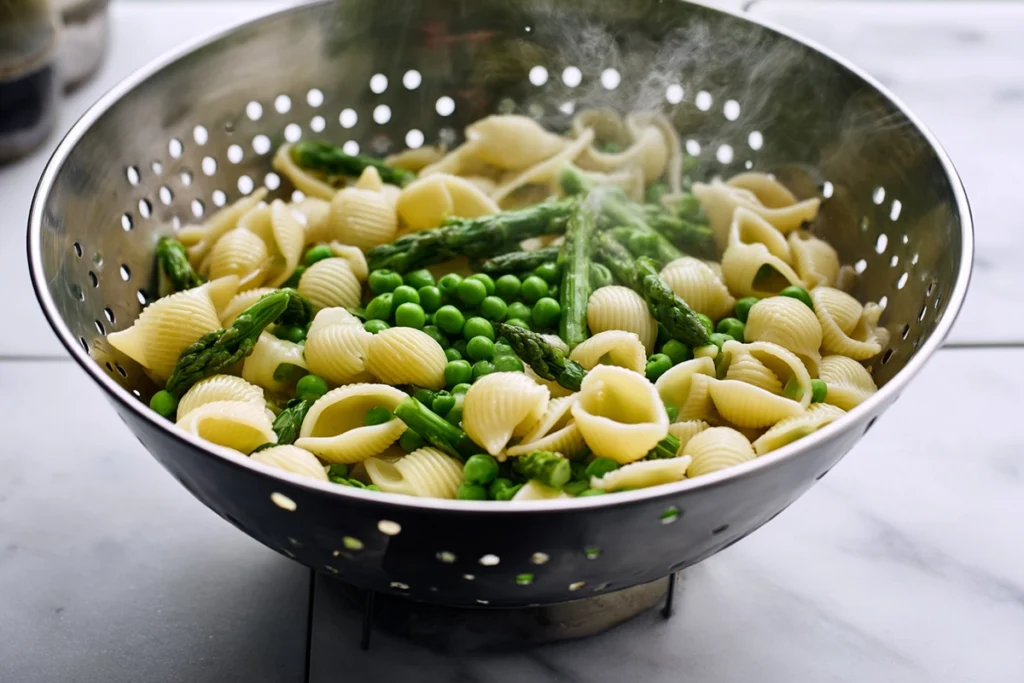
Sneaking the Vegetables Into the Same Pot
As the pasta finishes, add the asparagus to the boiling water and listen for the boil to return—loud and confident, not sluggish. A minute or two later, toss in the peas. When you drain everything together, the asparagus should be bright green and just tender when pinched, the peas sweet and plump, never wrinkled. Rinse briefly with cold water so they keep that color and snap.
The Dressing Strategy That Prevents a Gluey Salad
Building a Dressing That Coats, Not Clings
Whisk the yogurt, mayonnaise, and Dijon until the mixture looks smooth and slightly glossy. As you drizzle in the olive oil, the dressing should thicken and quiet down, losing that watery sheen. Add the herbs, lemon zest, and juice; you’ll smell the dill and citrus immediately—fresh and sharp, not sour. Season lightly at first, remembering the smoked salmon and capers will add their own salt later.
This dressing is intentionally generous. You want enough to loosen the salad now and again after chilling, when the pasta has absorbed some of that moisture. If you drag a spoon through it, it should leave a soft trail that slowly fills back in.
Bringing the Smoked Salmon Pasta Salad Together
The Gentle Toss
Add the cooled pasta and vegetables to a wide bowl so you have room to work. Scatter in the smoked salmon, keeping the pieces intact, then spoon over about half the dressing. Toss gently with a folding motion—listen for the soft thud of pasta against the bowl, not the wet slap of overmixing. The salad should look lightly coated, creamy without pooling at the bottom.
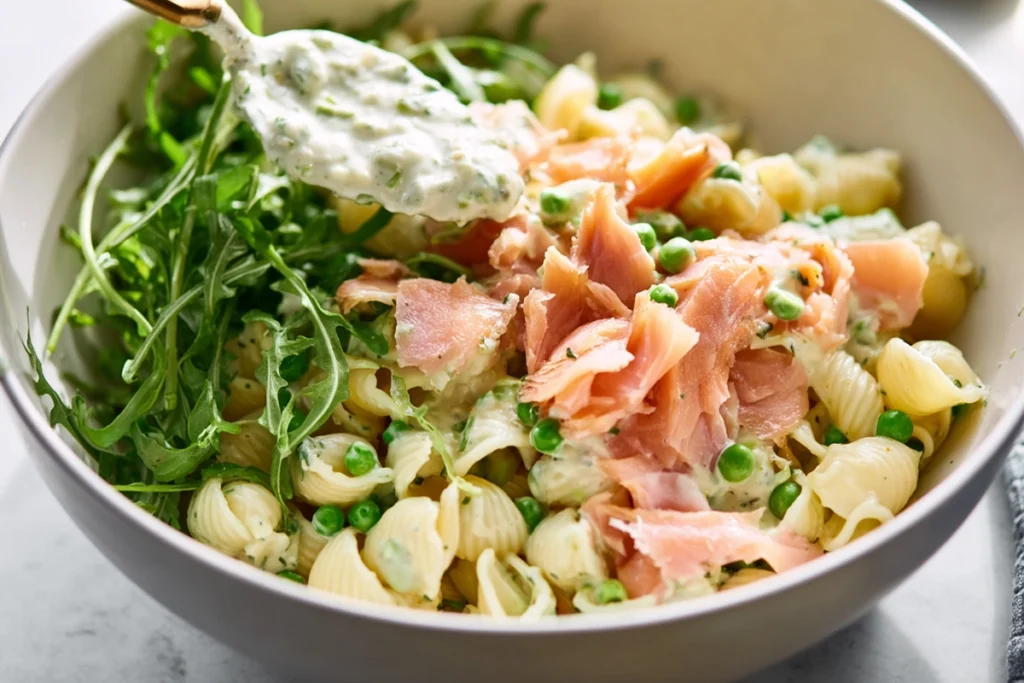
Only add the arugula if you’re serving soon. When it hits the bowl, it should stay perky and bright, releasing a faint peppery aroma as you toss. If you’re chilling the salad, cover it and let it rest; when you come back, loosen it with a bit more dressing until it moves easily and looks inviting again. That’s the moment you know this smoked salmon pasta salad is ready to eat, not just assembled.
Swaps That Actually Work (and One That Doesn’t)
This is a forgiving salad, but only if the swaps respect texture and balance. If you’re out of smoked salmon, this isn’t the place for fresh fish or canned tuna—they change the whole personality of the dish. What does work is leftover hot-smoked salmon or trout, flaked cold and folded in gently. It keeps the smoky backbone without turning mushy.
No Greek yogurt? Sour cream slides in easily, just a touch richer and softer on the tongue. If you only have mayonnaise, you can use it alone, but expect a flatter flavor—add extra lemon zest to compensate. Baby kale is the best stand-in for arugula if you’re making this ahead; it stays sturdy overnight. Baby spinach works in a pinch, but only if you’re serving the salad right away.
One thing to avoid: long pasta or whole-wheat pasta. Long noodles don’t hold the dressing properly, and whole-wheat tends to turn grainy once chilled, which fights the creamy dressing instead of working with it.
How I Actually Serve This in Real Life
This salad pulls double duty. As a main, I serve it slightly chilled with a wedge of lemon and nothing more than good bread on the side—something crusty to mop the bowl. As a side, it shines next to grilled chicken or roasted vegetables, cutting through char and smoke with its brightness.
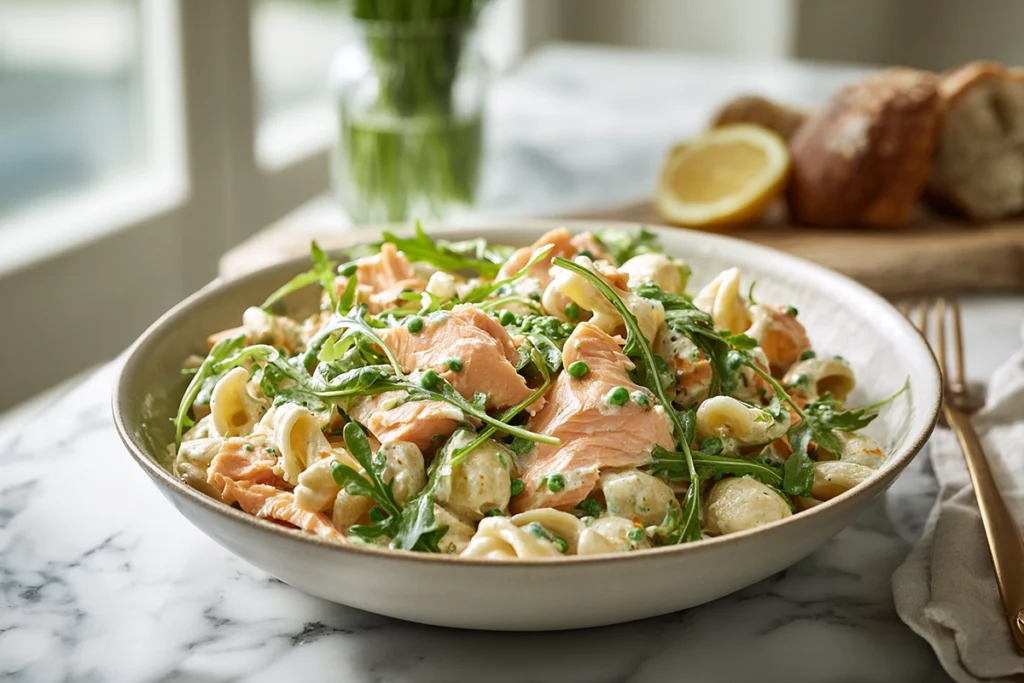
For brunch, it pairs beautifully with soft-boiled eggs or a simple vegetable frittata. At a barbecue, it’s a relief from heavy mayo salads, especially alongside grilled corn or burgers. If you’re packing it for lunch, keep the arugula separate and fold it in just before eating; it makes the salad feel freshly made even on day two.
Common Mistakes People Make With Smoked Salmon Pasta
The biggest mistake is overdressing right away. Pasta tightens as it chills, and dumping all the dressing in at once leaves you with a heavy, sticky salad later. Another misstep is shredding the salmon too small—keep the pieces generous so you actually taste them. And don’t rush the cooling step; warm pasta melts the dressing and dulls the herbs before you even start.
This smoked salmon pasta salad is at its best when you treat it like a composed dish, not a dumping ground. Respect the timing, save a little dressing, and let the ingredients do what they’re good at. You’ll end up with something that eats clean, stays fresh, and disappears faster than you expect—usually with people asking when you’re making it again.
Common Questions About Smoked Salmon Pasta Salad
Can I make smoked salmon pasta salad the night before?
Yes—but only if you do it strategically. Make the salad up through the pasta, vegetables, salmon, and dressing, but do not add the arugula. Cover it tightly and refrigerate overnight. The next day, loosen the salad with a few spoonfuls of the reserved dressing, then fold in the arugula just before serving so it stays bright and perky instead of wilted.
What pasta shapes work best for creamy seafood pasta salads?
Short pasta shapes are non-negotiable here. Shells, farfalle, penne, or fusilli work because they trap the dressing and small bits of salmon and herbs. Long noodles slide clean and leave the salad uneven. Also, cook the pasta one minute longer than usual—cold pasta firms up, and that extra minute keeps it tender once chilled.
Can I use sour cream instead of Greek yogurt?
Yes, sour cream works well and gives a slightly richer, softer dressing. Use it in the same amount as Greek yogurt. What doesn’t work is low-fat yogurt—it turns watery once mixed with lemon and oil and won’t coat the pasta properly. If you only have mayonnaise, increase the lemon zest to keep the dressing from tasting flat.
How long does smoked salmon pasta salad last in the fridge?
This salad keeps well for up to 3–4 days in an airtight container, but it’s best within the first day. The pasta will continue to absorb dressing as it sits, so expect to refresh it with extra dressing before eating. If arugula was mixed in, it will wilt over time—safe to eat, just less pretty.
Is this safe to serve at room temperature for a picnic?
It can sit out for about 1 hour comfortably if the weather is mild. Because this smoked salmon pasta salad contains dairy and fish, it shouldn’t linger longer than that without chilling. For outdoor events, keep it on ice and add the arugula right before serving to maintain both safety and texture.
Print
Smoked Salmon Pasta Salad
- Total Time: 20 minutes
- Yield: 4 servings 1x
Description
A bright and creamy smoked salmon pasta salad made with shell pasta, peas, asparagus, arugula, and a tangy yogurt-herb dressing. Designed to stay fresh, balanced, and delicious even after chilling.
Ingredients
- 8 ounces small shell pasta
- 1 cup frozen peas
- 1 small bunch asparagus, trimmed and cut into 1/2-inch pieces
- 1 tablespoon olive oil
- 1 cup baby arugula
- 4–6 ounces smoked salmon, torn or chopped
- 1/4 cup chopped red onion or shallot (optional)
- 1/2 cup Greek yogurt
- 2 tablespoons mayonnaise
- 1 tablespoon Dijon mustard
- 1/4 cup extra-virgin olive oil
- 2 tablespoons fresh dill, minced
- 3 tablespoons fresh parsley, minced
- 2 tablespoons fresh chives, sliced
- 1 tablespoon capers, chopped
- 1 teaspoon lemon zest
- 2 tablespoons fresh lemon juice
- Salt and black pepper to taste
Instructions
- Cook the pasta in well-salted boiling water until just past al dente.
- Add asparagus during the last 3 minutes and peas during the last minute of cooking.
- Drain and rinse pasta and vegetables with cold water until completely cooled.
- Whisk together yogurt, mayonnaise, Dijon, olive oil, herbs, lemon zest, and lemon juice.
- Combine pasta, vegetables, and smoked salmon in a large bowl.
- Add half the dressing and gently toss to coat evenly.
- Fold in arugula just before serving or reserve if chilling.
- Adjust seasoning and add more dressing as needed before serving.
Notes
- Cook pasta one minute longer than usual to keep it tender once chilled.
- Do not add arugula until just before serving if making ahead.
- Reserve extra dressing to loosen the salad after chilling.
- Store leftovers in an airtight container for up to 3–4 days.
- Prep Time: 10 minutes
- Cook Time: 10 minutes
- Category: Salad
- Method: Boiled
- Cuisine: American
Nutrition
- Serving Size: 1 bowl
- Calories: 480
- Sugar: 4
- Sodium: 820
- Fat: 28
- Saturated Fat: 6
- Unsaturated Fat: 20
- Trans Fat: 0
- Carbohydrates: 38
- Fiber: 4
- Protein: 22
- Cholesterol: 55