Spicy Chicken Ramen: Fiery Broth, Juicy Chicken, and Slurp-Worth Noodles

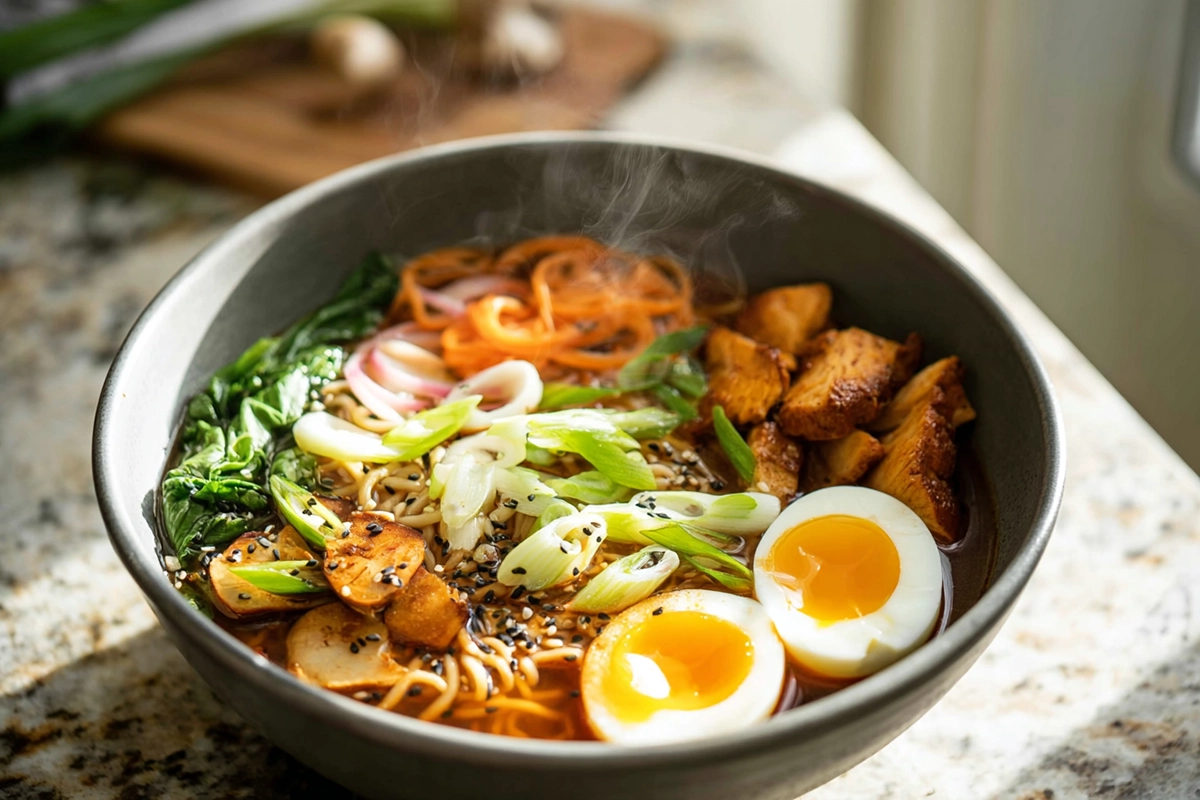
Dry chicken and flat broth are the two fastest ways to ruin ramen at home. One bite tells you everything: the noodles are fine, the toppings look right, but the chicken is chalky and the soup tastes like hot salt water. This recipe fixes both problems decisively. You get heat that builds instead of stings, chicken that stays juicy instead of tough, and a broth that tastes layered—even though you’re not simmering bones all day.
The difference starts with treating the chicken like it matters. It gets marinated in soy sauce, sriracha, honey, ginger, and garlic, then cooked separately over real heat so it browns instead of boiling in the soup. That step alone changes the entire bowl. The broth is built the same way: carrots and mushrooms are sautéed first, so their sweetness shows up before the liquid ever hits the pot. Packaged ramen isn’t a compromise here—it’s a shortcut used intentionally. Mike’s Mighty Good Fried Garlic Chicken Ramen brings savory depth, while sesame oil, bok choy, and radishes keep everything fresh and sharp.
This is spicy chicken ramen for weeknights when you want something cozy but not dull, bold but still balanced. You don’t need a ramen shop setup or a pantry full of obscure ingredients. Just a pot, a pan, and a willingness to build flavor in the right order. By the time you split a soft-boiled egg over the top and the yolk slides into the broth, you’ll know exactly why this bowl works—and why you’ll make it again.
Table of Contents
Why This Spicy Chicken Ramen Doesn’t Taste Like a Shortcut
This bowl works because every ingredient has a job—and none of them are just there to fill space. The goal isn’t to reinvent ramen; it’s to make a fast, weeknight version taste intentional. That starts with balancing heat, sweetness, salt, and fat so the broth feels rounded, not aggressive, and the chicken stays juicy instead of stringy.
The marinade does double duty. Soy sauce brings salt and umami, sriracha brings controlled heat, and honey smooths the edges so the spice doesn’t hit sharp or bitter. Ginger and garlic add warmth without overpowering the broth later. Cooking the chicken separately locks that flavor in instead of letting it wash out into the soup. The vegetables—carrots, mushrooms, bok choy, and radishes—aren’t just for color. They layer sweetness, earthiness, and crunch so the ramen eats like a complete meal, not noodles floating in broth.
Packaged ramen is often blamed for bland bowls, but here it’s used strategically. Mike’s Mighty Good Fried Garlic Chicken Ramen provides a seasoned backbone, while fresh aromatics and sesame oil give it depth you can’t get from a packet alone. This is why the final bowl tastes cohesive instead of cobbled together.
- Chicken Breast: Lean but reliable when marinated; thighs work too if you want richer texture, but expect more fat in the broth.
- Soy Sauce: Provides salt and umami—if using low-sodium, taste the broth before adding the full seasoning packet later.
- Sriracha: Adjustable heat; start low and build. Adding it early mellows the spice compared to stirring it in at the end.
- Honey: Balances heat and salt; maple syrup can sub, but it will add a deeper sweetness.
- Sesame Oil: Aromatic, not neutral—use sparingly or it will dominate the bowl.
- Chicken Broth: Acts as the canvas; a well-seasoned broth means less reliance on the packet.
- Ramen Noodles & Seasoning: Chosen for structure and flavor—discarding the oil packet until the end keeps the broth clean.
- Vegetables (Carrots, Mushrooms, Bok Choy, Radishes): Each brings a different texture and sweetness; skipping one flattens the bowl.
- Soft-Boiled Eggs: The yolk enriches the broth naturally—think of it as sauce, not garnish.

The Logic Behind the Bowl (Flavor First, Speed Second)
Good ramen isn’t about complexity; it’s about sequence. Flavor develops fastest when ingredients hit heat in the right order. Vegetables are sautéed before liquid so their sugars caramelize instead of dissolving. The broth simmers just long enough to extract flavor without turning murky. Noodles cook briefly so they stay springy and don’t steal all the liquid. The oil packet waits until the end so its aroma stays bright instead of dull.
This strategy is what keeps spicy chicken ramen from tasting thin or one-note. Heat is supported by sweetness. Salt is buffered by fat. Freshness comes in at the last moment, not the beginning. When everything lands in the bowl—juicy chicken, supple noodles, crisp greens, and a jammy egg—the result feels deliberate, comforting, and far more satisfying than the effort suggests.
The Chicken Goes First (And It Can’t Be Rushed)
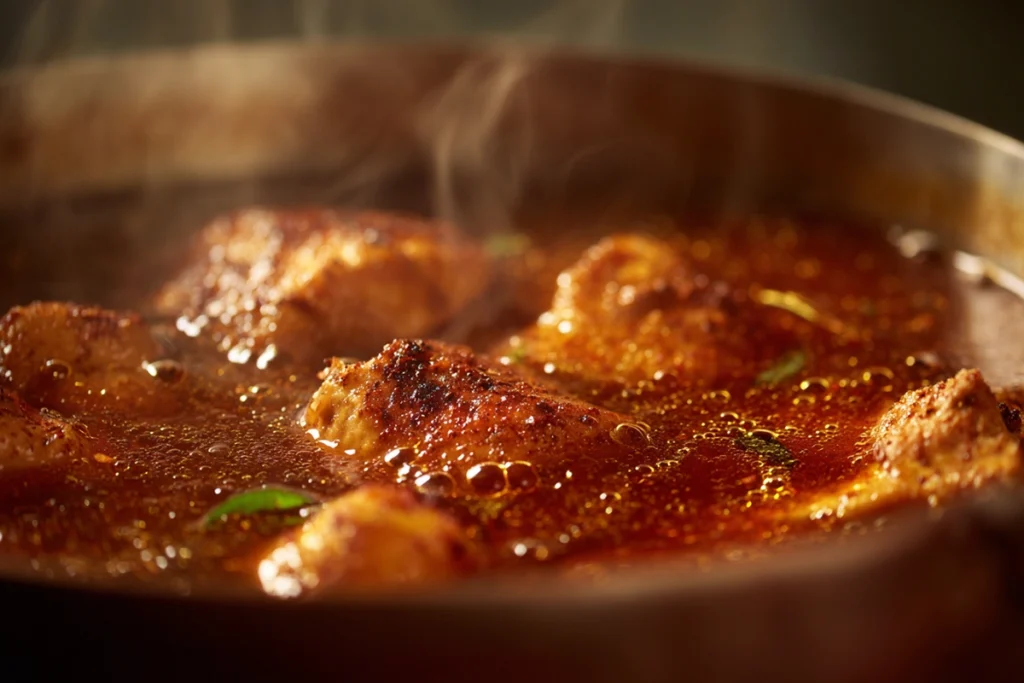
This is where spicy chicken ramen either starts strong or falls apart later. When the marinated chicken hits a hot pan, you should hear an immediate, confident sizzle—not a weak hiss. If it hisses, the pan isn’t hot enough and the chicken will release moisture instead of browning. Let it sit. The edges should turn opaque and lightly caramelized before you even think about stirring.
As it cooks, the smell shifts from raw garlic to something rounder and slightly sweet, thanks to the honey in the marinade. That’s your cue that the sugars are caramelizing, not burning. When the chicken is done, it should feel firm but springy when pressed, like the base of your thumb—not stiff, not spongy. Pull it off the heat and set it aside; keeping it separate is how you protect that juiciness instead of letting it boil away in the broth.
Building the Broth in Layers, Not All at Once
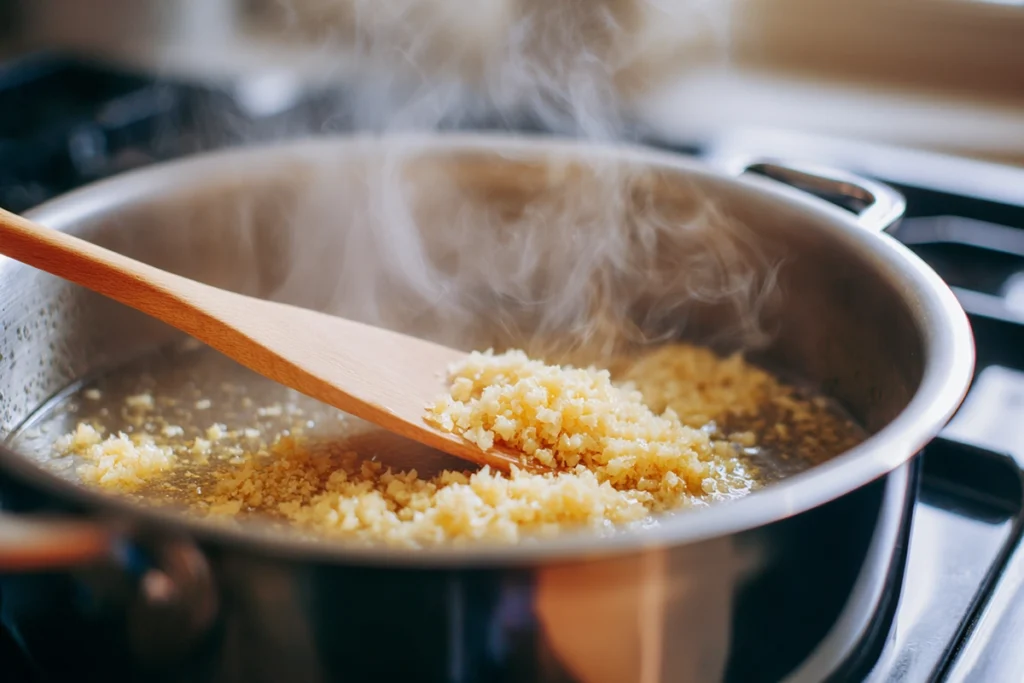
Use the same pot mindset as a stir-fry: flavor first, liquid second. When the sesame oil warms and the carrots go in, you’re looking for gentle sizzling and a faint sweetness in the air after a few minutes. Add the mushrooms and listen again—they’ll squeak slightly as they release moisture, then quiet down as they soften. That’s when the vegetables stop smelling raw and start smelling savory.
Only then does the broth go in. When it simmers, not boils, the surface should barely tremble. Add the ramen noodles and seasoning and watch them loosen and sink, turning the broth cloudy but fragrant. Bok choy, radishes, and green onions go in last; they should wilt just enough to soften while staying bright. When you finish with the oil packet off the heat, the aroma should bloom instantly—that toasted, garlicky finish is what tells you this spicy chicken ramen is ready for the bowl, not another minute on the stove.
The Heat Dial Is Yours (But There’s a Right Way to Turn It)
If you’re cooking for mixed spice tolerances, the smartest move is adjusting heat at the marinade stage, not the bowl. One tablespoon of sriracha gives you warmth; three gives you a slow burn that lingers. Adding more at the end tastes sharper and less integrated, so resist that instinct. If you’re out of sriracha, chili garlic sauce works, but expect a rougher heat and more garlic punch.
Protein swaps should be practical, not precious. Leftover rotisserie chicken works if you shred it cold and warm it gently in the broth at the very end—don’t cook it twice or it’ll tighten up. Chicken thighs are a straight swap for breast if you want a richer texture, just know they’ll release more fat into the soup. What doesn’t work? Pre-cooked frozen chicken or plant-based “chicken” simmered in the broth—it turns spongy and muddies the flavor fast.
How We Actually Serve This at Home
This is a one-bowl meal, but how you finish it matters. A wide, shallow bowl keeps the noodles loose and makes it easier to catch chicken, veg, and broth in one bite. The soft-boiled egg isn’t optional if you have it—the yolk melts into the broth and softens the heat in a way nothing else does.

To balance the richness of spicy chicken ramen, serve it with something crisp and clean on the side. A simple cucumber salad with rice vinegar cuts the heat and resets your palate. If you’re feeding hungry people, a small plate of dumplings or a piece of toasted flatbread turns dinner into something that feels intentional without extra work.
Spicy chicken ramen is one of those dishes that rewards paying attention without demanding perfection. Once you’ve made it once, you’ll start tweaking it to suit your fridge, your heat tolerance, and your mood. And that’s the point—it’s fast, flexible, and comforting in a way that actually holds up on a weeknight.
Common Fixes Before You Blame the Recipe
If the broth tastes flat, it’s usually because the vegetables didn’t get enough heat before the liquid went in. They should smell sweet and savory first, not raw. Mushy noodles mean the pot was boiling instead of gently simmering—ramen needs calm heat. And if the chicken feels dry, the pan probably wasn’t hot enough at the start. Browning protects moisture; rushing steals it.
Get inspired with more mouthwatering recipes! Follow me on Facebook and Pinterest for new cooking ideas every week.
Common Questions About Spicy Chicken Ramen
Can I make spicy chicken ramen less spicy without losing flavor?
Yes—but the adjustment has to happen early. Reduce the sriracha in the chicken marinade, not at the end. One tablespoon gives warmth without real heat, and the honey keeps the flavor balanced. If you wait and dilute the broth later, you’ll end up with leading saltiness instead of a rounded flavor. The spice in this recipe is designed to mellow as it cooks, not hit all at once.
What’s the best substitute if I can’t find Mike’s Mighty Good ramen?
Use another plain or lightly seasoned ramen noodle and keep the broth simple. Avoid strongly flavored packets like shrimp or beef—they’ll fight the chicken broth and sesame oil. If the seasoning packet is very salty, use only part of it and taste before adding more. The goal is structure the noodles, not overpowering the seasoning.
Can I use chicken thighs instead of chicken breast?
Yes, and it works well if you like a richer texture. Chicken thighs stay juicier and are more forgiving if slightly overcooked, but they release more fat into the pan. Sear them the same way—hot pan, no stirring until browned—and drain excess fat before adding them to the bowl so the broth doesn’t turn greasy.
How do I keep ramen noodles from absorbing all the broth?
Timing and heat control matter more than anything. Add the noodles only when the broth is gently simmering, not boiling, and cook just until they loosen and bend easily. Serve immediately. If you’re planning leftovers, store noodles and broth separately—ramen will keep drinking liquid even after the heat is off.
Is this spicy chicken ramen good for meal prep, or will it fall apart?
It works for short-term prep if you store components separately. Keep the broth and vegetables together, the chicken in its own container, and the noodles dry or barely cooked. Reheat the broth first, then add noodles and chicken at the end. This keeps the texture intact and prevents mushy noodles or overcooked chicken.
Print
Spicy Chicken Ramen
- Total Time: 45 minutes
- Yield: 4 servings 1x
- Diet: Halal
Description
Spicy chicken ramen that’s cozy, bold, and weeknight-friendly. Juicy marinated chicken, layered broth, springy noodles, and a soft-boiled egg make this bowl taste better than takeout—without a long simmer.
Ingredients
- 2 tablespoons soy sauce
- 1–3 tablespoons sriracha
- 1 tablespoon honey
- 1 teaspoon ginger powder
- 1 teaspoon minced garlic
- 1 medium chicken breast, cubed
- 1 tablespoon sesame oil
- 2 cups chopped or thinly sliced carrots
- 1 1/2 cups sliced mushrooms
- 3 3/4 cups chicken broth
- 2 packets fried garlic chicken ramen noodles with seasoning
- 1/4 cup sliced radishes
- 1/2 bunch baby bok choy
- 2 tablespoons chopped green onions
- 2 medium soft-boiled eggs
- Sesame seeds, optional
Instructions
- Mix soy sauce, sriracha, honey, ginger powder, and garlic.
- Marinate cubed chicken in the mixture.
- Sear chicken in sesame oil over medium-high heat until browned and cooked through; set aside.
- Sauté carrots in sesame oil until slightly softened.
- Add mushrooms and cook until tender.
- Pour in chicken broth and simmer gently.
- Add ramen noodles and seasoning packets; cook until noodles loosen.
- Stir in bok choy, radishes, and green onions briefly.
- Remove from heat and stir in oil packet.
- Serve topped with chicken, soft-boiled egg, and sesame seeds.
Notes
- Adjust the amount of sriracha to control spice level.
- Cook chicken separately to keep it juicy.
- Add greens at the end to keep them bright.
- Prep Time: 15 minutes
- Cook Time: 30 minutes
- Category: Dinner
- Method: Air Fryer
- Cuisine: Asian
Nutrition
- Serving Size: 2 cups
- Calories: 364
- Sugar: 9
- Sodium: 1467
- Fat: 16
- Saturated Fat: 1
- Unsaturated Fat: 6
- Trans Fat: 0.01
- Carbohydrates: 33
- Fiber: 2
- Protein: 24
- Cholesterol: 40