Steak and Scallops: A Hard Seared Crust and a Butter-Glossed Finish

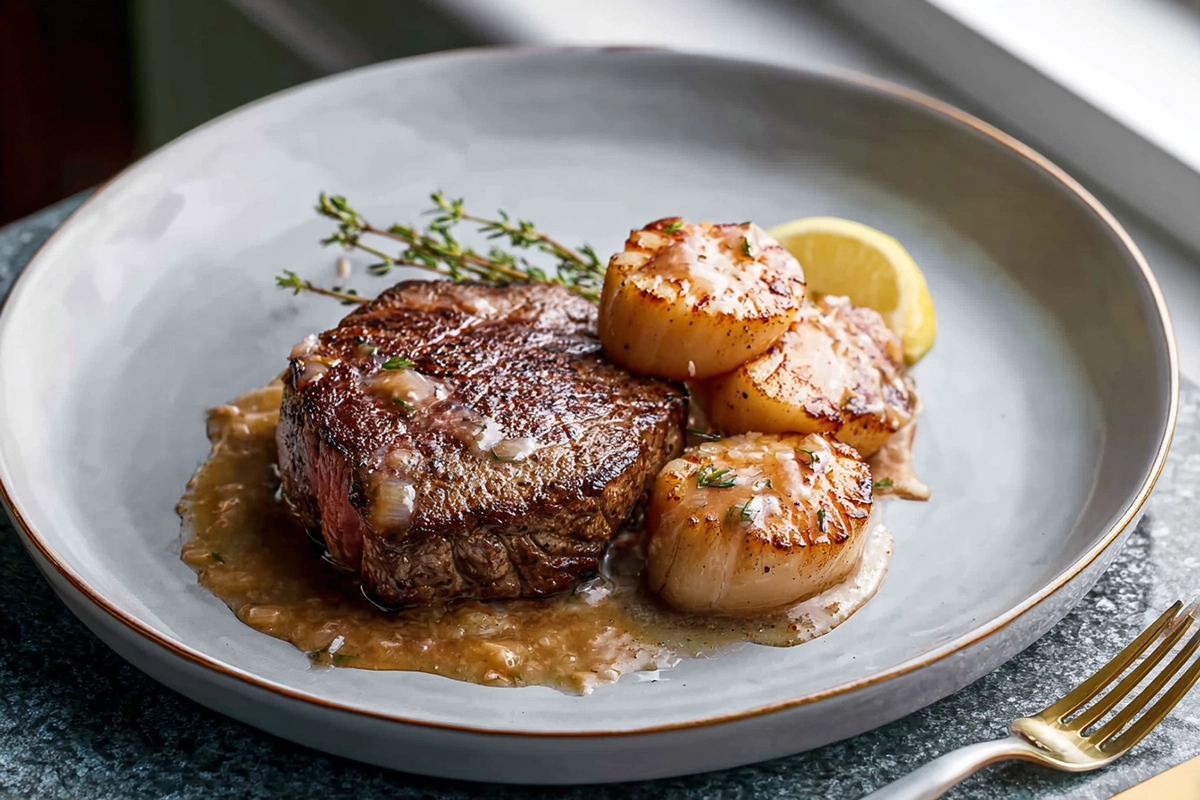
Steak and scallops sound like a flex until you actually try to cook them. One minute too long and the steak tightens up. Thirty seconds too far and the scallops turn from silky to rubbery. Most home versions fail for the same reason: both proteins get treated the same, even though they couldn’t be more different. This recipe exists to fix that. It’s about timing, restraint, and knowing when to leave the pan alone so heat can do its job.
The solution is not more ingredients—it’s sequence and temperature. Both the steak and scallops start by losing their chill, because cold protein is the fastest way to kill a good sear. The steak goes first, alone in a ripping-hot cast iron pan, where it builds a deep, bronzed crust without being poked or prodded. The scallops follow later, when the pan is seasoned with flavor but still hot enough to give them that quick, golden edge while the centers stay just barely set. What ties it all together is the pan sauce: shallots softened in butter, garlic just kissed by heat, a splash of dry white wine to lift the browned bits, and enough butter to turn it glossy—not greasy. Rosemary and lemon show up at the end, quietly, doing exactly what they’re supposed to do.
You don’t need special equipment or restaurant tricks. You need a heavy pan, high heat, and the confidence to wait. Pay attention to color, smell for toasted garlic instead of burnt, and pull things when they’re ready—not when the clock says so. Everything else falls into place.
Table of Contents
The Quiet Power Players: Shallots, Butter, and a Splash of White Wine
This steak and scallops recipe looks luxurious, but its backbone is restraint. Every ingredient earns its place by doing one specific job well—no fillers, no backup flavors. The proteins carry the weight, so everything around them exists to support texture and amplify what’s already there.
- Filet mignon steaks (6–8 oz): Lean, tender, and quick-cooking. This cut rewards high heat and minimal interference. A fattier steak would cloud the pan sauce with excess grease.
- Sea scallops: Size matters. Larger scallops sear instead of steaming, giving you a caramelized surface while staying barely set in the center. If they smell briny, not sweet, skip them.
- Kosher salt & fresh cracked pepper: Salt early on the steak to help moisture move to the surface for better browning. Pepper goes on just before searing so it doesn’t scorch.
- Canola oil: Neutral and high smoke point. Olive oil burns too fast here and muddies the sear.
- Unsalted butter: Used in stages for control. If you only have salted butter, hold back on seasoning later—the sauce concentrates quickly.
- Shallots: Sweeter and softer than onions. They melt into the sauce instead of announcing themselves.
- Garlic: Flavor, not heat. It should smell toasted, never sharp. If it browns, it’s already too late.
- Dry white wine (Sauvignon Blanc): Acidic and clean. Avoid oaky whites—they dull the sauce.
- Water: Keeps the sauce light and prevents it from tipping into richness overload.
- Rosemary: A small amount goes a long way. This is a background structure, not a pine forest.
- Fresh lemon juice: Brightness at the end. Bottled juice tastes flat once heated.

Why This Steak and Scallops Sauce Works Without Cream
The instinct with surf and turf is to reach for cream. This recipe refuses—and that’s why it works. Cream would mute the contrast between the beefy depth of the steak and the natural sweetness of the scallops. Instead, this sauce builds body through reduction and emulsification.
Shallots soften first, releasing sugars that round out the sharpness of the wine. Deglazing lifts the browned fond left behind by the steak and scallops—the real flavor engine here. Water stretches the sauce without weighing it down, giving the butter something to cling to instead of separating. When butter is added off aggressive heat, it emulsifies, turning the liquid glossy and cohesive rather than greasy.
Rosemary provides structure, not aroma dominance, while lemon juice lands last to cut through the richness and reset your palate. The result is a sauce that coats rather than smothers, letting each bite of steak and scallops taste distinct but connected. It’s balance by design, not accident.
Temperature Is the Hidden Ingredient (Room Temp or Bust)
Before a pan ever hits the stove, this dish is already being decided. Take the steak and scallops out of the fridge and let them lose their chill. When protein is cold, it steams before it sears, and you’ll hear a weak hiss instead of a confident sizzle. By the time they feel cool but not cold to the touch, the surface is dry enough to brown and the interior will cook evenly instead of tightening up.
Season the steak generously now, while it rests. Salt draws a little moisture to the surface, then lets it evaporate—exactly what you want for crust. The scallops wait; they get seasoned right before they hit the pan so they don’t leak water and sabotage their own sear.
Cast Iron, High Heat, No Fidgeting: How Steak and Scallops Earn Their Crust
Heat the pan until it smells faintly metallic, and you can see the oil shimmer and move like water. When the steak goes down, it should sizzle aggressively, not politely. That sound tells you contact is good. Leave it alone. Don’t press, don’t peek. Watch the edges instead—when they turn brown and the surface looks lacquered, the crust has formed.
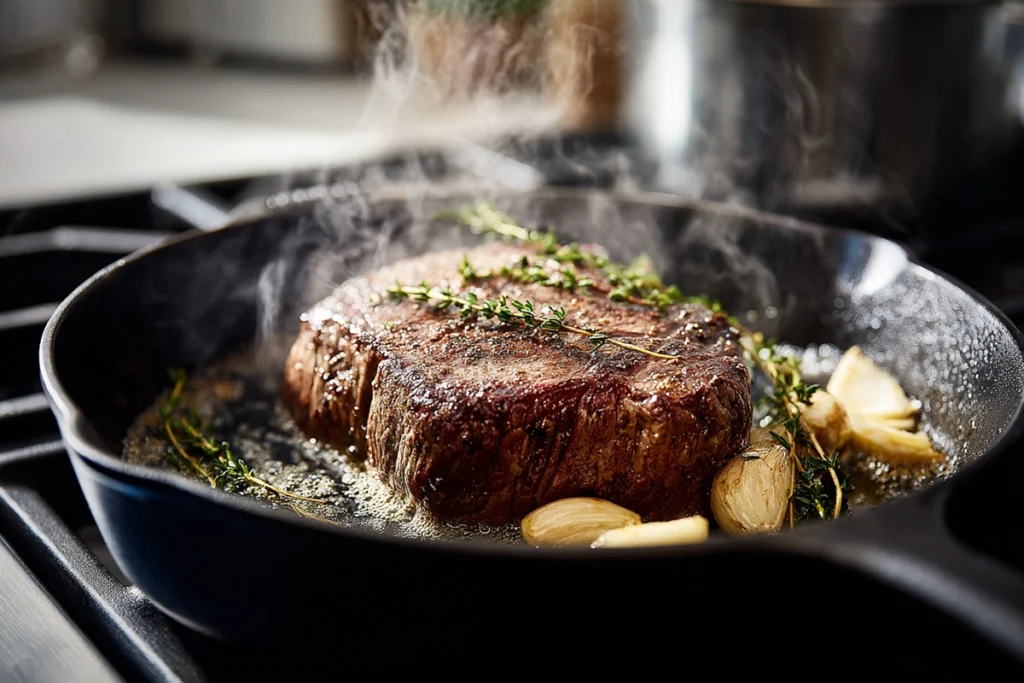
Flip once and repeat. The steak should feel springy but not soft when pressed, like the fleshy part of your palm below the thumb. Pull it and tent loosely; it will relax and finish gently while you work.
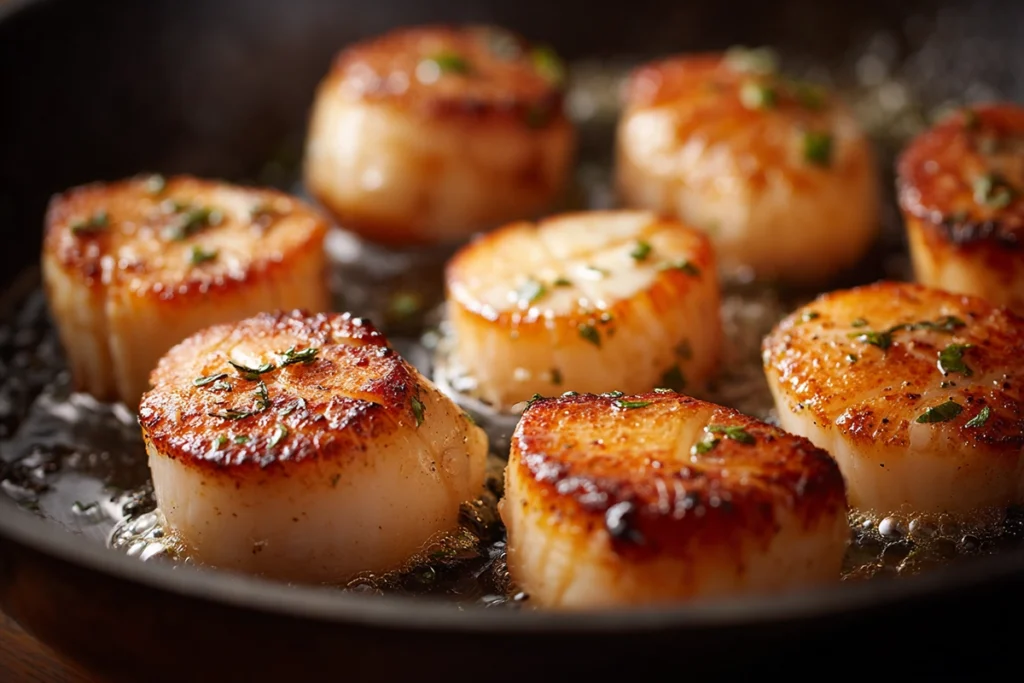
The scallops go into the same pan while it’s still hot. Listen for a sharp sizzle. After about a minute, look for a golden ring creeping up the sides. Flip when they release easily. The centers should feel just firm, with a slight jiggle—opaque at the edges, pearly in the middle. Anything tighter than that and you’ve gone too far.
Building the Sauce in the Same Pan (Without Losing Control)
Lower the heat slightly before adding butter and shallots. You should hear a soft sizzle, not a crackle. The shallots turn translucent and smell sweet before they brown—this is your cue to add the garlic. When the garlic hits, it should bloom instantly and smell nutty, never sharp. If it browns, the sauce will taste bitter no matter what you do next.
Pour in the white wine and listen for the pan to hiss as it lifts the browned bits from the bottom. Scrape gently; that fond is pure flavor. Add water and rosemary, let it simmer until the liquid looks slightly thicker and coats the back of a spoon. Off high heat, swirl in the remaining butter until the sauce turns glossy and unified. Finish with lemon—you’ll smell the brightness immediately.
This is where steak and scallops come back together, either nestled into the sauce or topped with it. The pan should smell rich, savory, and clean—not heavy. That’s how you know you got it right.
Swaps That Actually Work (and One That Doesn’t)
If filet mignon isn’t what you have, a well-trimmed sirloin or strip steak will work, but expect a firmer bite and a little more fat in the pan. Pat it dry aggressively so the sauce doesn’t turn greasy. Scallops are less flexible: if all you can find are previously frozen sea scallops, thaw them completely and dry them as your crust depends on it—because it does. Wet scallops steam and never brown.
Out of shallots? Use a small amount of finely minced yellow onion, but cook it longer and more slowly to soften the edge. For wine, any dry, crisp white works, but skip sweet or oaked bottles—they flatten the sauce. If you need a non-alcoholic option, use extra water with a small squeeze of lemon at the start, then finish carefully so it doesn’t tip sour.
What doesn’t work: baking or broiling. This steak and scallops recipe lives and dies by pan contact. Oven heat can’t give you the same crust or fond, and you’ll lose the sauce entirely.
How to Plate This Like a Restaurant Without Making It Fussy
This dish is rich, so pair it with something that absorbs and balances. Creamy mashed potatoes or risotto soak up the butter sauce without competing. Roasted asparagus or green beans cut through the fat with bitterness and crunch. Crusty bread is never wrong here—it turns the last swipe of sauce into the best bite.
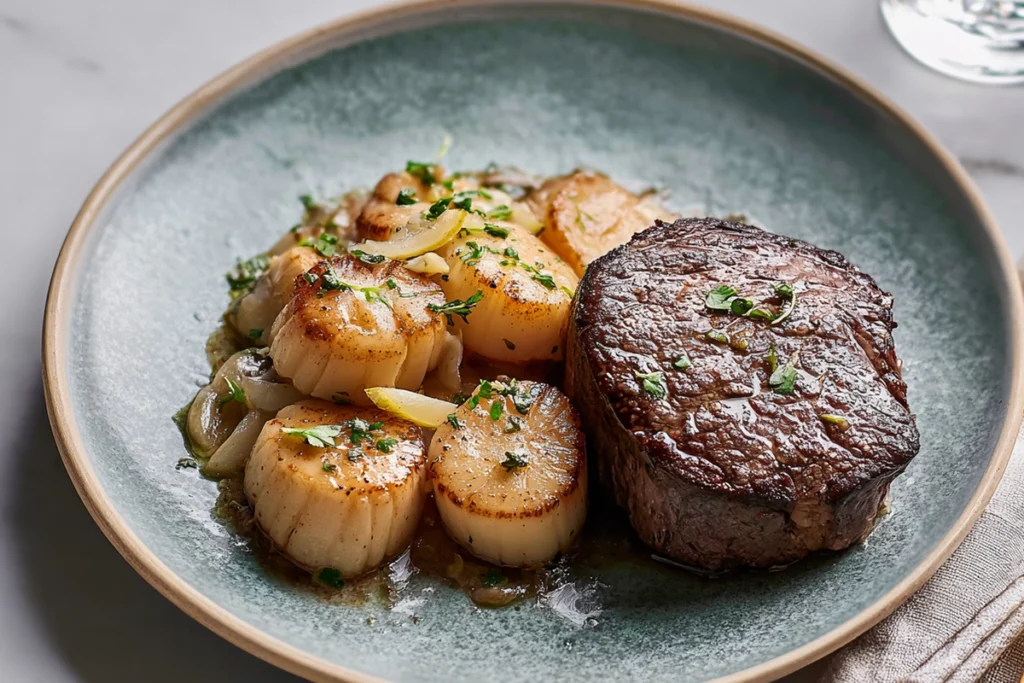
For plating, keep it simple. Steak first, scallops alongside, then spoon the sauce over both so they stay connected. You want each forkful to catch beef, scallop, and sauce together, not separately.
Common Slip-Ups That Flatten the Payoff
Crowding the pan is the fastest way to ruin this. Cook for two, not four. Also, resist the urge to keep stirring the sauce—once the butter goes in, gentle movement is enough. And if something feels done early, pull it. Overcooked scallops can’t be rescued.
This steak and scallops dish isn’t about showing off—it’s about control. Once you feel the timing and trust the cues, it stops being intimidating and starts being reliable. Make it once with attention, and after that, it’s just a really good dinner you know how to cook.
Get inspired with more mouthwatering recipes! Follow me on Facebook and Pinterest for new cooking ideas every week.
Common Questions About Steak and Scallops
Can I use ribeye instead of filet mignon?
You can, but expect a different result. Ribeye has much more fat, which renders into the pan and can overwhelm the butter sauce if you’re not careful. If you use ribeye, pour off excess fat before starting the sauce and reduce the added butter slightly so the final flavor stays balanced instead of greasy.
What’s the best scallop size for pan searing?
Large sea scallops are the right choice here because they sear instead of steaming. Smaller scallops cook through before they brown, which robs you of that golden crust. Look for scallops that are dry-packed and smell clean and slightly sweet—never fishy.
How do I know my steak is medium-rare without cutting it?
Press the center gently with your finger. A medium-rare steak should feel springy but not soft, similar to the fleshy part of your palm below the thumb. Cutting into it releases juices too early and interferes with carryover cooking while it rests.
Can I swap the white wine for something non-alcoholic?
Yes, but do it with intention. Replace the wine with extra water and add a small squeeze of lemon at the beginning to mimic acidity. Finish carefully, tasting as you go, so the sauce stays bright instead of sour.
Why did my butter sauce separate, and can I fix it?
The sauce separated because the heat was too high when the butter went in. Butter emulsifies best over low heat. If it breaks, pull the pan off the heat and whisk in a tablespoon of cool water to bring it back together before serving the steak and scallops.
Print
Steak and Scallops
- Total Time: 1 hour 5 minutes
- Yield: 2 servings 1x
- Diet: Gluten-Free
Description
Pan-seared steak and scallops cooked in one skillet with a glossy white wine butter sauce. This surf and turf recipe focuses on timing, heat, and texture for a restaurant-quality dinner at home.
Ingredients
- 2 filet mignon steaks (6–8 oz each)
- 8 sea scallops
- Kosher salt
- Fresh cracked black pepper
- 1 tablespoon canola oil
- 5 tablespoons unsalted butter, divided
- 1/4 cup finely chopped shallots
- 4 cloves garlic, minced
- 1/4 cup dry white wine
- 3/4 cup water
- 1 teaspoon chopped fresh rosemary
- Juice of 1/2 lemon
Instructions
- Remove the steak and scallops from the refrigerator 30–40 minutes before cooking. Season the steak generously with salt and allow both proteins to come to room temperature.
- Heat canola oil in a cast iron skillet over medium-high heat until shimmering. Season steak with black pepper and sear undisturbed until a deep golden crust forms.
- Flip the steak and cook until medium-rare, about 135°F. Remove to a plate and tent loosely with foil.
- Season scallops with salt and pepper. Add 1 tablespoon butter to the skillet and sear scallops briefly on each side until golden and just opaque. Remove and set aside.
- Lower heat slightly and add another tablespoon of butter with the shallots. Cook until softened, then add garlic and cook just until fragrant.
- Deglaze the pan with white wine, scraping up browned bits. Stir in water and rosemary and simmer until slightly reduced.
- Reduce heat to low and swirl in remaining butter until the sauce is glossy. Finish with lemon juice.
- Return steak and scallops to the pan or spoon sauce over before serving.
Notes
- Letting the steak and scallops come to room temperature ensures a better sear.
- Do not overcrowd the pan or the proteins will steam instead of brown.
- Add butter to the sauce over low heat to prevent separation.
- Prep Time: 10 minutes
- Cook Time: 25 minutes
- Category: Main Dish
- Method: Pan-Seared
- Cuisine: American
Nutrition
- Serving Size: steak and scallops, surf and turf, pan seared steak, scallops, butter sauce, cast iron
- Calories: 875 kcal
- Sugar: 3 g
- Sodium: 554 mg
- Fat: 73 g
- Saturated Fat: 34 g
- Unsaturated Fat: 33 g
- Trans Fat: 1 g
- Carbohydrates: 10 g
- Fiber: 1 g
- Protein: 40 g
- Cholesterol: 209 mg