
Sweet and Sour Chicken: Crackly-Fried Bites in a Glossy, Tangy Sauce
Soggy sweet and sour chicken is the heartbreak of takeout night. You open the box full of hope, fork ready, and instead of crunch you get a limp coating sliding off steamed chicken. The sauce is either cloyingly sweet or aggressively sharp, and by the time you reach the bottom of the container, everything tastes the same. This recipe exists to end that disappointment—decisively.
The fix isn’t exotic ingredients or a restaurant wok burner. It’s restraint and order. The chicken is coated in stages so the surface fries up crackly and stays that way, even after it meets the sauce. The sauce itself is built from pantry staples—ketchup, malt vinegar, dark muscovado sugar, and pineapple juice—but cooked just long enough to turn glossy and balanced, not sticky-sweet. Onions and peppers hit the pan hot so they soften without losing their color, and the garlic and ginger go in late, when the oil is fragrant but not scorched. Everything has a moment. Nothing is rushed, even though the whole dish takes about 25 minutes.
This sweet and sour chicken doesn’t ask for special equipment or a full afternoon. You need a hot pan, a bit of confidence with oil, and the willingness to let the chicken fry properly before you even think about sauce. Do that, and you get crisp-edged chicken that audibly crunches, wrapped in a tangy, pineapple-studded glaze that clings instead of floods. It’s weeknight cooking with payoff—the kind that makes rice mandatory, just so nothing goes to waste.
Table of Contents
Why This Sweet and Sour Chicken Sauce Tastes Balanced (Not Candy-Sweet)
Most sweet and sour sauces fail because they lean too hard in one direction—either syrupy sweet or aggressively sharp. This version works because every element has a job, and no single ingredient is trying to be the star. The acidity is rounded, not harsh. The sweetness is deep, not flat. And the sauce is loose enough to cling to the chicken instead of drowning it. That balance is what makes this sweet and sour chicken feel fresh instead of sticky.
- Tomato ketchup: This is doing more than adding sweetness. Ketchup brings acidity, body, and umami all at once. Skip it and you’d need three separate ingredients to get the same effect.
- Malt vinegar: Sharper and more rounded than white vinegar. If all you have is white vinegar, cut it slightly—you want tang, not bite.
- Dark brown muscovado sugar: This matters. Its molasses notes keep the sauce from tasting like candy. Light brown sugar will work in a pinch, but the sauce will be brighter and less complex.
- Canned pineapple chunks with juice: The juice thins the sauce to a glossy pour, while the fruit adds sweet bursts. Drain it and the sauce turns heavy fast.
- Onion and bell peppers: They soften into sweetness while still holding their shape, keeping the sauce from becoming one-note.
This isn’t restaurant mystery sauce. It’s pantry logic, cooked just long enough to come together.

The Three-Stage Coating That Makes or Breaks the Crunch
The crunch in this sweet and sour chicken isn’t accidental—it’s engineered. Instead of a wet batter that steams the moment it hits sauce, this coating builds layers that fry dry and stay crisp longer. Each stage solves a different problem.
- Cornflour (cornstarch): This first dusting pulls surface moisture from the chicken. That dryness is what lets the egg cling evenly instead of sliding off.
- Egg: Used as a binder, not a batter. Too much egg creates a rubbery shell; just enough creates grip.
- Plain (all-purpose) flour: Gives structure and crunch without toughness. Bread flour has too much protein and will turn chewy.
- Paprika and garlic salt: These season the crust itself, so flavor doesn’t rely on sauce alone. Skip them and the coating tastes flat once sauced.
- Chicken breast fillets: Lean meat cooks fast and stays juicy under high heat. Thighs can work, but they’ll fry darker and need more time.
The result is chicken that fries up browned and crackly, then gets tossed—briefly—with sauce. The coating absorbs flavor without collapsing, which is the whole point.
High Heat, One Pan, No Hesitation
Frying the Chicken Until It Sounds Right
Get your wok or large frying pan hot before the chicken goes anywhere near it. When the oil is ready, it should shimmer and move like water—and when the first piece of chicken hits the pan, you want a sharp, confident sizzle, not a weak hiss. That sound tells you the coating is sealing instantly instead of soaking up oil.
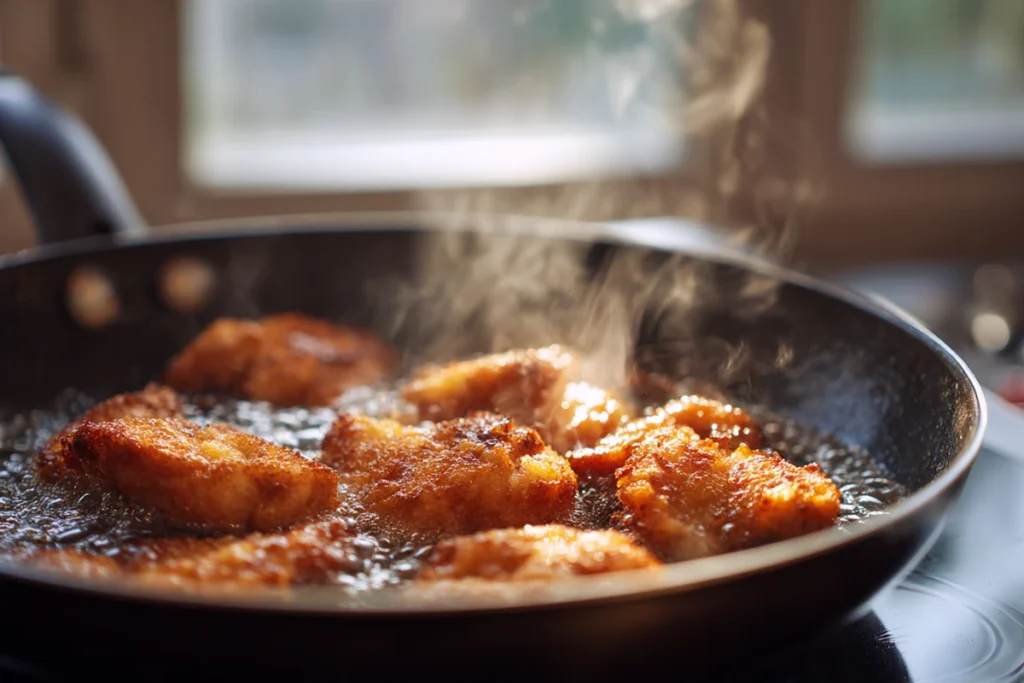
As the chicken cooks, resist the urge to stir constantly. Let it sit long enough for the underside to turn deeply golden, then turn it just two or three times total. You’re looking for color that edges toward amber, not pale beige. The pieces should feel firm when pressed with tongs, with a slight spring back—like the fleshy part of your palm. If the pan starts to smell nutty and savory rather than oily, you’re exactly where you should be.
When the chicken is done, lift it out and let it rest briefly on kitchen paper. You’ll hear the coating crackle as steam escapes. That sound is your reward.
Stir-Frying the Vegetables Without Killing Their Color
Building the Sauce in Layers
In a clean pan, warm the oil over medium-high heat and add the onions and peppers together. They should sizzle gently, not aggressively. Watch for the onions to turn translucent at the edges while the peppers stay bright and glossy—that contrast matters.
Once you smell sweetness from the onions, add the garlic and ginger. This is a short moment. The aroma should be sharp and fragrant, never bitter. As soon as it blooms, pour in the ketchup, vinegar, sugar, and pineapple with its juice. The sauce will look loose and thin at first, but as it bubbles, you’ll see it tighten into a shiny glaze.
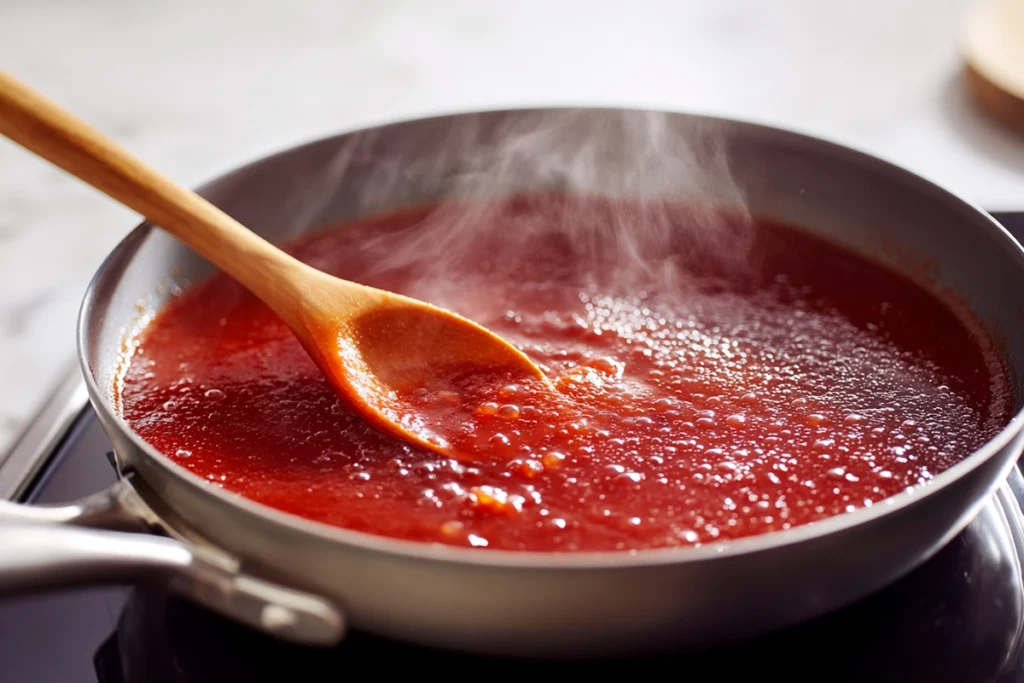
Bringing It All Together
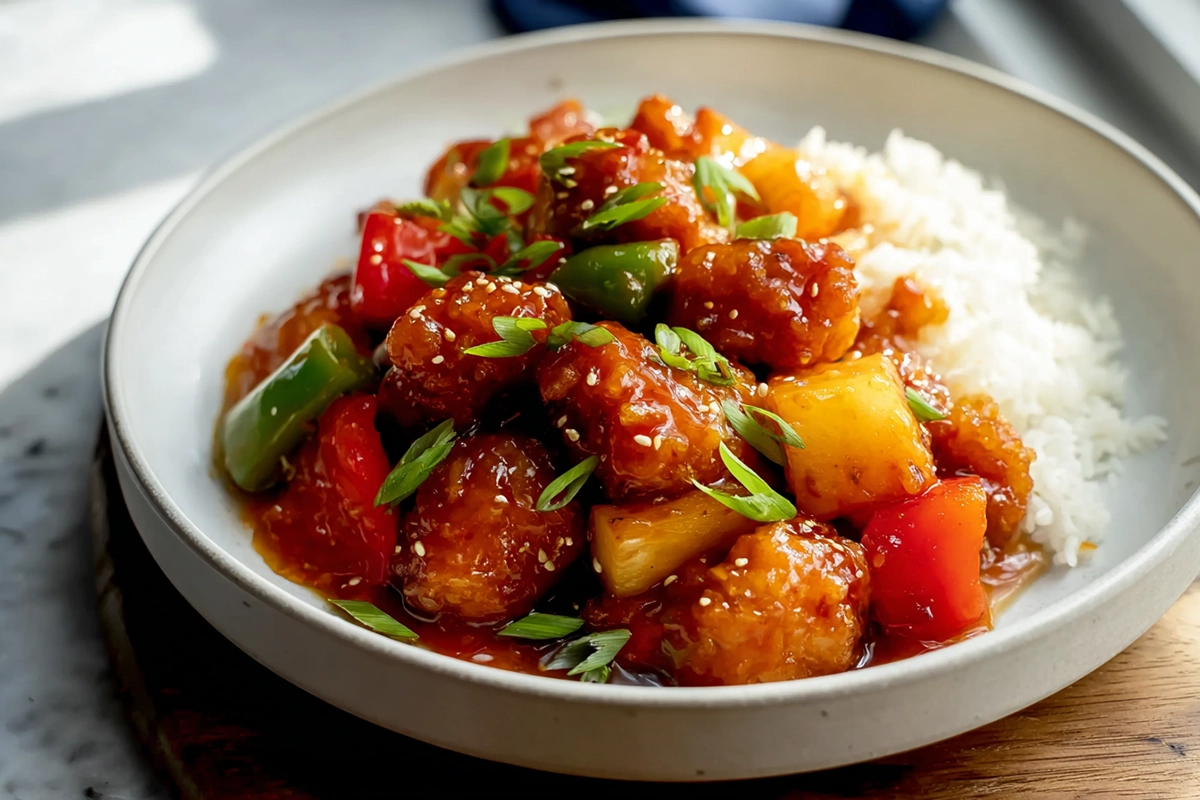
When you add the crispy chicken back to the pan, turn the heat down slightly. Toss gently, using a folding motion rather than stirring, just until every piece is coated. The sauce should cling in a thin layer, not pool at the bottom. If it smells sweet, tangy, and faintly caramelized, your sweet and sour chicken is ready for the table—crunch intact.
Swaps That Actually Work (and One That Doesn’t)
If you’re short on something, this recipe is flexible—but only within reason. Chicken thighs can replace breast if that’s what you have, but expect a darker fry and a slightly richer bite. Cut them evenly and give them a minute longer in the oil so they crisp properly. If muscovado sugar isn’t in your pantry, dark brown sugar is the closest substitute; just know the sauce will taste a little brighter and less rounded.
No malt vinegar? White vinegar works, but pull it back slightly and taste as you go—you want tang, not a sharp jab. Fresh ginger can replace minced ginger if you grate it finely; chunky pieces burn fast and turn bitter.
One thing to skip entirely: baking the chicken. This dish depends on fast, hot frying to set the coating. Oven heat dries it out before it crisps, and once sauce hits, you’ll be right back to soggy territory.
How to Serve It So It Still Feels Fresh on the Plate
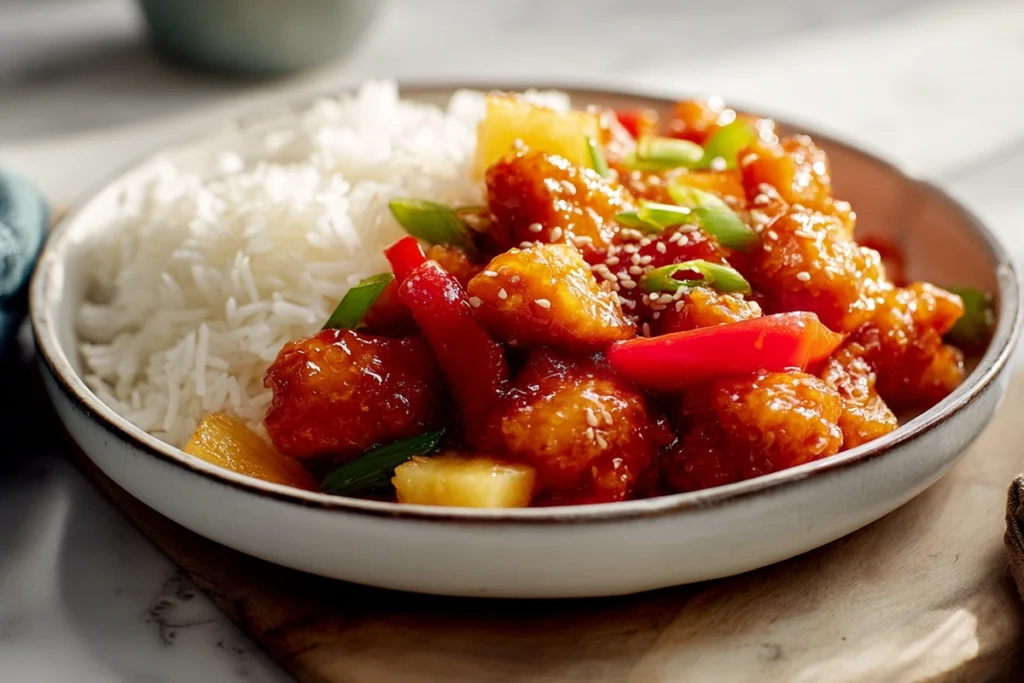
Sweet and sour chicken shines when it has something plain and steady underneath it. Steamed white rice lets the sauce soak in without competing. Egg fried rice adds richness and texture, especially if it’s lightly seasoned and not greasy. Either way, rice isn’t optional—it’s the buffer that keeps the dish from feeling heavy.
A small sprinkle of sesame seeds at the end adds a nutty snap that cuts through the sweetness. If you want contrast on the side, keep it simple: lightly steamed broccoli or snap peas work because they’re clean and green, not sauced or spiced. This dish already brings enough personality.
Last Tip Before You Start
Once the chicken and sauce meet, don’t linger. Toss, coat, and serve. The longer it sits in the pan, the more the crust softens. Timing here is what separates good sweet and sour chicken from great sweet and sour chicken.
If you’re craving takeout flavors but want control over crunch, sweetness, and balance, this recipe delivers without wasting oil, ingredients, or effort. It’s fast, bold, and forgiving—and once you hear that first crackle when the chicken hits the plate, you’ll know it was worth doing right.
Get inspired with more mouthwatering recipes! Follow me on Facebook and Pinterest for new cooking ideas every week.
Common Questions About Sweet and Sour Chicken
Can I use chicken thighs instead of chicken breast?
Yes—chicken thighs work, but you need to adjust your expectations and timing. Thigh meat has more fat, so it fries darker and takes slightly longer to crisp. Cut the pieces evenly and don’t rush the fry; wait until the coating is deeply golden and the chicken feels firm when pressed. The flavor will be richer, but the crust won’t be quite as light as with breast meat.
Can I make this ahead without it turning soggy?
I wouldn’t recommend making the full dish ahead. The chicken stays crisp only when it’s freshly fried and tossed with sauce right before serving. If you need a head start, fry the chicken and make the sauce separately, then keep them apart. Reheat the sauce until bubbling, briefly re-crisp the chicken in a hot pan, and combine at the very last moment.
What oil should I use if I don’t have vegetable oil?
Use a neutral, high–smoke point oil like sunflower, canola, or peanut oil. Olive oil isn’t a good choice here—it smokes too quickly and adds bitterness at high heat. The oil needs to stay clean and hot so the coating sets fast instead of absorbing grease.
How do I make it less sweet without ruining the balance?
Reduce the sugar slightly and keep the vinegar as written. Sweet and sour chicken relies on contrast, and cutting acidity will make the sauce taste flat. If it still feels too sweet after simmering, add a small splash of vinegar while the sauce bubbles—this sharpens the flavor without thinning it.
Can I freeze sweet and sour chicken?
Freezing the finished dish isn’t worth it. The sauce freezes fine, but the fried coating softens permanently once thawed. If freezing is necessary, freeze the sauce alone and cook the chicken fresh. That way you still get the crunch that makes sweet and sour chicken satisfying in the first place.
Print
Sweet and Sour Chicken
- Total Time: 25 minutes
- Yield: 4 servings 1x
- Diet: Halal
Description
Crispy sweet and sour chicken with a glossy pineapple sauce that clings, not soaks. Ready in 25 minutes and better than takeout.
Ingredients
- 5 tbsp vegetable oil
- 2 eggs, lightly beaten
- 3 tbsp cornflour (cornstarch)
- 90 g (3/4 cup) plain flour (all-purpose)
- 1/2 tsp salt
- 1/2 tsp pepper
- 1/2 tsp garlic salt
- 2 tsp paprika
- 3 skinless chicken breast fillets, cut into bite-size chunks
- 1 tbsp vegetable oil (for sauce)
- 1 large onion, chopped into large chunks
- 1 red pepper, chopped
- 1 green pepper, chopped
- 2 cloves garlic, chopped or crushed
- 1 tsp minced ginger
- 150 ml (2/3 cup) tomato ketchup
- 2 tbsp malt vinegar
- 6 tbsp dark brown muscovado sugar
- 475 g (17 oz) canned pineapple chunks in juice
- Sesame seeds, to serve
- Boiled or egg fried rice, to serve
Instructions
- Heat the oil in a wok or large frying pan until very hot and shimmering.
- Set up three bowls: cornflour in one, beaten eggs in another, and flour mixed with salt, pepper, garlic salt, and paprika in the third.
- Dredge the chicken in cornflour, dip in egg, then coat in the seasoned flour.
- Fry the chicken on high heat until deeply golden and crisp, turning only a few times; cook in batches if needed.
- Remove the chicken and drain briefly on kitchen paper.
- In a clean pan, heat oil and cook the onion and peppers until the onion turns translucent but peppers stay bright.
- Add garlic and ginger and cook briefly until fragrant.
- Stir in ketchup, vinegar, sugar, and pineapple with its juice; bring to a boil and simmer until glossy and slightly thickened.
- Add the crispy chicken to the sauce and toss gently to coat.
- Serve immediately over rice with a sprinkle of sesame seeds.
Notes
- Do not bake the chicken; frying is essential for a crisp coating.
- For prep ahead, keep chicken and sauce separate and combine just before serving.
- Chicken thighs can be used but will fry darker and need slightly longer cooking.
- Prep Time: 10 minutes
- Cook Time: 15 minutes
- Category: Dinner
- Method: Frying
- Cuisine: Chinese
Nutrition
- Serving Size: 1 serving
- Calories: 450
- Sugar: 30
- Sodium: 900
- Fat: 20
- Saturated Fat: 4
- Unsaturated Fat: 14
- Trans Fat: 0
- Carbohydrates: 45
- Fiber: 2
- Protein: 30
- Cholesterol: 120
What Are Our Readers Saying?
There are no reviews yet. Be the first one to write one.