Sesame Chicken Green Beans Rice Recipe: Sticky, Savory, and Weeknight-Smart

Takeout sesame chicken has a habit of disappointing. The sauce is either gluey-sweet or weirdly watery, the chicken soft instead of crisp, and the vegetables feel like an afterthought. You’re left with a pile of rice doing its best to rescue the situation. This recipe fixes that problem by refusing to rush the parts that matter and skipping everything that doesn’t.
Here’s the move: boneless chicken thighs get lightly coated with cornstarch and cooked dry before the sauce ever hits the pan. That single choice changes everything. The chicken browns instead of steams, the edges turn golden, and when the soy-sesame–sweet chili sauce finally goes in, it clings instead of sliding off. Meanwhile, the green beans are boiled just long enough to go bright and tender, not limp. They stay fresh and snappy, cutting through the sweetness instead of melting into it.
This sesame chicken green beans rice recipe isn’t trying to be restaurant-authentic or impress anyone with obscure pantry items. It’s about control. Control over heat, timing, and texture. The sesame oil stays subtle instead of perfuming the whole kitchen. The sauce thickens in minutes, not twenty. The rice does what rice is supposed to do: soak up every last glossy drop without turning mushy.
You don’t need a wok, a thermometer, or a stack of prep bowls. Just a pot for the beans, a pan for the chicken, and the willingness to let the chicken sit undisturbed long enough to actually brown. Do that, and you end up with a bowl that eats like comfort food but behaves like a smart weeknight dinner.
Why This Sesame Chicken Green Beans Rice Recipe Works With So Few Ingredients
This recipe lives or dies by restraint. Every ingredient here has a job, and none of them are decorative. The chicken thighs are the backbone — dark meat brings fat, and fat brings forgiveness. That’s critical when you’re cooking hot and fast. Boneless, skinless thighs stay juicy even if you miss the exact second they’re done. If all you have is chicken breast, it can work, but you’ll need to pull it earlier and accept a leaner bite.
Cornstarch is doing quiet, essential work. It lightly coats the chicken, helping it brown while also thickening the sauce later without extra steps. Skip it and the sauce turns thin and slippery. Soy sauce brings salt and depth, but only a tablespoon — this isn’t a salt bomb. If you’re using low-sodium soy sauce, you’ll get a softer, rounder finish; regular soy is fine, just don’t add extra salt elsewhere.
Toasted sesame oil is used sparingly on purpose. A teaspoon is enough to perfume the sauce without turning bitter or overwhelming. Sweet chili sauce is the shortcut ingredient here — sweetness, mild heat, and acidity bundled into one spoon. Green beans are the vegetable of choice because they hold structure after boiling; softer vegetables would collapse under the sauce. Long-grain white rice stays fluffy and neutral, absorbing flavor without competing.
- Boneless, skinless chicken thighs: Higher fat content means better browning and juicier results.
- Cornstarch: Creates a light crust and naturally thickens the sauce.
- Soy sauce: Adds umami and salt; low-sodium works if that’s what you keep.
- Toasted sesame oil: Aromatic, not a cooking fat — a little goes far.
- Sweet chili sauce: Balances sweet, heat, and acid in one step.
- Fresh green beans: Stay crisp-tender instead of soggy.
- Long-grain white rice: Absorbs sauce without turning gluey.

Why This Sesame Chicken Green Beans Rice Recipe Works
The core concept behind this sesame chicken green beans rice recipe is separation of roles. Each component is cooked in the way that suits it best, then brought together at the end. The chicken is cooked before the sauce touches the pan so it can brown instead of steam. That browning creates flavor through the Maillard reaction, giving the sauce something to cling to later.
The sauce itself is minimal and intentional. Because the cornstarch is already on the chicken, there’s no need for a slurry. Once the sauce hits the hot pan, it thickens quickly and evenly, coating instead of pooling. The sesame oil is added inside the sauce, not cooked off, so its aroma stays intact rather than turning sharp.
Boiling the green beans separately may sound old-fashioned, but it’s strategic. It sets their color, keeps their bite, and prevents them from soaking up too much sauce too early. When everything comes together over rice, you get contrast instead of mush: glossy chicken, bright beans, and rice that pulls it all into balance. This isn’t fusion for the sake of novelty — it’s structure, and it’s why the bowl eats clean instead of sloppy.
The Only Step That Can Ruin This Bowl (And How to Nail It)
Browning the Chicken Without Touching It
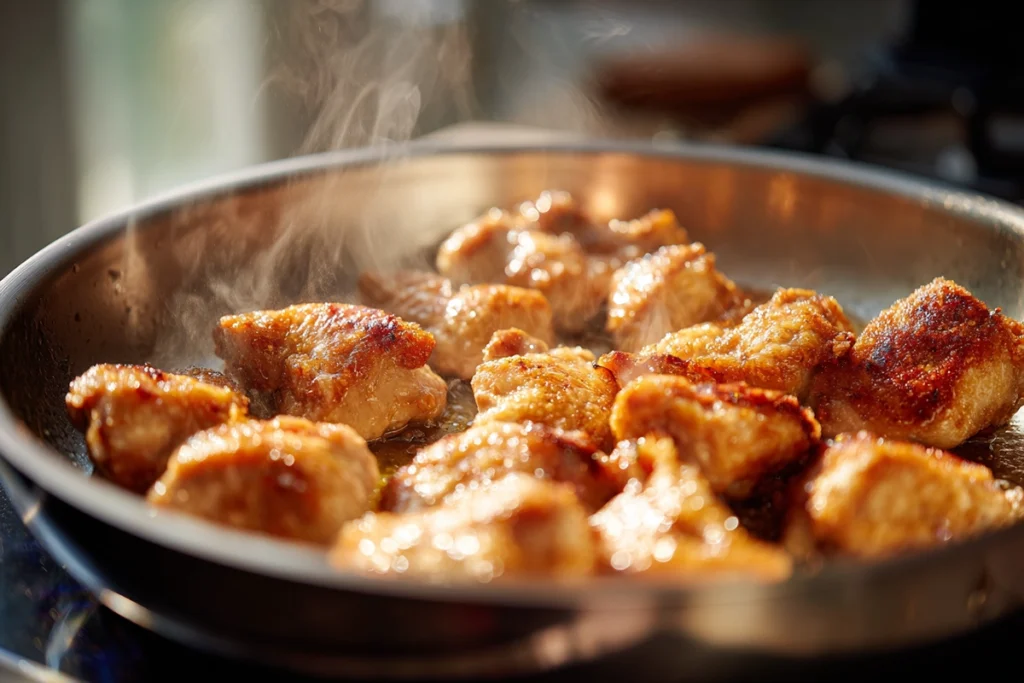
Start with the chicken dry and lightly dusted in cornstarch. When it hits the hot pan, you should hear an aggressive sizzle, not a timid hiss. If the pan sounds quiet, it isn’t hot enough, and the chicken will steam instead of brown.
Let the pieces sit. Don’t poke, don’t stir. Watch the edges — they’ll turn opaque, then slowly deepen to a golden brown. When you flip, the surface should release easily and feel firm but springy, like pressing the base of your thumb. If it sticks, it’s not ready yet.
This moment is the backbone of the sesame chicken green beans rice recipe. Rush it, and everything that follows tastes flat.
Green Beans: Tender, Bright, and Still Worth Eating
Cooking Them Until They Look Alive
Drop the green beans into well-salted boiling water. The pot should smell faintly vegetal, fresh, not sulfurous. As they cook, the color will shift from dull to bright green — that’s your visual cue they’re close.
Lift one out and bite it. It should be tender through the middle but still resist slightly. If it bends without snapping, you’ve gone too far. Drain immediately so the residual heat doesn’t keep cooking them into mush.
Set them aside and forget about them for a minute. Their job is to stay crisp and clean so they can cut through the sticky chicken later.
Sauce Control: Sticky, Glossy, Not Soup
Letting the Sauce Do Its Thing
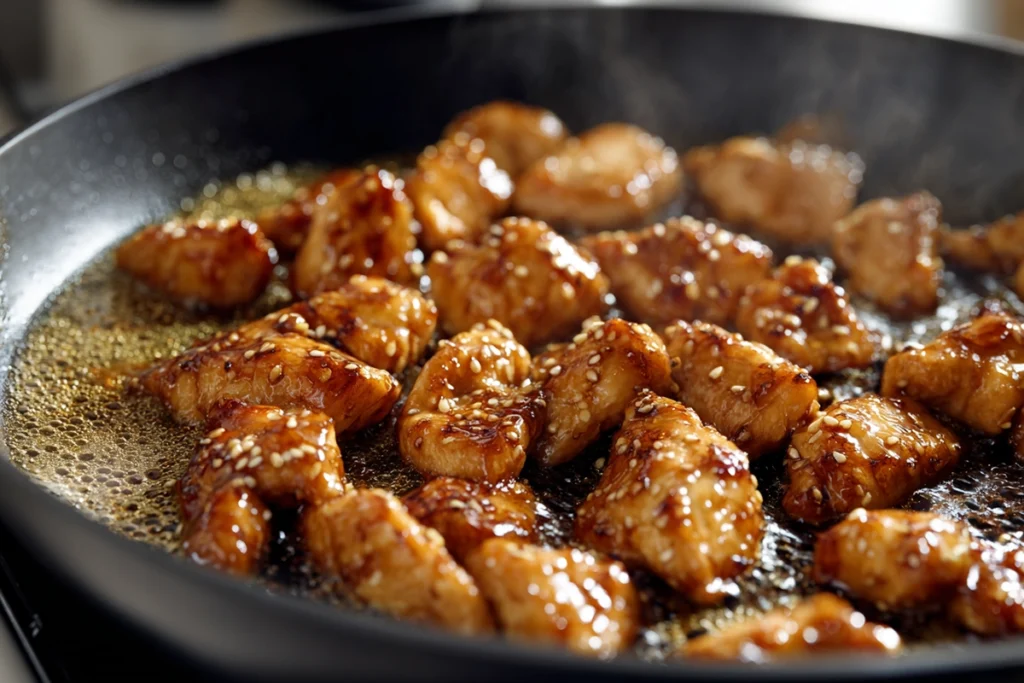
When the chicken is deeply browned and the pan smells nutty and savory, that’s when the sauce goes in. You’ll hear the sizzle soften as the liquid hits, then come back quickly. Stir just enough to coat every piece.
As it simmers, watch the sauce change texture. It will go from thin and shiny to glossy and thick, clinging to the chicken instead of pooling at the bottom. The smell shifts too — toasted sesame comes forward, sweetness rounds out the soy.
The moment it looks lacquered, turn off the heat. If you keep cooking, the sauce tightens too much and loses its sheen.
Bringing It Together Without Killing the Texture
Building the Bowl
Warm the rice until it’s fluffy and steaming, not dry. When you press it with a spoon, it should compress softly, not clump. Spoon it onto the plate first — rice is the foundation here.
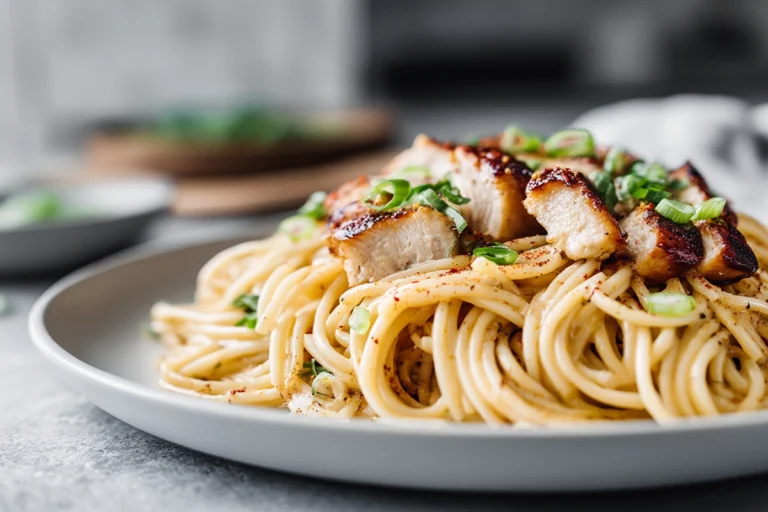
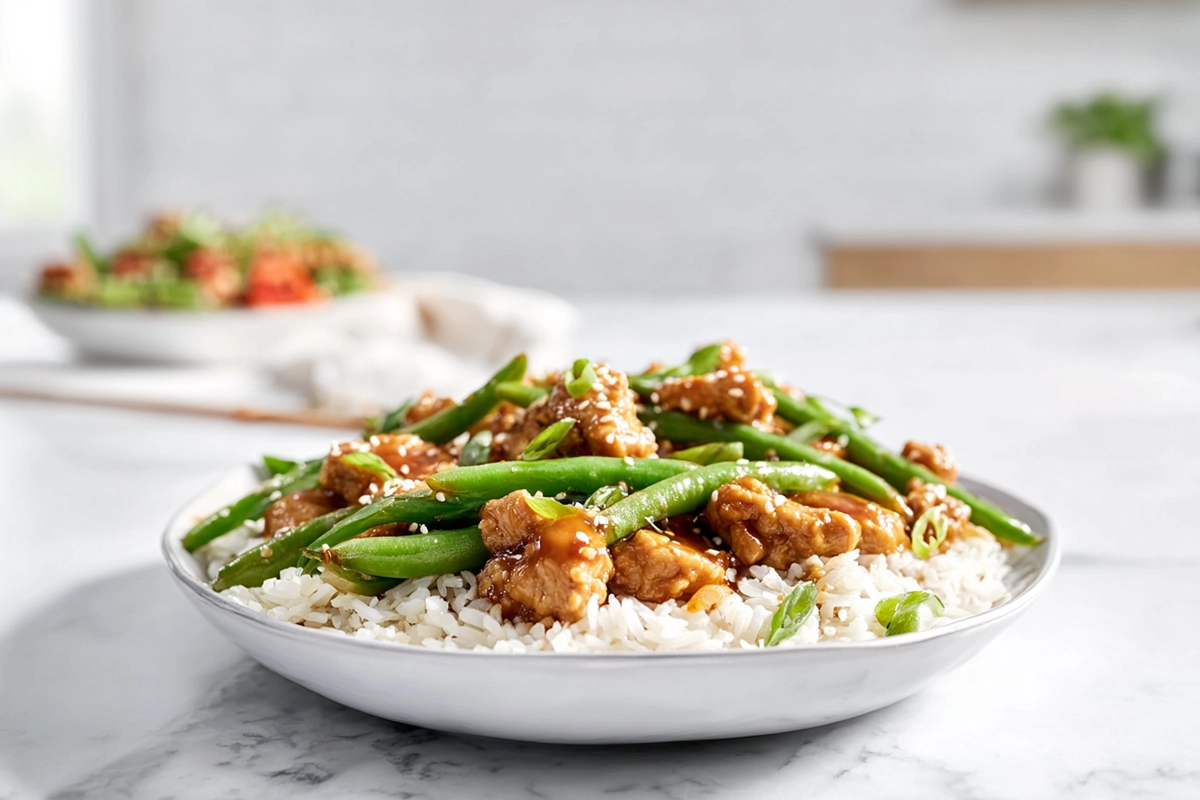
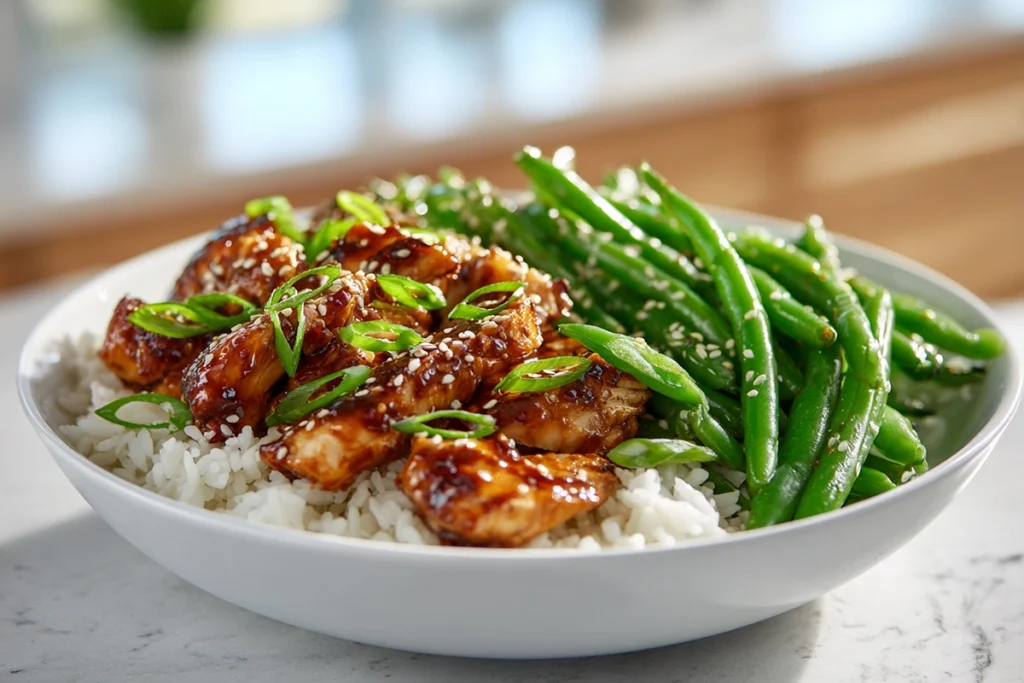
Add the chicken while it’s still glossy, then nestle the green beans alongside instead of burying them. You want contrast on the plate and in every bite. Finish with sliced scallions if you have them; their sharp, fresh smell cuts through the richness and signals that the bowl is ready to eat.
Swaps That Actually Work (And One That Doesn’t)
This recipe is flexible, but not lawless. If you’re out of green beans, broccoli florets or sugar snap peas are the cleanest swaps. Treat them the same way: quick boil until just tender, then get them out. Bell peppers sound tempting, but they soften too fast and turn the bowl sweet in the wrong way.
Chicken thighs are ideal, but leftover rotisserie chicken can work in a pinch. Shred it cold, then warm it gently in the sauce at the very end — don’t try to brown it or it’ll dry out and shred further. Rice-wise, jasmine rice is a great substitute for long-grain white rice if that’s what you have. Brown rice works too, but expect a chewier, more nutty base that pulls focus from the sauce.
One shortcut that does not work: baking the chicken. You lose the browning, the sauce never clings properly, and the whole thing eats flat. This bowl needs stovetop heat to earn its flavor.
How to Plate This for Real Life (Not Instagram)
This is a bowl meant to be eaten hot, straight from the pan to the table. Start with a bed of rice while it’s still steaming — that heat helps the sauce spread and soak instead of sitting on top. Spoon the chicken over one side so it keeps its glossy coating, then add the green beans alongside rather than mixing everything together.
For a complete meal, this sesame chicken green beans rice recipe pairs well with something sharp and simple. A cucumber salad with rice vinegar cuts the sweetness. If you want more crunch, add a handful of quick-pickled cucumbers or radishes right on the plate. Skip heavy sides — this bowl already carries its own weight.
Last Tip Before You Start
Have everything ready before the pan gets hot. This recipe moves fast once the chicken goes in, and scrambling for soy sauce while the pan cools is how good texture gets lost.
This is the kind of meal you make once, then keep in your back pocket. It uses what you already have, doesn’t punish small mistakes, and still delivers that sticky-savory payoff that makes takeout tempting in the first place. When a bowl checks all those boxes, it earns a repeat spot in the rotation.
Common Questions About Sesame Chicken Green Beans Rice Recipe
Can I make this sesame chicken green beans rice recipe ahead of time?
You can prep parts of it ahead, but don’t fully assemble it early. Cook the rice and green beans in advance and store them separately in the fridge. Cook the chicken and sauce fresh when you’re ready to eat, or at most reheat it gently. If everything is mixed and reheated together, the sauce tightens too much and the green beans lose their snap.
What’s the best rice to use if I don’t have long-grain white rice?
Jasmine rice is the best alternative because it stays fluffy and absorbs the sauce without turning mushy. Brown rice works if that’s what you keep on hand, but expect a chewier texture and a nuttier flavor that competes more with the sauce. Avoid short-grain or sushi rice — it clumps and makes the bowl feel heavy.
Can I swap the chicken thighs for chicken breast without drying it out?
Yes, but only if you change how you cook it. Cut the chicken breast slightly larger than you would thighs and pull it off the heat earlier, as soon as it feels firm but still springy. Breast meat dries out fast at high heat, so don’t try to push browning as far as you would with thighs.
Is there a way to make this less sweet without losing flavor?
Reduce the sweet chili sauce slightly and balance it by adding a small splash of water or an extra teaspoon of soy sauce while the sauce simmers. Don’t remove the sweet element entirely — it’s what makes the sesame flavor pop. Adjust at the end, once the sauce has thickened, not before.
Can I cook everything in one pan instead of boiling the green beans separately?
It’s better not to. Boiling the green beans separately sets their color and keeps their texture crisp. Cooking them in the pan with the chicken causes them to soften too much and soak up sauce before they’re tender, which dulls both the vegetables and the final dish.
Print
Sesame Chicken Green Beans Rice Recipe
- Total Time: 22 minutes
- Yield: 1 bowl 1x
Description
Sticky, savory sesame chicken with crisp green beans and fluffy rice. A fast weeknight bowl that delivers takeout-style flavor without deep frying.
Ingredients
- Boneless skinless chicken thighs
- Cornstarch
- Soy sauce
- Toasted sesame oil
- Sweet chili sauce
- Fresh green beans
- Long-grain white rice, cooked
- Olive oil
- Green onions (optional)
Instructions
- Slice the chicken into bite-size pieces and coat lightly with cornstarch, salt, and pepper.
- Boil the green beans in salted water until bright green and just tender, then drain and set aside.
- Heat olive oil in a hot skillet and cook the chicken undisturbed until deeply golden and cooked through.
- Whisk soy sauce, toasted sesame oil, and sweet chili sauce, then add to the pan and toss until the chicken is glossy and coated.
- Warm the rice, then serve the chicken and green beans over rice and finish with sliced green onions if using.
Notes
- Do not rush the browning step; color equals flavor.
- Add the sauce only after the chicken is fully cooked.
- Keep the green beans separate until serving to preserve their texture.
- Prep Time: 7 minutes
- Cook Time: 15 minutes
- Category: Dinner
- Method: Stovetop
- Cuisine: Asian-inspired
Nutrition
- Serving Size: 1
- Calories: 520
- Sugar: 12
- Sodium: 980
- Fat: 22
- Saturated Fat: 5
- Unsaturated Fat: 15
- Trans Fat: 0
- Carbohydrates: 52
- Fiber: 4
- Protein: 32
- Cholesterol: 145