Veggie Tray That Actually Gets Eaten at Every Gathering

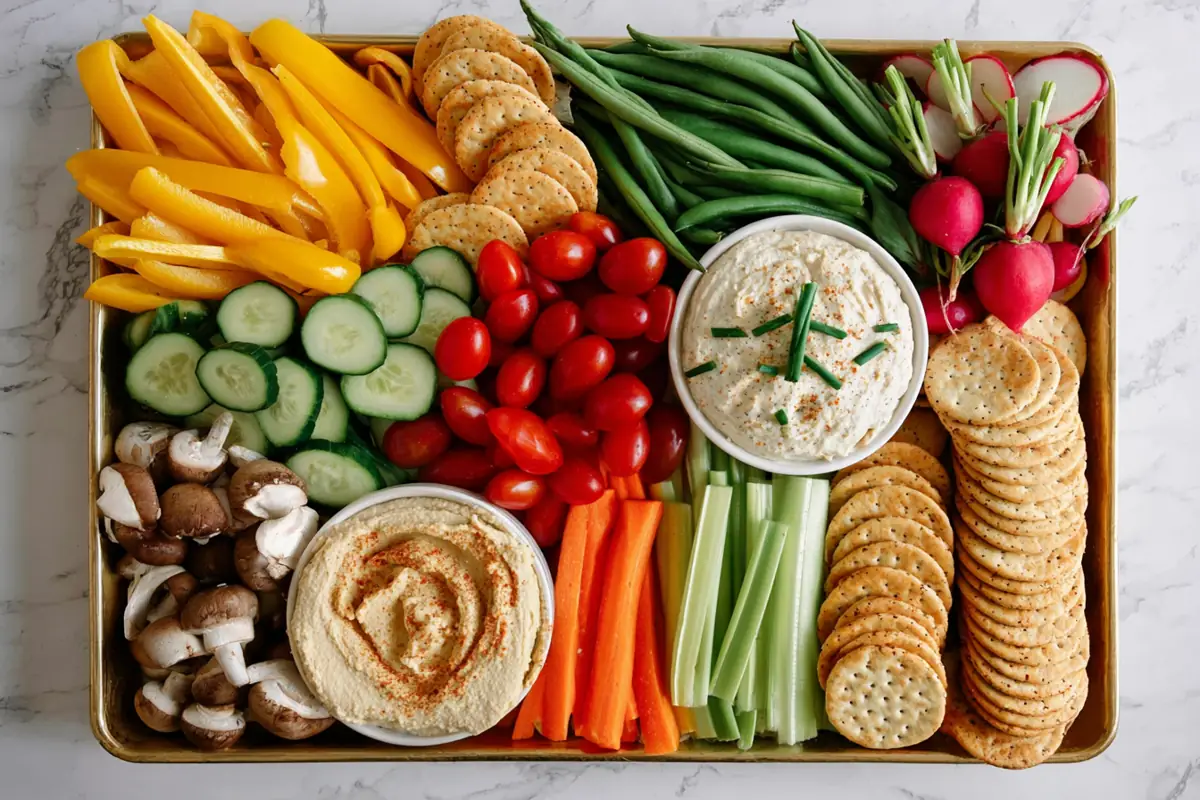
A good veggie tray sounds simple, but there’s a reason some get ignored while others disappear fast. It comes down to freshness, how you cut things, and what you serve alongside.
This is the version I grew up seeing on our table. Mama didn’t overthink it, but she paid attention to small details—crisp vegetables, a couple of dips, and everything arranged so it felt easy to reach.
I’ll walk you through how to build one that people actually snack on, not just admire.
Why a Veggie Tray Still Belongs on Every Table
You’d think a platter of raw vegetables wouldn’t compete with heavier dishes. But set it out early, and watch what happens. People start picking at it while they talk, before anything else is even ready.
The trick is keeping everything fresh and cold. If carrots or cucumbers sit out too long and soften, they lose their appeal. I usually prep everything about 20 minutes before serving, then keep the tray in the fridge until the last minute.
It also gives balance. When there’s rich food around, something crisp and light feels right. That’s why it always works, no matter the occasion.
What to Include on a Veggie Tray (Fresh, Crisp, and Balanced)
Start with vegetables that hold their shape and give a good crunch. Soft or watery ones don’t do as well here.
Here’s what I use most often:
- Carrots (cut into sticks about 3–4 inches long)
- Celery (trimmed and sliced into even pieces)
- Bell peppers (cut into wide strips, not too thin)
- Cucumber (peeled if the skin is thick, sliced into sticks)
- Cherry tomatoes (left whole)
- Radishes (halved so they’re easier to bite)
- Green beans (raw, trimmed ends)
- Mushrooms (whole or halved depending on size)
Size matters more than people think. Too small, and they dry out. Too big, and they’re awkward to dip. I aim for pieces you can grab and eat in two bites.
If you’ve got time, soak carrots and celery in cold water for 10 minutes before serving. They come out noticeably crisper. Worth it.
Choosing Dips That Work with Your Veggie Tray
Vegetables alone won’t carry the tray. The dips do half the work.
I usually go with two or three options, not more. Too many choices just crowd the platter. A mix like this works well:
- A creamy dip (like ranch or yogurt-based)
- Something thicker (like hummus)
- Optional: a sharper flavor (like onion dip)
Keep the dips in small bowls and fill them about ¾ full. If they’re overfilled, they spill once people start dipping.
One thing I learned the hard way—don’t serve dips straight from the fridge if they’re too cold. Let them sit out for about 10 minutes so they loosen slightly. It makes dipping easier and the flavor comes through better.
How to Assemble and Present a Veggie Tray That Looks Inviting
Start with the dips. Place them first on the platter so you don’t end up rearranging everything later.
Then build around them. I like grouping each vegetable instead of mixing everything together. It keeps the tray tidy and makes it easier for people to find what they want.

Lay longer vegetables like carrots and celery in rows, slightly overlapping. Round items—like tomatoes or radishes—can fill in the gaps. Don’t pack it too tight. A little space actually makes it look more generous.
If you’re adding crackers, keep them off to one side or on a separate plate so they don’t soften from moisture.
Right before serving, I sometimes wipe the edges of the platter if there’s any moisture. Small detail, but it keeps everything looking fresh.
Practical Tips to Make Your Veggie Tray Better Every Time
A few small habits make a big difference here.
First, dry your vegetables well. After washing, I leave them on a towel for a few minutes. If they’re wet, the tray ends up with puddles, and dips get watered down. Not ideal.
Color matters more than people admit. Try to spread out the reds, greens, and oranges instead of stacking similar colors together. It makes the whole tray feel more inviting without doing anything complicated.
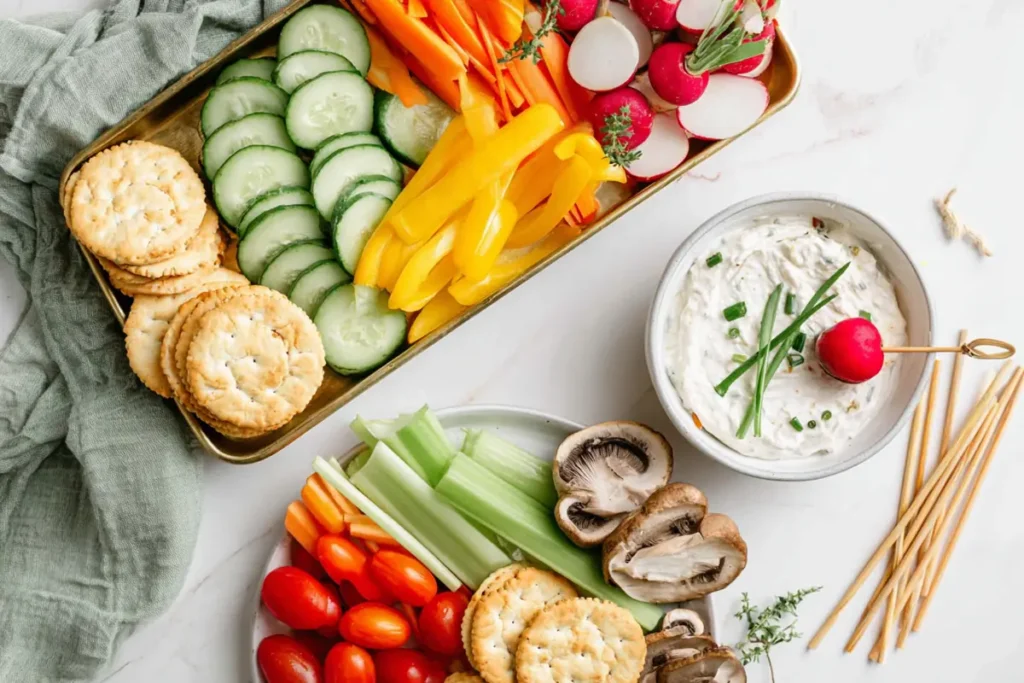
One more thing—don’t overfill. It’s tempting, but a crowded tray gets messy fast. I’d rather refill once than start with everything piled up.
Storing Your Veggie Tray Without Losing Freshness
If you’re making it ahead, timing is everything.
You can prep all the vegetables up to 4 hours in advance, but keep them covered in the fridge. I usually use plastic wrap or a tight lid if the platter allows it. Air is what dries things out.
Keep dips separate if you can, especially if they’re soft. Add them just before serving so they stay clean and fresh.
Leftovers? Store the vegetables in airtight containers. Most will hold up for 1–2 days, though cucumbers tend to soften first. I usually eat those the next morning.
Frequently Asked Questions
How long can a veggie tray sit out?
About 2 hours at room temperature is a safe window. After that, the dips start to lose their texture, and the vegetables don’t feel as fresh.
Can I make a veggie tray the night before?
You can prep everything ahead, but I’d wait to assemble it. Cut and store the vegetables separately, then arrange them the next day. It keeps everything crisp.
Should cucumbers be peeled?
Depends on the skin. If it’s thick or slightly bitter, I peel it. If it’s thin and tender, I leave it on for extra texture.
Is it cheaper to make your own veggie tray?
Usually, yes. Buying whole vegetables and cutting them yourself costs less, and you control the quality. It takes about 20 minutes, but it shows.
A Simple Tray That Feels Like Home
There’s nothing complicated about a veggie tray, but when it’s done right, people notice. Fresh cuts, good dips, and a little care in how it’s arranged—that’s all it takes.
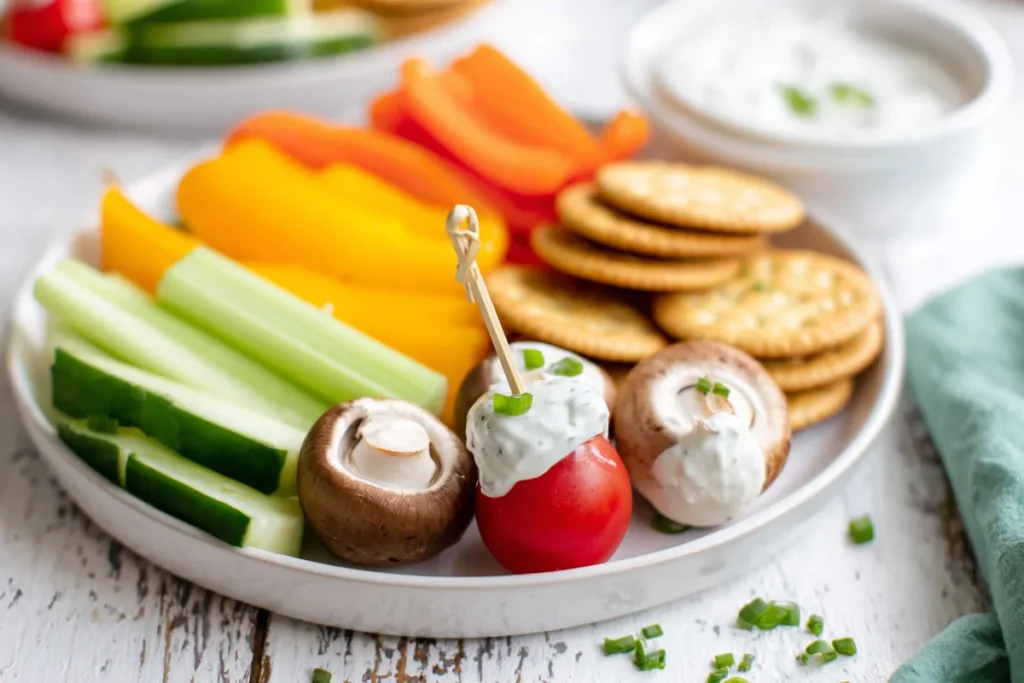
This is one of those things mama always put on the table without thinking twice. And somehow, it was always the first plate to empty. Pull up a chair. Mama always made extra.
Print
Veggie Tray
- Total Time: 20 minutes
- Yield: 12 servings 1x
Description
A fresh veggie tray with crisp vegetables and simple dips, ready in 20 minutes and perfect for gatherings or everyday snacking.
Ingredients
- 3 carrots, peeled and cut into sticks
- 2 celery stalks, trimmed and cut into pieces
- 1 cup cherry tomatoes
- 2 bell peppers, sliced into strips
- 1/2 cup radishes, halved
- 1 cup green beans, trimmed
- 1 cucumber, sliced into sticks
- 1 cup mushrooms, whole or halved
- 3 cups assorted dips
- crackers (optional)
Instructions
- Wash all vegetables thoroughly under cold water
- Peel carrots and trim ends of celery and green beans
- Cut vegetables into sticks or bite-sized pieces for easy dipping
- Pat vegetables dry to remove excess moisture
- Place dips into small serving bowls and set on a large platter
- Arrange vegetables around the dips in grouped sections
- Add crackers if using, keeping them separate from moisture
- Serve immediately or cover and refrigerate up to 4 hours
Notes
- Dry vegetables well to prevent soggy tray
- Cut vegetables into similar sizes for easy serving
- Keep tray refrigerated until just before serving
- Do not overcrowd the platter, refill as needed
- Serve dips slightly softened, not too cold
- Prep Time: 20 minutes
- Category: Appetizer
- Method: No-cook
- Cuisine: American
Nutrition
- Serving Size: 1 serving
- Calories: 120
- Sugar: 5
- Sodium: 180
- Fat: 6
- Saturated Fat: 1
- Unsaturated Fat: 4
- Trans Fat: 0
- Carbohydrates: 12
- Fiber: 3
- Protein: 3
- Cholesterol: 5