
Baked Fish with Lemon Cream Sauce for an Easy Weeknight Dinner


Some fish dinners take longer to prepare than they do to eat. This Baked Fish with Lemon Cream Sauce goes the other direction. A few pantry ingredients melt together into a silky sauce while the fish cooks in the oven, giving you a dinner that feels a little special without adding extra work.
The lemon keeps the sauce bright, the garlic adds depth, and the fish stays tender thanks to the short baking time. It’s the kind of meal that fits comfortably into a busy weeknight.
What Makes Baked Fish with Lemon Cream Sauce So Good
The first thing you’ll notice is the contrast. The fish comes out flaky and delicate, while the sauce settles around it in a rich layer that carries the flavor into every bite. Lemon plays a bigger role than many people expect. It cuts through the butter and cream so the sauce feels fresh rather than heavy.

This recipe also works because everything cooks together. As the fish bakes, its juices mingle with the sauce in the dish. Nothing complicated. Just simple ingredients helping each other out.

Another advantage is flexibility. Most mild white fish fillets work well here, so you don’t have to hunt down a specific variety. If your grocery store has cod one week and haddock the next, either can fit the recipe nicely.
Ingredients That Matter Most
Fish is obviously the star, but the sauce deserves equal attention. A firm white fish holds its shape during baking and absorbs the flavors without overpowering them. Cod, haddock, pollock, hake, and tilapia are all practical choices. Fillets around 150–180 grams (6 ounces) cook evenly in the recommended baking time.
The sauce starts with butter, heavy cream, garlic, and lemon juice. Each ingredient has a job. Butter brings richness, cream smooths everything out, garlic adds a savory backbone, and lemon keeps the sauce lively.
There’s also a spoonful of Dijon mustard, which doesn’t make the sauce taste like mustard. Instead, it adds subtle depth and helps tie the flavors together. The chopped shallots sprinkled over the fish contribute a gentle sweetness as they soften in the oven.
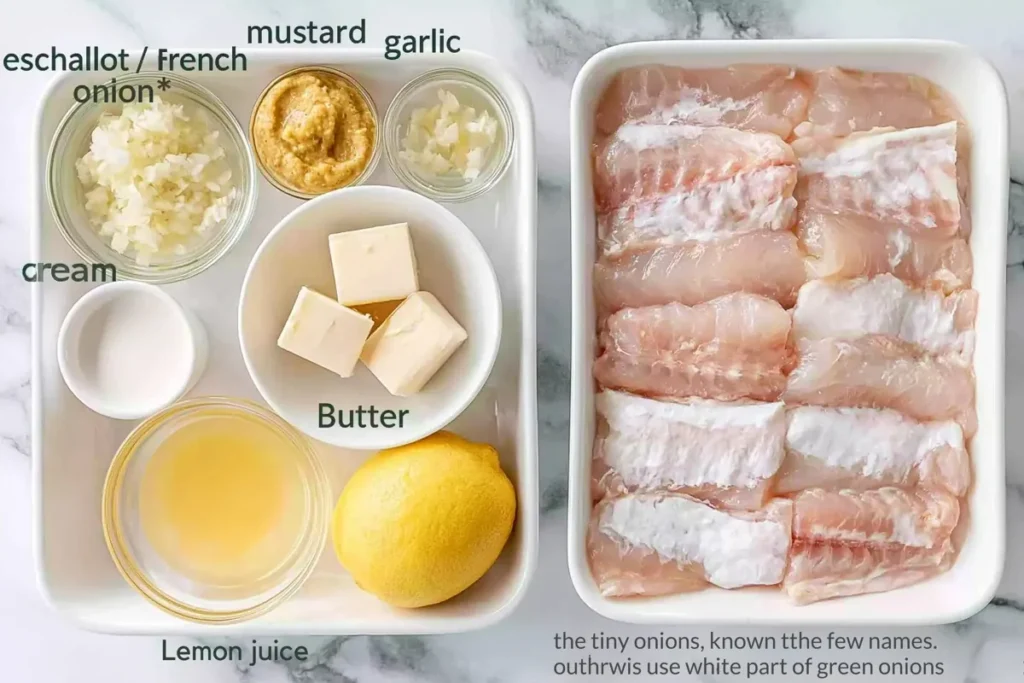
Fresh parsley isn’t essential for cooking, but it brightens the finished dish and adds a welcome burst of color.
Preparation Tips Before the Fish Goes Into the Oven
A little attention before baking makes a noticeable difference. Start by choosing a baking dish that gives each fillet some space. If the fish is packed too tightly, it can steam rather than bake, which changes the texture.
Season both sides with salt and pepper. It only takes a moment, but seasoning one side often leaves the fish tasting flat underneath the sauce.
When melting the butter, cream, garlic, mustard, and lemon juice, stir between heating intervals until the mixture looks smooth. If you rush this step, the ingredients may not combine properly before they reach the fish.
One more thing. Keep an eye on the clock. White fish can move from tender to dry fairly quickly once it’s cooked through.
How to Make Baked Fish with Lemon Cream Sauce
Begin by heating the oven to 200°C / 390°F. While it warms, arrange the fish fillets in a baking dish, leaving a little room between them. Season both sides with salt and pepper so the flavor reaches every part of the fish.
Next, combine the butter, cream, minced garlic, Dijon mustard, lemon juice, salt, and pepper in a microwave-safe jug or bowl. Heat the mixture in two 30-second bursts, stirring between each round. You’re looking for a smooth sauce with no visible separation. If the butter is fully melted and everything looks blended, it’s ready.
Scatter the chopped shallots over the fish. Then pour the warm sauce across the fillets, making sure each piece gets coated. The shallots soften during baking and lightly flavor the sauce.
Bake for 10 to 12 minutes. The exact timing depends on the thickness of your fish. Rather than relying only on the clock, check for visual cues. The fish should flake easily when pressed with a fork and appear opaque throughout. If it still looks translucent in the center, give it another minute or two.
Transfer the fish carefully to serving plates. Spoon the sauce from the baking dish over the top, then finish with chopped parsley and lemon wedges if you like a little extra brightness at the table.
Easy Ways to Change the Recipe
Small changes can give this dish a different personality without changing the basic method. If you enjoy a stronger lemon flavor, add an extra teaspoon of lemon juice after baking rather than before. That keeps the fresh citrus note more noticeable.
Fresh herbs can shift the flavor in interesting ways too. Parsley keeps things clean and simple, while dill leans slightly richer and pairs especially well with cod. Chives bring a mild onion flavor that works nicely with the cream sauce.
Not a fan of mustard? Leave it out. The sauce will still be smooth and flavorful. I’ve made it both ways, and the difference is subtle enough that either version works.
Side Dishes That Pair Well With This Fish
The sauce influences what belongs on the plate beside it. Since it’s rich and creamy, sides that can absorb some of that sauce tend to work best.
Rice is one of the easiest options. A simple bowl of steamed white rice catches every spoonful of sauce without competing with the fish. Mashed potatoes do something similar, creating a comforting dinner that’s especially welcome on cooler evenings.

For a lighter meal, try steamed green beans, asparagus, or broccoli. Their fresh flavor balances the richness of the cream. A crisp green salad dressed with a light vinaigrette works well too because the acidity echoes the lemon in the sauce.
Roasted potatoes are another favorite in my kitchen. The crisp edges pick up the sauce beautifully and add a little texture contrast to the soft fish.
Storing and Reheating Leftovers
Fish is usually best the day it’s cooked, but leftovers can still be enjoyable if handled carefully. Store the fish and sauce together in an airtight container and refrigerate for up to 2 days.
When reheating, low heat is your friend. A microwave can work, but use short intervals and stop as soon as the fish is warm. Overheating tends to dry out the fillets and can cause the sauce to separate.
If you’re reheating on the stovetop, place the fish and sauce in a covered pan over gentle heat for a few minutes. The goal isn’t to cook it again—just warm it through.
Frequently Asked Questions
Can I use frozen fish?
Yes. Thaw it completely before baking and pat away excess moisture with paper towels. Too much water can thin the sauce and affect the texture of the fish.
How do I know when the fish is cooked?
Most fillets are ready after 10–12 minutes at 200°C / 390°F. The fish should flake easily with a fork and look opaque all the way through. If the center still appears translucent, it needs a little more time.
Can I make the sauce without cream?
You can experiment with alternative cream products, but heavy cream gives the sauce its smooth texture and stability. Lighter substitutes may produce a thinner sauce.
What other fish work well in this recipe?
Any mild white fish that holds together during baking is a good candidate. Cod, haddock, hake, pollock, basa, and tilapia are all reliable choices.
Can leftovers be reheated successfully?
Yes, as long as they’re warmed gently. High heat can dry the fish and affect the consistency of the sauce, so slow reheating usually produces the best results.
A Dinner Worth Keeping in Rotation
Some recipes earn a place in the weekly meal plan because they’re practical. Others stay because people ask for them again. This Baked Fish with Lemon Cream Sauce manages to do both.
The combination of tender fish, bright lemon, and a smooth cream sauce feels satisfying without requiring much effort. Keep a few fish fillets in the freezer and most of the ingredients are probably already in your kitchen.
Baked Fish with Lemon Cream Sauce
Ingredients
Method
- Preheat the oven to 200°C / 390°F.
- Place the fish fillets in a baking dish, leaving a little space between each piece so they are not packed too tightly.
- Season both sides of the fish with salt and pepper.
- Place the butter, heavy cream, garlic, Dijon mustard, lemon juice, salt, and pepper in a microwave-safe jug or bowl.
- Microwave the sauce ingredients in two 30-second bursts, stirring well between each burst, until the butter is melted and the sauce looks smooth.
- Sprinkle the chopped shallots over the fish.
- Pour the warm lemon cream sauce over the fish, coating the fillets evenly.
- Bake for 10–12 minutes, or until the fish is opaque and flakes easily with a fork.
- Remove the baking dish from the oven and transfer the fish carefully to serving plates.
- Spoon the sauce from the baking dish over the fish, then garnish with parsley and serve with lemon wedges if desired.
Notes
- Use firm white fish such as cod, haddock, hake, pollock, basa, or tilapia.
- Do not overcrowd the baking dish, or the fish may steam instead of bake.
- Cooking time depends on the thickness of the fish fillets, so begin checking around 10 minutes.
- For a brighter lemon flavor, add a small squeeze of fresh lemon juice after baking.
- Store leftovers in an airtight container in the refrigerator for up to 2 days and reheat gently.