Baked Salmon Sushi for an Easy Family Dinner

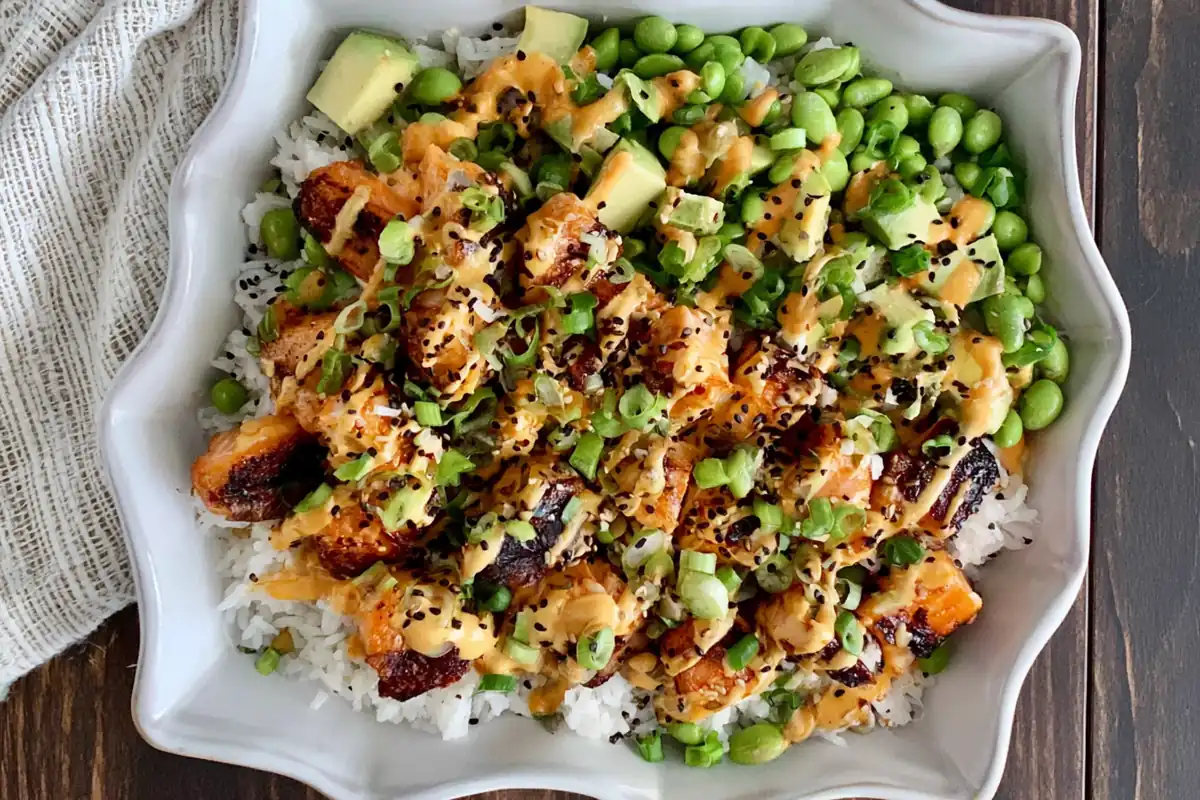
Warm rice, savory glazed salmon, creamy spicy mayo, and cool cucumber all come together in this baked salmon sushi. It gives you the flavors of a sushi roll without the careful rolling or raw fish.
Everything is layered in one baking dish, so the work stays simple. The result is a practical dinner with enough texture and freshness to keep each bite interesting.
Baked Salmon Sushi as a Warm, Deconstructed Roll
Baked salmon sushi is my home-style take on a deconstructed sushi roll. Instead of wrapping rice and fish in nori, you spread seasoned rice into a baking dish, cover it with marinated salmon, and bake the layers together.
The rice stays soft underneath while the salmon cooks in a mixture of soy sauce, sesame oil, honey, rice vinegar, garlic, and optional sriracha. That combination gives the fish a savory, lightly sweet coating without hiding its flavor.
This version works well for family dinners because the salmon is fully cooked and the spice level is easy to control. Leave the sriracha out of the marinade for a mild base, then place extra spicy mayo on the table for anyone who wants more heat. No rolling mats. No delicate slicing. Just scoop and serve.
Ingredients and Practical Substitutions
The salmon is the main ingredient, so cut it into evenly sized cubes before marinating. Pieces around 1 inch wide tend to cook at a similar speed and are easy to scoop with the rice. Skinless salmon is the easiest option here.
Use about 3 cups of warm cooked rice for a 9×13-inch baking dish. Sushi rice gives the closest texture to a traditional roll, though another short-grain rice can work. Long-grain rice stays looser and may not hold together as neatly when served.
Rice vinegar and salt season the rice while it’s still warm. For the salmon, soy sauce brings saltiness, sesame oil adds a toasted note, and honey softens the sharper flavors. Maple syrup can replace the honey. Coconut aminos or gluten-free tamari can replace regular soy sauce when needed.
Add the cucumber, avocado, edamame, green onions, and spicy mayo after baking. Their cool, fresh texture balances the warm rice and salmon. Adding them too early can leave the cucumber watery and the avocado dull.
How to Make Baked Salmon Sushi
Start by heating the oven to 400°F. While it warms, combine the cubed salmon with soy sauce, sesame oil, honey, rice vinegar, garlic, and sriracha if you’re using it. Let the salmon sit for 5–10 minutes. That’s enough time for the surface to pick up flavor without making the fish overly salty.
Season the warm rice with rice vinegar and salt. Stir gently so the grains stay intact, then press the rice into a greased 9×13-inch baking dish or a large oven-safe skillet. Keep the layer even, especially around the edges, where thin patches can dry out first.
Spoon the salmon over the rice in a single layer. Pour the remaining marinade across the top rather than leaving it in the bowl. It will soak into the rice as the salmon cooks and help connect the two layers.
Bake uncovered for 18–22 minutes. Begin checking near the lower end of the range. The salmon should look opaque and separate easily when pressed with a fork. Avoid waiting for every piece to become firm; salmon continues cooking slightly after it leaves the oven, and overbaking can make the cubes dry.
Let the dish rest for a few minutes before adding the toppings. That brief pause helps the rice settle and makes serving less messy.
Serving Baked Salmon Sushi
Serve the baked salmon sushi while the rice and fish are still warm. Drizzle spicy mayo over the top, then scatter on chopped cucumber, diced avocado, edamame, and sliced green onions.
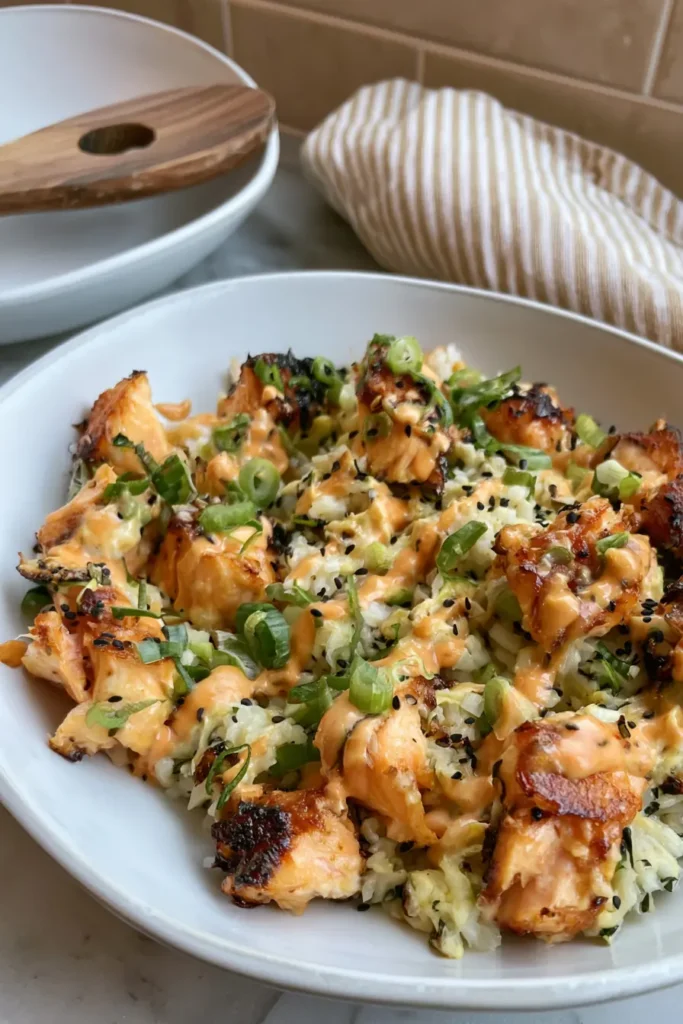
For a sushi-style bite, place small sheets of nori at the table and let everyone scoop a little rice and salmon onto each one. It’s casual and works especially well when people want different amounts of toppings.
You can also serve it in bowls. Add the warm salmon and rice first, then arrange the fresh vegetables on top so they stay crisp. Keep extra spicy mayo nearby rather than covering the whole dish heavily. A light drizzle gives creaminess without masking the sesame, garlic, and salmon.
Useful Tips for a Family-Friendly Result
Use the salmon’s short marinating time to prepare the toppings. Chop the cucumber, slice the green onions, and portion the edamame while the oven heats. Leave the avocado until close to serving so it doesn’t darken.
Keep the rice layer even from corner to corner. Thick spots stay softer, while thin edges can dry out during the 18–22 minutes in the oven. The same rule applies to the salmon cubes. Similar-sized pieces cook more evenly.
For a milder family dinner, skip the sriracha in the marinade and serve it separately. Spicy mayo can also go on individual portions instead of across the whole dish. That way, everyone controls the heat without changing the base recipe.
Storage and Meal Prep Tips
Store the cooked salmon and rice separately from the cucumber, avocado, green onions, and spicy mayo. The baked portion keeps better when the fresh toppings aren’t mixed in, since cucumber releases water and avocado softens quickly.
Refrigerate leftovers in a covered container and use them within 2 days. Reheat individual portions until hot throughout, then add fresh toppings afterward. A microwave works for convenience, though covering the dish loosely helps keep the rice from becoming dry.
For meal prep, divide the baked base into containers and pack the toppings in small separate cups. Add the avocado on the day you plan to eat it. Simple, but it makes a noticeable difference.
Frequently Asked Questions About Baked Salmon Sushi
Can I make baked salmon sushi without sriracha?
Yes. Leave the sriracha out of the salmon marinade for a mild version, then serve spicy mayo or extra sriracha separately for anyone who wants more heat.
Which type of rice works best?
Sushi rice or another short-grain rice works best because the grains hold together when scooped. Long-grain rice can be used, though the finished dish will have a looser texture.
Can baked salmon sushi be prepared ahead?
You can cook the rice, cube the salmon, and prepare most toppings ahead. Keep everything refrigerated separately, then marinate the salmon shortly before assembling and baking.
Should baked salmon sushi be served warm or cold?
It is best served warm from the oven with cool toppings added just before eating. Leftovers can also be enjoyed chilled, though reheating restores the softer texture of the rice.
Can I substitute another type of fish?
A firm fish that cooks in a similar time can work, but the flavor and moisture level will change. Cut the pieces evenly and begin checking for doneness near the lower end of the baking time.
Bring This Easy Sushi Bake to the Table
The best part of this baked salmon sushi is how easy it is to adjust at the table. Keep the base warm, set out the toppings, and let each person build a portion with the amount of crunch, creaminess, and heat they prefer.
It’s the kind of dinner that feels a little different without making the evening complicated.
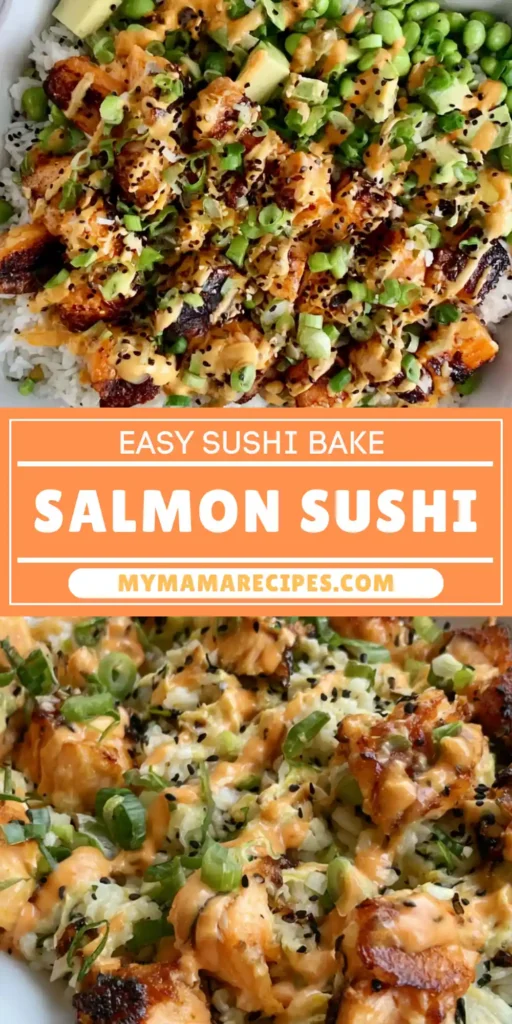
Baked Salmon Sushi
Ingredients
Method
- Preheat the oven to 400°F. Lightly grease a 9×13-inch baking dish or a large oven-safe skillet.
- Place the cubed salmon in a bowl. Add the soy sauce, sesame oil, honey, 1 tablespoon rice vinegar, sriracha if using, and minced garlic. Toss gently and let the salmon marinate for 5–10 minutes.
- Stir the remaining 3 tablespoons rice vinegar and the salt into the warm cooked rice.
- Spread the seasoned rice evenly in the prepared baking dish, keeping the layer level from edge to edge.
- Spoon the marinated salmon evenly over the rice. Pour any marinade remaining in the bowl over the salmon.
- Bake uncovered for 18–22 minutes, until the salmon is opaque, flakes easily with a fork, and remains moist in the center.
- Let the dish rest for 3–5 minutes. Drizzle with spicy mayo and top with cucumber, avocado, edamame, and green onions immediately before serving.
- Serve warm in bowls or scoop portions onto nori sheets.
Notes
- Cut the salmon into evenly sized cubes so all the pieces cook at the same rate.
- For a mild version, omit the sriracha from the marinade and serve it separately.
- Prepare the cucumber, edamame, and green onions while the salmon marinates, but cut the avocado shortly before serving.
- Store the baked salmon and rice separately from the fresh toppings in the refrigerator for up to 2 days.
- Reheat the salmon and rice until hot throughout, then add fresh toppings and spicy mayo.