
Lemon Loaf That Feels Like Home (Moist, Bright, and Easy)


What Makes This Lemon Loaf So Moist and Balanced
The secret to a great lemon loaf isn’t piling on lemon juice or overloading it with sugar. It’s balance. This recipe uses a mix of oil, yogurt, and a little butter, and each one plays a role. The oil keeps the crumb soft even after a few days. The yogurt adds gentle tang and moisture without heaviness. The butter brings flavor that makes the loaf taste rich instead of flat.
Lemon zest does most of the flavor work here. That’s where the real lemon aroma lives. The juice adds brightness, but too much can make a loaf sour or dense. When you get that balance right, the loaf tastes fresh and sunny, not sharp.
This is also why the texture holds up so well. You get a tender crumb that slices cleanly, not something that breaks apart or dries out by the next morning.
Ingredients You Actually Need (and Why They Matter)
Here’s what you’ll want to have ready before you start. Simple pantry ingredients, nothing unusual, and each one earns its place.
Lemon Loaf Batter
- 2 cups all-purpose flour
- 4 teaspoonfuls of baking powder
- 1/8 teaspoon salt
- 1 cup plain yogurt, at room temperature
- 2 large eggs, at room temperature
- 5 tablespoons unsalted butter, melted and cooled
- 1/4 cup vegetable or canola oil
- 2 tablespoons lemon zest
- 1/4 cup of fresh lemon juice
- 1 1/4 cups granulated sugar
- 1/2 teaspoon vanilla essence
- 1 1/2 teaspoons lemon extract (optional but recommended)
Lemon Glaze (Optional but Loved)
- 1 cup powdered sugar, sifted
- 3 to 4 teaspoons fresh lemon juice
The yogurt can be full-fat or low-fat, but full-fat gives you the softest crumb. Neutral oil matters here—olive oil will overpower the lemon. Fresh lemons make a difference, especially for zest. Bottled juice works in a pinch, but zest from a real lemon brings the loaf to life.

Mixing and Baking: The Method That Prevents Dry Lemon Bread
Commence by heating your oven to 350°F. Grease a standard loaf pan and line it with parchment paper along the bottom and long sides. This makes lifting the loaf out easy later, especially once it’s glazed.
In a large bowl, whisk together the flour, baking powder, and salt until evenly combined. This step matters more than it seems—it guarantees the loaf rises evenly and doesn’t end up with bitter pockets of baking powder.
In a separate bowl, whisk the yogurt, eggs, melted butter, oil, lemon zest, lemon juice, sugar, vanilla, and lemon extract until smooth. Everything should look unified and slightly thick, with the sugar mostly dissolved.
Pour the wet mixture into the dry ingredients. Gently whisk just until the batter comes together and no dry flour remains. The batter should be smooth but not overworked. Overmixing here is one of the fastest ways to end up with a dense loaf.
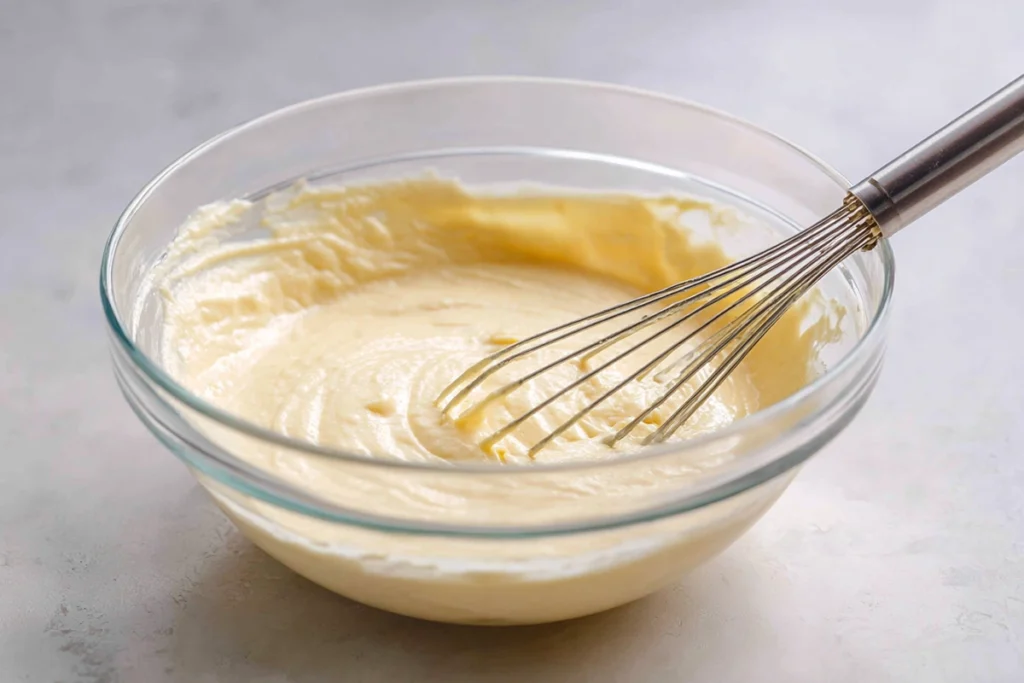
Scrape the batter into the prepared pan and smooth the top. Place it in the oven and allow it to bake uncovered for about 45 minutes. At this point, the top should be lightly golden and starting to crack.
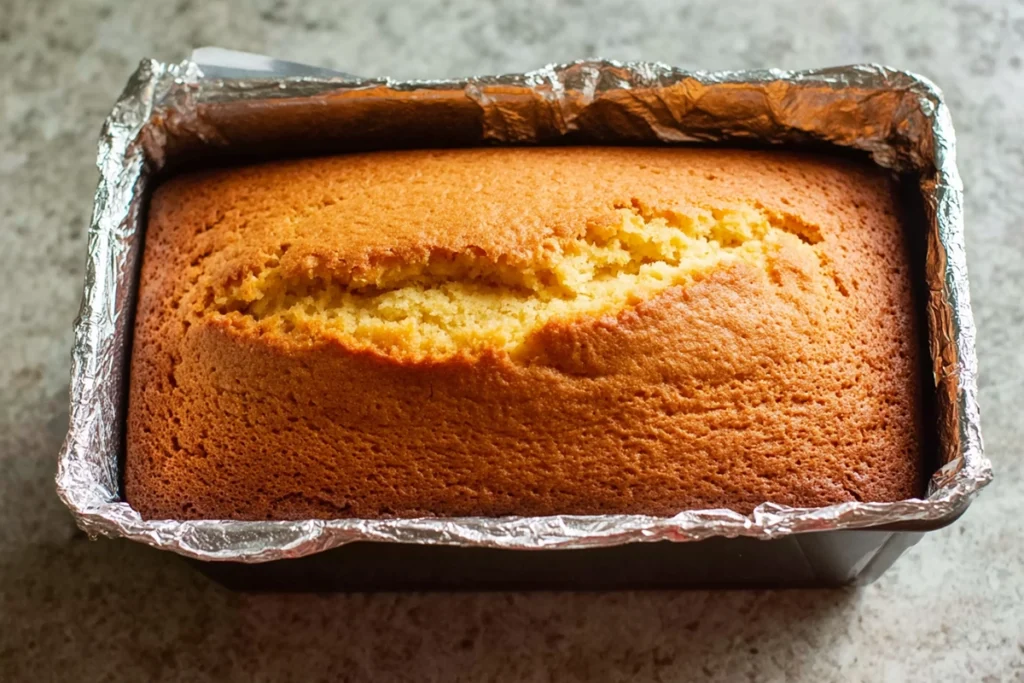
Loosely tent the loaf with foil and return it to the oven for another 20 minutes or so. This protects the top from overbrowning while the center finishes baking.
How to Tell When Lemon Loaf Is Perfectly Baked
Doneness is about more than time. Look for a gentle dome and a crack running down the center—that’s a good sign. The edges should pull slightly away from the pan.
Insert a skewer or thin knife into the center of the loaf. It should come out clean or with just a few moist crumbs, not wet batter. If the loaf still feels soft in the middle, give it another five minutes and test again.
Once baked, let the loaf cool in the pan for about 10 minutes. Then lift it out and place it on a wire rack to cool completely. This takes patience, but it matters. Glazing too early will melt the sugar and soak into the loaf instead of sitting beautifully on top.
Cooling, Glazing, and That Bakery-Style Finish
When the loaf is fully cool—usually about three hours—it’s ready for the glaze. In a small bowl, whisk the powdered sugar with lemon juice until smooth. You’re aiming for a thick, opaque glaze that drips slowly, not something thin and transparent.
Start with three teaspoons of lemon juice and add more a little at a time. A tiny splash makes a big difference here. Spoon the glaze over the top and gently nudge it toward the edges so it drips naturally down the sides.
The glaze sets as it sits, giving you that classic bakery-style finish that everyone loves. Even people who claim they don’t like icing tend to make an exception for this one.
Flavor Variations That Still Taste Like Lemon Loaf
Once you’re comfortable with the base recipe, it’s easy to make small changes without losing what makes this loaf special.
A lemon loaf cake with blueberries is a favorite. Toss fresh or frozen blueberries in a little flour before folding them gently into the batter to prevent sinking.
For a lemon pound cake feel, skip the glaze and serve thick slices with butter. The loaf toasts beautifully and takes on a rich, almost cake-like texture.
If you love texture, a tablespoon of poppy seeds adds subtle crunch without drying out the crumb. Keep the rest of the recipe the same.
Make-Ahead, Storage, and Freezing Tips
This loaf is a great make-ahead option. It stays moist for up to five days stored in an airtight container. In warm weather, refrigeration helps, but always bring slices to room temperature before serving for the best flavor.
You can freeze the loaf whole or in slices. Wrap tightly in plastic wrap, then foil, and freeze for up to three months. If freezing, it’s best to wait and add the glaze after thawing.
To reheat, warm slices briefly in the microwave or toast them lightly. The texture holds up beautifully.
How to Serve Lemon Loaf (Beyond Just a Slice)
A simple slice with coffee or tea is hard to beat, but there are other ways to enjoy it. Toasted slices with butter and a drizzle of honey feel especially comforting in the morning.
For brunch, serve it alongside fresh berries or a bowl of yogurt. As a dessert, a slice with lightly sweetened whipped cream feels effortless but special.
This loaf fits into everyday life without needing an occasion, which is exactly why it’s so loved.

FAQ
Why did my lemon loaf sink in the middle?
This usually happens if the loaf is underbaked or if the oven temperature runs a little low. Opening the oven door too early can also cause the center to collapse before it has time to set. Make sure the loaf is fully baked, and the center passes the skewer test before removing it.
Can I use bottled lemon juice instead of fresh?
You can use bottled lemon juice in a pinch, but fresh lemon juice gives a livelier, cleaner flavor. More importantly, fresh lemon zest makes a big difference and cannot be replaced by bottled juice. If possible, use fresh lemons for the best result.
Why is my lemon loaf dry even though I followed the recipe?
Dry lemon loaf is often caused by overbaking or overmixing the batter. Every oven bakes a little differently, so it’s best to start checking a few minutes early. Mixing just until the batter comes together also helps keep the crumb tender.
Can I skip the glaze?
Yes, the loaf is still delicious without the glaze. Without it, the flavor is a little more subtle, and the loaf is perfect for toasting and spreading with butter or honey. The glaze simply adds extra lemon punch and sweetness.
Does lemon loaf need to be refrigerated?
Lemon loaf does not need to be refrigerated if your kitchen is cool and it’s stored in an airtight container. In warmer weather, refrigeration helps it stay fresh longer, but always let it come to room temperature before serving for the best texture and flavor.
Print
Lemon Loaf That Feels Like Home
- Total Time: 1 hour 20 minutes
- Yield: 10 slices 1x
- Diet: Vegetarian
Description
A classic homemade lemon loaf that’s moist, bright, and easy to make. Finished with a simple lemon glaze, this tender quick bread is perfect for everyday baking, brunch, or an afternoon treat.
Ingredients
- 2 cups plain flour
- 4 tablespoons baking powder
- 1/8 teaspoon salt
- 1 cup plain yogurt, room temperature
- 2 large eggs, room temperature
- 5 tablespoons unsalted butter, melted and cooled
- 1/4 cup vegetable or canola oil
- 2 tablespoons lemon zest
- 1/4 cup raw lemon juice
- 1 1/4 cups granulated sugar
- 1/2 teaspoon pure vanilla extract
- 1 1/2 teaspoons lemon extract
- 1 cup powdered sugar
- 3 to 4 teaspoons fresh lemon juice
Instructions
- Preheat the oven to 350°F and grease a standard loaf pan, lining it with parchment paper along the bottom and sides.
- In a large bowl, whisk together the flour, baking powder, and salt until evenly combined.
- In a separate bowl, whisk the yogurt, eggs, melted butter, oil, lemon zest, lemon juice, sugar, vanilla extract, and lemon extract until smooth.
- Pour the wet ingredients into the dry ingredients and whisk gently just until no dry flour remains.
- Transfer the batter to the prepared pan and smooth the top evenly.
- Bake uncovered for about 45 minutes, until lightly golden on top.
- Loosely tent the loaf with foil and continue baking for another 20 minutes, or until a skewer inserted in the center comes out clean.
- Let the loaf cool in the pan for 10 minutes, then remove and cool completely on a wire rack.
- Whisk the powdered sugar with lemon juice to make the glaze, then spoon it over the cooled loaf before slicing and serving.
Notes
- Do not overmix the batter or the loaf may turn out dense.
- For best lemon flavor, use fresh lemon zest rather than bottled juice.
- Allow the loaf to cool completely before glazing so the glaze sets properly.
- Store leftovers in an airtight container at room temperature for up to 3 days or refrigerate in warm weather.
- Prep Time: 15 minutes
- Cook Time: 1 hour 5 minutes
- Category: Dessert
- Method: Baking
- Cuisine: American
Nutrition
- Serving Size: 1 slice
- Calories: 320
- Sugar: 28 g
- Sodium: 180 mg
- Fat: 14 g
- Saturated Fat: 6 g
- Unsaturated Fat: 7 g
- Trans Fat: 0 g
- Carbohydrates: 45 g
- Fiber: 1 g
- Protein: 5 g
- Cholesterol: 55 mg