Honey Sriracha Salmon Bowls for a Quick Weeknight Dinner

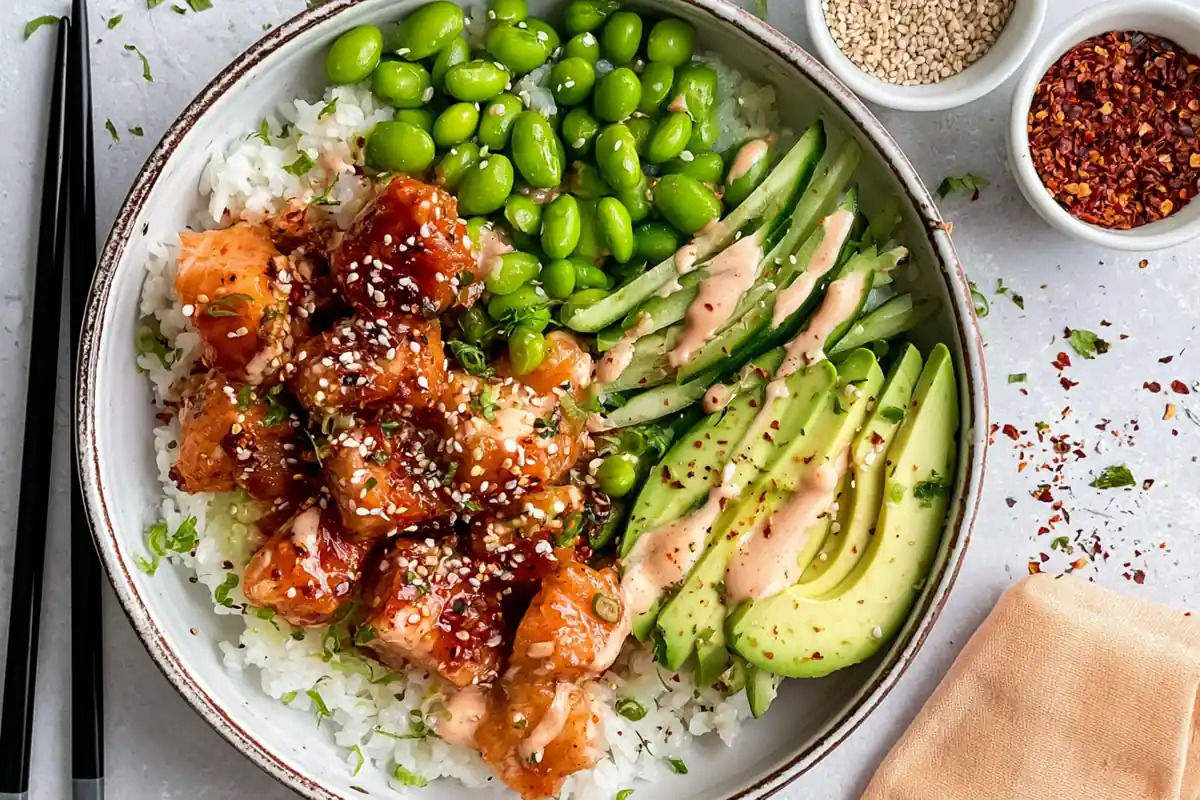
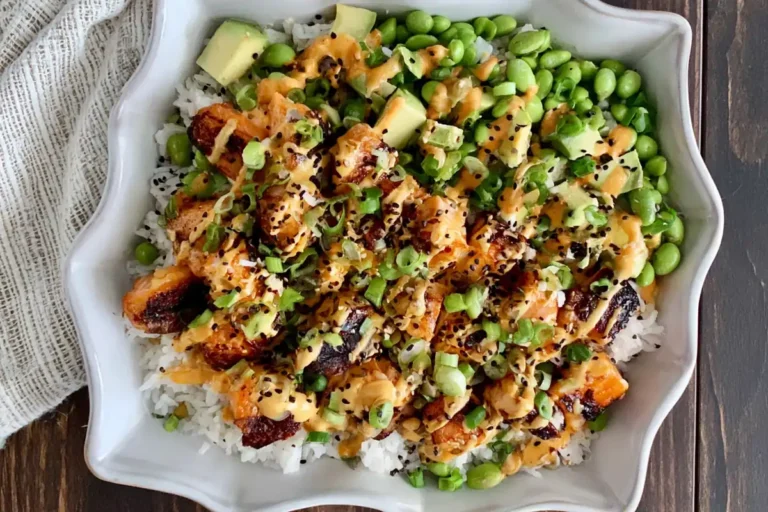
Crisp-edged salmon coated in a sticky honey-sriracha sauce makes these Honey Sriracha Salmon Bowls feel far more involved than they really are. The warm salmon sits over rice with cool cucumber, creamy avocado, and tender edamame, so every bite has a little contrast.
Most of the work happens while the salmon marinates. Prepare the rice and toppings during that time, and the final cooking takes about 10 minutes.
Key Ingredients for Honey Sriracha Salmon Bowls
The salmon carries most of the flavor, so choose fillets that look moist and firm, without dry edges. You’ll need about 2 pounds of salmon, which makes four generous bowls or up to six lighter servings. Skinless fillets are easier to cube, though you can leave the skin on if you enjoy its texture.
The marinade combines soy sauce or tamari, honey, sriracha, garlic, fresh ginger, sesame oil, cornstarch, baking soda, and water. Honey gives the sauce its glossy finish, while cornstarch helps it cling to each salmon cube. The baking soda supports browning, but measure it carefully; too much can leave an unpleasant taste.
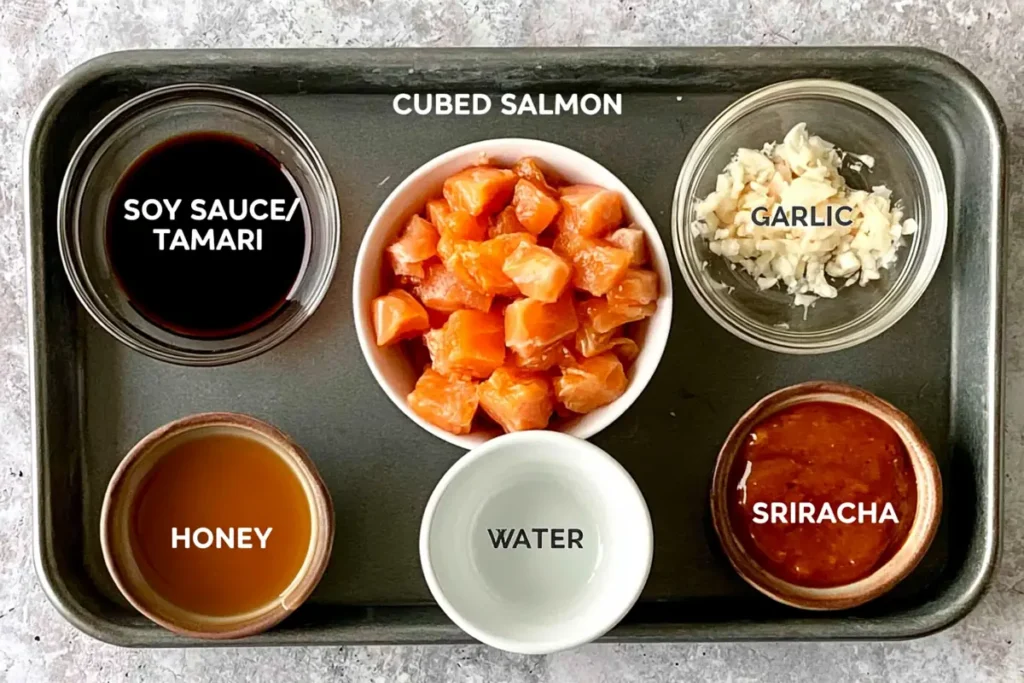
Use tamari instead of soy sauce when preparing the recipe gluten-free, and check the labels on the sriracha and sriracha mayonnaise as well. Start with 2 teaspoons of sriracha for gentle heat. Add more when you want the sauce to have a stronger kick.
For the bowls, white rice and sushi rice both work. Sushi rice creates a stickier base, while regular white rice stays looser. Add sliced avocado, cucumber, and edamame, then finish with sriracha mayonnaise, sesame seeds, red pepper flakes, green onions, or cilantro. You don’t need every garnish. A few well-chosen toppings taste better than a crowded bowl.
Preparing the Salmon for Crisp Edges
Cut the salmon into roughly 1-inch cubes. Keeping them close to the same size matters because smaller pieces can dry out before larger ones cook through. A sharp knife also helps the cubes hold their shape instead of tearing along the edges.
Whisk the marinade in a large bowl before adding the fish. That distributes the cornstarch and baking soda evenly, which is harder to do once the salmon is already in the bowl. Fold the cubes through the mixture gently so they don’t break apart.
Let the salmon marinate for at least 20 minutes and no longer than 1 hour. Twenty minutes gives the garlic, ginger, honey, and sriracha enough time to season the surface. A much longer soak can soften the fish and change its texture.
Use the marinating time well. Cook the rice, slice the cucumber and avocado, prepare the edamame, and mix the garnishes. Once the pan is hot, the salmon moves quickly.
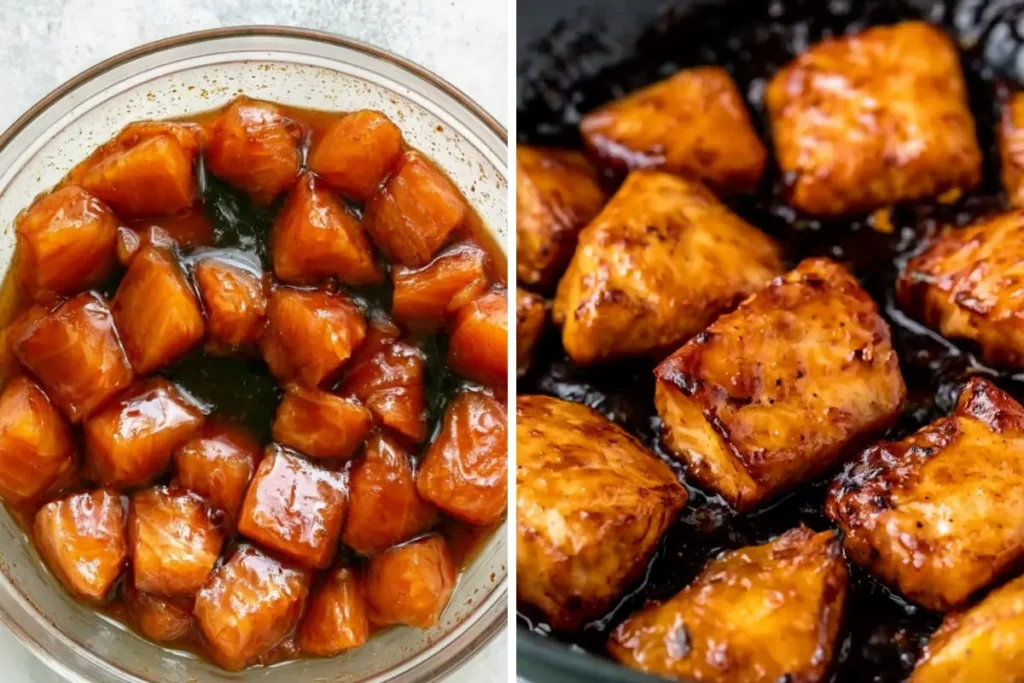
Before searing, lift the salmon from the bowl and allow excess marinade to drip off. Keep the remaining marinade nearby. A heavy coating of liquid in the skillet can cause the cubes to steam instead of developing crisp edges.
How to Cook Honey Sriracha Salmon Bowls
Heat a large skillet over medium-high heat with a small splash of oil. The pan should be properly hot before the salmon goes in; the oil will look thinner and move easily across the surface. Arrange the cubes in a single layer with a little room between them.
Don’t move them straight away. Let the first side cook for 2–3 minutes until the bottom develops a browned edge and releases from the pan without much resistance. Turn the pieces carefully and cook the other sides for another 2–3 minutes, depending on their thickness.
Crowding the skillet is the main thing to watch. When the salmon pieces sit too close together, trapped moisture prevents browning. Cook in two batches if your pan isn’t wide enough. Worth the extra step.
Once the salmon is nearly cooked, lower the heat slightly and pour in the reserved marinade. Because it has been in contact with raw fish, it needs to come to a steady simmer. Cook it for a few minutes, stirring carefully, until the sauce looks glossy and leaves a brief trail when a spoon moves through the pan.
The sauce can thicken quickly because it contains cornstarch and honey. Take the skillet off the heat once it coats the salmon rather than pooling like a thin liquid. Leaving it over high heat for too long can make the honey catch on the bottom.
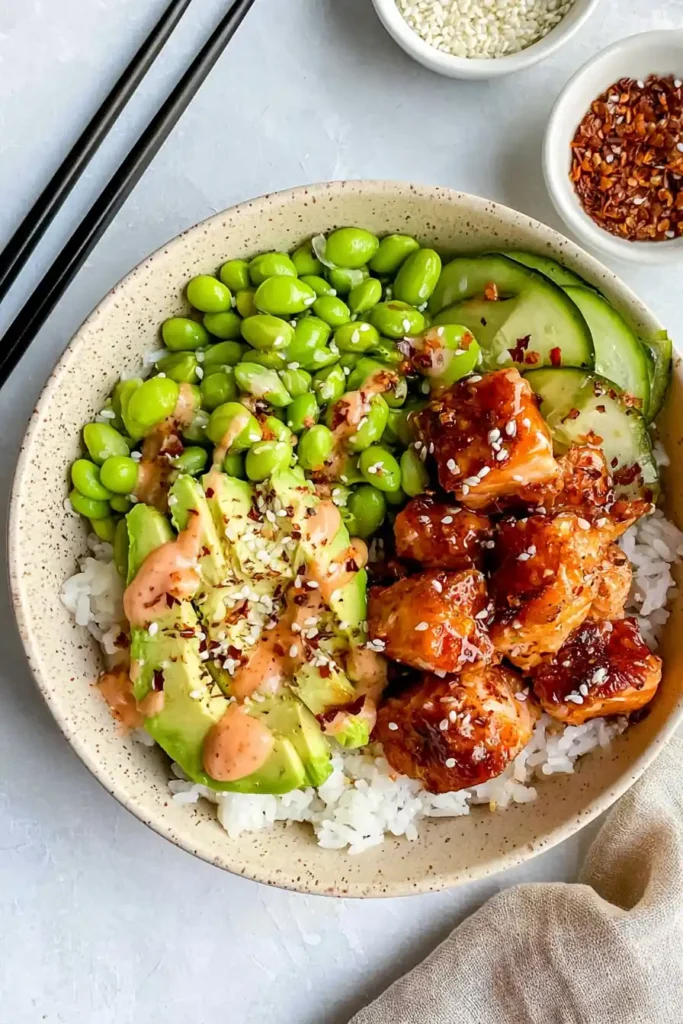
Build each bowl with warm rice first. Add the glazed salmon, cucumber, avocado, and edamame in separate sections so the colors stay distinct. Spoon or drizzle sriracha mayonnaise over the top, then add sesame seeds and red pepper flakes. A little cilantro or sliced green onion brings freshness, though both are optional.
Storing and Reheating Leftover Salmon Bowls
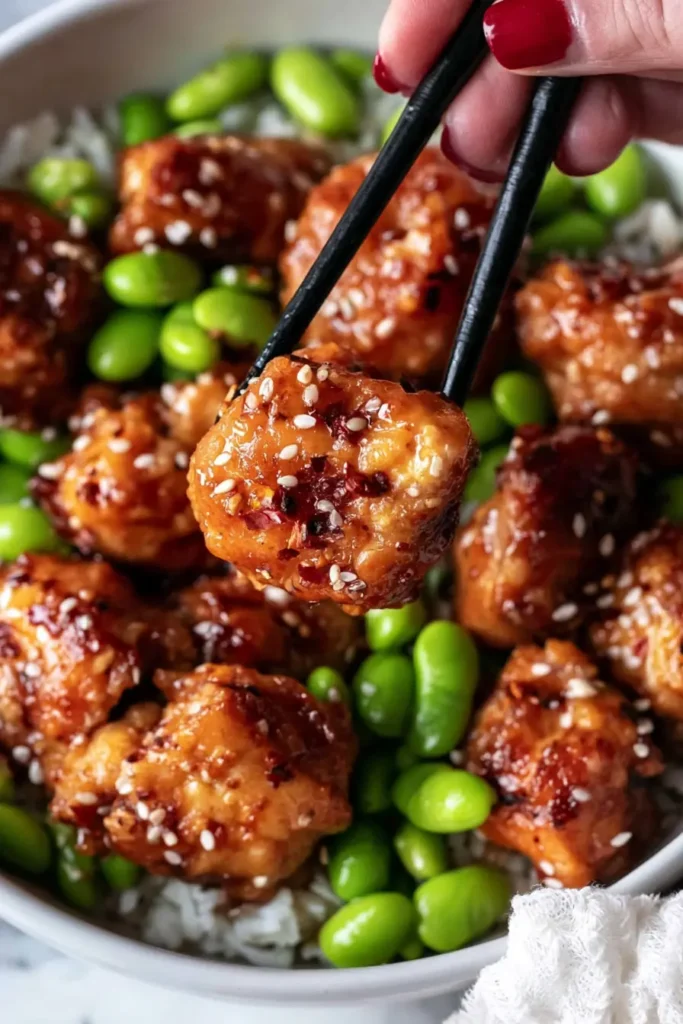
Store the salmon, rice, vegetables, and sriracha mayonnaise separately when possible. The cooked salmon and rice can stay refrigerated in sealed containers for up to 3 days, while sliced avocado is best eaten sooner because it browns quickly.
Reheat the salmon gently in a covered skillet over low heat with a teaspoon of water. Two or three minutes is usually enough. High heat tends to dry the small cubes before the center warms through. Microwave the rice separately with a damp paper towel over the bowl, then add the cold cucumber, avocado, edamame, and sauce afterward.
Cooked salmon and rice can be frozen in separate airtight containers for up to 2 months. Leave out the cucumber, avocado, garnishes, and mayonnaise-based sauce; their texture won’t hold up well after thawing.
Serving a Sweet and Spicy Salmon Bowl at Home
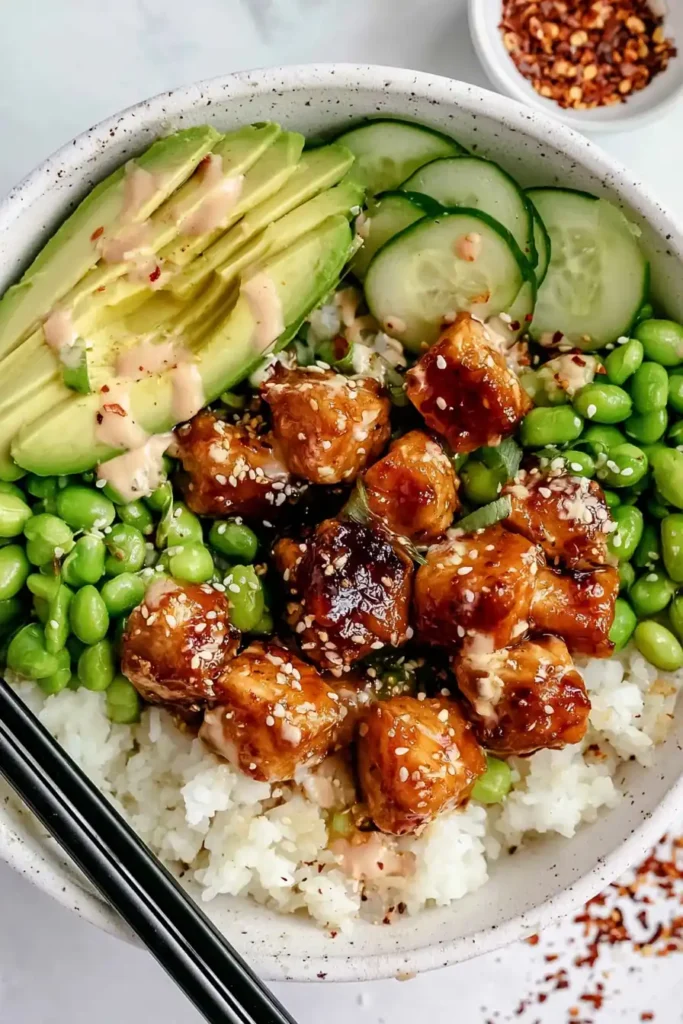
These bowls are easiest to finish when the toppings are ready before the salmon hits the skillet. Rice can stay warm under a lid, while the cucumber, avocado, edamame, and garnishes wait nearby. Once the sauce thickens, assemble everything straight away so the salmon stays crisp around the edges.
Adjust the heat at the table rather than making the whole batch too spicy. A lighter drizzle of sriracha mayonnaise keeps the bowl mellow, while extra red pepper flakes add a sharper finish. I prefer a little more cucumber when the sauce is spicy because its cool crunch balances the honey and sriracha.
Frequently Asked Questions
Can I leave the skin on the salmon?
Yes. Salmon skin can stay on if you like the texture, though skinless pieces are easier to cut into even cubes and brown on several sides. When leaving it on, place the skin side against the hot skillet first and let it cook undisturbed for about 3 minutes before turning.
How long should salmon marinate?
A 20-minute marinade gives the salmon plenty of flavor without changing its texture too much. You can leave it for up to 1 hour, but I wouldn’t push it beyond that. The salty marinade and small cube size mean the fish absorbs seasoning quickly.
Can I make the bowls less spicy?
Start with 2 teaspoons of sriracha in the marinade and use plain mayonnaise mixed with a small amount of sriracha for the topping. The honey, ginger, garlic, and sesame oil will still give the sauce plenty of character. Add more heat to individual bowls instead of the whole skillet.
What rice works best for salmon bowls?
Sushi rice gives the bowl a slightly sticky texture that holds the salmon and vegetables well. Regular white rice is lighter and works just as well when you want separate grains. For 1½ to 2 cups of uncooked rice, follow the package directions and let it rest covered for about 10 minutes after cooking.
How can I make the recipe gluten-free?
Replace regular soy sauce with certified gluten-free tamari. Check the labels on the sriracha, sriracha mayonnaise, and any prepared edamame seasoning, since formulations differ between brands. The remaining ingredients are naturally gluten-free as long as they haven’t been processed with added wheat products.
A Bowl Worth Making Again
The key is simple: give the salmon enough space in the skillet and take the sauce off the heat once it turns glossy. That keeps the cubes tender while still giving you those caramelized edges.
Serve the bowls while the rice and salmon are warm, with the fresh toppings added at the last moment. It’s an easy combination to adjust, and that makes it useful on busy nights.
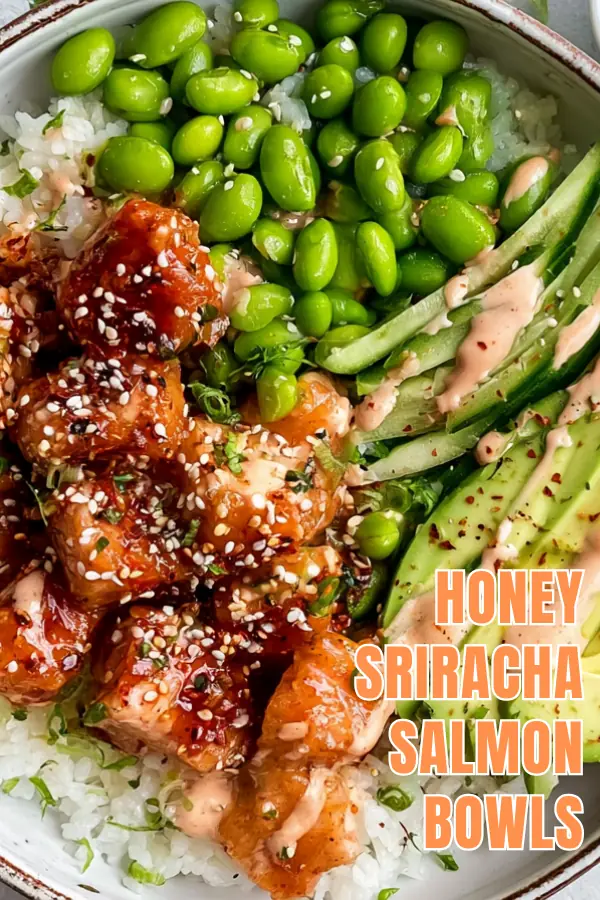
Honey Sriracha Salmon Bowls
Ingredients
Method
- Cut the salmon into evenly sized 1-inch cubes. Remove the skin first if desired.
- Whisk the soy sauce or tamari, honey, sriracha, garlic, ginger, cornstarch, baking soda, sesame oil, and water in a large bowl until smooth.
- Add the salmon and gently toss until every piece is coated. Marinate for at least 20 minutes and no longer than 1 hour.
- While the salmon marinates, cook the rice and prepare the avocado, cucumber, edamame, and garnishes.
- Heat a large skillet over medium-high heat with the neutral cooking oil. Lift the salmon from the marinade, allowing excess liquid to drip back into the bowl, and reserve the marinade.
- Arrange the salmon in a single layer. Cook for 2 to 3 minutes without moving it, then turn the cubes and cook for another 2 to 3 minutes until browned around the edges and nearly cooked through. Work in batches if needed.
- Reduce the heat slightly and pour the reserved marinade into the skillet. Bring it to a steady simmer and cook for a few minutes, stirring gently, until the sauce becomes glossy and thick enough to coat the salmon.
- Divide the cooked rice among the bowls. Add the glazed salmon, avocado, cucumber, and edamame.
- Drizzle with sriracha mayonnaise, then finish with sesame seeds, red pepper flakes, and optional green onions or cilantro. Serve immediately.
Notes
- For a gluten-free bowl, use certified gluten-free tamari and check the labels on the sriracha and sriracha mayonnaise.
- Do not marinate the salmon for longer than 1 hour because the salty marinade can soften the small pieces.
- Leave space between the salmon cubes while searing so they brown instead of steaming.
- Start with less sriracha for a milder bowl, then add extra heat to individual servings.
- Store the salmon, rice, fresh vegetables, and mayonnaise separately in the refrigerator for up to 3 days.
- Nutrition values are estimated per serving and will vary with the rice, mayonnaise, toppings, and brands used.