Soufflé Pancakes with Whipped Cream and Fresh Berries

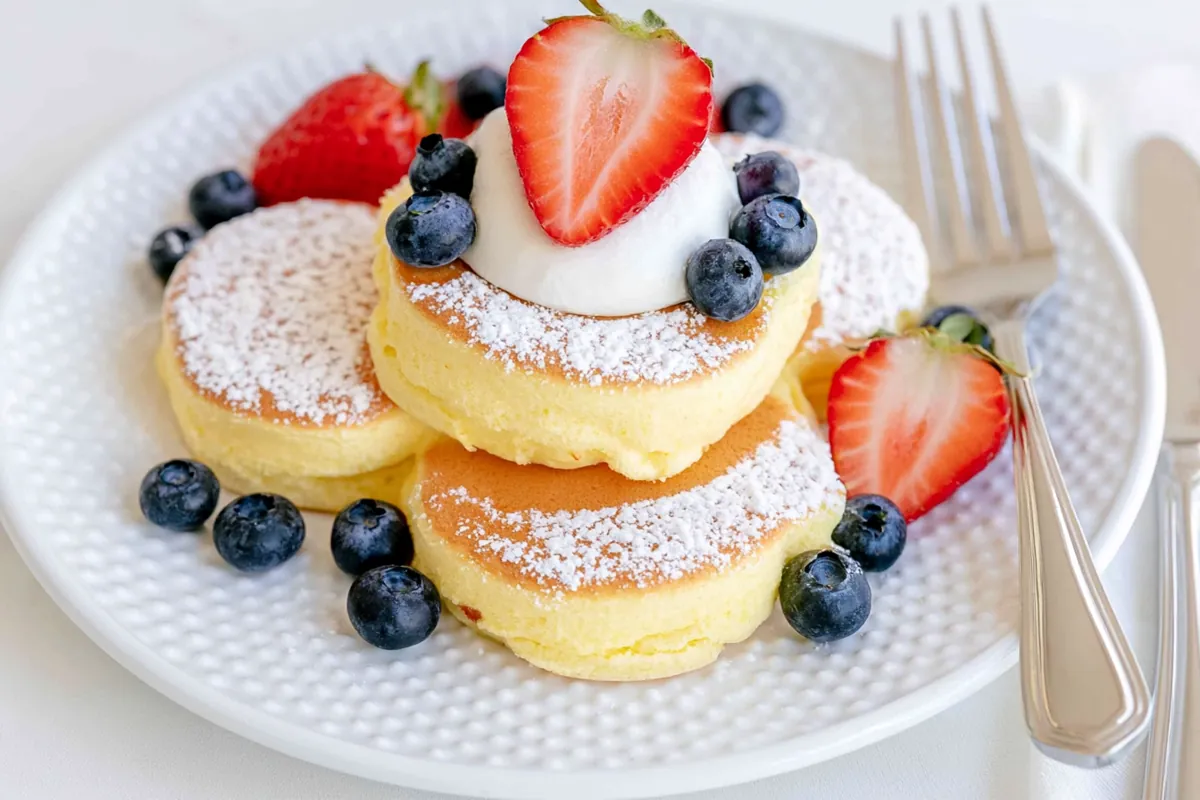
Tall, soft, and gently jiggly, soufflé pancakes get their height from whipped egg whites rather than a heavy batter. They take a little more attention than everyday pancakes, but the method itself is simple: build a stable meringue, fold it carefully, and cook the batter slowly under a lid.
This version makes two to three pancakes and finishes them with lightly sweetened whipped cream, fresh berries, and a dusting of icing sugar.
What Gives Soufflé Pancakes Their Airy Texture?
The texture comes mostly from the meringue. When egg whites are beaten with sugar, they trap thousands of tiny air bubbles. Those bubbles expand as the pancakes warm, which gives the batter its tall shape and light crumb.
The 3 grams of baking powder provide a little extra lift, but they aren’t doing the main job. That’s why the way you handle the egg whites matters so much.
A good soufflé pancake should feel soft and springy when touched with a spatula. The middle should be cooked through, not wet, while the outside stays pale golden rather than deeply browned.
Ingredients That Build Height, Flavor, and Structure
Only a small amount of each ingredient goes into this recipe, so accurate measurements make a real difference. I recommend using an electric scale for the flour, baking powder, and icing sugar. A few extra grams of flour can make the batter heavier, while too little sugar can leave the meringue less stable.
The two medium eggs form the base. Their yolks add richness, while the whites provide the air that makes the pancakes rise. Whole milk loosens the yolk mixture and gives the batter a fuller flavor than water would.
Plain flour gives the pancakes enough structure to stand tall after cooking. There are only 30 grams, so the finished texture stays tender. The baking powder supports the rise, while the ¼ teaspoon vanilla essence softens the egg flavor.
Icing sugar works well here because it dissolves quickly as it is added to the whites. That helps the meringue stay smooth instead of grainy.
Whipped Cream and Fresh Fruit Toppings
Prepare the toppings before mixing the batter. These pancakes are best served straight from the pan, while they are still warm and holding their height.
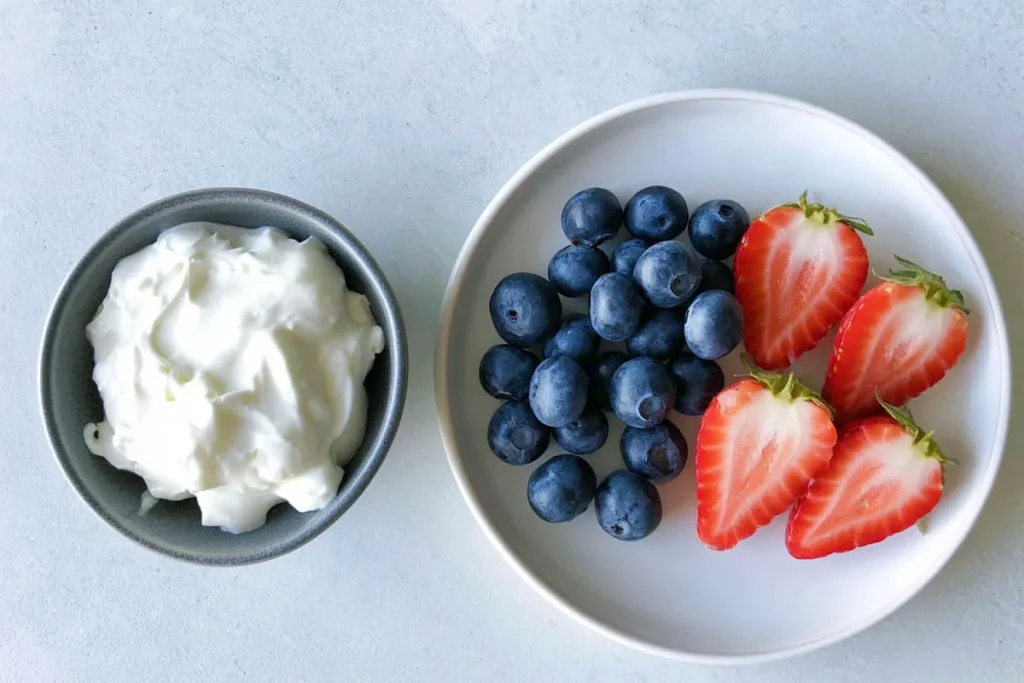
Whip 60 milliliters of double cream with ½ tablespoon of icing sugar until thick and silky. Stop as soon as the cream holds a soft mound. Beating it too far can make it stiff and slightly grainy.
Wash and dry the berries, then cut any larger fruit into small pieces. Once the pancakes are cooked, you’ll be able to plate them right away instead of leaving them to sit.
Simple Equipment for Tall, Even Pancakes
You don’t need special pancake rings for this method. A spoon is enough to layer the batter and build height gradually.
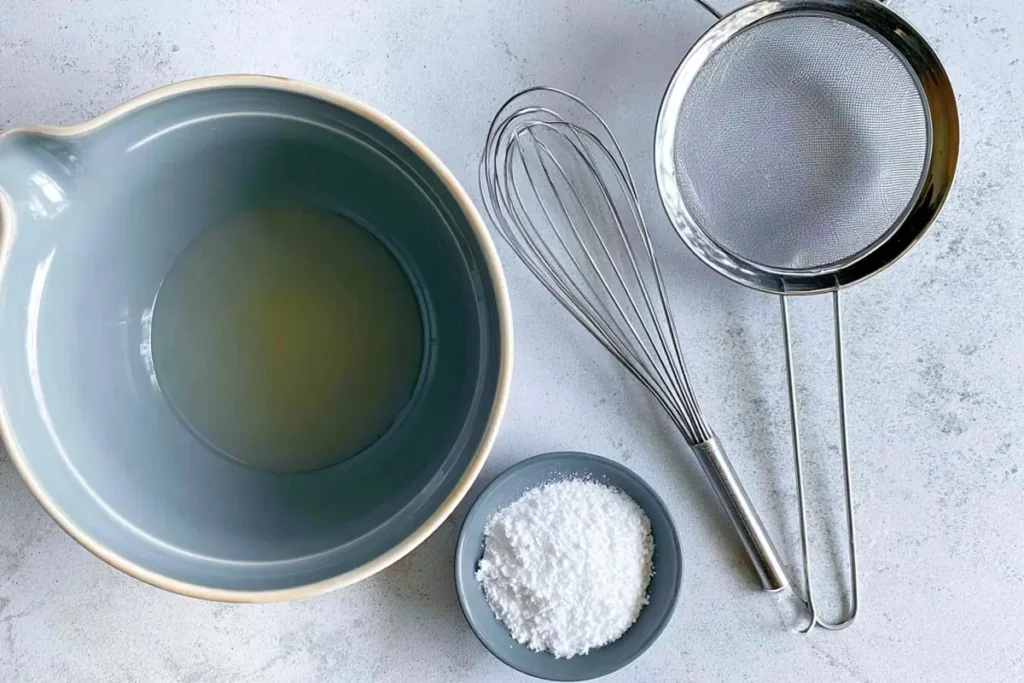
Use two clean mixing bowls for separating the eggs, plus a small bowl for the flour and baking powder. The bowl for the whites needs to be completely free of oil, water, and egg yolk. Even a small greasy spot can make the whites harder to whip.
An electric hand mixer makes the meringue much easier to control. You’ll also need a fine sieve, a flexible spatula for folding, and a wide nonstick frying pan with a lid.
Choose a pan large enough to leave space around all three pancakes. They spread slightly as they cook, and you need room to slide the spatula underneath them. When the pan is too small, cook in two pans or make fewer pancakes at a time.
A paper towel is useful for wiping away excess oil. The pan should look lightly coated, not shiny or greasy.
Preparing the Batter and Stiff-Peak Meringue
Separate the eggs while they are still cold, since the yolks are less likely to break. Place the whites in one clean bowl and the yolks in another. Once separated, let them sit for a few minutes while you measure the remaining ingredients.
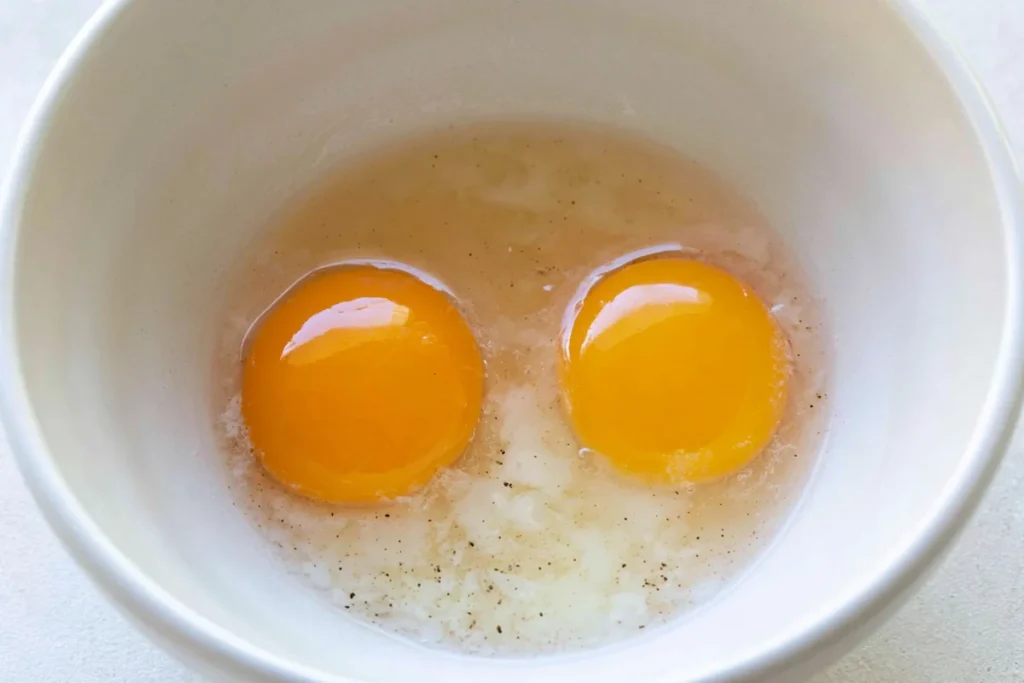
Add 20 milliliters of whole milk and ¼ teaspoon vanilla essence to the yolks. Beat until the mixture looks evenly blended and slightly foamy.
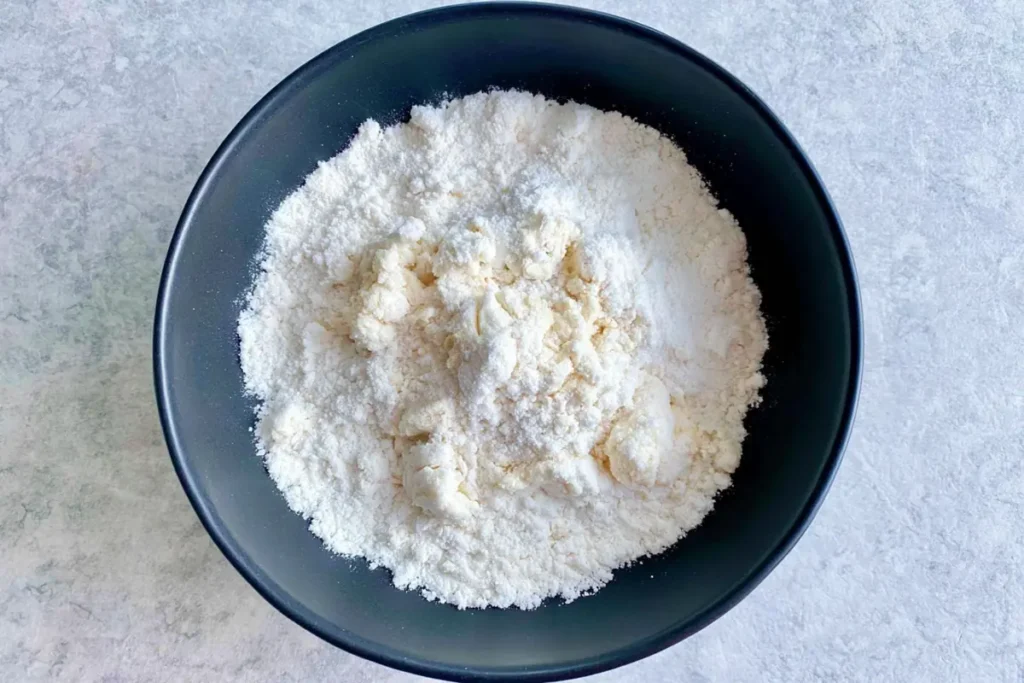
In a separate bowl, combine 30 grams of plain flour with 3 grams of baking powder. Sifting them before they go into the yolks helps prevent small flour pockets from forming in such a light batter.
Beating the Egg Whites Gradually
Start mixing the egg whites on low speed.
At first they will look loose and bubbly. Gradually increase the speed as the foam becomes finer and the whites begin to grow in volume.
Once they have roughly doubled in size, sift in about one-third of the 30 grams of icing sugar. Keep beating, then add the remaining sugar in two more additions.
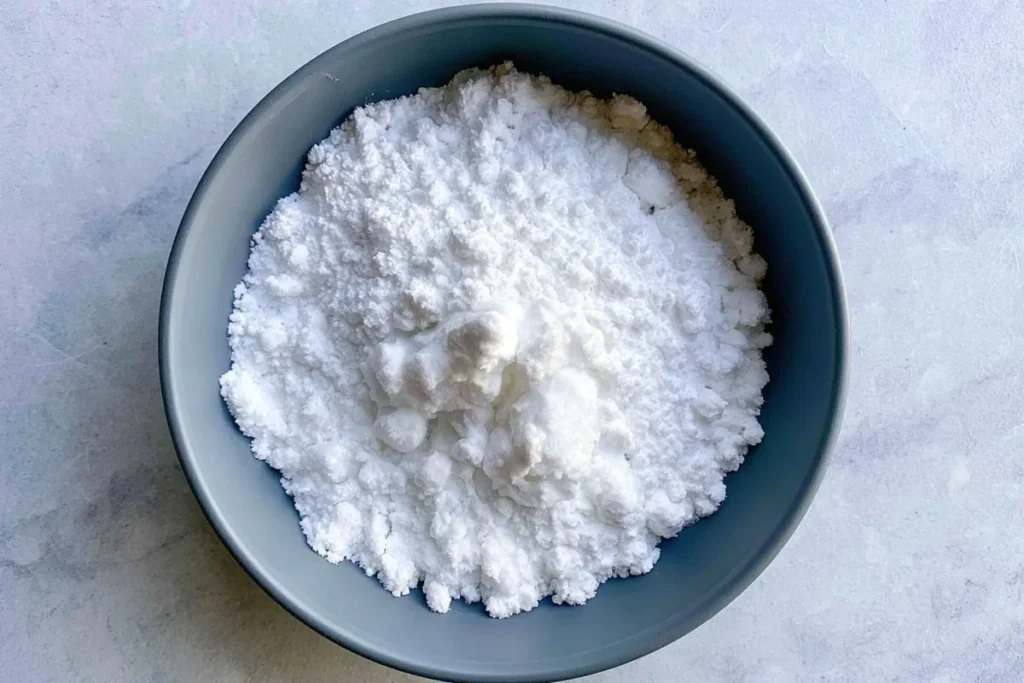
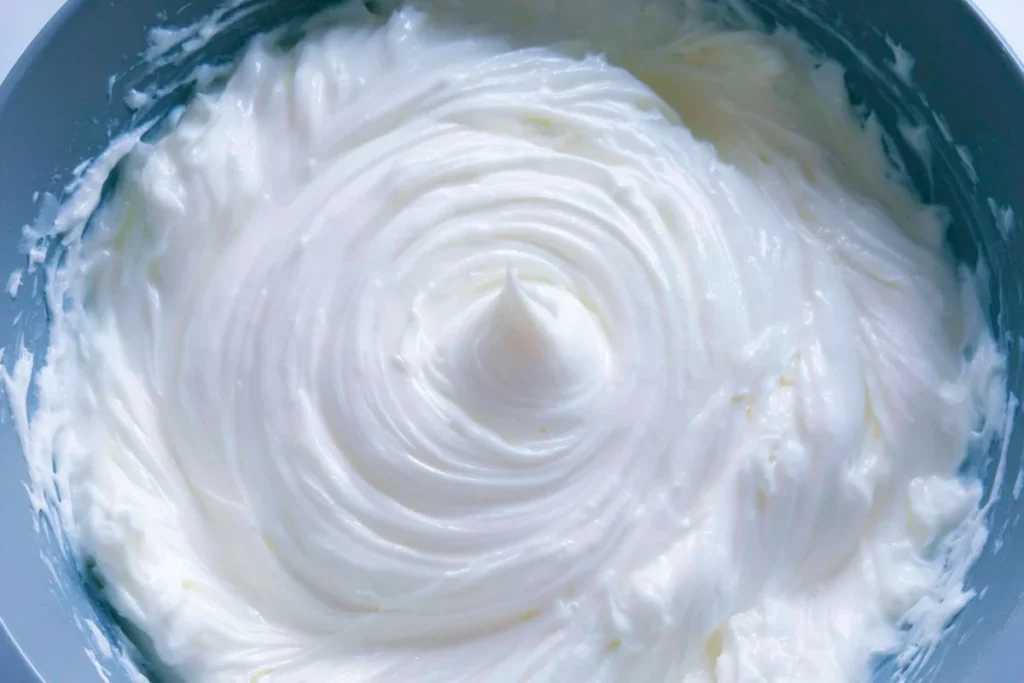
The meringue is ready when the beaters leave clear tracks and the peak stands upright when lifted. It should still look glossy and smooth. If it becomes dry, clumpy, or dull, it has gone too far and will be harder to fold without losing air.
Folding Without Losing the Air
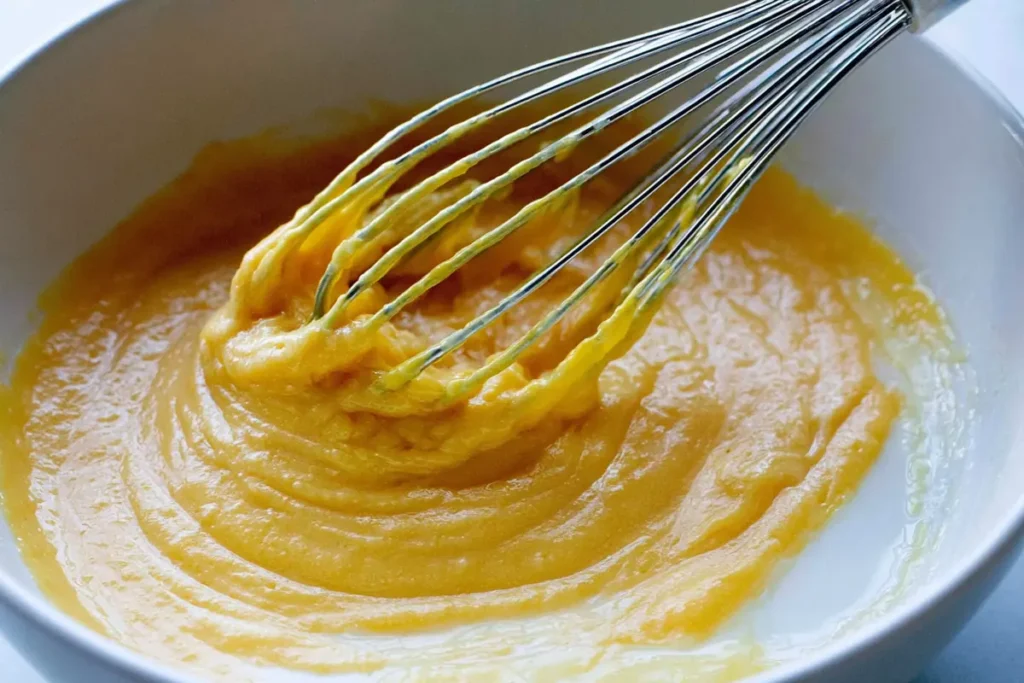
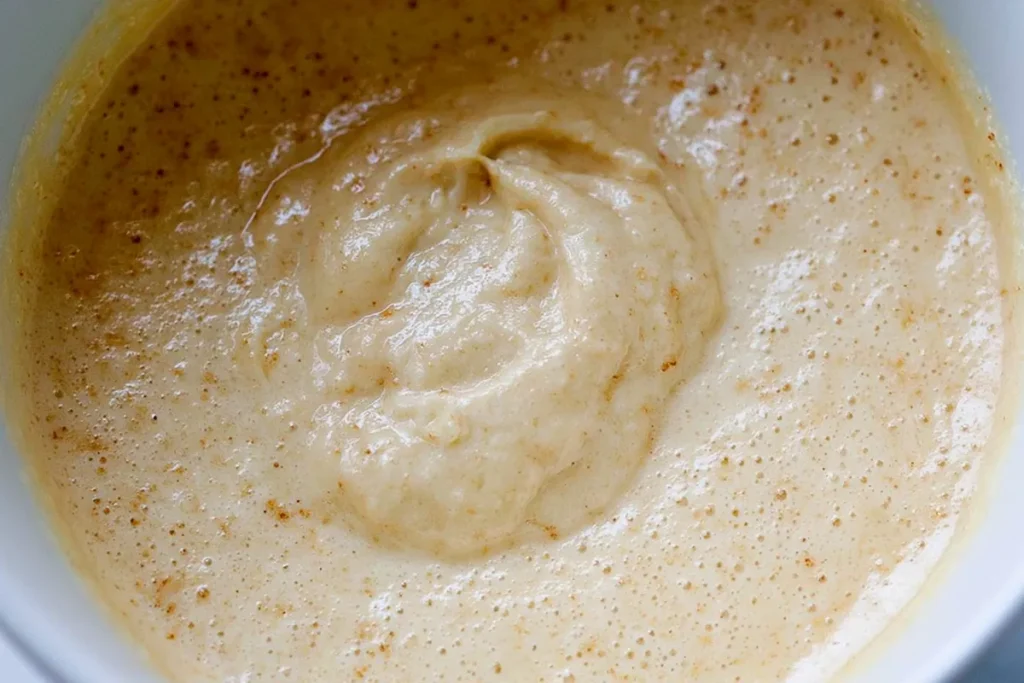
Beat the yolk mixture again briefly, then sift in the flour and baking powder. Mix only until the batter looks smooth.
Add about one-third of the meringue first and stir it in more firmly. This loosens the yolk batter, which makes the remaining egg whites easier to fold.
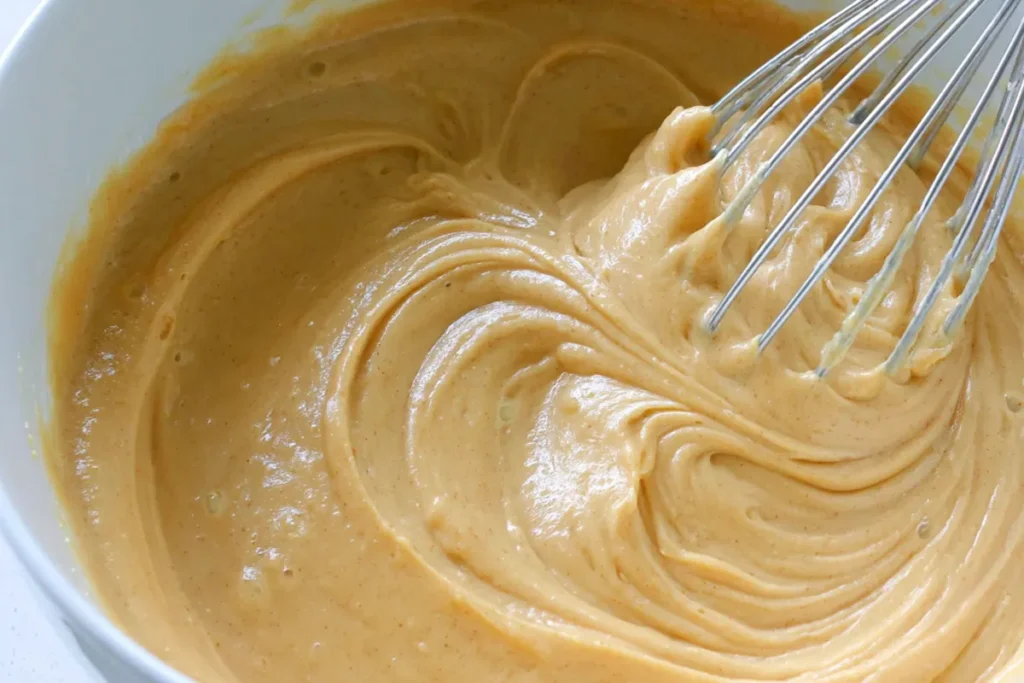
Add half of the remaining meringue. Slide the spatula down the side of the bowl, scoop underneath the batter, and lift it over the top. Rotate the bowl as you work instead of stirring in circles.
Repeat with the final portion. Stop once no large white streaks remain. The batter should look thick, airy, and light enough to hold its shape for a moment when lifted with a spoon.
How to Cook Soufflé Pancakes with Gentle Steam
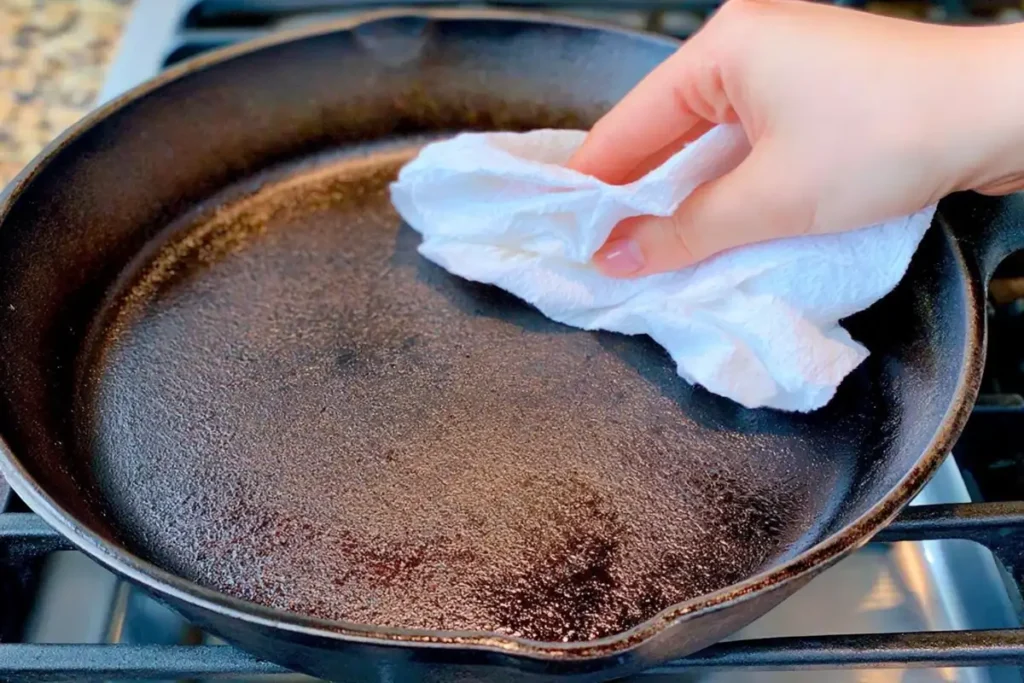
Set a wide nonstick pan over very low heat. Add a thin layer of neutral oil, then wipe most of it away with a paper towel. You want the surface lightly coated, not slick. Too much oil encourages the batter to spread and can leave the bottoms unevenly browned.
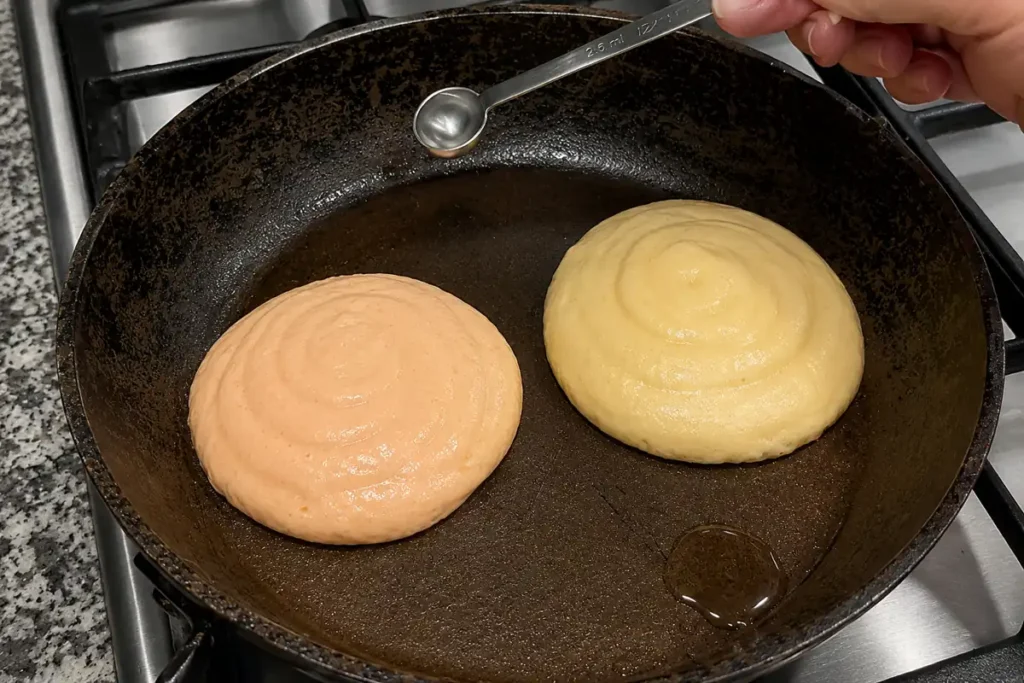
Spoon one mound of batter into the pan, then move to the second and third pancake. Rotate between them, adding one scoop at a time so they rise at a similar pace. Save enough batter for one final scoop on each pancake.
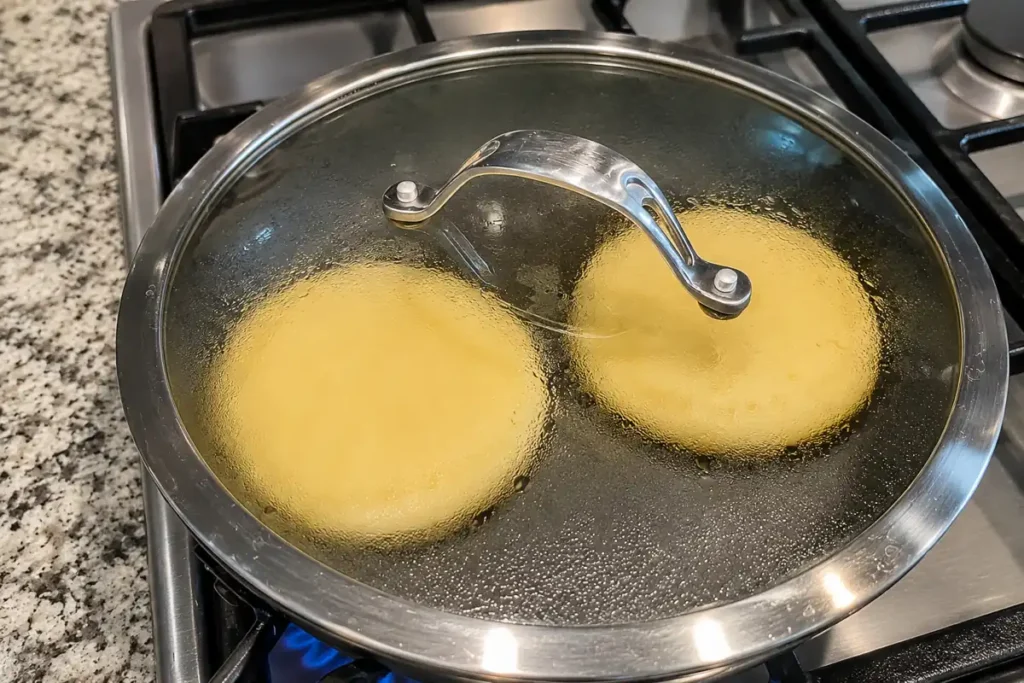
Add ½ teaspoon of water to an empty area of the pan, away from the batter, and cover immediately. Cook for 5 minutes. The trapped steam helps the centers warm gently while the pancakes keep their height.
Remove the lid and add the final scoop of batter to each pancake
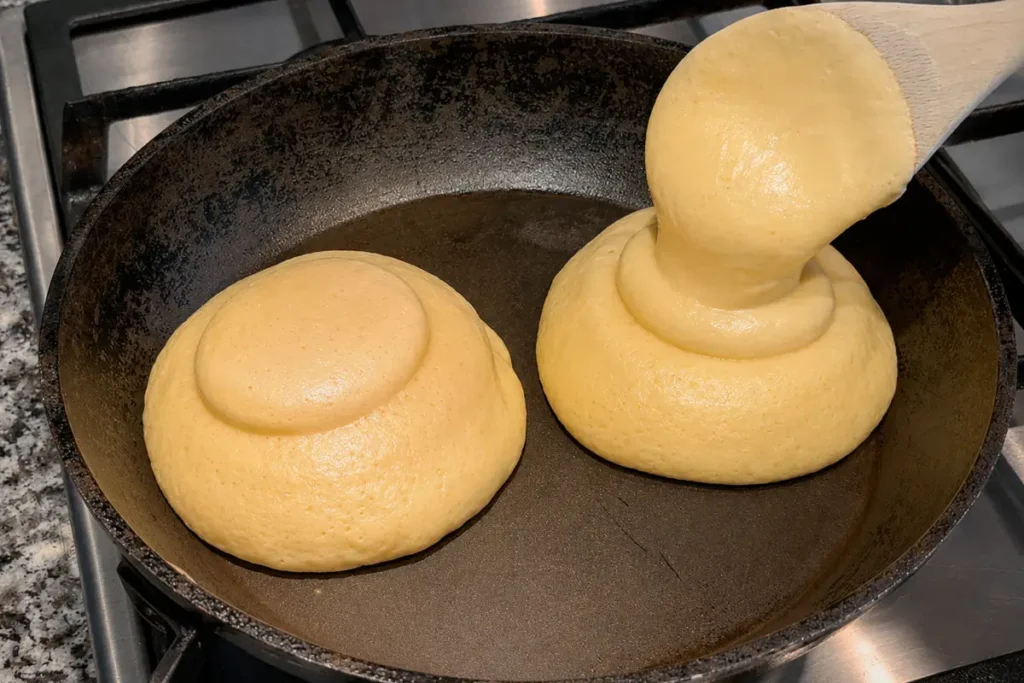
. Pour in another ½ teaspoon of water, cover again, and cook for about 2 minutes. At this point, the tops should look nearly set rather than wet and glossy.
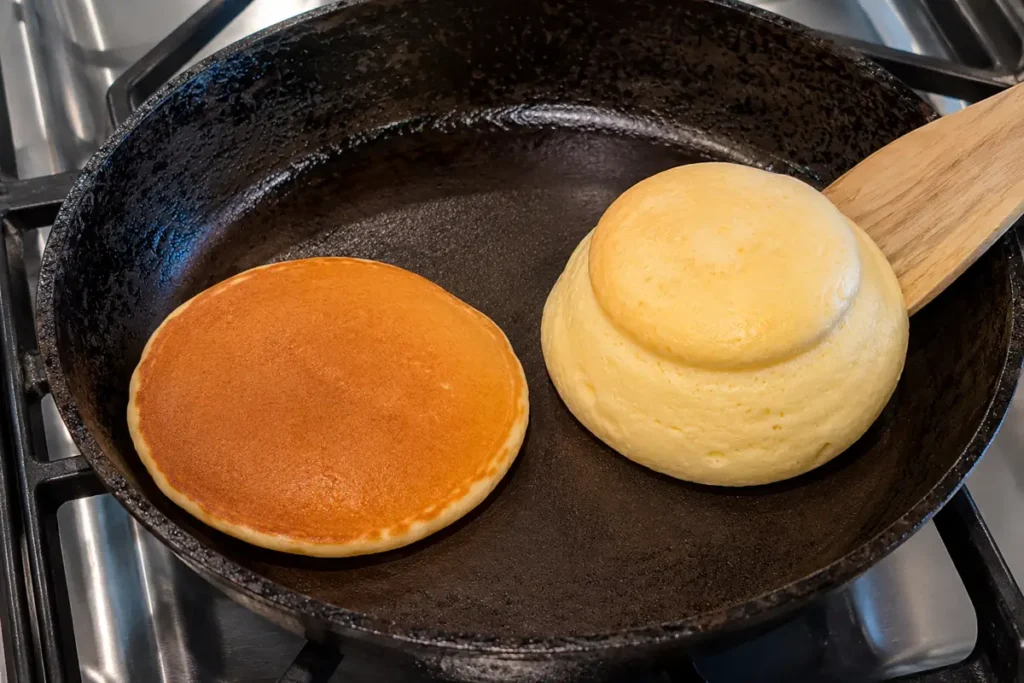
Flipping Without Deflating the Pancakes
Slide a flexible spatula under one pancake and gently tease it away from the pan. Don’t lift it high and drop it onto the other side. That sudden impact can burst the air bubbles you worked to build.
Instead, roll the pancake over with the spatula supporting most of its weight. Add the final ½ teaspoon of water, cover the pan, and cook for another 4–5 minutes.
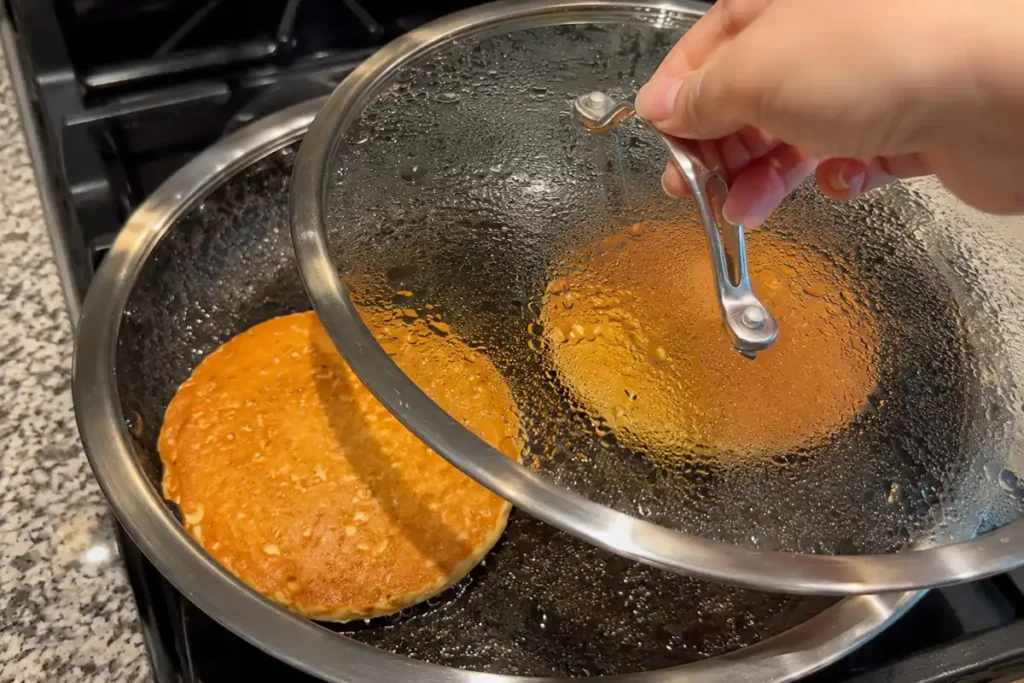
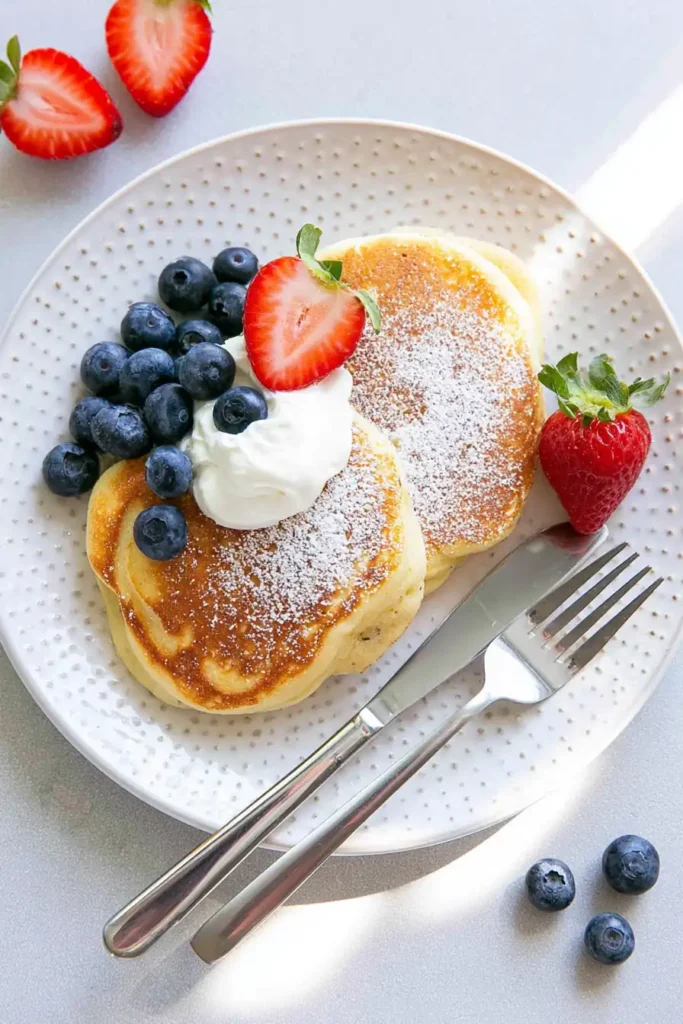
The finished pancakes should feel lightly springy when nudged and should no longer wobble like uncooked batter. Transfer them to a plate straight away. Add the whipped cream, fresh berries, and a light dusting of icing sugar just before serving.
Soufflé Pancake Tips and Troubleshooting
Accurate weighing matters here. With only 30 grams of flour and 30 grams of icing sugar, even a small measuring difference can change the batter. A digital scale is more dependable than spoon measurements.
The egg-white bowl also needs attention. A trace of yolk, oil, or water can stop the whites from building a strong foam. Wipe the bowl and beaters before starting, and separate each egg carefully.
If the pancakes spread instead of rising, the meringue may not have reached stiff peaks. If they rise in the pan and collapse soon after, the batter may have been folded too roughly or the centers may still be undercooked.
Dark bottoms usually mean the heat is too high. Lower it before the next batch and give the pan a minute to cool. These pancakes need time. Rushing them tends to brown the outside before the middle has enough structure.
Overcrowding causes another problem: there’s no room to add batter neatly or slide in the spatula. Use two pans or cook fewer pancakes at once. It’s a little slower, but much easier to control.
Frequently Asked Questions About Soufflé Pancakes
How are soufflé pancakes different from regular pancakes?
Soufflé pancakes rely on whipped egg whites for most of their lift, so they cook taller and lighter than standard pancakes made from a pourable batter.
How can I tell when the centers are cooked?
The tops should look set before flipping, and the finished pancakes should feel lightly springy rather than loose or wet when moved with a spatula.
Can I make the batter ahead of time?
It is better to cook the batter immediately because the trapped air in the meringue slowly escapes as it sits.
Why did my soufflé pancakes deflate?
Common causes include weak meringue, overmixing, rough flipping, or removing the pancakes before the centers have fully set.
Can I cook all three pancakes in a small pan?
A small pan can make shaping and flipping difficult, so use two pans or cook fewer pancakes at a time.
A Soft, Special Breakfast Worth the Care
Soufflé pancakes aren’t difficult, but they do reward careful measuring and patient cooking. Build the meringue properly, keep the heat low, and handle each pancake gently when turning it.
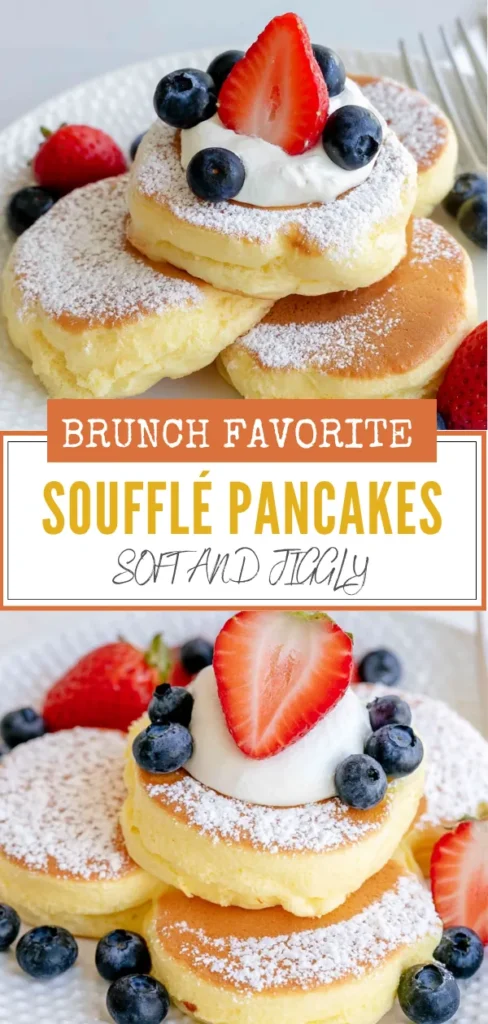
Serve them while they’re still warm, with the whipped cream just soft enough to spoon and the berries ready on the side. That contrast of airy pancake, cool cream, and fresh fruit is exactly what makes the extra attention worthwhile.
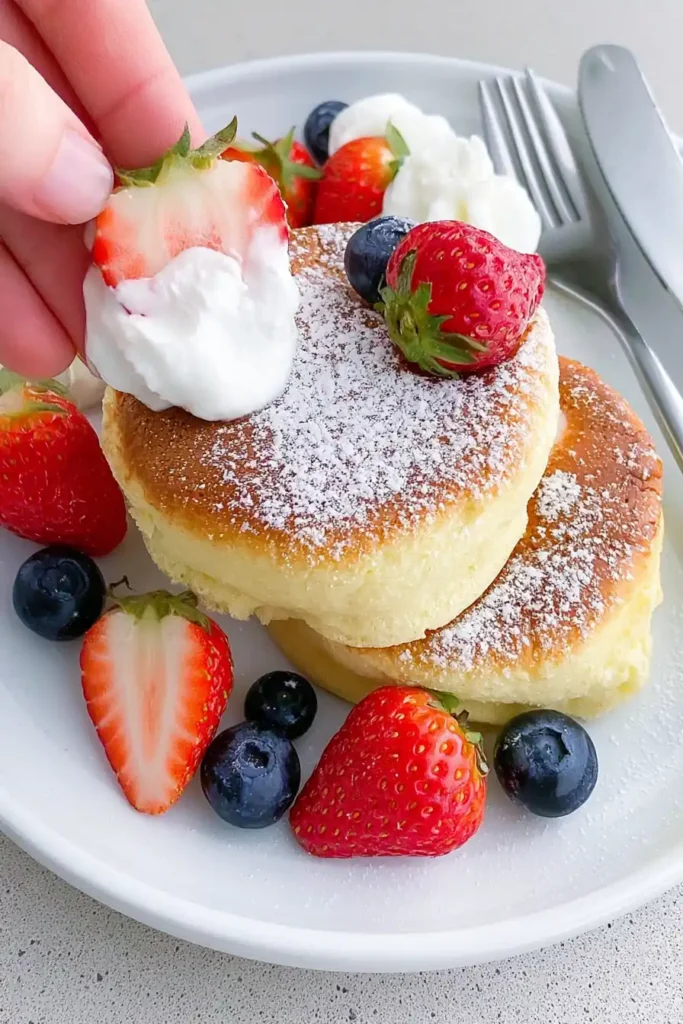
Soufflé Pancakes with Whipped Cream and Fresh Berries
Ingredients
Equipment
Method
- Whip the double cream with 1/2 tablespoon of icing sugar until thick and silky, then prepare the berries and set both toppings aside.
- Separate the egg whites and yolks into two clean mixing bowls, taking care not to get any yolk in the whites.
- Add the whole milk and vanilla essence to the yolks and whisk until evenly combined and slightly foamy.
- Combine the plain flour and baking powder in a small bowl, and measure the 30 grams of icing sugar into a separate bowl.
- Beat the egg whites slowly at first, then gradually increase the speed until they become foamy and double in volume.
- Sift in one-third of the icing sugar and continue beating, then add the remaining sugar gradually until the meringue forms glossy stiff peaks.
- Whisk the yolk mixture again, sift in the flour and baking powder, and mix just until the batter is smooth.
- Stir one-third of the meringue into the yolk batter to loosen it, then gently fold in the remaining meringue in two additions until no large white streaks remain.
- Heat a large nonstick frying pan over very low heat, add a thin layer of neutral oil, and wipe away the excess with a paper towel.
- Spoon one mound of batter into the pan for each pancake, rotating between them and adding one scoop at a time while reserving enough batter for a final layer.
- Add 1/2 teaspoon of water to an empty area of the pan, cover with the lid, and cook over low heat for 5 minutes.
- Remove the lid, add the final scoop of batter to each pancake, add another 1/2 teaspoon of water, cover, and cook for about 2 minutes until the tops are nearly set.
- Gently loosen each pancake with a flexible spatula and roll it onto its second side without dropping it.
- Add the final 1/2 teaspoon of water, cover the pan, and cook for another 4 to 5 minutes until the pancakes feel lightly springy and the centers are cooked.
- Transfer the pancakes to a plate and serve immediately with whipped cream, fresh berries, and a light dusting of icing sugar.
Notes
- Use a digital kitchen scale for the flour, baking powder, and icing sugar because small measurement differences can affect the batter.
- Keep the egg-white bowl and beaters completely free of yolk, oil, and water so the meringue can whip properly.
- Cook over very low heat to give the centers time to set before the bottoms become too dark.
- Do not overcrowd the pan; use two pans or cook fewer pancakes at once if needed.
- Serve the pancakes immediately because they gradually lose some height as they cool.