
Baked Fish with Lemon Cream Sauce: A One-Pan Dinner That Feels Special
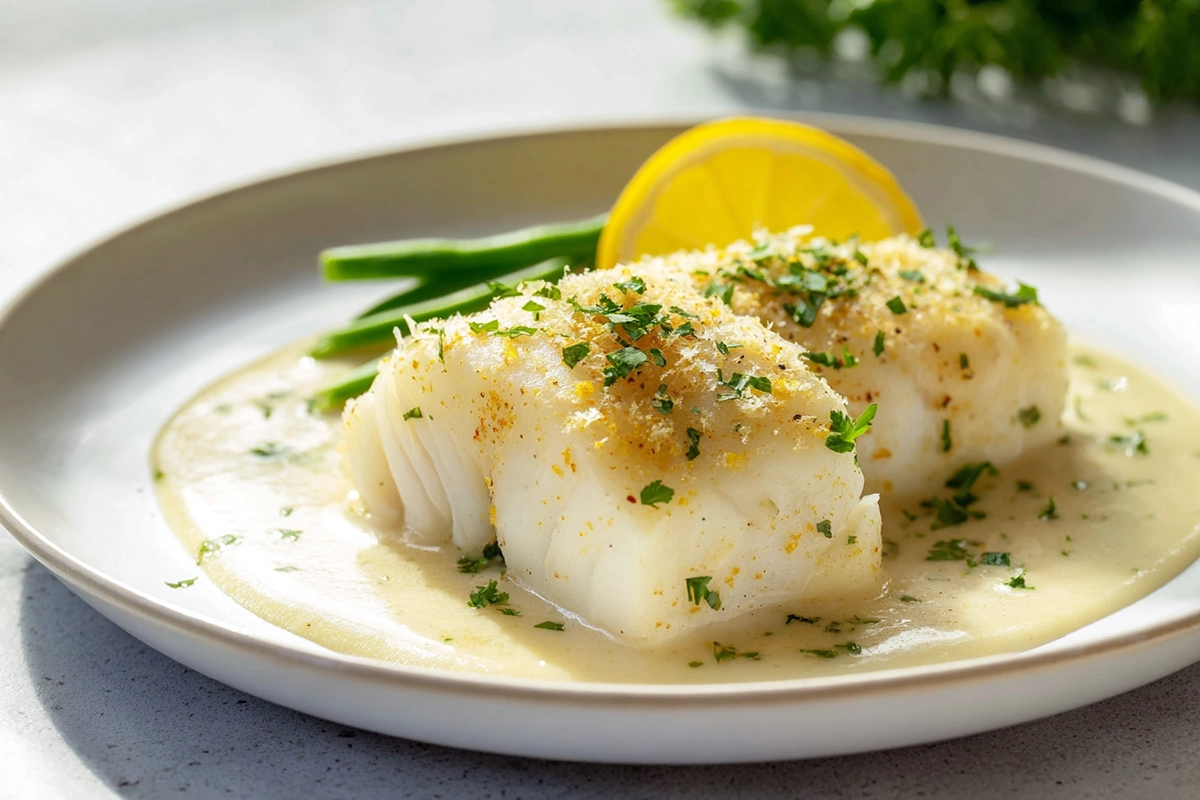
There’s a particular moment this dish hits its stride — about ten minutes into baking — when butter melts into cream, Dijon softens, and lemon turns from sharp to round. The fish stays pale and tender, barely holding together, while a light sauce forms underneath it almost by accident. That’s the beauty here. Nothing is reduced, nothing is whisked over heat. The oven quietly does the work, and the reward is a plate that feels far more thoughtful than the effort it took to get there.
What makes this recipe dependable isn’t complexity, but restraint. The ingredient list is short on purpose, and each one earns its place. The cream adds body without heaviness. The mustard doesn’t shout — it steadies the sauce. Garlic and shallots melt down into the background, giving depth instead of bite. Most importantly, the fish contributes its own juices as it cooks, turning the sauce into something that tastes layered rather than poured on. That’s why spacing the fillets and choosing the right kind of fish matter more than fancy techniques.
This is the kind of dinner I turn to when I want something that looks composed but behaves like a weeknight meal. One baking dish. Fifteen minutes. No stovetop juggling. The result is light, elegant, and reliable — the kind of recipe you remember because it worked exactly the way you hoped it would.
Below, I’ll walk you through the small details that make or break this Baked Fish with Lemon Cream Sauce, starting with the timing and technique that keep the fish tender and the sauce smooth.
Table of Contents
Let’s Talk Fish Choices Before Anything Else Goes Wrong
Before butter melts or lemon is squeezed, this recipe is decided by the fish you choose. Baked Fish with Lemon Cream Sauce only works as intended when the fillets cook quickly and release just enough juice to build the sauce without flooding it. That’s why lean, white fish around half an inch thick is the sweet spot. These fillets cook evenly in the oven’s short window and stay tender without turning chalky.
Very fatty fish behave differently. Salmon, for example, releases fat instead of clean juices, which causes the cream and butter to separate. Ultra-thin fillets cook too fast and dry out before the sauce has time to come together. Frozen fish can work, but only if it’s fully thawed and patted dry aggressively; excess moisture will thin the sauce beyond repair. This dish rewards restraint — choose fish that cooks politely and gets out of its own way.
- White fish fillets: Lean varieties like tilapia, snapper, barramundi, perch, or ling give clean flavor and predictable cooking.
- Thickness matters: Aim for about ½ inch so the fish finishes just as the sauce settles.
- Frozen fish: Acceptable only when completely thawed and dried; otherwise, expect a watery sauce.
What Each Ingredient Is Actually Doing (And Why None Are Optional
This is one of those short ingredient lists that looks almost suspicious until you understand how each part supports the others. The sauce isn’t built on the stovetop or thickened with flour. It relies on balance — fat, acid, and emulsifiers working together while the fish bakes.
Butter provides richness, but it’s the cream that gives the sauce its body. Dijon mustard isn’t here for sharpness; it stabilizes the sauce so it stays smooth instead of splitting in the oven. Lemon juice adds brightness early, so its edge softens as it bakes. Garlic and shallots don’t announce themselves — they dissolve into the background, giving depth rather than bite. Skip or swap too freely, and the sauce loses its structure.
If you need a lighter option, evaporated milk can replace the cream, but the sauce will be thinner and less forgiving. Using light cream? Increase the Dijon slightly to compensate. This is a one-pan fish dinner that depends on quiet cooperation between ingredients, not bold substitutions.
- Unsalted butter: Controls richness without overpowering the fish.
- Heavy cream: Creates body; evaporated milk works, but expect a lighter texture.
- Dijon mustard: Holds the sauce together and balances the fat.
- Lemon juice: Brightens the sauce without making it sharp.
- Garlic cloves: Adds depth once baked, not raw heat.
- Shallots (eschallots): Melt into the sauce; substitute finely minced onion or green onion whites if needed.
- Salt and pepper: Season lightly before baking; adjust after once the sauce concentrates.
- Fresh parsley & lemon slices: Finish the dish with freshness, not decoration.
This foundation is what gives the dish its restaurant-style dinner feel without asking for restaurant-level effort.

Timing Is Everything: How 2 Extra Minutes Can Ruin This Dish
This dish moves fast, and that’s the point. The oven should already be hot before the fish ever touches the pan — you want immediate heat, not a slow warm-up. As it bakes, you’ll hear a gentle sizzle, not a violent boil, and the sauce will loosen before it tightens. If you smell lemon mellowing and butter turning nutty rather than sharp, you’re exactly where you should be.
Watch the fish, not the clock. The surface turns opaque first, then the center follows quietly. Press the thickest part with your finger — it should feel just firm, like the base of your thumb, not stiff. The moment you see the flakes just beginning to separate at the edges, pull the pan. Carryover heat finishes the job, and this is where most baked fish loses its tenderness if you wait too long.
The Quiet Trick That Makes the Sauce Work (It’s Not the Cream)
The sauce doesn’t thicken because it’s cooked hard — it comes together because everything melts and mingles at the same pace. When the butter and cream hit the oven, they loosen first, looking almost thin and pale. As the fish releases its juices, the sauce deepens in color and aroma, smelling faintly of garlic and lemon peel rather than raw citrus.
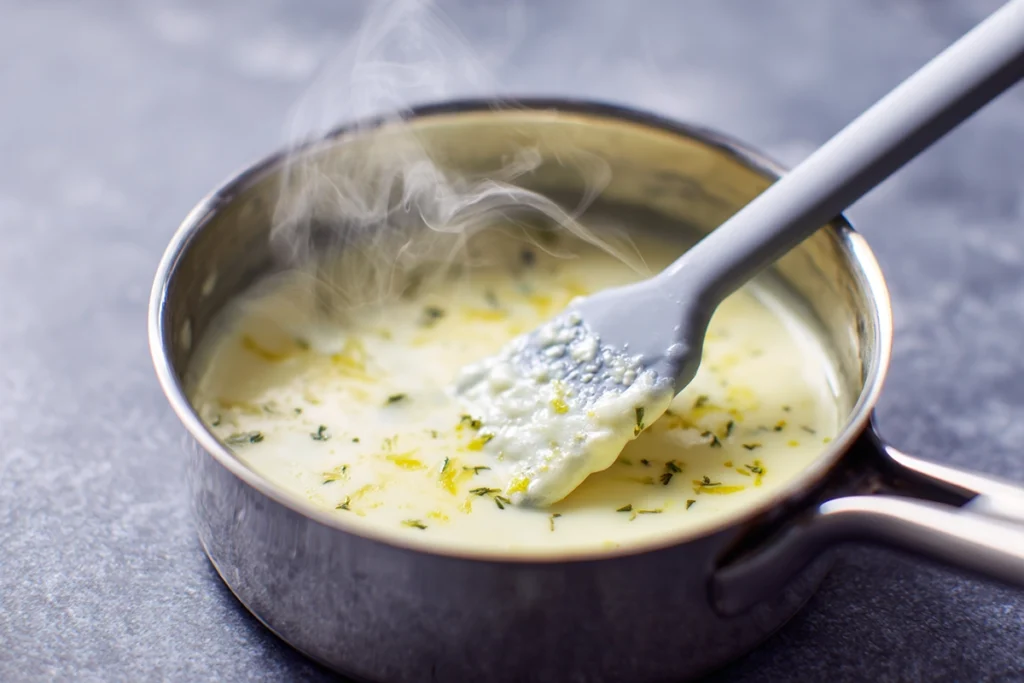
Midway through baking, the sauce should shimmer, not bubble aggressively. That’s the mustard doing its job, holding the fat and liquid together without turning heavy. If you see the sauce breaking or oil pooling, the heat is too high or the fish is overcooking. This is why one-pan fish dinner recipes like this rely on moderation — steady heat, short time, and trust in the process.
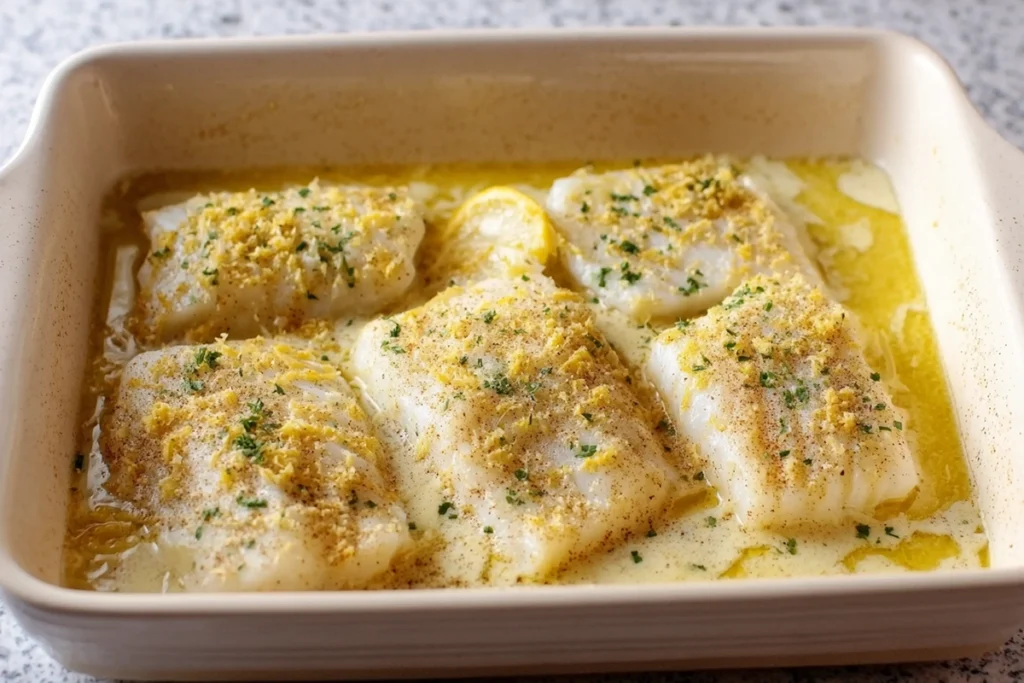
Knowing When to Separate the Fish From the Sauce
When the fish is done, lift it out gently rather than letting it sit. The flesh is fragile at this point, and the sauce underneath is still active. As the pan rests, you’ll hear a soft hiss fade to silence, and the sauce will thicken slightly on its own. Spoon it while it’s glossy and warm, not after it cools and tightens.
If the sauce looks looser than you’d like, return the empty pan to the oven for a brief moment. You’ll smell the dairy concentrate and see the surface tighten almost immediately. This small adjustment keeps the baked fish with lemon cream sauce balanced — light, elegant, and spoonable, never heavy or watery.
Small Changes That Keep the Sauce Balanced
This recipe doesn’t ask for much improvisation, but there are a few adjustments that hold up when made with intention. If you’re aiming for a lighter dish, evaporated milk can replace the cream without collapsing the sauce. The texture will be looser and less luxurious, but still pleasant — especially if you increase the Dijon slightly to keep the sauce from feeling flat. Light cream also works, though it needs that same mustard boost to stay cohesive.
Garlic can be adjusted to taste, but restraint matters. Too much, and it overwhelms the fish before it has time to mellow in the oven. Shallots are harder to replace, but finely minced yellow onion or the white part of green onions will melt in similarly. What doesn’t work here is swapping in fatty fish like salmon or trying to turn this into a skillet dish. The sauce depends on controlled oven heat and lean fish; change that foundation and the balance falls apart.
How I Serve This When I Want It to Feel Like a Real Meal
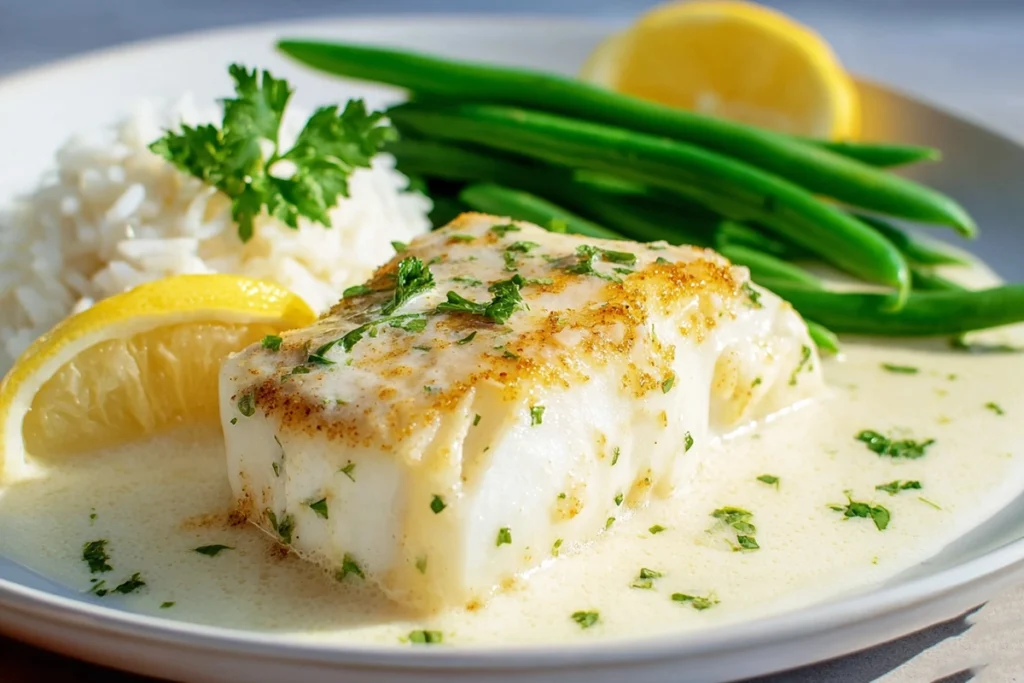
The sauce is light but purposeful, so it helps to serve this with something that can quietly catch it. Steamed rice, mashed potatoes, or a piece of crusty bread all give the sauce somewhere to go without stealing attention from the fish. For vegetables, I lean toward restraint — roasted asparagus, green beans, or a simple lemon-dressed salad add freshness without competing.
This baked fish with lemon cream sauce works especially well when you want an elegant dinner that doesn’t feel heavy. It’s the kind of plate that fits a quiet weeknight just as easily as a small dinner with friends, where the food feels composed but familiar. The clean flavors also make it a good example of a dependable one-pan fish dinner that doesn’t rely on excess seasoning.
A Few Last Things Worth Remembering
Most issues with this dish come down to timing and moisture. Overbaking dries the fish before the sauce has time to settle, while crowded fillets release too much liquid at once. If something feels off, pause before adjusting — often the sauce just needs a minute to rest or a brief return to the oven on its own. Trust the process more than the clock.
This is a recipe I come back to because it behaves itself. It doesn’t ask for special equipment or last-minute fixes, just attention to a few small details. When you get those right, the result is calm, balanced, and quietly satisfying — exactly the kind of cooking that earns a permanent place in a home kitchen.
Get inspired with more mouthwatering recipes! Follow me on Facebook and Pinterest for new cooking ideas every week.
FAQ
Can I use frozen fish for baked fish with lemon cream sauce?
Yes, frozen fish can work, but it needs extra care. Thaw it completely and pat it very dry before baking, otherwise the excess water will thin the sauce. Even then, expect a slightly looser sauce compared to fresh fish.
Why did my lemon cream sauce turn out watery?
This usually happens when the fish releases too much liquid while baking. Different fish hold different amounts of water, and frozen fillets are the most common cause. If it happens, remove the fish and return the pan to the oven for a minute or two to let the sauce tighten.
Can I make this recipe without heavy cream?
You can substitute evaporated milk if you want a lighter option. The sauce will be thinner and less rich, but still balanced if you increase the Dijon slightly. Very low-fat milk is not recommended, as it won’t hold together in the oven.
How do I know when the fish is fully cooked?
The fish is done when it turns opaque and flakes easily at the edges but still feels slightly firm in the center. If it feels stiff or starts to pull apart aggressively, it’s already overcooked. It’s better to pull it early and let residual heat finish the job.
Print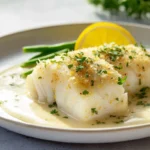
Baked Cod with Lemon Cream
- Total Time: 15 minutes
- Yield: 4 servings 1x
Description
A light, elegant baked fish dinner made in one pan. Tender white fish cooks quickly in a smooth lemon Dijon cream sauce that forms naturally in the oven, perfect for an easy but special meal.
Ingredients
- 4 white fish fillets (about 5–6 oz each), skinless and boneless
- Unsalted butter
- Heavy cream
- Garlic cloves, minced
- Dijon mustard
- Fresh lemon juice
- Shallots, finely chopped
- Salt
- Black pepper
- Fresh parsley, for serving
- Lemon slices, for serving
Instructions
- Preheat the oven and arrange the fish fillets in a baking dish with space between them, seasoning lightly with salt and pepper.
- Gently melt the butter with the cream, Dijon mustard, garlic, lemon juice, salt, and pepper until smooth.
- Sprinkle the shallots over the fish and pour the sauce evenly over the fillets.
- Bake until the fish turns opaque and flakes at the edges while the sauce shimmers and lightly thickens.
- Remove the fish to plates, spoon the sauce over the top, and finish with parsley and lemon slices.
Notes
- Lean white fish works best for this recipe because it releases clean juices that help build the sauce.
- Avoid fatty fish like salmon, which can cause the sauce to split.
- If the sauce is too thin, remove the fish and return the pan to the oven briefly to thicken.
- Frozen fish must be fully thawed and patted very dry before baking.
- Prep Time: 5 minutes
- Cook Time: 10 minutes
- Category: Dinner
- Method: Baking
- Cuisine: Western
Nutrition
- Serving Size: 1 fillet with sauce
- Calories: 285
- Sugar: 1
- Sodium: 220
- Fat: 16
- Saturated Fat: 10
- Unsaturated Fat: 6
- Trans Fat: 0
- Carbohydrates: 1
- Fiber: 0
- Protein: 34
- Cholesterol: 130
What Are Our Readers Saying?
There are no reviews yet. Be the first one to write one.